
Introduction
Running a small business without a clear marketing plan is one of the fastest ways to waste time, money, and energy. Many entrepreneurs jump into promotion, social media, or advertising without a real strategy, hoping something will work. In reality, that approach often leads to frustration, poor results, and slow growth. This is exactly why having a small business marketing plan is not optional if you want consistent results.
A marketing plan for small business owners is more than just a document. It is a practical roadmap that shows where your business is going, who you are trying to reach, and how you plan to attract and convert customers. Without it, marketing becomes guesswork instead of a system. I have seen businesses with great products fail simply because they had no clear marketing direction, while others with average offers grew steadily because they followed a structured plan.
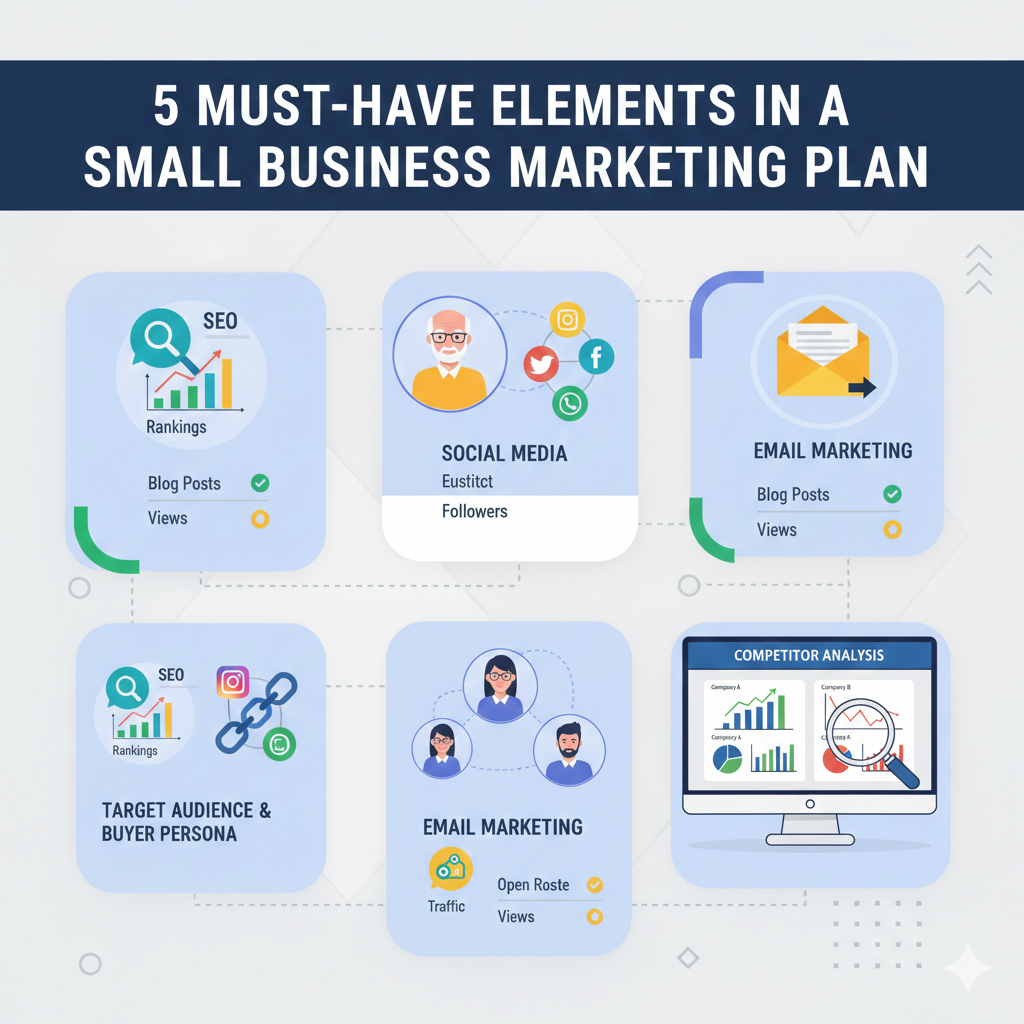
This guide is designed to walk you through the five most important elements of a small business marketing plan that actually drive growth. Whether you are just starting or trying to improve your current results, you will learn how to set clear marketing goals, understand your audience, choose the right strategies, and measure what truly matters.
By the end of this guide, you will have a clearer understanding of how to build a marketing plan that supports long-term business growth instead of short-term guesses.
What Is a Small Business Marketing Plan?
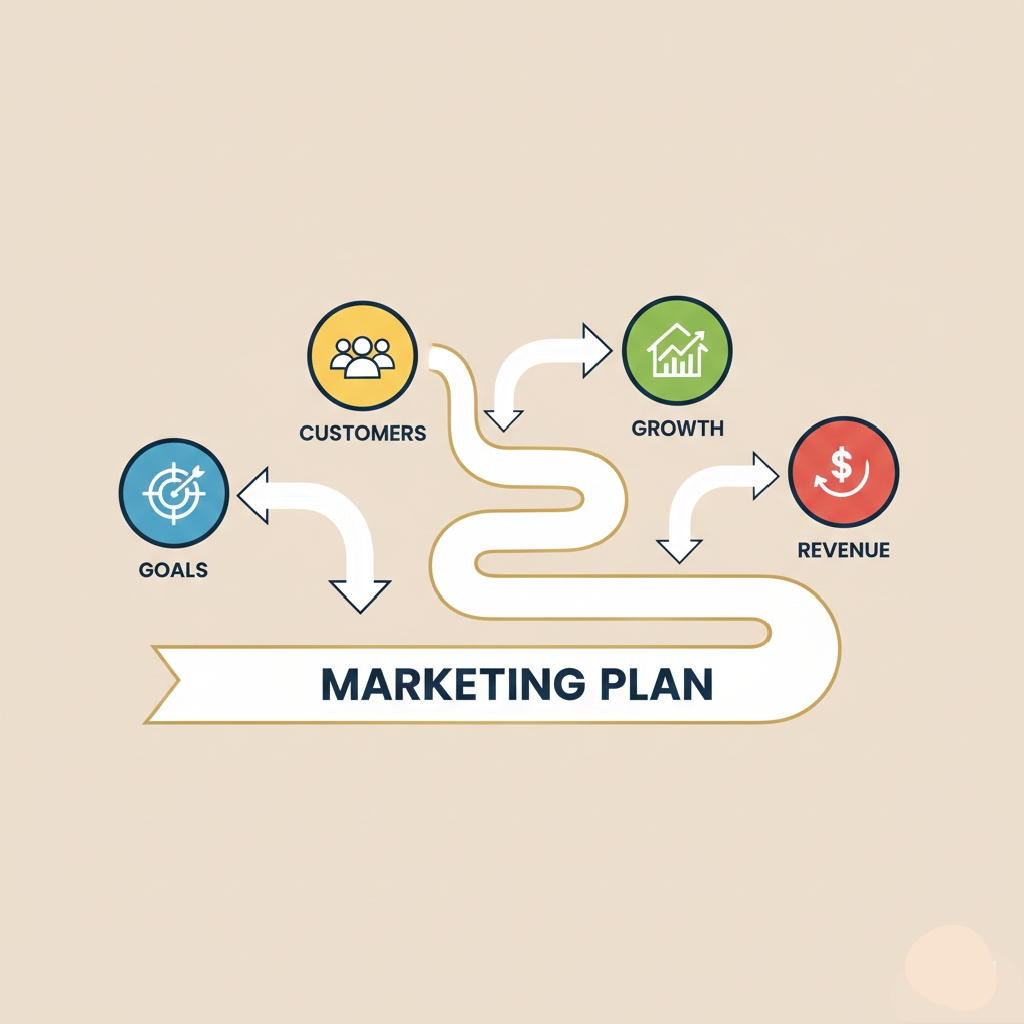
A small business marketing plan is a clear, written strategy that explains how a business will attract customers, promote its products or services, and grow consistently over time. It is not the same as a business plan. While a business plan explains what your business is and how it will operate, a marketing plan focuses strictly on how people will find you and choose you over competitors.
In simple terms, a marketing plan acts as a roadmap for visibility and sales. It helps you decide where to focus your energy, what channels to use, and how to spend your marketing budget wisely. Without it, many small businesses end up posting randomly on social media, running ads without direction, or copying competitors without understanding what actually works.
A strong marketing plan also helps you stay consistent. Instead of guessing what to post or promote each week, you follow a structured approach based on your goals and audience. This is especially important for small business owners who have limited time and resources.
Another key benefit is clarity. A good marketing plan helps you understand your ideal customer, define your message, and measure what is working. For example, if your goal is business growth, your marketing activities should directly support that objective, not distract from it. This is the same principle discussed in this guide on small business growth strategies, where planning and consistency play a major role.
In short, a marketing plan is not optional. It is the foundation that supports visibility, customer trust, and long-term success.
Element 1 – Clear Marketing Objectives
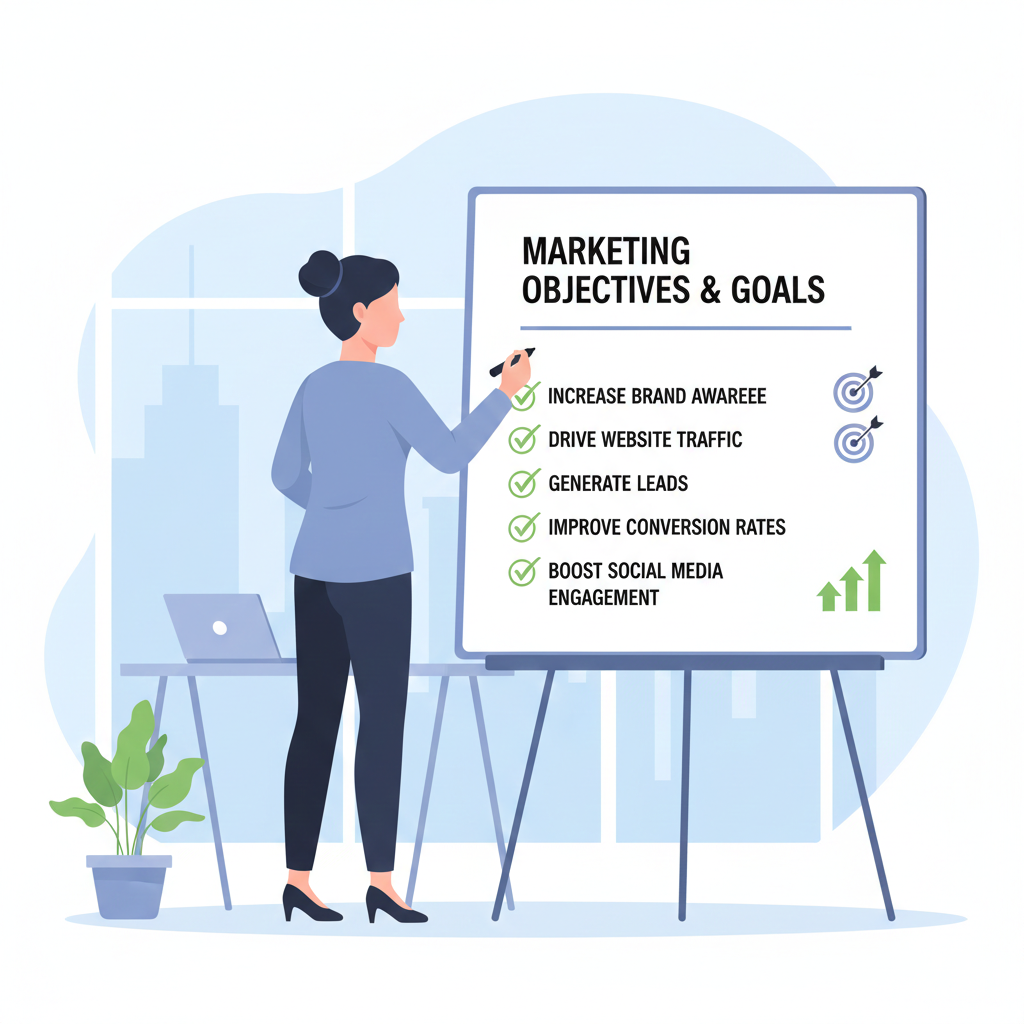
Every successful small business marketing plan starts with clear marketing objectives. Without defined goals, marketing becomes guesswork, and that usually leads to wasted time, money, and effort.
Marketing objectives explain what you want to achieve and why you are doing it. They give direction to every action you take, from social media posts to paid ads and content creation. When objectives are clear, decision-making becomes easier because you can measure everything against your goals.
What Marketing Objectives Really Mean
Marketing objectives are specific outcomes you want your marketing activities to achieve within a set period. These objectives are not vague ideas like “get more customers.” Instead, they are measurable and intentional, such as increasing website traffic, generating leads, or improving brand visibility.
For example, instead of saying:
- “I want more sales,”
A clearer objective would be:
- “Increase website inquiries by 30 percent in three months.”
This clarity helps you choose the right strategies and avoid distractions that do not support growth.
Short-Term vs Long-Term Marketing Goals
A strong marketing plan balances both short-term and long-term objectives.
Short-term goals focus on quick wins, such as:
- Driving traffic to a new blog post
- Growing social media engagement
- Generating leads for a new offer
Long-term goals focus on sustainable growth, such as:
- Building brand authority
- Growing an email list
- Becoming a recognized name in your niche
For example, publishing educational blog content may not bring instant sales, but over time, it builds trust and positions your brand as an authority. This is the same strategy used in resources like this detailed guide on how to create a winning business plan for startups, where long-term planning plays a major role in success.
Using SMART Goals for Better Results
One of the most effective ways to set marketing objectives is by using the SMART framework:
- Specific – Clearly defined
- Measurable – Trackable with data
- Achievable – Realistic for your resources
- Relevant – Aligned with business goals
- Time-bound – Has a deadline
For example, a SMART marketing goal could be:
“Increase organic website traffic by 40 percent in six months through SEO and content marketing.”
This type of goal makes it easier to track performance and adjust strategies when necessary.
Why Clear Objectives Matter for Small Businesses
Small businesses often work with limited budgets, so every marketing action must count. Clear objectives help you:
- Focus on what truly matters
- Avoid copying competitors blindly
- Measure return on investment
- Stay consistent with your brand message
Many businesses fail not because their product is bad, but because they market without direction. Having defined marketing objectives ensures that every effort supports growth rather than guesswork.
Element 2 – Identifying Your Target Audience
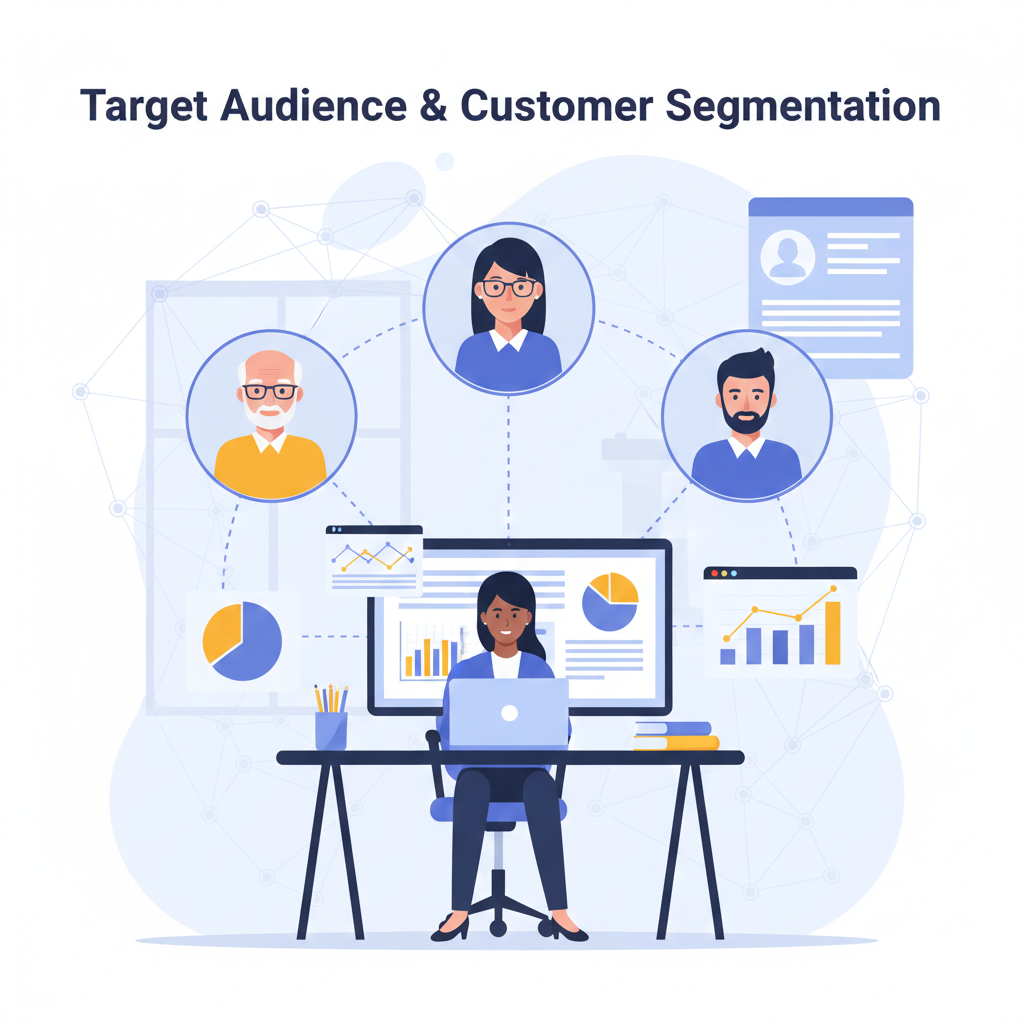
Understanding your target audience is one of the most important parts of a small business marketing plan. Many businesses struggle not because their product is bad, but because they are talking to the wrong people or trying to talk to everyone at once.
A target audience refers to the specific group of people most likely to buy your product or service. When you clearly understand who they are, your marketing becomes more focused, effective, and affordable.
What a Target Audience Really Means
Your target audience is defined by more than age or gender. It includes:
- Their needs and problems
- Their buying behavior
- Their interests and lifestyle
- Where they spend time online
- What influences their decisions
For example, a business selling digital services to entrepreneurs will market very differently from one selling household products. Trying to speak to both at once often leads to weak messaging that connects with no one.
This is why successful brands invest time in audience research before spending money on ads or content.
Why Small Businesses Fail Without Clear Targeting
One of the most common mistakes small businesses make is assuming “everyone” is their customer. This leads to:
- Low engagement
- Poor conversion rates
- Wasted ad spend
- Confusing brand messaging
When your audience is clear, your marketing becomes sharper. You know what to say, where to say it, and how to say it in a way that resonates.
This is also why market research is a key part of any serious marketing or business plan. In fact, if you look at how structured planning works in this guide on building a strong startup business plan, audience definition is always one of the first steps.
Demographics vs Psychographics
To truly understand your audience, you need to look beyond basic demographics.
Demographics include:
- Age
- Gender
- Location
- Income level
- Education
Psychographics include:
- Interests
- Values
- Lifestyle
- Buying motivation
- Pain points
For example, two people may be the same age and income level, but their buying decisions can be completely different based on goals and lifestyle. This is why psychographics often matter more than demographics in marketing.
How to Identify Your Ideal Customer
Here are practical ways to define your target audience effectively:
1. Use Analytics Tools
Platforms like Google Analytics help you understand:
- Where visitors come from
- What pages they view
- How long do they stay
- What devices do they use
This data gives clear insight into who is already interested in your business.
- Why did they choose you?
- What problem were they trying to solve?
- How did they find you?
2. Study Your Existing Customers
Look at your current customers and ask:
Patterns will start to appear quickly.
3. Use Social Media Insights
Platforms like Facebook and Instagram provide built-in audience insights that show:
- Age range
- Interests
- Location
- Engagement behavior
These insights help refine your marketing strategy and content direction.
4. Create Buyer Personas
A buyer persona is a detailed profile of your ideal customer. It usually includes:
- Name and background
- Goals and challenges
- Buying behavior
- Preferred platforms
Creating one or two strong personas helps you write content and run campaigns that feel personal and relevant.
This approach is especially useful when combined with growth strategies like the ones explained in this guide on small business growth strategies for beginners.
Why Audience Clarity Improves Marketing Results
When you know exactly who you are targeting:
- Your messaging becomes clearer
- Your ads convert better
- Your content feels more personal
- Your marketing budget goes further
This is one of the biggest differences between struggling businesses and growing ones. The successful ones understand their audience deeply and speak directly to their needs.
Element 3 – Market and Competitor Analysis
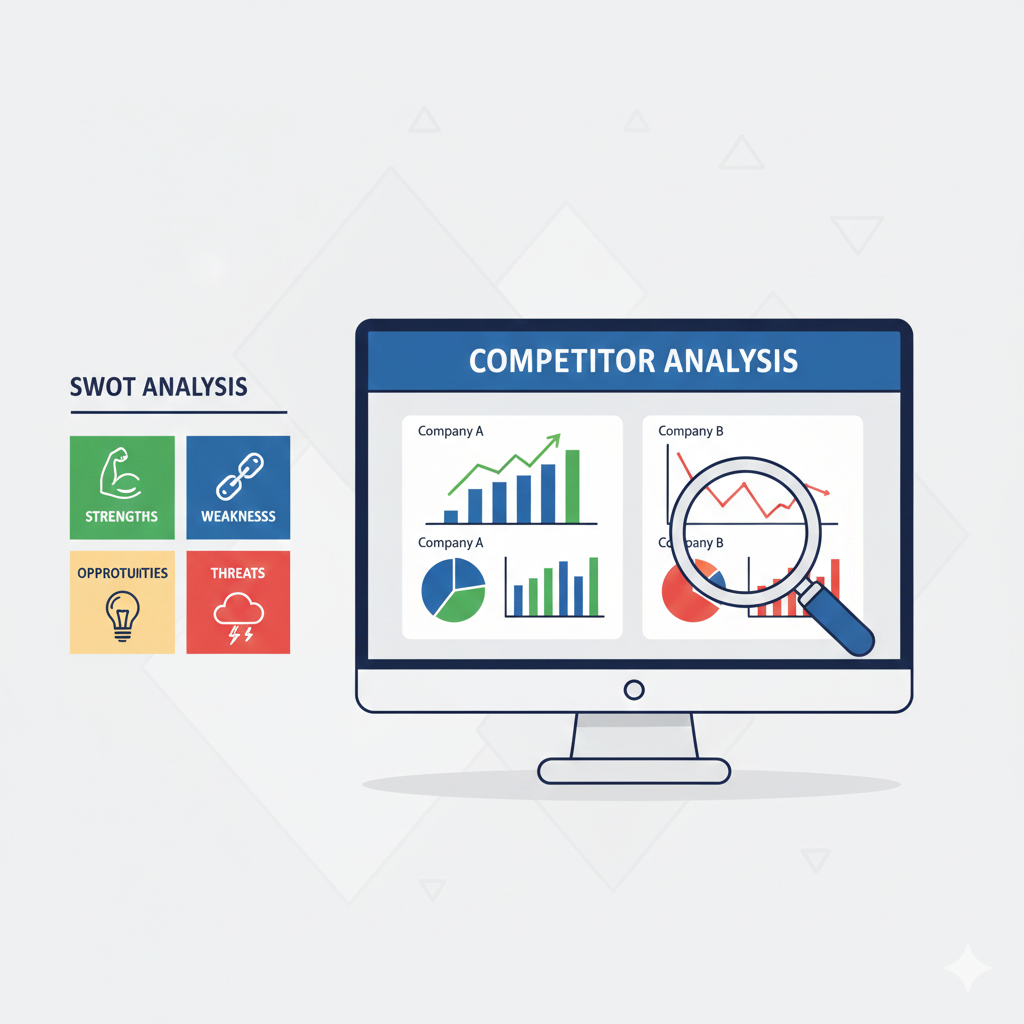
Understanding your market and competitors is what separates guesswork from smart decision-making. Many small business owners skip this step because it feels technical, but in reality, it is one of the most practical parts of a small business marketing plan.
Market and competitor analysis helps you understand where your business fits, who you are competing with, and how you can stand out.
What Market Analysis Really Means
Market analysis is the process of studying:
- Your industry
- Your target market
- Current trends
- Customer behavior
- Market demand
It helps you answer important questions like:
- Is there demand for my product or service?
- Is the market growing or shrinking?
- What problems are customers actively trying to solve?
For example, someone starting an online service business should first understand whether people are already paying for similar services and how those services are positioned.
You can find reliable industry data using platforms like:
- Statista for market trends and statistics
- Google Trends to see what people are actively searching for
- IBISWorld for industry reports and forecasts
Using these tools gives you real data instead of assumptions.
Why Competitor Research Matters
Competitor analysis does not mean copying others. It means learning from what already works and identifying gaps you can fill.
When you study competitors, you should look at:
- Their pricing
- Their marketing channels
- Their messaging
- Their strengths and weaknesses
- Customer reviews and complaints
This helps you understand what customers like and what they feel is missing.
A simple way to do this is by searching competitors on Google, reviewing their websites, and analyzing their content. You can also use tools like:
- SEMrush for keyword and competitor insights
- SimilarWeb to analyze traffic sources
- Ubersuggest for SEO and content gaps
These tools help you make data-backed decisions rather than relying on guesswork.
Using SWOT Analysis for Better Positioning
A simple and effective method for analysis is the SWOT framework:
Strengths
What your business does well, such as pricing, expertise, or customer service.
Weaknesses
Areas that need improvement, like limited visibility or a small budget.
Opportunities
Market gaps, rising trends, or unmet customer needs.
Threats
Competitors, market saturation, or changing customer behavior.
This method gives you a clear picture of where your business stands and what direction to take next.
Understanding Customer Behavior and Trends
Marketing works best when it aligns with how people think and buy. Studying customer behavior helps you understand:
- What motivates purchases
- When people are most likely to buy
- Which platforms influence decisions
For example, many small businesses now rely heavily on online visibility because buyers research before making decisions. This is why combining market analysis with a strong digital strategy is essential, especially if you want long-term growth.
If you want a clearer idea of how businesses use research and strategy to grow sustainably, this guide on small business growth strategies explains it in practical terms.
Why This Step Matters So Much
Market and competitor analysis helps you:
- Avoid costly mistakes
- Identify profitable opportunities
- Position your brand correctly
- Make confident marketing decisions
Without this step, even the best marketing ideas can fail because they are not aligned with real market demand.
Element 4 – Marketing Strategies and Tactics
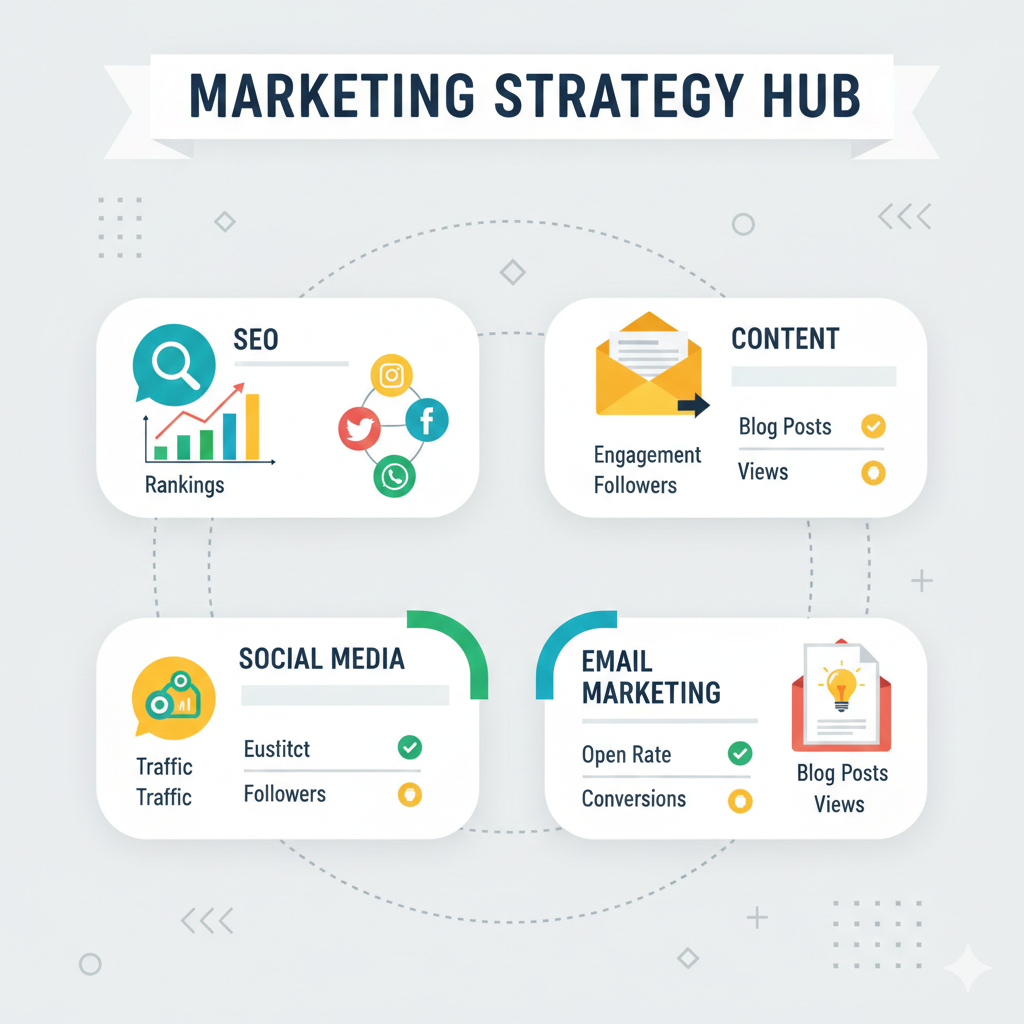
Once you understand your market and competitors, the next step in your small business marketing plan is deciding how you will actually reach your customers. This is where strategy meets action.
Many small businesses fail not because they lack ideas, but because they jump into tactics without a clear strategy behind them. A strong marketing plan aligns your goals, audience, and budget with the right marketing activities.
Strategy vs Tactics (Important Difference)
A marketing strategy is the big picture.
A marketing tactic is the action you take to execute that strategy.
For example:
- Strategy: Increase online visibility
- Tactics: SEO, blog content, social media posting, email campaigns
Without a strategy, tactics become random and ineffective.
Digital Marketing Strategies for Small Businesses
Digital marketing is often the most cost-effective option for small businesses, especially those working with limited budgets.
1. Search Engine Optimization (SEO)
SEO helps your business appear on Google when people search for solutions related to what you offer.
A good SEO strategy includes:
- Keyword-optimized content
- Fast-loading website
- Mobile-friendly design
- Quality backlinks
If you are building long-term visibility, SEO should be a priority. This is why content-based strategies work so well for small businesses. You can see how SEO fits into business growth in this guide on building a strong business foundation.
Helpful tools for SEO include:
2. Content Marketing
Content marketing builds trust and positions your brand as an authority. This includes:
- Blog posts
- Guides and tutorials
- Videos
- Social media posts
For example, writing helpful articles like this one allows your audience to learn while naturally becoming familiar with your brand. Over time, this leads to trust and conversions.
If you are just starting, creating educational content related to your niche is one of the safest and most sustainable ways to grow.
3. Social Media Marketing
Social media helps you connect directly with your audience. The key is choosing platforms where your audience already spends time.
Examples:
- Facebook for community building
- Instagram for visual branding
- LinkedIn for professional services
- TikTok for brand awareness and reach
Consistency matters more than perfection. Posting useful content regularly builds recognition and trust.
4. Email Marketing
Email marketing remains one of the highest-converting marketing channels.
It allows you to:
- Build direct relationships
- Share updates and offers
- Educate your audience
- Drive repeat sales
Platforms like Mailchimp or Brevo make it easy for small businesses to manage email campaigns without technical skills.
Offline Marketing Strategies
While digital marketing is powerful, offline strategies still work well, especially for local businesses.
Some effective options include:
- Networking events
- Referrals and word-of-mouth
- Local partnerships
- Flyers and community boards
Combining offline and online strategies often produces better results than using only one approach.
Budget Planning and Channel Selection
One of the biggest mistakes small businesses make is spreading their budget too thin.
Instead:
- Start with one or two marketing channels
- Track performance
- Scale what works
For example, if blog content and SEO bring consistent traffic, invest more there instead of trying to be everywhere at once.
This approach is similar to what successful entrepreneurs do when building scalable businesses. You can see how this works in practice in this guide on low-capital business ideas that grow over time.
Why This Element Matters
Marketing strategies and tactics turn plans into action. Without them:
- Your business remains invisible
- Growth becomes unpredictable
- Money gets wasted on trial and error
With the right strategy, even small businesses can compete effectively and grow steadily.
Element 5 – Measurement and Performance Tracking
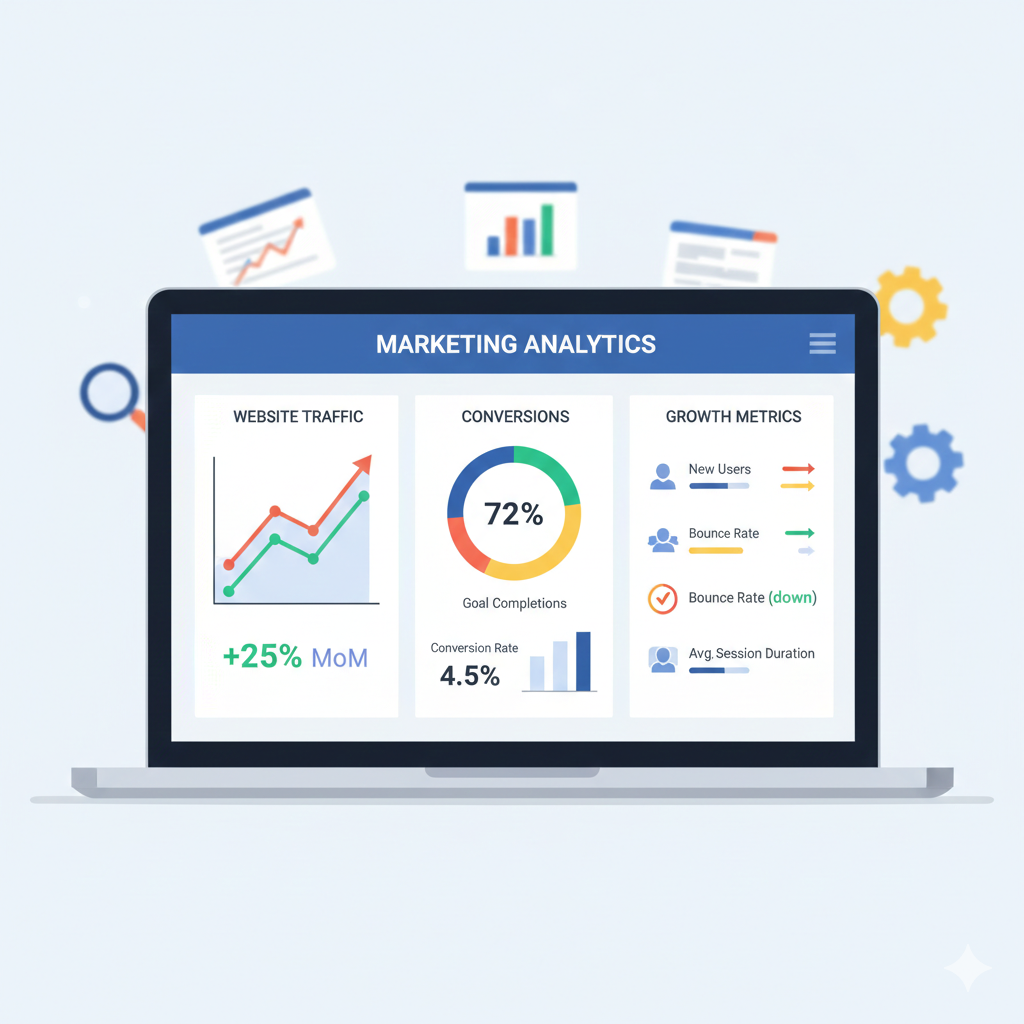
One of the biggest reasons small businesses fail to grow is not lack of effort, but lack of measurement. If you are not tracking results, you are guessing. And guessing is expensive in business.
A strong small business marketing plan always includes a system for tracking performance. This is what tells you what is working, what needs improvement, and where to invest more time or money.
Why Tracking Your Marketing Performance Matters
Tracking helps you:
- Understand which strategies bring results
- Avoid wasting money on ineffective campaigns
- Improve decision-making
- Scale what already works
Many business owners feel busy but do not see growth because they are not measuring anything. Once tracking becomes part of your routine, marketing becomes clearer and more predictable.
Key Performance Indicators (KPIs) to Track
KPIs are measurable values that show how well your marketing efforts are performing.
Some of the most important KPIs for small businesses include:
Website Traffic
This shows how many people are visiting your website and where they are coming from.
You should monitor:
- Total visitors
- Traffic sources (Google, social media, referrals)
- Most visited pages
You can track all of this easily using Google Analytics.
Leads and Conversions
Traffic alone does not pay bills. What matters is how many visitors take action.
Examples of conversions:
- Filling a contact form
- Subscribing to your email list
- Making a purchase
- Downloading a resource
Tracking conversions helps you understand whether your marketing is actually driving business growth.
Customer Acquisition Cost (CAC)
This tells you how much you spend to get one customer.
If you spend $100 on ads and get 5 customers, your CAC is $20. Knowing this helps you determine whether your marketing is profitable or not.
Return on Investment (ROI)
ROI shows whether your marketing is making or losing money.
It answers a simple question:
“Am I getting more value than what I am spending?”
This is one of the most important metrics in any marketing plan.
Tools to Track Marketing Performance
You do not need expensive software to track performance effectively.
Here are reliable tools small businesses can start with:
- Google Analytics – Tracks website traffic and behavior
- Google Search Console – Helps monitor SEO performance
- Meta Business Suite – Tracks Facebook and Instagram performance
- Email marketing tools like Mailchimp or Brevo
These tools provide enough data to make smart decisions without overwhelming you.
Using Data to Improve Your Marketing
Data is only useful if you act on it.
For example:
- If blog posts bring the most traffic, publish more content
- If social media drives engagement, increase posting frequency
- If ads are not converting, adjust targeting or pause them
This is how successful businesses grow steadily instead of guessing their way forward.
Many business owners start seeing real growth once they combine tracking with a structured plan like the one explained in this guide on small business growth strategies.
Why This Element Is Non-Negotiable
Without tracking:
- You cannot measure success
- You cannot improve performance
- You cannot scale confidently
With proper measurement:
- Decisions become clearer
- Growth becomes predictable
- Marketing becomes an investment, not an expense
This is what separates struggling businesses from those that grow consistently.
Common Marketing Plan Mistakes to Avoid
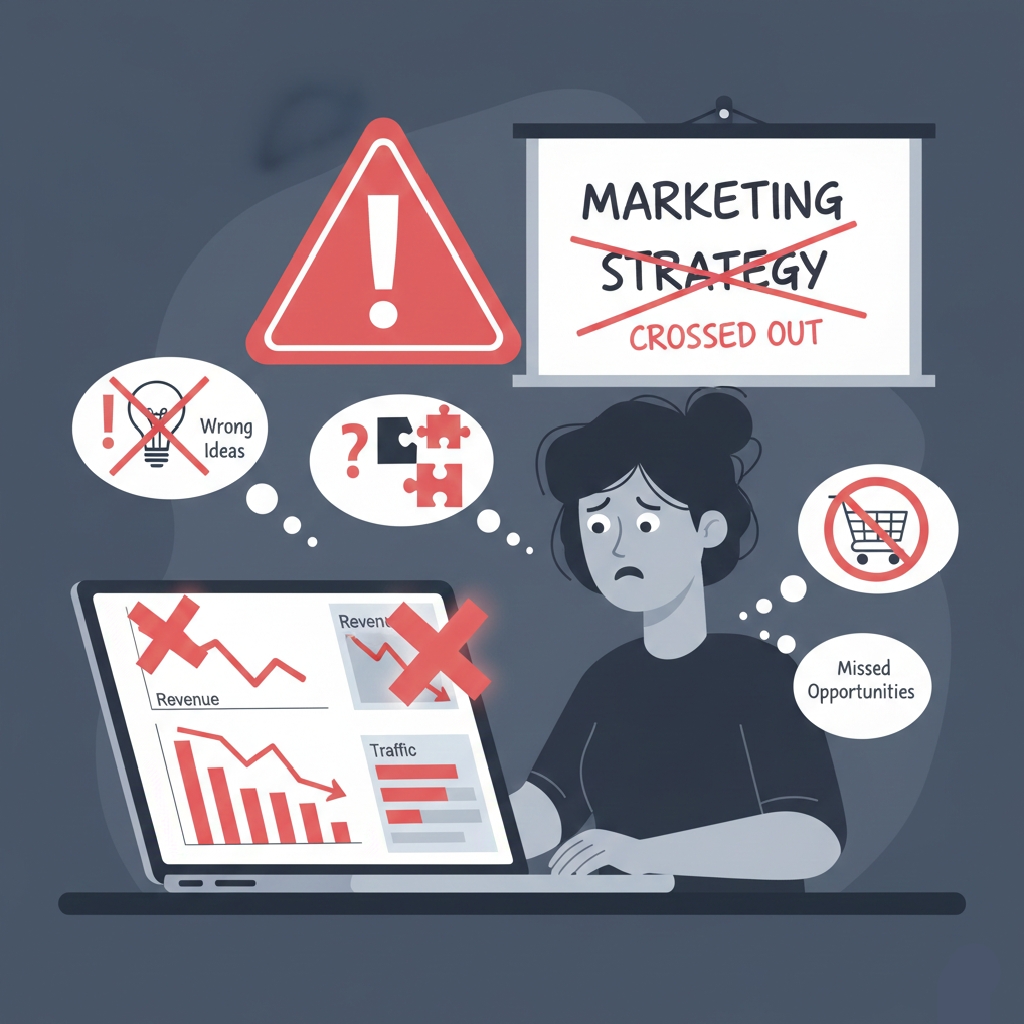
Even with the right tools and strategies, many small businesses still struggle because of avoidable mistakes. These errors often happen not because business owners are lazy, but because they lack clarity or follow trends without understanding them.
Avoiding these mistakes can save you money, time, and frustration.
1. Having No Clear Marketing Goals
One of the most common mistakes is running marketing activities without clear objectives.
Many small business owners say things like:
- “I just want more customers.”
- “I want my brand to be known.”
While these sound good, they are not measurable.
A strong small business marketing plan sets clear goals such as:
- Increase website traffic by 30 percent in three months
- Generate 50 leads per month
- Improve email open rate by 10 percent
Without defined goals, it becomes impossible to measure success or improve performance.
2. Trying to Market to Everyone
Trying to reach everyone usually means reaching no one.
When businesses fail to define their target audience, their message becomes weak and unfocused. This leads to:
- Low engagement
- Poor conversion rates
- Wasted advertising budget
For example, a business selling affordable services to startups should not market the same way as a luxury brand. Understanding your audience allows you to speak directly to their needs.
If you want to see how audience targeting affects business growth, this guide on small business growth strategies explains it in more depth.
3. Ignoring Data and Analytics
Many business owners rely only on intuition instead of data. This is risky.
Marketing decisions should be guided by:
- Website traffic trends
- Conversion rates
- Customer behavior
- Campaign performance
Ignoring analytics often leads to repeated mistakes. Tools like Google Analytics and Google Search Console provide free insights that help you understand what is working and what is not.
When you track results consistently, you stop guessing and start growing intentionally.
4. Copying Competitors Without Strategy
Looking at competitors is useful, but copying them blindly is not.
What works for another business may not work for you because:
- They have a different audience
- They operate in a different market
- Their budget may be higher
- Their brand positioning may be different
Instead of copying, analyze:
- What problem are they solving
- How they communicate
- What you can do better or differently
Your marketing plan should reflect your unique value, not someone else’s success.
5. Failing to Review and Update the Plan
A marketing plan is not something you write once and forget.
Markets change. Customer behavior changes. Platforms change.
A good practice is to review your marketing plan:
- Every 3 months for performance
- Every 6–12 months for strategy updates
Businesses that review and adjust regularly grow faster than those that stick to outdated plans.
Why Avoiding These Mistakes Matters
When you avoid these common errors:
- Your marketing becomes more effective
- You waste less money
- You make smarter decisions
- Your business grows with clarity
Many struggling businesses are not failing because they lack ideas, but because they lack structure and direction.
Frequently Asked Questions (FAQs)
1. What is a small business marketing plan?
A small business marketing plan is a clear document that outlines how a business will attract customers, promote its products or services, and grow sales over time. It explains who your target audience is, what marketing strategies you will use, how much you will spend, and how success will be measured.
Unlike random marketing efforts, a structured plan helps you stay focused and avoid wasting money on tactics that do not produce results. If you already have a business idea but lack direction, this guide on how to create a winning business plan explains how planning supports long-term growth.
2. How long should a small business marketing plan be?
There is no fixed length. A simple marketing plan can be 3 to 5 pages, while a detailed one may run 15 pages or more. What matters most is clarity, not length.
For most small businesses, a well-structured plan that explains goals, audience, strategies, budget, and tracking methods is enough to guide marketing decisions effectively.
3. How often should a marketing plan be updated?
A marketing plan should be reviewed at least every three to six months.
You should also update it when:
- Your business introduces a new product
- Customer behavior changes
- A marketing channel stops performing
- You increase or reduce your budget
Regular reviews help you stay flexible and competitive in a fast-changing market.
4. Can a small business grow without a marketing plan?
Yes, but growth is usually slow and inconsistent.
Businesses that grow without a plan often rely on luck or word-of-mouth. While this may work short-term, it becomes difficult to scale. A proper marketing plan gives structure, direction, and measurable progress.
If you are just starting, you may also find this guide on low-capital business ideas helpful for choosing the right path.
5. What is the most important part of a marketing plan?
The most important part is understanding your target audience.
When you know who you are selling to, everything else becomes easier:
- Your messaging becomes clearer
- Your ads perform better
- Your content attracts the right people
Without audience clarity, even the best marketing strategies fail.
Conclusion
A strong small business marketing plan is not about doing everything at once. It is about doing the right things consistently, with a clear purpose and direction. When your marketing is guided by clear objectives, a well-defined audience, smart strategies, and proper tracking, growth becomes predictable instead of accidental.
Throughout this guide, you have seen how each element of a marketing plan works together to support long-term business success. From setting realistic goals to choosing the right channels and measuring results, every step plays a role in building visibility, attracting customers, and increasing revenue. The businesses that grow steadily are usually not the loudest, but the most intentional.
If you are serious about building something sustainable, now is the time to put these elements into action. Start simple, refine as you go, and stay consistent. And if you want a deeper understanding of how planning connects with overall business success, this step-by-step guide on creating a business plan for startups explains how marketing fits into the bigger picture.
Growth does not happen by chance. It happens when strategy meets action. Start building your marketing plan today and give your business the structure it needs to grow confidently.
Good blog