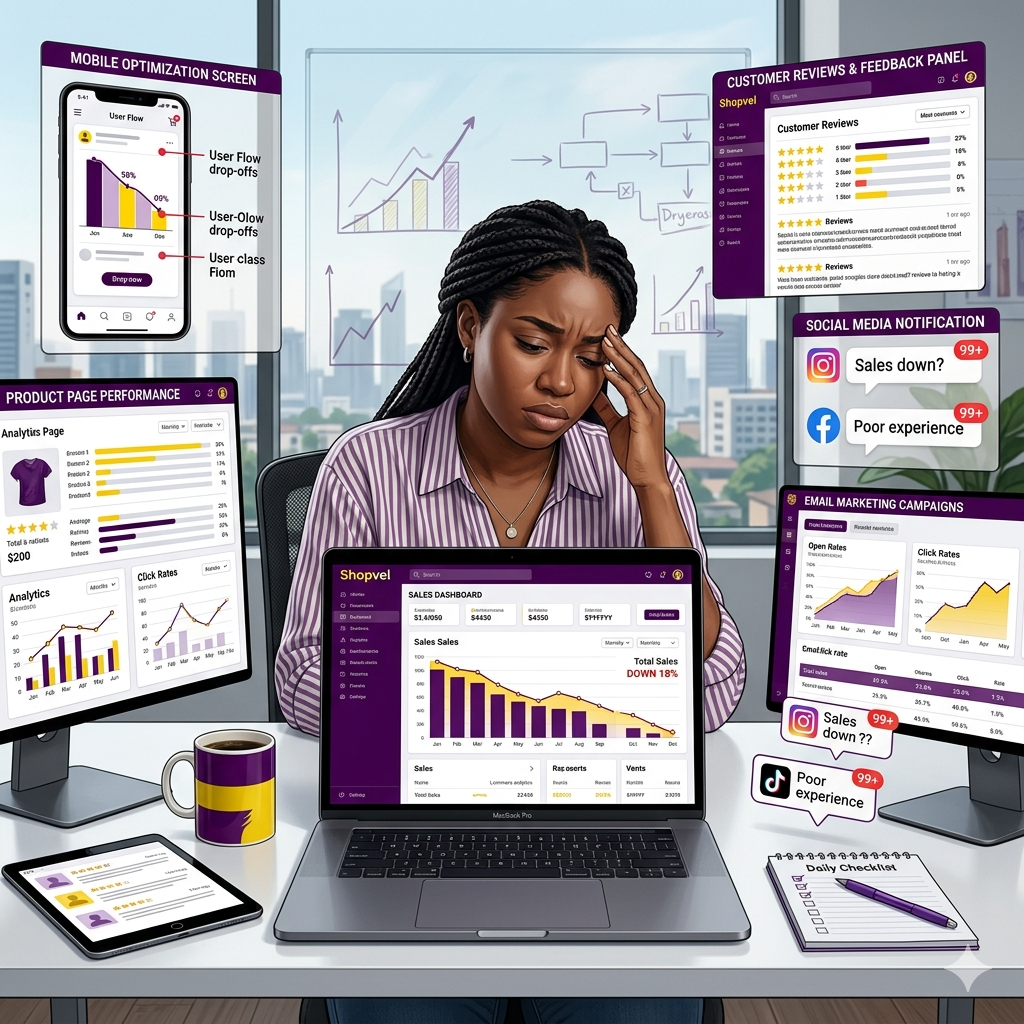

E-commerce mistakes are one of the biggest reasons many new online stores struggle to survive in 2026. Every day, thousands of people launch online stores with excitement, hoping to build profitable businesses, but most of them fail to generate consistent sales after the initial launch phase.
And honestly, after studying many struggling online stores, one thing becomes very clear: most failures are not caused by bad products alone.
In many cases, the real problems come from weak strategy, poor positioning, unrealistic expectations, and avoidable beginner mistakes that slowly damage growth before the business even gains momentum.
A lot of new store owners believe success in e-commerce is simply about:
- creating a website
- uploading products
- running ads
- waiting for customers
But e-commerce in 2026 is far more competitive than that.
Customers now have endless options online. They compare prices instantly, judge brands quickly, and expect smooth shopping experiences across every device.
This is why many stores fail even when they sell decent products.
Some focus too much on store design while ignoring marketing.
Others depend completely on paid ads without building long-term traffic systems.
Many ignore mobile optimization, customer trust, or proper product validation.
These may look like small issues individually, but together they create the exact reasons why online stores fail before they ever scale properly.
The good news is this: most of these mistakes can actually be fixed.
That’s why this guide goes deeper than generic advice. Instead of just listing problems, we’ll break down:
- The biggest common e-commerce mistakes
- why they happen
- how they affect growth
- practical ways to fix them
Because building a successful online store today is less about luck and more about understanding the systems that drive sustainable growth.
WHY E-COMMERCE IN 2026 IS MORE COMPETITIVE THAN EVER
One thing many new store owners underestimate is how much e-commerce has changed over the last few years.
Starting an online store today is easier than ever. Platforms like Shopify,WooCommerce, and TikTok Shop have made it possible for almost anyone to launch an online business within days.
But while accessibility has increased, competition has exploded as well.
This is one reason many people experience frustrating e-commerce mistakes early: they enter the market expecting easy sales without realizing how competitive online shopping has become in 2026.
Customers Have More Choices Than Ever
Years ago, simply having an online store already gave businesses an advantage.
Today, customers can compare hundreds of stores in minutes.
If your pricing, branding, trust signals, or customer experience feel weak, shoppers move on quickly because alternatives are everywhere.
This means online businesses can no longer rely on “just existing” online.
You now need:
- stronger branding
- better customer experience
- clearer positioning
- smarter marketing systems
to stand out effectively.
Mobile Shopping Is Dominating E-Commerce
One major shift shaping online shopping is mobile-first behavior.
A huge percentage of customers now browse and buy directly from smartphones.
And honestly, many beginner store owners still overlook this completely.
Slow-loading websites, cluttered mobile layouts, tiny buttons, and confusing checkout systems are quietly destroying conversions for many stores.
This is one of the most overlooked beginner e-commerce mistakes I keep seeing repeatedly.
If customers struggle to navigate your store on mobile, many simply leave before purchasing.
Customer Expectations Are Higher in 2026
Modern shoppers expect smooth experiences.
People now expect:
- fast-loading pages
- clear product descriptions
- simple checkout processes
- fast responses
- trustworthy branding
- easy return policies
Platforms like Amazon have influenced customer expectations heavily.
Even small stores are now indirectly compared to those large shopping experiences.
This means customer trust and convenience matter more than ever for how to grow an online store successfully today.
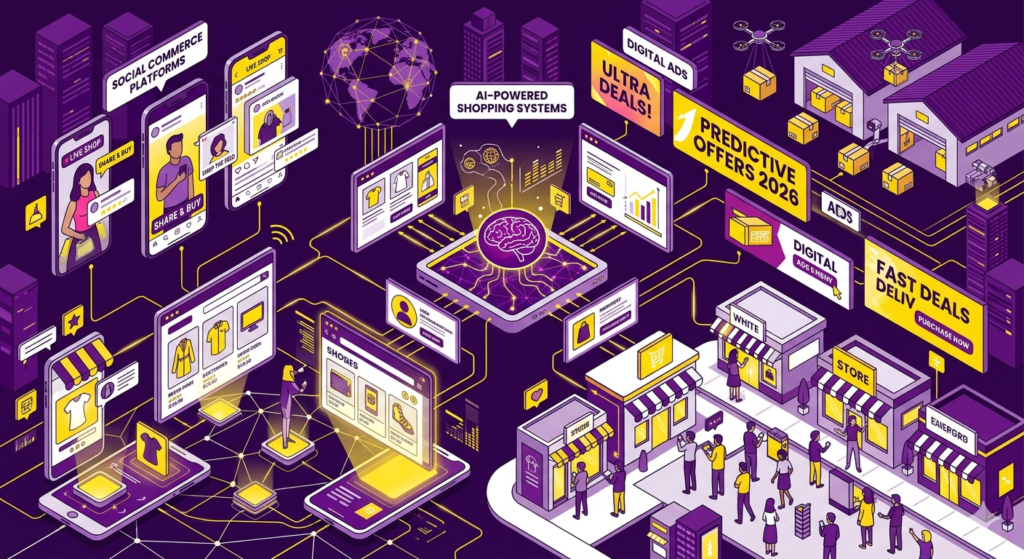
AI and Automation Are Changing Online Shopping
Artificial intelligence is also reshaping e-commerce rapidly.
Customers now encounter:
- AI-powered recommendations
- chatbot support systems
- personalized shopping experiences
- automated follow-up emails
- predictive product suggestions
At the same time, AI tools are making it easier for businesses to create content, ads, and product descriptions faster.
The result?
More stores are entering the market daily, increasing overall competition significantly.
This is why weak stores with poor systems struggle to survive long-term.
Paid Advertising Is Becoming More Expensive
A few years ago, many stores could rely heavily on cheap Facebook or Instagram ads to generate quick sales.
That environment has changed dramatically.
Advertising costs continue rising because more businesses are competing for the same audience attention.
This is why stores depending only on ads often struggle with profitability today.
Smart businesses are now combining:
- SEO
- content marketing
- email marketing
- community building
- social media growth
to reduce dependence on paid traffic alone.
If you want a deeper understanding of organic growth systems, revisit How to Market Your Small Business in 2026 Without Wasting a Kobo on Ads because the same principles apply strongly to e-commerce businesses too.
Strategy Matters More Than Ever
The biggest shift in 2026 is this:
Successful e-commerce businesses are no longer winning simply because they launched first.
They are winning because they understand:
- branding
- trust-building
- customer psychology
- conversion systems
- retention strategies
- long-term marketing
And honestly, this is encouraging for smaller businesses.
Because even without huge budgets, stores with strong systems and consistent execution can still grow successfully today.
MISTAKE 1: STARTING AN ONLINE STORE WITHOUT VALIDATING THE PRODUCT
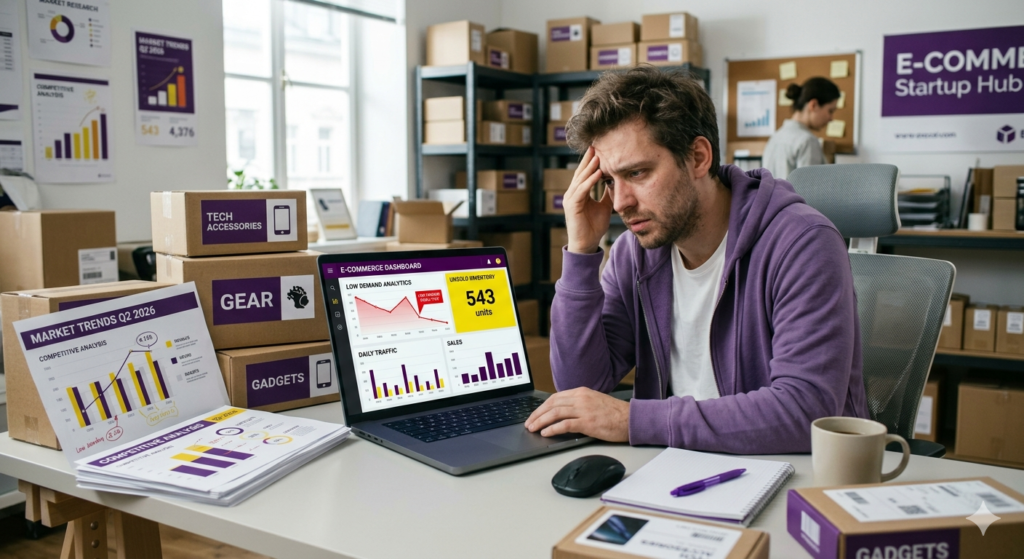
One of the biggest common e-commerce mistakes new store owners make is launching products nobody is truly interested in buying.
And honestly, this happens more often than most people realize.
A lot of beginners start an online store based purely on personal excitement instead of actual market demand.
They see a product online, assume it looks attractive, quickly build a store around it, then become frustrated when sales never come consistently.
But in most cases, the problem is not the website itself.
The problem is weak product validation.
A Good Product Idea Does Not Automatically Mean Market Demand
This is one of the hardest lessons many store owners eventually learn.
Just because a product looks interesting does not mean people are actively searching for it or willing to spend money on it.
Successful e-commerce businesses usually solve one or more of these:
- a clear problem
- convenience
- status or identity
- entertainment
- emotional desire
If the product does not connect strongly with real customer demand, marketing becomes much harder and more expensive.
This is one reason why online stores fail even when the store design looks professional.
Many Beginners Skip Market Research Completely
One thing I’ve observed repeatedly is that many new sellers rush into building a store before researching:
- customer interest
- competition
- pricing trends
- buying behavior
They invest in logos, themes, and ads before confirming whether enough people actually want the product.
That creates unnecessary risk.
Instead, product validation should happen before heavy investment.
Social Media Is One of the Best Validation Tools Today
Platforms like:
can reveal strong product trends very quickly.
For example, if products consistently generate:
- comments
- shares
- saves
- reviews
- repeat discussions
That often signals existing customer interest.
This doesn’t guarantee success, but it gives much stronger market clues than random guessing.
Use Search Data to Understand Demand
Another smart validation strategy is using search behavior.
Tools like:
help identify what people are already searching for online.
This matters because search behavior often reflects real buying intent.
If nobody is searching for products related to your niche, growth becomes much more difficult.
Validate Before Investing Heavily
One mistake many people make is buying large amounts of inventory immediately.
Smarter businesses usually test demand first using:
- small inventory batches
- pre-orders
- sample launches
- marketplace testing
- organic content marketing
This reduces risk significantly while helping businesses learn customer behavior early.
Customer Feedback Is Extremely Valuable Early On
Many new store owners become emotionally attached to products and ignore customer feedback completely.
But customer reactions are one of the best indicators of future success.
Pay attention to:
- repeated questions
- objections
- reviews
- comments
- engagement patterns
This feedback often reveals:
- What customers actually value
- What confuses buyers
- What improvements are needed
Businesses that adapt quickly usually survive longer.
Product Validation Saves Time and Money
One thing I’ve consistently noticed is that validated products make almost every part of e-commerce easier:
- Marketing becomes simpler
- Conversions improve faster
- Content ideas come naturally
- Customer interest increases organically
Without demand, businesses often end up forcing sales through expensive advertising with weak long-term results.
That’s why strong product validation is one of the smartest small e-commerce business strategies beginners can focus on before scaling aggressively.
MISTAKE 2: FOCUSING TOO MUCH ON STORE DESIGN INSTEAD OF SALES

One of the most common things new e-commerce store owners obsess over is design.
They spend weeks:
- changing themes
- adjusting fonts
- redesigning logos
- testing colors
- perfecting layouts
while completely ignoring the real thing that drives business growth: sales and customer acquisition.
And honestly, this is one of the most expensive beginner e-commerce mistakes because it creates the illusion of progress without actually generating revenue.
A beautiful store alone does not guarantee customers.
Many “Pretty Stores” Still Struggle to Make Sales
I’ve seen online stores with amazing designs fail completely.
At the same time, I’ve also seen simple-looking stores generate consistent revenue because they understood:
- customer psychology
- product positioning
- trust-building
- marketing systems
This is an important lesson many beginners eventually learn.
Customers care far more about:
- solving their problem
- trusting your business
- understanding the offer
- smooth shopping experience
than fancy animations or expensive themes.
Design Should Support Sales, Not Distract From It
Good design is important, but its purpose should be improving user experience and conversions, not showing creativity alone.
Some stores become so overloaded with:
- popups
- animations
- sliders
- flashy visuals
that the actual shopping experience becomes confusing.
A clean and simple store often performs better because customers can quickly understand:
- What the product is
- Why it matters
- How to buy it
Clarity usually converts better than complexity.
Product Positioning Matters More Than Fancy Branding
A major reason many stores struggle is weak product positioning.
They fail to communicate:
- Who the product is for
- What problem does it solve
- Why customers should care
- What makes it different
Without clear positioning, even strong products become harder to sell.
This is one reason many people experience frustrating e-commerce marketing mistakes despite investing heavily in visuals.
Marketing Is What Brings Attention
One thing many new store owners forget is this:
Customers cannot buy from a store they have never discovered.
You can build the most beautiful online store in the world, but without visibility and marketing, traffic stays low.
This is why successful e-commerce businesses usually focus heavily on:
- SEO
- content marketing
- social media growth
- email marketing
- influencer collaborations
- customer retention
instead of endlessly redesigning their homepage.
If you want to understand this deeper, revisit How to Market Your Small Business in 2026 Without Wasting a Kobo on Ads because strong marketing systems matter more than perfect design alone.
Customer Experience Matters More Than Visual Perfection
Customers mainly want a shopping experience that feels:
- easy
- trustworthy
- fast
- clear
This means your store should prioritize:
- simple navigation
- clear product pages
- fast loading speed
- mobile friendliness
- straightforward checkout
Those elements improve conversions far more than endless cosmetic changes.
Don’t Delay Launching Forever
Another mistake I see often is people delaying launches endlessly because the store “isn’t perfect yet.”
But honestly, real business growth usually starts after launch, not before it.
Once customers start interacting with your store, you gain valuable feedback that helps improve the business faster than endless preparation ever could.
Many successful online stores started very simply and improved gradually over time.
The Key Insight
Strong e-commerce businesses are built around:
- solving customer problems
- driving traffic
- building trust
- improving conversions
not just visual perfection.
A clean and professional store is enough. After that, your focus should shift toward systems that actually generate consistent sales and long-term growth.
MISTAKE 3: IGNORING MOBILE USERS AND PAGE SPEED

One of the most damaging e-commerce mistakes many new store owners still make in 2026 is building stores that perform poorly on mobile devices.
And honestly, this mistake quietly destroys conversions every single day.
A lot of beginners build their online store using a laptop and assume everything looks perfect.
But they forget something extremely important:
Most customers now browse and shop directly from smartphones.
This means your mobile experience is no longer optional. It is the main shopping experience for many users.
Mobile Shopping Is Now the Default for Many Customers
Over the past few years, mobile commerce has grown rapidly across almost every industry.
People now:
- Discover products on social media
- Click store links from Instagram or TikTok
- Compare prices on phones
- complete purchases directly from mobile devices
This is especially true for younger audiences and impulse purchases.
If your store feels frustrating on mobile, many visitors simply leave immediately.
This is one reason why online stores fail even when they are getting traffic.
Slow Websites Kill Sales Faster Than Most People Realize
One thing I’ve consistently observed is that customers are becoming less patient online.
If pages load slowly, people rarely wait long.
A delay of even a few seconds can reduce conversions significantly because users lose interest quickly or assume the store is unreliable.
Common causes of slow stores include:
- oversized images
- too many apps or plugins
- poor hosting
- unoptimized themes
- unnecessary animations
Many beginners unknowingly overload their stores with features that slow performance dramatically.
Poor Mobile Experience Creates Friction
Another major issue is bad mobile usability.
Some stores may technically work on mobile, but still create frustrating experiences because of:
- tiny text
- difficult navigation
- cluttered layouts
- buttons too close together
- confusing checkout forms
Customers should never struggle to understand how to shop on your website.
The easier your store feels to use, the higher your conversion potential usually becomes.
Simplicity Often Performs Better
One thing successful stores understand is that mobile optimization is mostly about simplicity.
Customers want to browse quickly and complete purchases with minimal effort.
This means your store should prioritize:
- clean product pages
- easy navigation
- clear CTAs
- fast checkout
- readable text
- optimized images
Simple user experiences usually outperform overly complex designs.
Google Also Cares About Mobile Experience
Mobile optimization does not only affect customers.
Search engines like Google also prioritize mobile-friendly websites in rankings.
That means poor mobile performance can hurt both:
- conversions
- organic traffic visibility
This is why mobile optimization is one of the most important small e-commerce business strategies for long-term growth.
Tools That Help Improve Speed and Mobile Performance
Several tools can help identify issues quickly:
These tools show:
- loading problems
- image optimization issues
- mobile usability concerns
- performance bottlenecks
Even small improvements in speed can positively impact conversions over time.
Mobile Optimization Is Part of Customer Trust
One thing many businesses overlook is that poor mobile experiences damage credibility.
If your website feels slow, broken, or confusing, customers may assume:
- The business is unreliable
- Payment systems are unsafe
- Customer support will also be poor
A smooth mobile experience helps build confidence and trust much faster.
The Key Insight
In 2026, mobile optimization is no longer a technical bonus feature.
It is a core part of sales, customer experience, SEO, and long-term e-commerce growth.
Stores that ignore mobile users are quietly losing customers every single day, often without realizing it.
MISTAKE 4: WRITING WEAK PRODUCT DESCRIPTIONS THAT DON’T SELL
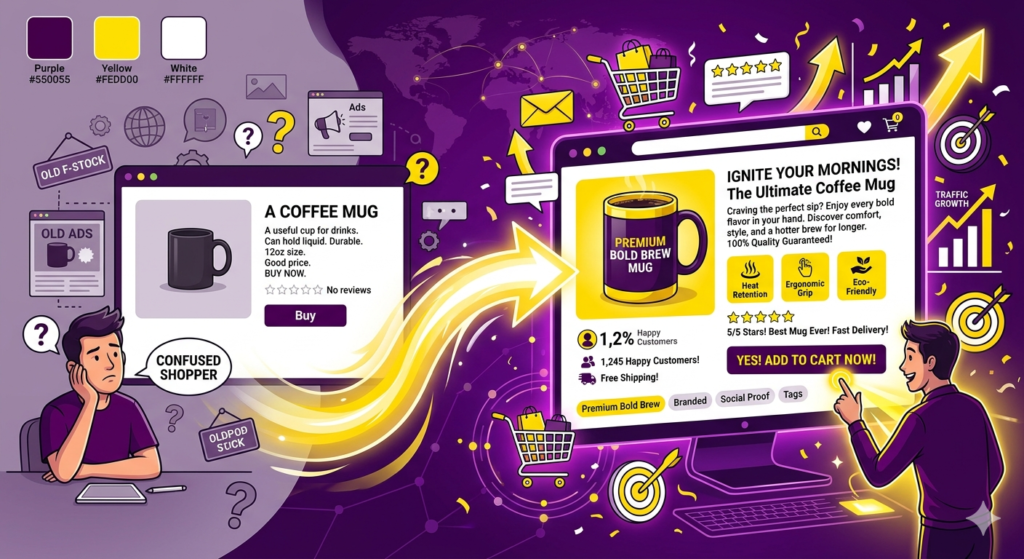
One of the most overlooked common e-commerce mistakes is treating product descriptions like simple technical information instead of sales tools.
And honestly, this mistake quietly hurts conversions for many online stores.
A lot of beginners copy generic descriptions directly from suppliers or write very basic details that fail to persuade customers emotionally.
The result?
Visitors see the product but feel no strong reason to buy it.
Features Alone Rarely Convince Customers
One thing I’ve noticed repeatedly is that many product pages focus only on features while ignoring customer benefits.
For example:
❌ “Water-resistant backpack with multiple compartments.”
That explains the product, but it does not create emotional desire or show real-life value clearly.
A stronger description would explain:
✅ How the backpack helps commuters stay organized
✅ How it protects valuables during travel
✅ Why does it make daily life easier
Customers usually care more about outcomes than specifications alone.
This is one reason weak descriptions contribute heavily to online store conversion tips that many businesses ignore.
Customers Buy Emotionally First
Successful product descriptions usually combine:
- emotion
- clarity
- trust
- benefits
- problem-solving
People often buy because they want to:
- save time
- feel confident
- look attractive
- reduce stress
- improve convenience
- solve frustrations
Strong descriptions connect the product to those emotional motivations naturally.
Generic Supplier Descriptions Hurt SEO and Trust
One major issue with copy-pasting supplier descriptions is that hundreds of other stores may be using the exact same text.
This creates two problems:
1. Poor SEO Performance
Search engines may struggle to rank duplicate content effectively.
2. Weak Brand Identity
Generic descriptions make stores feel unoriginal and less trustworthy.
This is one of the most damaging e-commerce marketing mistakes beginners make without realizing it.
Unique product descriptions help stores stand out better both for customers and search engines.
Good Descriptions Help Customers Imagine Ownership
One thing high-converting stores do well is help customers visualize using the product.
Instead of just listing information, they create scenarios.
For example:
Instead of saying:
“Comfortable office chair.”
A stronger description could say:
“Designed to support long work hours comfortably while reducing back strain during busy workdays.”
That wording helps customers imagine the product improving their daily experience.
Structure Matters More Than Many Realize
Large blocks of text can overwhelm shoppers.
Strong product pages usually make descriptions easy to scan using:
- short paragraphs
- bullet points
- bold highlights
- benefit-focused sections
This improves readability, especially for mobile users.
Remember, most shoppers skim before deciding whether to read deeper.
SEO Still Matters in Product Descriptions
Product descriptions also play an important role in organic traffic growth.
Naturally, including relevant keywords helps search engines understand your products better.
For example, if you sell fitness products, phrases like:
- adjustable dumbbells
- home workout equipment
- beginner fitness tools
can help attract targeted search traffic.
This supports long-term strategies for growing an online store beyond paid advertising alone.
Reviews and Social Proof Strengthen Descriptions
One smart strategy many successful stores use is blending customer feedback into product messaging.
For example:
- “Loved by remote workers for all-day comfort.”
- “Popular among busy parents for quick meal preparation.”
This creates additional trust while reinforcing benefits naturally.
Focus on Clarity Before Cleverness
Another mistake some businesses make is trying too hard to sound overly creative or complicated.
Clarity usually converts better.
Customers should quickly understand:
- What the product is
- Who it helps
- Why it matters
- How does it improve their situation
Simple and persuasive communication almost always performs better than confusing wording.
The Key Insight
Strong product descriptions are not just informational.
They are conversion tools that help customers:
- understand value
- feel an emotional connection
- Trust the product
- imagine ownership
- feel confident buying
Improving product descriptions may seem small, but it can create major improvements in sales and customer conversions over time.
MISTAKE 5: DEPENDING ONLY ON PAID ADS FOR TRAFFIC
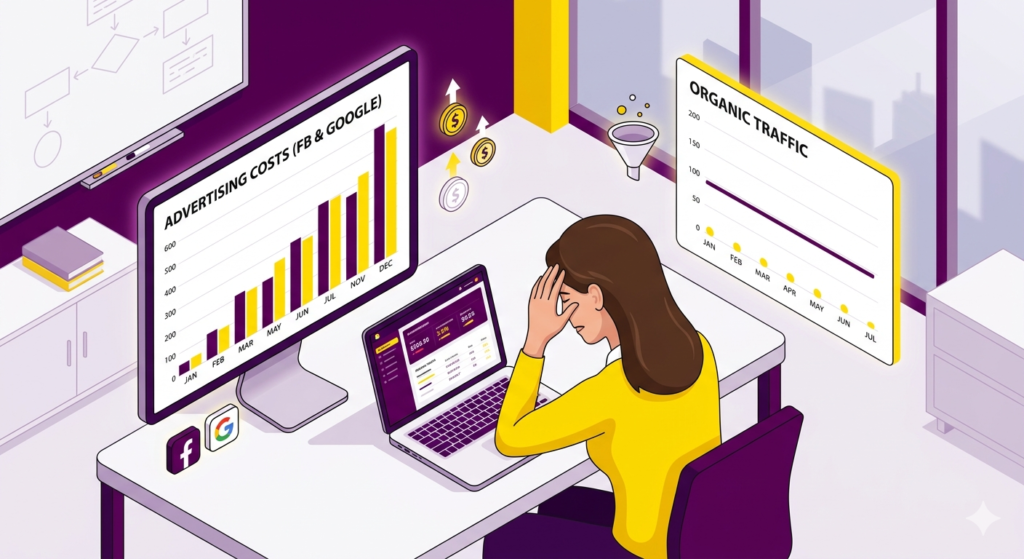
One of the biggest e-commerce marketing mistakes many new store owners make is relying completely on paid advertising to grow their business.
And honestly, this creates a dangerous situation very quickly.
Many beginners launch their store, run Facebook or TikTok ads immediately, and then expect instant profitability.
Sometimes they get a few early sales, which creates excitement.
But when ad costs increase or performance drops, the business starts struggling because there is no other reliable traffic source supporting the store.
This is one of the biggest reasons why online stores fail after the initial launch phase.
Paid Ads Can Work, But They Should Not Be Your Entire Strategy
Advertising is useful.
Platforms like:
can drive targeted traffic quickly.
But depending only on ads creates long-term instability because:
- Advertising costs fluctuate
- Algorithms change
- Competition increases
- Performance becomes unpredictable
If your store only survives when ads are running, growth becomes fragile.
Advertising Costs Are Rising Rapidly
One thing many new store owners underestimate is how competitive online advertising has become in 2026.
More businesses are competing for the same audience attention every day.
As competition increases:
- cost-per-click rises
- customer acquisition becomes more expensive
- profit margins shrink
This is why stores with weak profit systems often struggle to scale sustainably through ads alone.
Organic Traffic Creates More Stability
The strongest e-commerce businesses today usually combine paid and organic traffic together.
They build systems around:
- SEO
- content marketing
- social media growth
- Pinterest traffic
- email marketing
- community building
This creates multiple traffic sources instead of relying on one platform alone.
And honestly, this is one of the smartest small e-commerce business strategies for long-term survival.
SEO Helps Stores Generate Long-Term Traffic
Search engine optimization is one of the most powerful long-term traffic systems that many beginners ignore.
Optimized product pages, blog content, and educational articles can bring customers consistently from Google over time.
For example, many successful stores now create blog content around:
- product education
- buying guides
- comparisons
- tutorials
- problem-solving topics
This attracts people already searching for solutions online.
If you want to understand this strategy deeper, revisit How to Market Your Small Business in 2026 Without Wasting a Kobo on Ads because the same organic growth systems work strongly for e-commerce businesses, too.
Social Media Content Builds Brand Awareness
Another major mistake is using social media only for advertisements instead of relationship-building.
Platforms like:
can generate organic traffic through:
- educational content
- tutorials
- storytelling
- behind-the-scenes videos
- customer experiences
This type of content builds trust gradually while attracting new audiences organically.
Email Marketing Is One of the Most Underrated Traffic Assets
One thing smart e-commerce businesses understand is this:
You do not fully control social media platforms or ad platforms.
Algorithms can change anytime.
But your email list belongs to you.
This is why strong businesses consistently build email systems for:
- promotions
- abandoned cart recovery
- customer retention
- product launches
- repeat purchases
Email marketing often produces some of the highest ROI in e-commerce when used properly.
Content Compounds Over Time
Paid ads stop generating traffic when the budget stops.
But organic content can continue driving visitors for months or even years.
That’s one reason content-driven stores often build stronger long-term brand authority and customer trust.
Over time, this reduces dependence on constant advertising spending.
The Key Insight
Paid ads should support your growth strategy, not become your only growth strategy.
The stores surviving and scaling in 2026 are usually building multiple traffic systems together:
- SEO
- content marketing
- social media
- email marketing
- customer retention
because diversified traffic creates stronger and more predictable long-term growth.
MISTAKE 6: IGNORING TRUST SIGNALS THAT HELP CUSTOMERS BUY
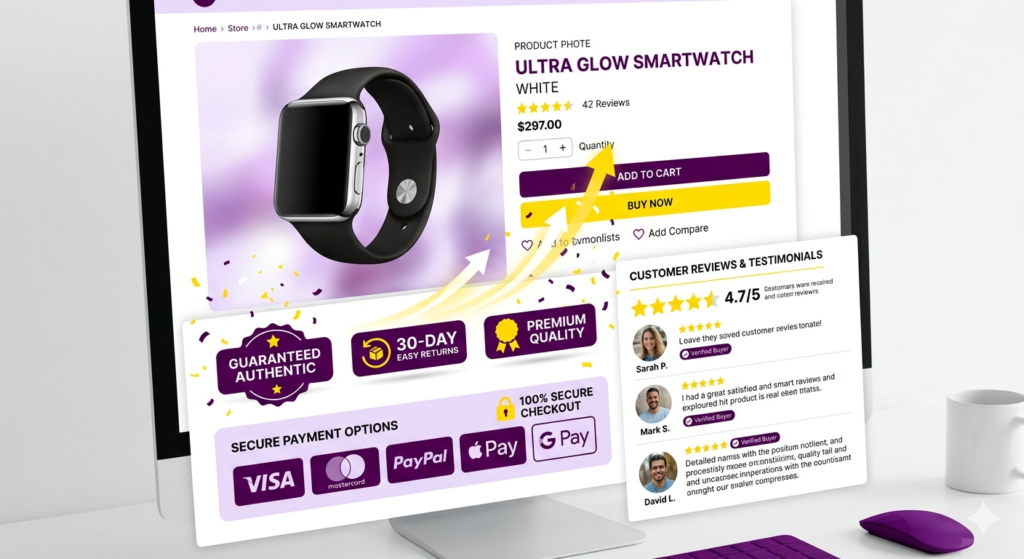
One of the most damaging e-commerce mistakes many new store owners make is underestimating how important trust is in online shopping.
And honestly, this is completely understandable.
When you own the business, you already trust your products because you know what happens behind the scenes.
But customers do not have that same confidence yet.
To them, your online store is just another website competing for attention among thousands of others.
This is why trust signals matter so much in e-commerce.
People Are Naturally Careful When Shopping Online
Modern customers are more skeptical than ever.
Before purchasing, many shoppers silently ask themselves:
- Is this store legitimate?
- Will I actually receive the product?
- What if there’s a problem?
- Can I trust this business with my money?
If your store does not answer those concerns clearly, hesitation increases and conversions drop.
This is one reason why online stores fail even when they attract decent traffic.
Traffic alone does not guarantee trust.
Missing Reviews Hurt Credibility
One of the strongest trust signals in e-commerce is customer reviews.
People trust other buyers more than business claims.
When shoppers see real reviews, testimonials, or customer photos, it reduces uncertainty significantly.
Even a few authentic reviews can improve buying confidence.
This is why many successful stores actively encourage customers to leave feedback after purchases.
Platforms like Judge.me and Trustpilot help businesses display reviews more professionally.
Clear Policies Build Confidence
Another major issue with many beginner stores is missing or unclear policies.
Customers want to know:
- shipping times
- refund conditions
- return process
- payment security
If this information is difficult to find, people often leave the store because uncertainty creates fear.
Simple, transparent policies help stores appear more professional and trustworthy.
Weak Branding Makes Stores Feel Risky
One thing I’ve observed repeatedly is that weak branding often creates trust problems unintentionally.
Stores with:
- inconsistent visuals
- poor product images
- unclear messaging
- generic layouts
can appear unreliable even when the business itself is legitimate.
Strong branding creates familiarity and professionalism, which directly influences customer confidence.
This is why branding is an important part of long-term e-commerce business tips and not just visual decoration.
Product Images Matter More Than Many Think
Since customers cannot physically touch products online, visuals become extremely important.
Low-quality images often reduce trust immediately.
Good product visuals should help customers clearly understand:
- the product’s appearance
- size and details
- usage context
- product quality
Lifestyle images also help customers imagine themselves using the product, which improves emotional connection and conversion rates.
Social Proof Influences Buying Decisions
Humans naturally follow signals from other people.
This is why social proof strongly affects online shopping behavior.
Examples include:
- customer testimonials
- user-generated content
- influencer mentions
- customer photos
- sales notifications
- social media engagement
These signals reassure customers that other people already trust the business.
And honestly, this can make a major difference for newer stores trying to establish credibility quickly.
Contact Information Increases Legitimacy
One surprisingly overlooked detail is visible contact information.
Many customers feel more confident when stores clearly display:
- email support
- WhatsApp contact
- business address
- social media presence
because it makes the business feel more real and accessible.
Trust Helps Conversion Rates Significantly
Many stores focus heavily on traffic generation but ignore trust optimization completely.
But even strong traffic struggles to convert when shoppers feel uncertain.
This is why improving trust signals is one of the most effective online store conversion tips beginners can apply immediately.
The Key Insight
In e-commerce, customers are not only buying products.
They are buying confidence, safety, convenience, and reassurance.
The stores that make customers feel secure usually convert better, retain customers longer, and build stronger long-term growth.
MISTAKE 7: POOR PRICING AND PROFIT MARGIN STRATEGY

One of the most dangerous beginner e-commerce mistakes is poor pricing.
And honestly, many new store owners don’t realize they have a pricing problem until the business starts struggling financially.
Some underprice products, hoping to attract customers quickly.
Others copy competitor pricing blindly without understanding their own costs.
The result?
Sales may come in, but profits remain weak or completely disappear.
And this is one of the hidden reasons many e-commerce businesses fail, even when orders start increasing.
More Sales Do Not Always Mean More Profit
A lot of beginners become excited when they start generating orders.
But revenue alone does not determine whether a business is healthy.
If pricing is too low, businesses may struggle to cover:
- advertising costs
- shipping fees
- packaging
- platform fees
- transaction charges
- taxes
- product sourcing
This creates a situation where the store appears busy but remains financially unstable.
That’s why understanding margins is a critical part of sustainable small e-commerce business strategies.
Underpricing Can Damage Brand Perception
Many beginners think lower prices automatically attract more buyers.
But extremely low pricing can sometimes reduce customer trust instead.
People often associate pricing with perceived quality.
If a product feels unusually cheap compared to competitors, customers may question:
- product quality
- legitimacy
- durability
- customer support
This is especially important in competitive niches where branding and trust heavily influence buying decisions.
Copying Competitor Pricing Is Risky
One major mistake I’ve observed repeatedly is businesses blindly copying competitors without understanding the full picture.
Competitors may have:
- different suppliers
- larger buying power
- lower operating costs
- stronger brand recognition
- existing customer loyalty
This means the same pricing strategy may not work for your store at all.
Pricing decisions should be based on your own business structure and goals.
Hidden Costs Destroy Many Stores
A lot of new sellers calculate pricing based only on product cost.
But e-commerce includes many hidden expenses that reduce profitability over time.
These may include:
- payment processing fees
- refunds and returns
- shipping damage
- app subscriptions
- marketing costs
- influencer promotions
- packaging materials
Ignoring these costs creates unrealistic pricing models that become difficult to sustain long-term.
Strong Pricing Supports Growth
Healthy profit margins allow businesses to:
- Reinvest in marketing
- Improve customer service
- Upgrade branding
- Test new products
- Scale operations safely
Without healthy margins, growth becomes stressful because every new expense creates pressure on the business.
Value-Based Pricing Often Works Better
One thing successful brands understand is this:
Customers do not always buy the cheapest option.
They often buy based on perceived value.
This is why businesses that improve:
- branding
- product presentation
- customer experience
- trust signals
can sometimes charge higher prices successfully.
People are willing to pay more when they feel confident in the overall experience.
Discounts Should Be Used Carefully
Another major e-commerce marketing mistake is overusing discounts constantly.
If customers always expect promotions, they may stop buying at normal prices completely.
Discounts work best when used strategically for:
- product launches
- seasonal campaigns
- email promotions
- limited-time offers
instead of becoming the store’s entire pricing strategy.
Track Profitability Regularly
One thing many store owners ignore is reviewing actual profitability consistently.
Successful businesses regularly monitor:
- profit margins
- average order value
- customer acquisition cost
- repeat purchase rates
because these numbers reveal whether growth is truly sustainable.
Tools like Google Sheets,QuickBooks, or Shopify Analytics can help simplify tracking.
The Key Insight
Pricing is not just about attracting customers.
It is about building a business that can survive, scale, and remain profitable long-term.
Smart pricing strategies balance:
- customer value
- competitiveness
- profitability
- sustainability
because healthy margins create the foundation for long-term e-commerce growth.
MISTAKE 8: FAILING TO BUILD AN EMAIL LIST FROM DAY ONE
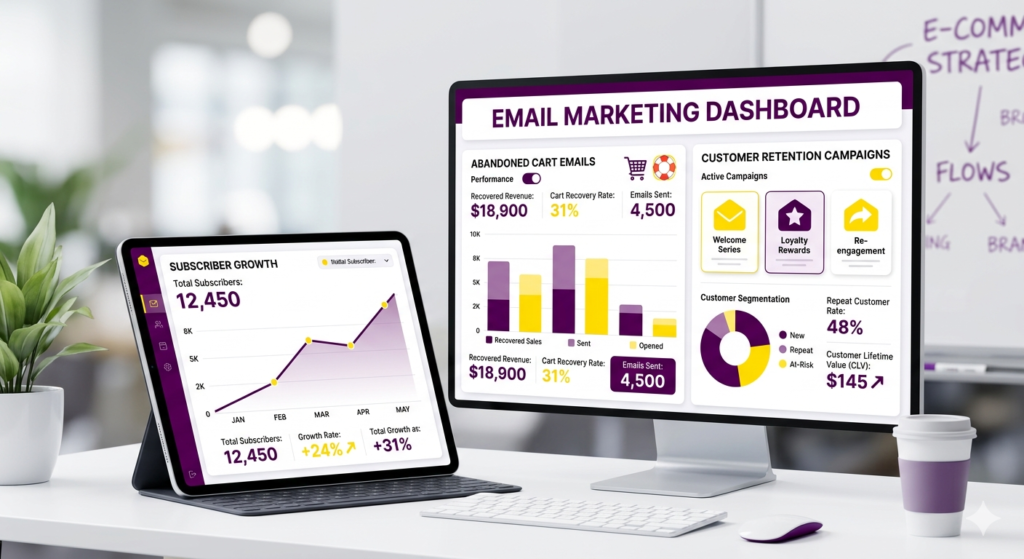
One of the most costly e-commerce mistakes many beginners make is ignoring email marketing early.
And honestly, this mistake quietly hurts long-term growth more than most people realize.
A lot of store owners focus only on getting traffic and making immediate sales.
They rely heavily on:
- Instagram followers
- TikTok views
- Facebook ads
- marketplace traffic
without building a system to keep communicating with potential customers afterward.
The problem is this:
Most visitors will not buy on their first visit.
If you do not capture their contact information, many of those potential customers disappear permanently.
Social Media Followers Are Not Fully Yours
One thing smart businesses understand is that social media platforms can change anytime.
Algorithms shift constantly.
Reach fluctuates.
Accounts can lose visibility unexpectedly.
But an email list is different.
Your email audience is one of the few digital assets you truly control directly.
This is why strong email systems are such an important part of sustainable small e-commerce business strategies.
Most Customers Need Multiple Touchpoints Before Buying
Many beginners assume customers buy immediately after seeing a product once.
But real buying behavior is usually more complex.
People often need time to:
- compare options
- build trust
- Research the product
- justify the purchase
This is why follow-up matters heavily in e-commerce.
Email marketing allows businesses to continue nurturing potential buyers even after they leave the website.
Email Marketing Improves Customer Retention
One major reason successful stores grow faster is repeat customers.
Acquiring new customers repeatedly through ads can become expensive.
But existing customers already trust your business more.
Email marketing helps encourage:
- repeat purchases
- product recommendations
- upsells
- seasonal promotions
- customer loyalty
And honestly, customer retention is one of the biggest hidden growth drivers in e-commerce.
Simple Email Capture Strategies Work
You do not need complicated systems to start building an email list.
Simple methods include:
- discount popups
- free guides
- early-access offers
- giveaways
- newsletter subscriptions
The goal is simply to encourage visitors to stay connected with your business.
Platforms like Mailchimp,Klaviyo, and ConvertKit make this much easier for beginners today.
Abandoned Cart Emails Recover Lost Sales
One thing many beginners underestimate is how many customers abandon carts before completing checkout.
Sometimes people get distracted.
Sometimes they need more time to decide.
Abandoned cart emails help remind customers about products they already showed interest in.
And honestly, these follow-ups can recover significant revenue over time.
This is one of the easiest online store conversion tips that many stores fail to implement properly.
Email Marketing Supports Long-Term Brand Growth
Unlike ads that stop working once spending stops, email marketing compounds over time.
As your list grows, you build a stronger direct relationship with your audience.
This creates opportunities for:
- launches
- promotions
- educational content
- product announcements
- customer engagement
without constantly paying for new traffic.
Valuable Emails Perform Better Than Constant Selling
One mistake many businesses make is sending only promotional emails.
But the strongest email strategies usually combine:
- educational content
- product value
- customer stories
- tips and tutorials
- occasional promotions
This keeps subscribers engaged instead of feeling constantly sold to.
Email Lists Increase Business Stability
One thing I’ve consistently observed is that businesses with strong email systems usually recover faster during traffic drops or advertising problems.
Because they already have an audience, they can reach them directly anytime.
This creates more predictable and stable long-term growth.
The Key Insight
Traffic is important, but relationships matter even more.
Building an email list from the beginning helps transform random visitors into long-term customers and loyal supporters.
And in modern e-commerce, that relationship-building advantage becomes more valuable every year.
MISTAKE 9: NOT TRACKING STORE DATA AND CUSTOMER BEHAVIOR
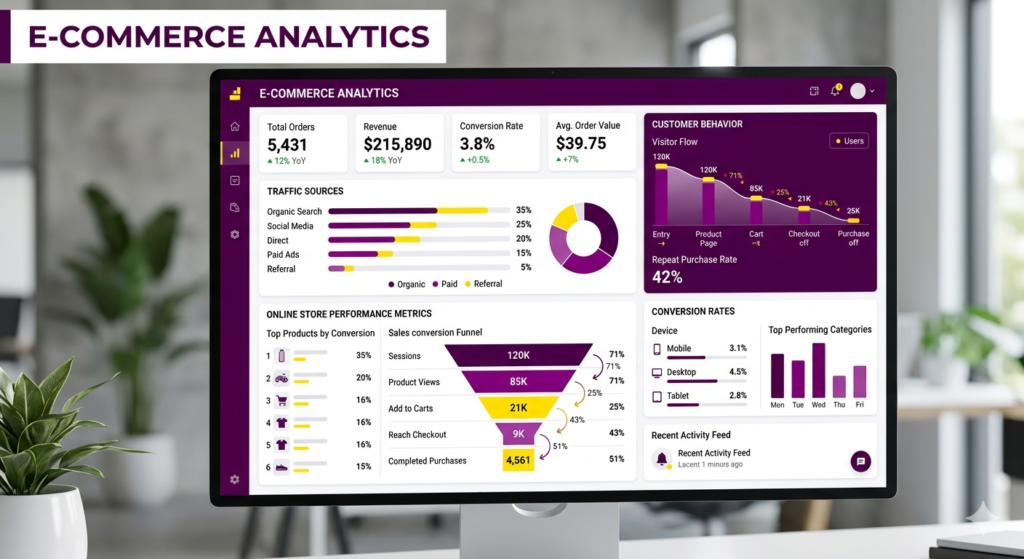
One of the most overlooked common e-commerce mistakes is running an online store without paying attention to data.
And honestly, many beginners make business decisions based purely on assumptions instead of actual customer behavior.
They launch products, run ads, change pricing, or redesign pages without really understanding:
- What customers are doing
- Where traffic is coming from
- Why visitors leave
- Which products perform best
This creates a situation where growth becomes unpredictable because decisions are being made blindly.
Data Helps You Understand What’s Actually Working
One thing successful e-commerce businesses do consistently is track performance closely.
Because numbers often reveal problems that emotions or assumptions cannot.
For example, analytics can show:
- Which products attract the most attention
- Where customers abandon checkout
- Which traffic sources convert best
- What content generates sales
- Which pages have poor engagement
Without this information, improving the business becomes much harder.
Many Stores Focus Only on Sales Numbers
A common beginner mistake is tracking only revenue while ignoring the deeper metrics affecting growth.
Sales matter, but they do not explain the full customer journey.
For example:
- Are visitors leaving too quickly?
- Are mobile users struggling with checkout?
- Are certain products getting traffic but not converting?
Understanding these behaviors helps identify hidden growth problems earlier.
Important Metrics Every Store Owner Should Monitor
You do not need to become a data expert immediately, but some numbers are extremely important for long-term growth.
Key Metrics Include:
- conversion rate
- traffic sources
- average order value
- cart abandonment rate
- customer acquisition cost
- repeat customer rate
- bounce rate
These metrics help reveal whether your store systems are improving or declining over time.
Conversion Rate Matters More Than Many Realize
One of the most important online store conversion tips is improving the percentage of visitors who actually buy.
For example:
- A store getting 1,000 visitors with a 1% conversion rate gets 10 customers
- Improving conversion to 2% doubles sales without increasing traffic
This is why conversion optimization often produces faster growth than simply chasing more traffic constantly.
Customer Behavior Reveals Hidden Problems
Analytics tools can help uncover customer frustrations you may not notice immediately.
For example, behavior tracking may reveal:
- users struggling on mobile
- confusing product pages
- checkout drop-offs
- slow-loading sections
Fixing these small leaks can improve overall store performance significantly.
Use Analytics Tools Early
Many beginners delay analytics setup because it feels technical or unnecessary.
But honestly, even basic tracking provides valuable insights.
Useful tools include:
These tools help businesses understand how people interact with their store in real time.
Data Helps You Spend Money Smarter
One thing many businesses struggle with is wasting money on ineffective marketing.
Tracking helps identify:
- profitable campaigns
- weak-performing traffic sources
- strong customer segments
- successful products
This allows businesses to invest more confidently into strategies already producing results.
Growth Becomes Easier When Decisions Are Data-Driven
Successful e-commerce businesses rarely rely on guesswork alone.
They test, observe, analyze, and improve continuously.
Over time, this creates smarter decision-making and more stable growth systems.
This is one reason data-driven stores usually outperform businesses operating emotionally or randomly.
The Key Insight
You cannot improve what you do not measure.
Tracking customer behavior and store performance helps businesses identify opportunities, fix weaknesses, and make smarter growth decisions over time.
And honestly, small improvements discovered through analytics can create massive long-term growth in e-commerce.
MISTAKE 10: EXPECTING FAST SUCCESS WITHOUT CONSISTENCY

One of the most common beginner e-commerce mistakes is expecting instant success immediately after launching a store.
And honestly, social media has made this expectation even worse.
People constantly see screenshots of massive sales days, viral products, and overnight success stories online.
What many beginners do not see is:
- the failed products
- months of testing
- marketing struggles
- low-conversion periods
- learning curves behind those results
This creates unrealistic expectations that cause many store owners to quit too early.
E-Commerce Growth Usually Takes Longer Than Expected
A lot of new sellers believe success should happen within a few weeks.
So when sales come slowly or inconsistently at first, frustration builds quickly.
But most successful online businesses needed time to improve:
- product positioning
- marketing strategy
- customer trust
- branding
- conversion systems
Growth is usually the result of repeated adjustments and learning, not instant perfection.
Many Stores Quit Before Momentum Builds
One thing I’ve repeatedly observed is that some businesses stop too early, right before systems begin improving.
They may have already started learning:
- What content works
- Which products attract attention
- How customers behave
- where conversions improve
but because expectations were unrealistic, they abandoned the process prematurely.
This is one reason why online stores fail despite having potential.
Consistency Builds Brand Recognition
Customers rarely trust unknown brands immediately.
Repeated exposure matters heavily in e-commerce.
When people consistently see your:
- products
- content
- customer reviews
- social media presence
- email campaigns
Your brand slowly becomes more familiar and trustworthy.
That familiarity often increases conversions over time.
Comparing Your Beginning to Established Brands Is Dangerous
Another major mistake is comparing a new store to businesses that already spent years building systems and audiences.
Established brands often have:
- customer loyalty
- optimized marketing
- large email lists
- stronger social proof
- repeat buyers
New businesses are still building those foundations.
This is why patience matters during the early stages of growth.
Sustainable Growth Comes From Systems
Successful stores usually focus less on “quick wins” and more on building systems that improve gradually.
These systems include:
- SEO
- email marketing
- customer retention
- social media content
- product optimization
- conversion improvements
Over time, these systems compound together and create stronger results.
This is very similar to the concepts explained in Sales System for a Small Business: Stop Chasing Leads, Build a Predictable Machine in 2026 because sustainable growth usually comes from repeatable systems, not random effort.
Improvement Matters More Than Perfection
One thing many successful e-commerce businesses do well is continuous improvement.
Instead of expecting immediate perfection, they consistently refine:
- product pages
- offers
- customer experience
- marketing strategies
- traffic systems
Those small improvements often create major long-term growth over time.
The Key Insight
E-commerce success rarely happens overnight.
Most profitable stores are built through patience, testing, learning, and consistent execution over time.
The businesses that survive long enough to improve strategically are often the ones that eventually grow the strongest.
HOW SUCCESSFUL ONLINE STORES GROW DIFFERENTLY IN 2026

One thing that becomes very obvious after studying successful e-commerce brands is this:
The stores growing consistently in 2026 are operating very differently from the average beginner store.
They are no longer relying only on random products or short-term hype.
Instead, they are building systems focused on:
- customer relationships
- long-term trust
- community
- retention
- brand positioning
And honestly, this shift is one reason some businesses continue scaling while others struggle to survive.
Successful Stores Focus on Brand, Not Just Products
Many struggling stores treat products like temporary opportunities.
But strong e-commerce businesses focus heavily on building recognizable brands customers remember.
This includes:
- consistent messaging
- visual identity
- customer experience
- storytelling
- emotional connection
Because in highly competitive markets, branding often becomes the reason customers choose one store over another.
This is one of the most important small e-commerce business strategies in 2026.
Community-Driven Marketing Is Becoming More Powerful
One major shift happening in e-commerce is the rise of community-focused growth.
Instead of only chasing cold traffic constantly, successful brands are building loyal audiences around shared interests and values.
They use:
- social media communities
- user-generated content
- customer engagement
- educational content
- behind-the-scenes storytelling
to make customers feel connected to the brand itself.
And honestly, connected customers usually buy more often and recommend businesses more naturally.
Customer Retention Matters More Than Ever
A lot of beginner stores focus only on getting new customers repeatedly.
But successful businesses understand that keeping existing customers is often cheaper and more profitable than constantly acquiring new ones.
This is why strong stores prioritize:
- email marketing
- loyalty systems
- personalized follow-ups
- excellent customer support
- repeat purchase incentives
Retention creates more stable revenue and stronger long-term profitability.
Storytelling Builds Stronger Emotional Connection
One thing many successful online brands do extremely well is storytelling.
Instead of only posting product photos, they communicate:
- brand mission
- customer transformations
- product experiences
- founder stories
- lifestyle identity
This helps customers connect emotionally with the business.
And emotional connection is becoming increasingly important as online competition grows.
Multi-Channel Selling Reduces Risk
Another major difference is diversification.
Strong e-commerce brands rarely depend on only one traffic source or platform anymore.
Instead, they combine multiple channels such as:
- websites
- TikTok Shop
- email marketing
- marketplaces
This creates more stability because the business is not fully dependent on a single platform algorithm.
Content Is Becoming a Major Growth Asset
Many successful stores now behave partly like media brands.
They create content consistently to:
- educate customers
- increase visibility
- improve SEO
- build trust
- drive organic traffic
This is one reason businesses investing in blogs, short-form videos, and educational content are growing stronger in long-term authority online.
If you want deeper insight into organic marketing systems, revisit How to Market Your Small Business in 2026 Without Wasting a Kobo on Ads because these principles now play a huge role in e-commerce success, too.
Successful Stores Think Long-Term
One thing I’ve consistently noticed is that growing brands think differently about time.
They are not only asking:
“How can we get sales today?”
They are also asking:
- How do we build trust?
- How do we retain customers?
- How do we create repeat buyers?
- How do we stay relevant long-term?
That long-term thinking creates more sustainable growth systems.
The Key Insight
The stores winning in 2026 are not just selling products.
They are building brands, communities, customer relationships, and long-term systems around their business.
And honestly, that approach creates far stronger growth than chasing quick wins alone.
A SIMPLE E-COMMERCE GROWTH CHECKLIST FOR BEGINNERS
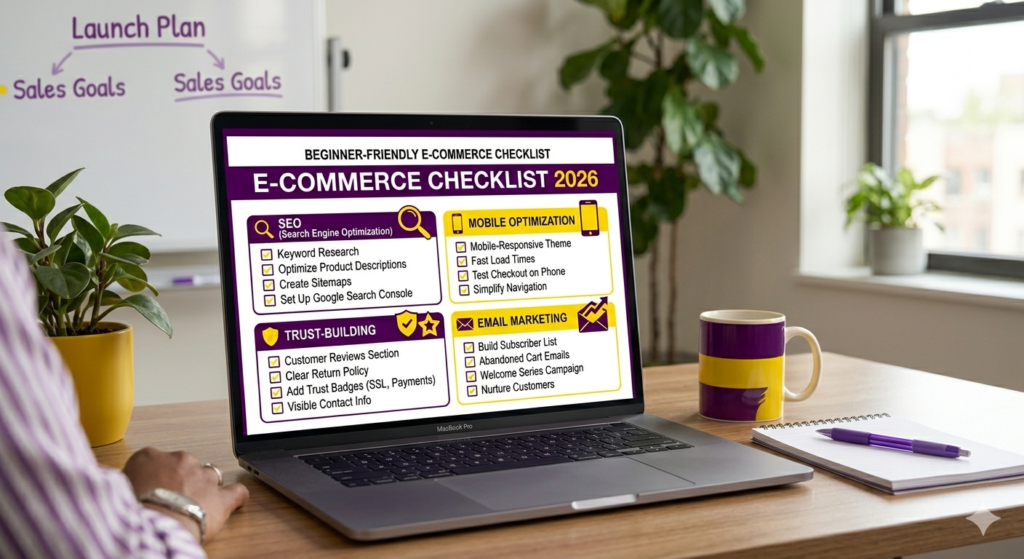
After understanding these major e-commerce mistakes, the next step is knowing what to focus on practically.
And honestly, this is where many beginners become overwhelmed.
There are so many tools, strategies, and opinions online that new store owners often end up confused about what actually matters most.
But the truth is, sustainable e-commerce growth usually comes from getting the fundamentals right consistently.
You do not need to perfect everything immediately.
You simply need strong foundational systems that improve over time.
Here’s a simple checklist to help guide your growth more strategically.
1. Validate Product Demand Before Scaling
Before investing heavily in inventory or ads, confirm that people actually want the product.
Research:
- customer interest
- competitor demand
- social media engagement
- keyword searches
- product trends
This reduces the risk of building a store around weak demand.
2. Make Sure Your Store Is Mobile-Friendly
Test your store regularly on smartphones.
Check for:
- loading speed
- navigation clarity
- mobile responsiveness
- checkout simplicity
- readable product pages
Since mobile shopping dominates e-commerce today, user experience matters heavily for conversions.
3. Focus on Clear Product Positioning
Customers should quickly understand:
- What the product is
- Who it is it for
- What problem does it solve
- Why it matters
Strong positioning improves both marketing and conversions significantly.
4. Improve Product Descriptions and Visuals
Use product pages that clearly communicate value.
Include:
- benefit-focused descriptions
- quality product images
- FAQs
- trust-building details
- customer-focused language
Good product pages act like silent salespeople for your store.
5. Build Organic Traffic Systems Early
Do not rely only on paid advertising.
Start developing:
- SEO content
- Pinterest traffic
- Instagram growth
- TikTok content
- email marketing systems
Organic traffic creates stronger long-term stability.
If you need help building sustainable marketing systems, revisit How to Market Your Small Business in 2026 Without Wasting a Kobo on Ads because these strategies apply strongly to e-commerce growth, too.
6. Add Trust Signals Across Your Store
Improve customer confidence using:
- reviews
- testimonials
- clear policies
- secure payment systems
- visible contact information
Trust directly influences buying decisions online.
7. Build an Email List From the Beginning
Capture visitor emails early using:
- discounts
- lead magnets
- newsletters
- product updates
This helps turn visitors into repeat customers over time.
8. Track Important Store Metrics
Monitor key data consistently, such as:
- conversion rate
- traffic sources
- abandoned carts
- repeat customers
- best-performing products
Data helps businesses improve smarter and faster.
9. Focus on Customer Experience
Successful stores make shopping feel:
- simple
- trustworthy
- fast
- convenient
Small improvements in customer experience often increase conversions significantly.
10. Stay Consistent and Improve Gradually
Most successful stores were not perfect at launch.
Growth usually comes from:
- testing
- learning
- optimizing
- staying consistent
over time.
This mindset helps businesses survive the difficult early stages where many competitors quit.
Final Checklist Insight
Many stores fail because they focus too heavily on shortcuts while ignoring foundational systems.
But businesses that consistently improve:
- trust
- marketing
- conversions
- customer experience
- retention
usually creates much stronger long-term e-commerce growth.
FREQUENTLY ASKED QUESTIONS ABOUT E-COMMERCE MISTAKES
Why do most online stores fail?
Many online stores fail because of a combination of poor strategy, unrealistic expectations, and avoidable e-commerce mistakes.
Some common reasons include:
- weak product validation
- depending only on paid ads
- poor mobile experience
- lack of customer trust
- inconsistent marketing
- weak conversion systems
In many cases, the issue is not the product itself but the lack of sustainable business systems behind the store.
Successful stores usually focus on long-term growth strategies instead of chasing quick wins only.
What is the biggest e-commerce mistake beginners make?
One of the biggest beginner e-commerce mistakes is launching a store without understanding customer demand first.
Many new sellers focus heavily on logos, themes, or ads before validating whether enough people actually want the product.
Another major mistake is expecting fast success without building proper systems for:
- traffic generation
- trust-building
- email marketing
- customer retention
Long-term e-commerce growth usually comes from consistent optimization and learning over time.
How can I grow my online store faster?
If you want to improve how to grow an online store, focus on building strong fundamentals first.
Some of the most effective growth strategies include:
- improving product positioning
- optimizing mobile experience
- building organic traffic
- creating SEO content
- using email marketing
- increasing customer trust
- improving conversion rates
It also helps to build a predictable customer acquisition system instead of relying on random sales.
For example, understanding systems like the ones discussed in Sales System for a Small Business: Stop Chasing Leads, Build a Predictable Machine in 2026 can help e-commerce businesses create more consistent growth long-term.
Is paid advertising necessary for e-commerce success?
No. Paid ads can help accelerate traffic, but they are not the only growth strategy.
Many successful stores now combine paid traffic with:
- SEO
- Pinterest marketing
- TikTok content
- Instagram growth
- blogging
- email marketing
This creates more stable and diversified traffic sources.
Depending only on ads is actually one of the biggest e-commerce marketing mistakes many businesses make today because advertising costs continue rising.
Organic traffic systems usually become more valuable over time.
How important is SEO for e-commerce stores?
SEO is extremely important for long-term growth.
Optimized product pages, blog articles, and category pages can attract customers directly from Google without paying for every click.
SEO also helps stores build authority and generate more sustainable traffic over time.
This is one reason many successful e-commerce brands now invest heavily in educational content and blogging strategies.
How long does it take for a new online store to grow?
Growth timelines vary depending on:
- product demand
- competition
- marketing consistency
- traffic sources
- customer experience
- branding
Some stores gain traction quickly, while others need several months of testing and optimization before seeing strong results.
The key is staying consistent while improving systems gradually instead of expecting overnight success.
What traffic source is best for beginners?
There is no single perfect traffic source for every business.
But many beginners start successfully using combinations of:
- TikTok content
- Instagram Reels
- Pinterest marketing
- SEO blogging
- email marketing
because these methods can generate traffic organically without requiring huge advertising budgets immediately.
The strongest businesses usually diversify traffic instead of depending fully on one platform.
Do small e-commerce stores still have a chance in 2026?
Absolutely.
E-commerce is more competitive now, but small stores can still grow successfully by focusing on:
- niche positioning
- customer trust
- content marketing
- community-building
- better customer experience
Many customers today actually prefer buying from smaller brands that feel more authentic and personal compared to large corporations.
That creates strong opportunities for businesses willing to build long-term relationships with their audience.
FINAL THOUGHTS: SMALL FIXES CAN CREATE BIG E-COMMERCE GROWTH
Building a successful online store in 2026 is no longer just about launching products and hoping customers appear.
The stores growing consistently today are usually the ones fixing small problems early and building stronger systems over time.
And honestly, that should encourage new store owners.
Because many of the biggest e-commerce mistakes are completely fixable once you understand what is slowing growth down.
Sometimes the problem is not traffic.
Sometimes it is trust.
Sometimes it is weak product positioning.
Sometimes it is a poor mobile experience or inconsistent marketing.
Small improvements in these areas can create major long-term results when applied consistently.
One thing I’ve repeatedly observed is that successful e-commerce businesses are rarely built through perfection from day one.
They grow through:
- testing
- learning
- adapting
- improving customer experience
- building stronger marketing systems
over time.
This is why patience matters so much in e-commerce.
A lot of businesses fail not because success was impossible, but because they stopped improving too early.
If you focus on:
- validating demand
- building trust
- improving conversions
- creating organic traffic systems
- retaining customers
Your store already has a stronger foundation than many competitors entering the market blindly.
And honestly, one of the smartest things any new store owner can do is stop chasing shortcuts and start building systems that compound gradually.
Because long-term e-commerce growth usually comes from consistency, not hype.
If you want to continue improving your marketing and customer acquisition systems, also read:
- How to Market Your Small Business in 2026 Without Wasting a Kobo on Ads
- First 10 Customers in 30 Days: A Practical Guide for New Small Businesses
- Sales System for a Small Business: Stop Chasing Leads, Build a Predictable Machine in 2026
Because the businesses that survive long-term are usually the ones that keep learning, improving, and executing consistently.