
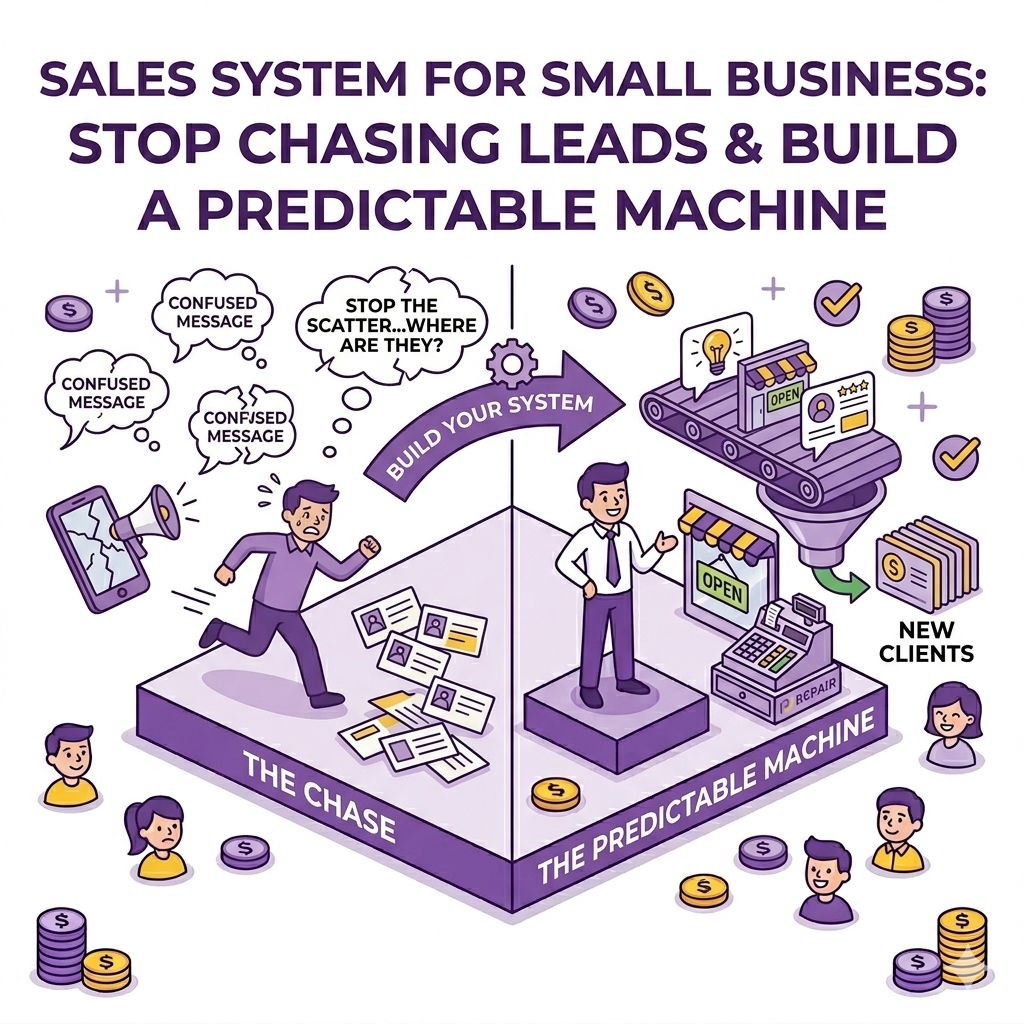
INTRODUCTION: WHY CHASING LEADS IS KILLING YOUR BUSINESS GROWTH

If you’ve ever felt like you’re constantly chasing customers but still not making consistent sales, you’re not alone. One week you get inquiries, the next week everything goes silent. You post, you promote, you hustle, but the results are unpredictable.
This is exactly what happens when you don’t have a sales system for a small business.
Most small business owners are stuck in what I call the hustle trap, always looking for the next customer instead of building a system that brings customers consistently. You rely on referrals today, social media tomorrow, maybe a promotion next week, but nothing is structured.
I’ve seen this pattern repeatedly while working with entrepreneurs. They are working hard, but because there is no system, their income is unstable. And over time, this becomes exhausting.
Here’s the truth:
👉 Chasing leads is not a strategy. It’s a temporary survival tactic.
What your business really needs is a simple, repeatable sales system that attracts, nurtures, and converts customers without you starting from zero every time.
In this guide, I will walk you step-by-step through how to build a sales system that works for your business. You’ll learn how to create a small business sales process that generates leads, builds trust, and helps convert leads into customers consistently.
Once you understand this, everything changes. You stop guessing, stop chasing, and start building a system that works for you every day.
WHAT A SALES SYSTEM REALLY MEANS FOR A SMALL BUSINESS
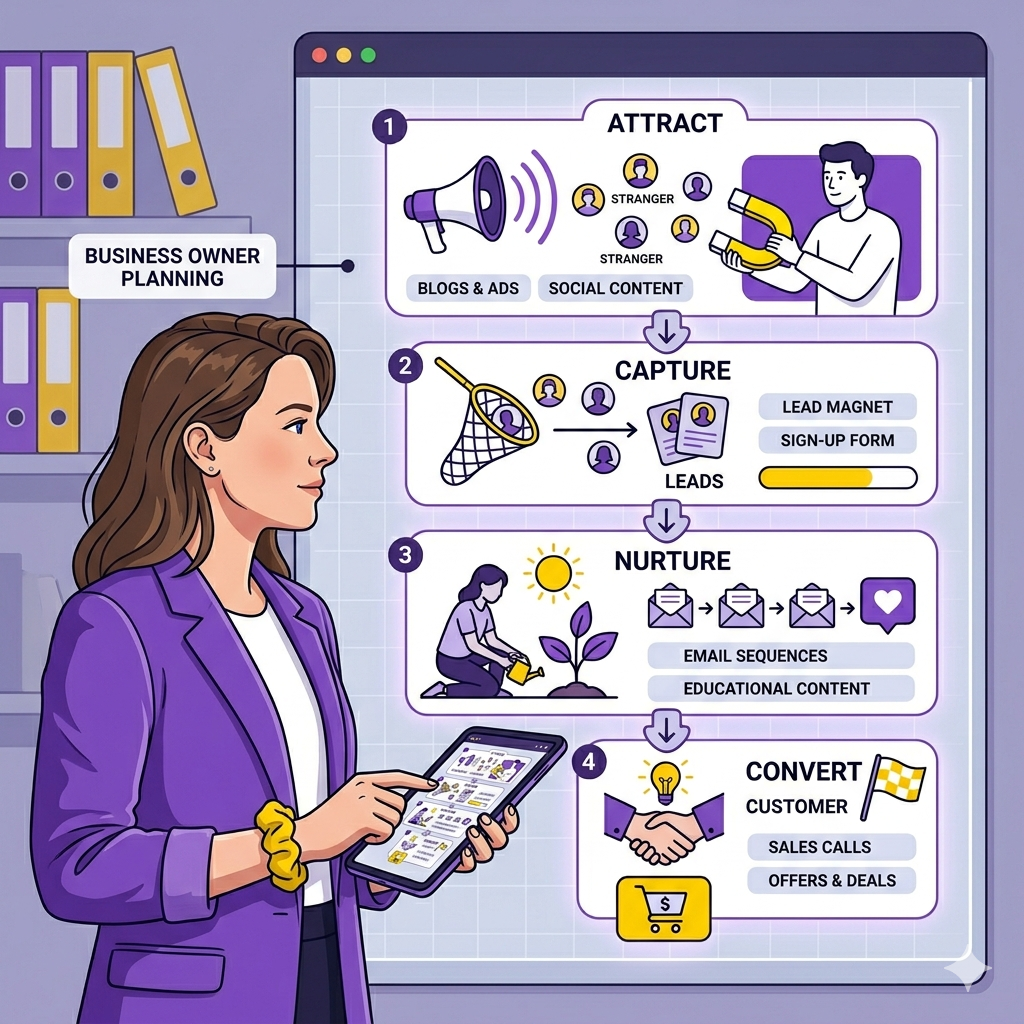
Before you can build one, you need to clearly understand what a sales system for a small business actually means.
In simple terms, a sales system is a repeatable process that takes a stranger and turns them into a paying customer. It is not luck, it is not random, and it is not based on how you feel that day. It is a structured flow that works consistently over time.
Random Selling vs Structured Selling
Most small business owners operate like this:
- Post today
- Wait for messages
- Reply randomly
- Hope the person buys
That is not a system. That is guesswork.
A real small business sales process is different. It follows clear steps:
- You attract the right people
- You capture their interest
- You build trust
- You guide them to buy
Every step is intentional. Nothing is left to chance.
Why Every Small Business Needs a Sales System
From my experience, the biggest difference between businesses that struggle and those that grow is this:
👉 Growing businesses have systems
👉 Struggling businesses rely on effort alone
I once worked with a service provider who was getting random clients through referrals. Some months were good, others were dry. When we introduced a simple sales funnel for small businesses, their approach changed completely.
Instead of waiting for referrals, they started:
- Creating content to attract leads
- Collecting contacts
- Following up consistently
Within a short time, their income became more predictable.
What a Sales System Helps You Achieve
When you build a proper system:
- You stop depending on luck
- You generate leads consistently
- You improve at converting leads into customers
- You create a predictable flow of income
If you’re still struggling with inconsistent growth, it’s often because the system is missing. I explained a similar pattern in why your small business is not making sales, where I broke down how the lack of structure affects results.
The Key Insight
A sales system is not complicated. It is simply a clear path your customer follows from discovering your business to buying from you.
Once that path is defined and repeated, your business becomes easier to manage, easier to grow, and far less stressful.
SIGNS YOU DON’T HAVE A SALES SYSTEM IN PLACE

Many small business owners think they have a sales strategy, but when you look closely, there is no real structure. It’s just an activity without direction.
If you’re not sure whether you have a proper sales system for a small business, here are clear signs to look out for.
1. Your Income Is Inconsistent
One of the biggest red flags is unpredictable income.
- Some weeks, you make sales
- Other weeks, nothing happens
- You can’t explain why the results change
This is a classic sign that you don’t have a system; you’re relying on luck or random effort.
A proper small business sales process creates stability because you know where your next customers are coming from.
2. You Rely Only on Referrals
Referrals are great, but they should not be your only source of customers.
If your business depends only on people recommending you, then you don’t have control over your growth. When referrals slow down, your sales drop.
This is one of the most common issues I’ve seen, especially in service-based businesses.
3. You Don’t Have a Clear Path from Lead to Customer
Another major sign is confusion in your process.
- People ask about your product, but don’t buy
- Conversations start but don’t end in sales
- You don’t know what to say next
This means there is no clear system for converting leads into customers.
Instead of guiding the customer step by step, you leave the process open, and that leads to lost opportunities.
4. You Are Always Looking for New Customers
If you constantly feel like you need “more people” to make sales, that’s a problem.
It usually means:
- You are not nurturing existing leads
- You are not following up
- You are losing potential customers
This creates a cycle where you are always chasing instead of building a system that works over time.
5. You Don’t Track or Improve Your Process
Many small business owners don’t track what is working.
- You don’t know which content brings leads
- You don’t know why people don’t buy
- You don’t improve your process
Without tracking, growth becomes slow and unpredictable.
If this sounds familiar, you may also be making some of the mistakes I explained in 9 common mistakes that are slowing your small business growth.
The Key Insight
If your sales feel random, stressful, or inconsistent, it’s not because your business cannot grow.
It’s because you don’t have a system yet.
The good news is that once you recognize these signs, you are already one step closer to fixing the problem.
THE SIMPLE SALES SYSTEM EVERY SMALL BUSINESS NEEDS
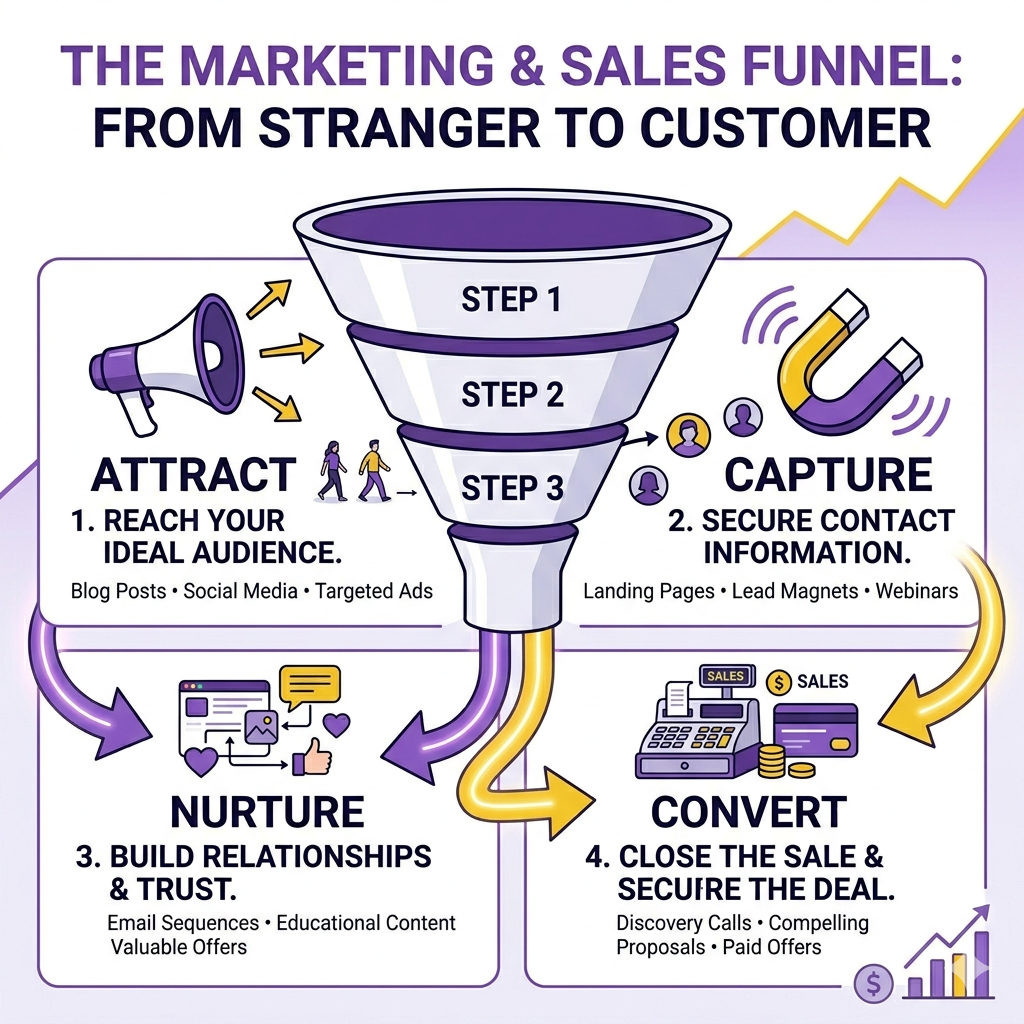
Now that you understand the problem, let’s simplify the solution.
Every effective sales system for a small business is built on one simple idea:
👉 Guide people step by step from discovering your business to becoming paying customers.
You don’t need anything complex. You just need a clear structure that works consistently.
From my experience working with small business owners, the most effective system can be broken into four simple stages:
1. ATTRACT (Lead Generation System)
This is where people discover your business.
Your goal here is to get attention from the right audience using a lead generation system.
This can include:
- Social media content
- Educational posts
- Videos
- Referrals
- Search visibility
If no one knows you exist, nothing else matters.
This is why I always emphasize building visibility. If you need help with this, revisit how to market your small business in 2026, where I explained how to attract customers without ads.
2. CAPTURE (Collecting Leads)
Getting attention is not enough. You need to capture that attention.
This means collecting contact details so you can follow up later.
Examples include:
- WhatsApp contacts
- Email lists
- Contact forms
- DMs
Many businesses skip this step, and that’s why they lose potential customers.
No capture = lost opportunity.
3. NURTURE (Building Trust)
Most people don’t buy immediately.
They need time to understand your offer, trust your brand, and feel confident. This is where nurturing comes in.
You nurture leads by:
- Sharing valuable content
- Answering questions
- Providing helpful information
- Showing proof and results
This stage is critical for improving the conversion of leads into customers.
4. CONVERT (Closing the Sale)
This is where you turn interest into payment.
At this stage, you need:
- A clear offer
- Simple pricing
- Strong call-to-action
- Confidence in your communication
A lot of businesses lose sales here because their offer is unclear or they don’t guide the customer properly.
How It All Works Together
Think of it like a flow:
👉 Attract → Capture → Nurture → Convert
If one part is missing, your system breaks.
For example:
- You attract but don’t capture → you lose leads
- You capture but don’t nurture → no trust
- You nurture but don’t convert → no sales
Everything must work together.
The Key Insight
A sales funnel for a small business is not complicated. It is simply this four-step process working consistently.
When you build this system, you stop chasing customers and start guiding them through a journey that naturally leads to sales.
STEP 1: BUILD A SIMPLE LEAD GENERATION SYSTEM

Every effective sales system for a small business starts with one thing: attention.
If people are not discovering your business, nothing else in your system will work. This is why building a strong lead generation system is the first and most important step.
From my experience, many small business owners struggle here not because they lack ideas, but because they overcomplicate the process or rely on one method only.
The goal is simple:
👉 Attract the right people consistently.
What a Lead Generation System Really Means
A lead generation system is how you consistently bring new people into your business.
These are people who:
- Are interested in what you offer
- Have a problem you can solve
- Are potential customers
Without this system, your business will always feel slow and unpredictable.
1. Use Content Marketing to Attract Attention
Content is one of the most powerful ways to generate leads without spending money.
You can create:
- Educational posts
- Problem-solving content
- Tips and guides
- Short videos
This positions you as someone who understands your audience and builds trust before selling.
If you want to go deeper into this, revisit how to market your small business in 2026, where I explained how to grow using organic strategies.
2. Leverage Social Media Platforms
Your audience is already on platforms like:
The key is not just to post, but to post consistently and strategically.
From what I’ve seen, businesses that show up regularly and engage with their audience generate more leads over time.
3. Use Referrals as a Growth Channel
Never underestimate referrals.
Satisfied customers can bring in new customers if you encourage it.
Simple ways to do this:
- Ask for referrals
- Offer small incentives
- Deliver excellent service that people want to talk about
Referrals can strengthen your lead generation system without additional cost.
4. Combine Multiple Lead Sources
One mistake many businesses make is relying on only one source of leads.
Instead, combine:
- Content
- Social media
- Referrals
- Direct outreach
This creates a more stable flow of potential customers.
If you’re building your business from scratch, you can also explore small business ideas for students with low capital to align your idea with demand from the beginning.
The Key Insight
Lead generation is not about doing everything. It is about doing the right things consistently.
When your lead generation system is working, you stop worrying about where your next customer will come from.
Instead, you start focusing on how to move those leads through your system and turn them into paying customers.
STEP 2: CAPTURE AND ORGANIZE YOUR LEADS PROPERLY
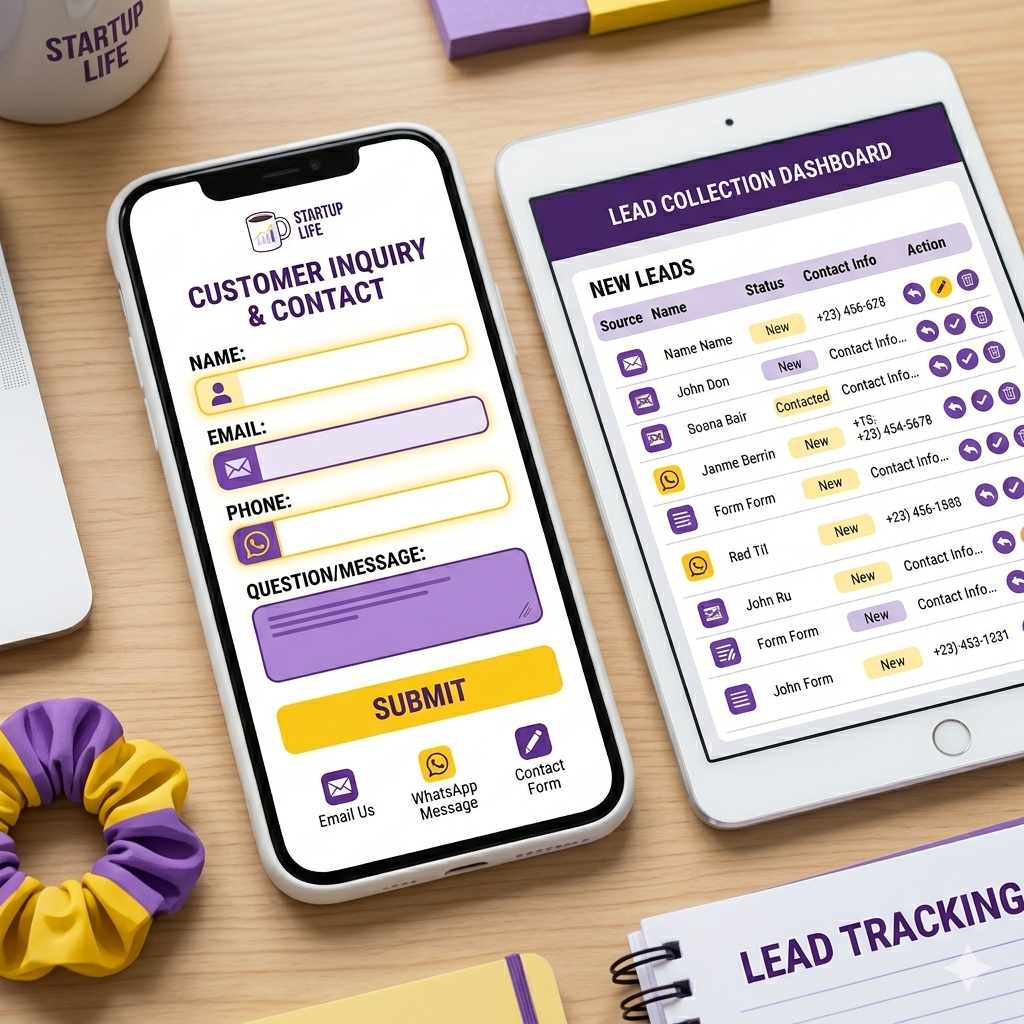
Getting attention is good, but if you don’t capture it, you lose it.
This is one of the biggest gaps I see in many businesses. They attract people through content or referrals, but they don’t have a system to collect and manage those leads.
If you’re serious about building a sales system for a small business, this step is non-negotiable.
The Real Problem: Wasted Opportunities
Let me show you what usually happens:
- Someone views your post
- They are interested
- They message you or check your page
- Then they disappear
Why?
Because there was no clear system to capture and follow up with them.
This is where many businesses lose potential customers, not because people are not interested, but because there is no structure to keep them engaged.
What It Means to Capture Leads
Capturing leads simply means collecting a way to contact and follow up with potential customers.
This can include:
- Phone numbers (WhatsApp)
- Email addresses
- Contact forms
- Direct messages
The goal is to move people from “just seeing your content” to being part of your system.
Simple Tools You Can Use
You don’t need complex software to get started.
Here are simple tools I recommend:
- Google Forms for collecting customer details
- WhatsApp for direct communication and follow-ups
- Email lists for long-term communication
These tools help you organize your leads instead of losing them.
If you’re already creating content and attracting people, tools like those mentioned in 11 essential tools that support small business growth in 2026 can help you manage your workflow better.
The Importance of Follow-Up
Capturing leads is only the first step. The real value comes from follow-up.
Most customers don’t buy immediately. They need reminders, clarity, and sometimes reassurance.
From experience, I’ve seen businesses increase their sales just by improving their follow-up process. A simple message like:
👉 “Hi, just checking if you’re still interested.”
can bring back lost opportunities.
This is a key part of improving the conversion of leads into customers.
How to Stay Organized
As your leads grow, you need structure:
- Keep a list of contacts
- Track conversations
- Note who is interested and who needs follow-up
This prevents confusion and helps you manage your small business sales process effectively.
The Key Insight
Attention without capture is wasted effort.
When you capture and organize your leads properly, you build a system that allows you to follow up, nurture relationships, and increase your chances of making sales.
STEP 3: NURTURE LEADS AND BUILD TRUST OVER TIME

Capturing leads is not the end of the process; it is just the beginning.
One of the biggest mistakes small business owners make is expecting people to buy immediately after the first interaction. In reality, most customers need time before making a decision.
This is why nurturing is a critical part of any sales system for a small business.
Why People Don’t Buy Immediately
From my experience, there are three main reasons:
- They are not fully convinced yet
- They are comparing options
- They are not ready financially
This is normal. It doesn’t mean they are not interested. It simply means they need more time and more information.
If you ignore them after the first contact, you lose them.
What It Means to Nurture Leads
Nurturing means building a relationship with your leads over time until they are ready to buy.
Instead of pushing for a sale immediately, you focus on:
- Providing value
- Answering questions
- Building trust
- Positioning yourself as the right choice
This is what improves your chances of converting leads into customers.
Simple Ways to Nurture Your Leads
You don’t need anything complicated. Start with these:
- Share helpful tips and insights regularly
- Send follow-up messages
- Answer common questions clearly
- Show proof, testimonials, and results
- Educate your audience about your offer
This is where many businesses start to see real improvement in their small business sales process.
Using Email and Messaging to Build Trust
If you are building an email list, this is where it becomes powerful.
You can send:
- Educational emails
- Updates about your products
- Helpful content
- Offers when the time is right
If you are using WhatsApp, the same principle applies. Keep communication helpful, not pushy.
Real Example
I once worked with a business that was getting leads but struggling to close sales. Their mistake was simple: they only contacted leads once.
We introduced a nurturing system:
- Follow-up messages
- Educational content
- Testimonials
Within a few weeks, conversion improved significantly.
Why? Because people felt more confident and informed before making a decision.
The Key Insight
People buy when they are ready, not when you are ready.
Your job is to stay present, provide value, and build trust until that moment comes.
When nurturing is done right, your system becomes more effective, and you stop losing potential customers along the way.
STEP 4: CONVERT LEADS INTO PAYING CUSTOMERS

At this stage, you’ve done the hard work.
You’ve attracted attention, captured leads, and nurtured them over time. Now comes the most important part, turning that interest into actual sales.
This is where many small businesses struggle, not because people are not interested, but because they don’t know how to guide them to take action.
If you want a complete sales system for a small business, you must master converting leads into customers.
The Real Problem: No Clear Direction
One thing I’ve noticed repeatedly is this: businesses assume customers will “figure it out.”
- No clear offer
- No clear next step
- No strong call-to-action
So the customer delays… and eventually loses interest.
Sales don’t happen by accident. They happen when you guide people clearly.
What Conversion Really Means
Conversion is simply moving a lead from:
👉 “I’m interested.”
to
👉 “I’m ready to buy.”
To do this effectively, you need three key elements:
1. A Clear and Simple Offer
Your offer must be easy to understand.
Customers should quickly know:
- What they are getting
- How it helps them
- Why is it valuable
Avoid overcomplicating things. Simplicity converts better.
2. A Strong Call-to-Action
Never leave your customer guessing what to do next.
Tell them clearly:
- “Send a message to order.”
- “Click the link to get started.”
- “Reply ‘YES’ to proceed.”
This small step makes a big difference in your small business sales process.
3. Handle Objections with Confidence
Most customers hesitate because of:
- Price concerns
- Doubts about quality
- Fear of making the wrong decision
Instead of avoiding these objections, address them directly:
- Explain the value clearly
- Provide proof (testimonials, results)
- Answer questions confidently
This builds trust and increases your chances of closing the sale.
Real Example
I worked with a service provider who had many interested leads but very low conversions.
The issue was simple: they never asked for the sale.
We introduced:
- Clear offer explanation
- Direct call-to-action
- Confident communication
Within a short time, their conversion rate improved.
Sometimes, the difference between low sales and consistent sales is simply asking the right way.
The Key Insight
People rarely buy without guidance.
When your process is clear, your offer is strong, and your communication is confident, converting leads becomes easier and more consistent.
This is how you turn interest into income and make your sales system for a small business actually work.
HOW TO AUTOMATE YOUR SALES SYSTEM (EVEN AS A BEGINNER)
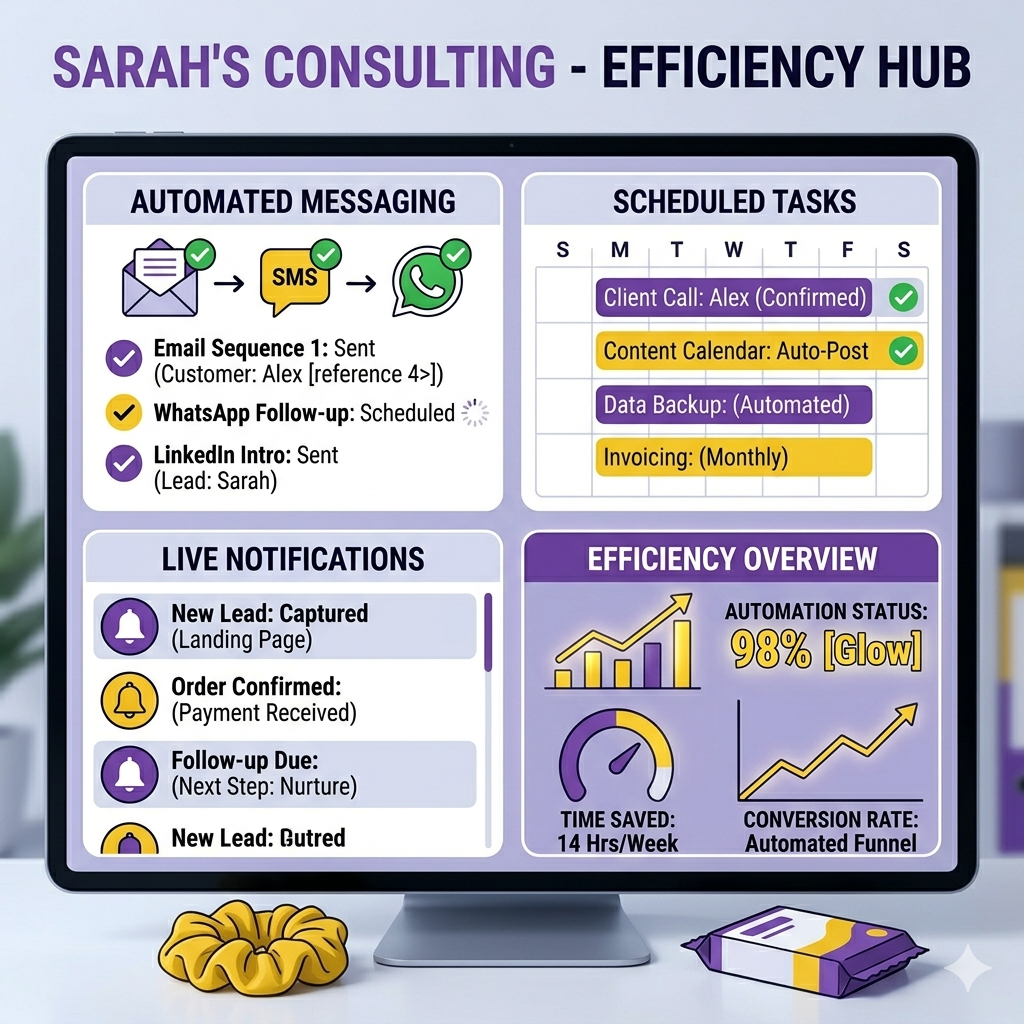
Once your process is working, the next step is making it easier to manage.
Automation does not mean removing the human touch. It means using simple tools to handle repetitive tasks so you can focus on growing your business.
If you want a scalable sales system for a small business, automation is what helps you move from manual effort to consistent execution.
Why Automation Matters
Without automation:
- You forgot to follow up
- You respond late to messages
- You lose track of leads
- Your system becomes inconsistent
With automation:
- Your follow-ups happen on time
- Your leads are organized
- Your communication becomes consistent
- You save time and energy
This is how you move closer to getting consistent sales without burning out.
Simple Automation You Can Start With
You don’t need expensive tools. Start simple.
1. Automated Lead Capture
Use tools like:
- Google Forms to collect customer details
- Landing pages or simple forms
This ensures every interested person is captured in your system.
2. Automated Responses
Set up quick replies on:
- WhatsApp Business
- Social media platforms
This helps you respond instantly even when you’re not online.
3. Follow-Up Reminders
If you’re not ready for advanced tools, start with:
- Phone reminders
- Notes
- Simple tracking sheets
Later, you can upgrade to tools that automate follow-ups for you.
4. Email Sequences
If you collect emails, you can send automated messages like:
- Welcome emails
- Educational content
- Offers
This keeps your audience engaged without manual effort every time.
Tools That Can Help
If you want to go further, the tools mentioned in the 11 essential tools that support small business growth in 2026 can help you automate parts of your business effectively.
The Balance: Automation + Human Touch
One mistake to avoid is over-automation.
People still want to feel heard and understood. Use automation for structure, but keep your communication real and personal.
The Key Insight
Automation is not about complexity; it is about consistency.
When your system runs smoothly even when you’re not fully active, your business becomes more stable and scalable.
That is how a strong sales system for a small business supports long-term growth.
COMMON SALES MISTAKES SMALL BUSINESS OWNERS MAKE
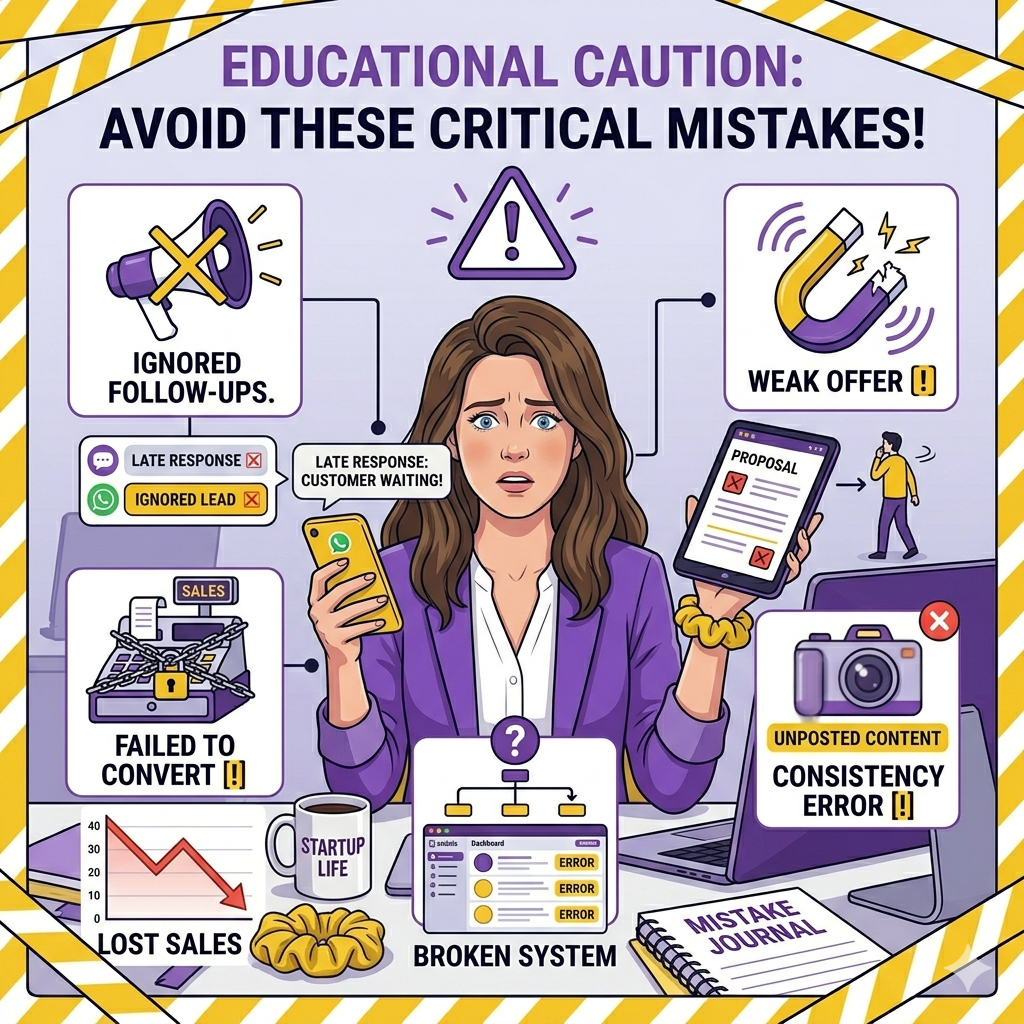
Even with a good product and effort, certain mistakes can break your entire sales system for a small business. I’ve seen many entrepreneurs struggle not because they lack potential, but because they keep repeating avoidable errors.
If you want to build a system that works, you must first eliminate what is not working.
1. Chasing Leads Instead of Building a System
This is the biggest mistake of all.
Many business owners jump from one strategy to another:
- Today, it’s posting
- Tomorrow it’s promotions
- Next week, it’s referrals
There is no structure.
This leads to burnout and inconsistent results. Instead of chasing leads, focus on building a simple sales strategy that works repeatedly.
2. No Follow-Up Process
Most sales don’t happen on the first interaction.
Yet many businesses:
- Reply once and stop
- Forgot to check back
- Lose interested customers
From my experience, improving follow-up alone can significantly increase sales. It is a key part of any effective small business sales process.
3. Weak or Confusing Offers
If your offer is unclear, customers hesitate.
They don’t understand:
- What they are getting
- Why it matters
- Why they should choose you
This leads to poor converting leads into customers because people are unsure.
If you need help strengthening your offer, revisit the 5 must-have elements in a small business marketing plan, where I explained how to position your offer properly.
4. Poor Messaging
Another major issue is how businesses communicate.
- Too generic
- Not focused on the customer
- No clear value
Your message should speak directly to your audience’s problem and show how you solve it.
5. Ignoring Data and Feedback
Many small business owners operate without checking results.
- You don’t know what content works
- You don’t know why people don’t buy
- You don’t improve your system
Using tools like Google Analytics can help you track performance and make better decisions.
The Key Insight
Mistakes slow down growth, even when effort is high.
When you remove these common errors, your system becomes clearer, your communication improves, and your sales process becomes more effective.
This is how you move from struggling to building a sales system for a small business that actually delivers results.
HOW TO GET CONSISTENT SALES WITHOUT RUNNING ADS
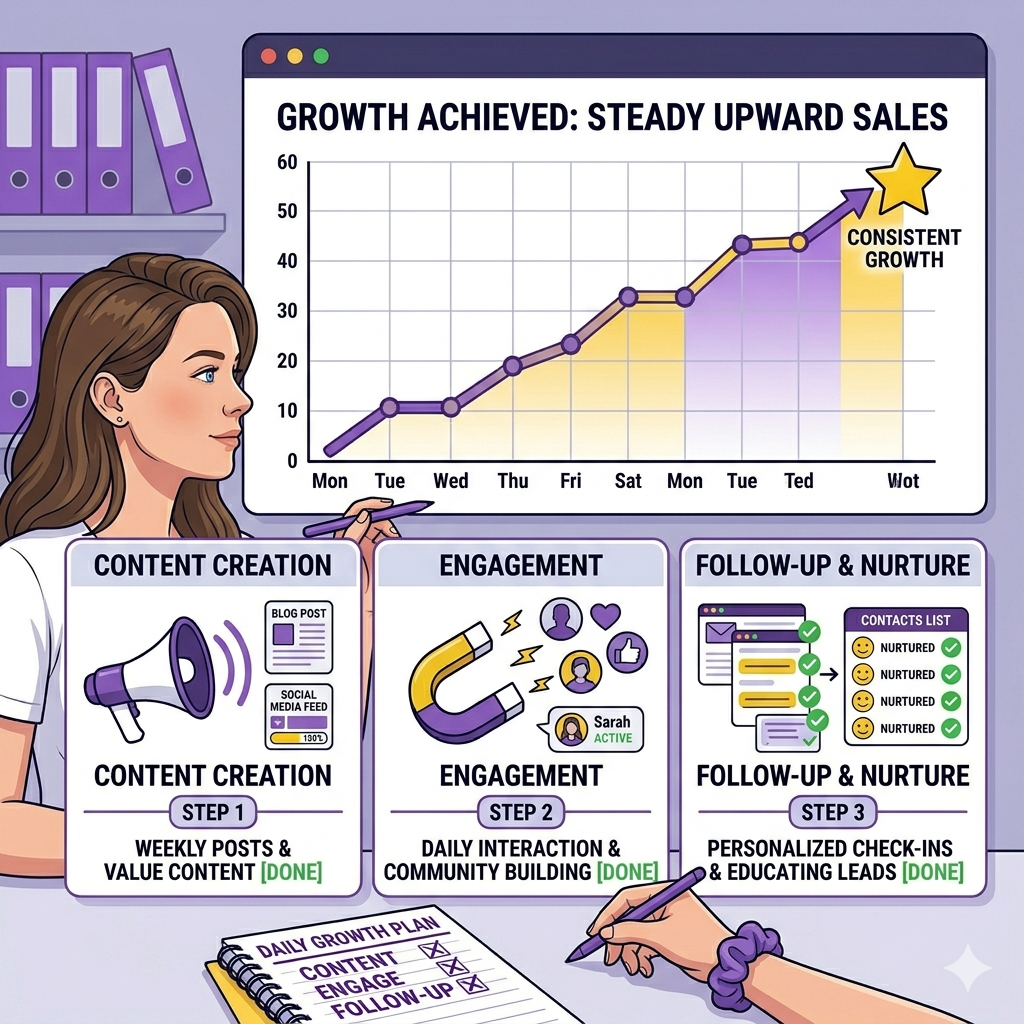
One of the biggest misconceptions in business today is that you need ads to make sales.
From my experience, that is not true. Many small businesses are generating results consistently without spending money on ads because they have built strong systems.
If your goal is to understand how to get consistent sales, then your focus should be on building repeatable actions, not chasing quick results.
Focus on Organic Systems That Work
Consistency comes from systems, not one-time efforts.
Instead of relying on ads, focus on:
- Content that attracts your target audience
- A clear small business sales process
- Regular engagement with potential customers
- Follow-up and relationship building
This is exactly what I explained in ” How to Market Your Small Business in 2026 where I broke down how organic marketing can drive growth without spending money.
Repeat What Works
One mistake I see often is this:
A business tries something that works once… then stops doing it.
Consistency is built by identifying what works and repeating it.
- If a type of content brings engagement, do more of it
- If a strategy brings inquiries, improve it
- If a message converts, use it consistently
This is how you turn effort into a simple sales strategy that produces results over time.
Daily Actions That Drive Sales
If you want consistent results, your daily actions must align with your goals.
Focus on:
- Posting valuable content regularly
- Engaging with your audience
- Following up with leads
- Improving your offer and messaging
These actions may look simple, but when done consistently, they build momentum.
Real Example
I worked with a small business owner who believed ads were the only way to grow. They had spent money but saw little return.
We shifted the focus to organic strategies:
- Consistent content
- Better engagement
- Stronger follow-up
Within a few weeks, they started getting steady inquiries without spending on ads.
The difference was not magic; it was structure and consistency.
The Key Insight
You don’t need ads to grow; you need a system that works consistently.
When your actions are repeatable, and your process is clear, you stop depending on luck and start building predictable results.
This is the foundation of how to get consistent sales in any small business.
REAL-LIFE EXAMPLE OF A SIMPLE SALES SYSTEM IN ACTION
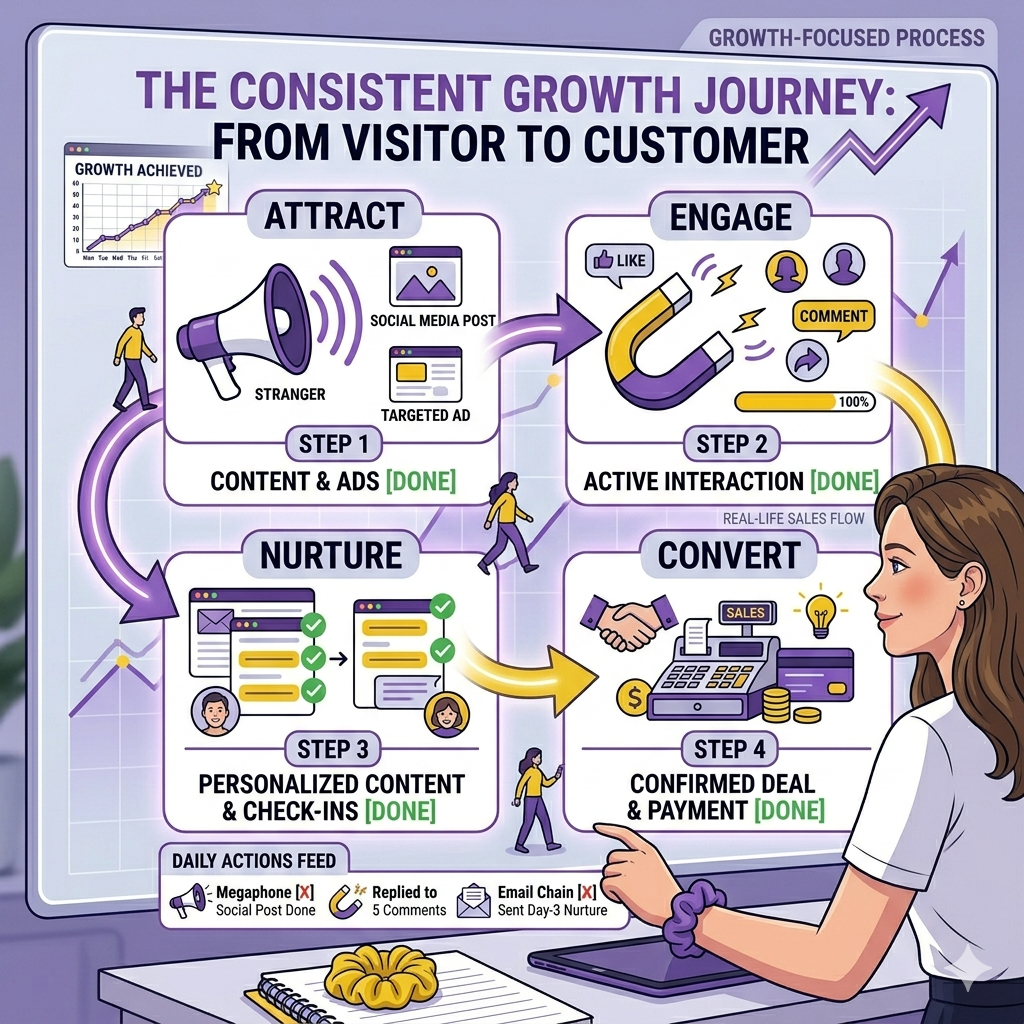
To make this practical, let’s walk through a real-life example of how a simple sales system for a small business works from start to finish.
I’ll use a scenario similar to what I’ve implemented with several small business owners.
The Business
A small fashion brand selling affordable outfits online.
Before implementing a system, the business struggled with:
- Inconsistent sales
- Random posting
- No follow-up
- Heavy reliance on “whoever shows up.”
This is a classic case of no structure.
Step 1: Attract (Lead Generation System)
We started by fixing visibility using a simple lead generation system:
- Posting styling tips and outfit ideas
- Sharing customer photos
- Creating short videos showing how outfits fit
This content attracted the right audience, people interested in fashion, not just random viewers.
Step 2: Capture Leads
Instead of letting people just view content and leave, we introduced a simple capture system:
- “Send a message to order.”
- “Click link in bio to join WhatsApp list.”
Now, interested people have become part of the business’s contact list.
Step 3: Nurture Leads
Next, we focused on building trust:
- Sharing customer reviews
- Posting testimonials
- Showing real-life results
We also followed up with people who asked about products but didn’t buy immediately.
This step alone improved the conversion of leads into customers significantly.
Step 4: Convert
Finally, we simplified the sales process:
- Clear pricing
- Clear product description
- Direct call-to-action
Instead of long conversations, customers were quickly guided to make a decision.
The Result
Within a short period:
- More inquiries started coming in
- Conversion improved
- Sales became more consistent
The business didn’t suddenly become perfect, but it became structured.
What Made the Difference
It wasn’t a new product.
It wasn’t ads.
It wasn’t luck.
It was the system.
The same four steps:
👉 Attract → Capture → Nurture → Convert
When applied consistently, this simple sales funnel for a small business created predictable results.
The Key Insight
Any small business can apply this.
You don’t need complexity. You need clarity and consistency.
Once your system is working, your focus shifts from chasing customers to improving how your system performs.
FREQUENTLY ASKED QUESTIONS ABOUT SALES SYSTEMS
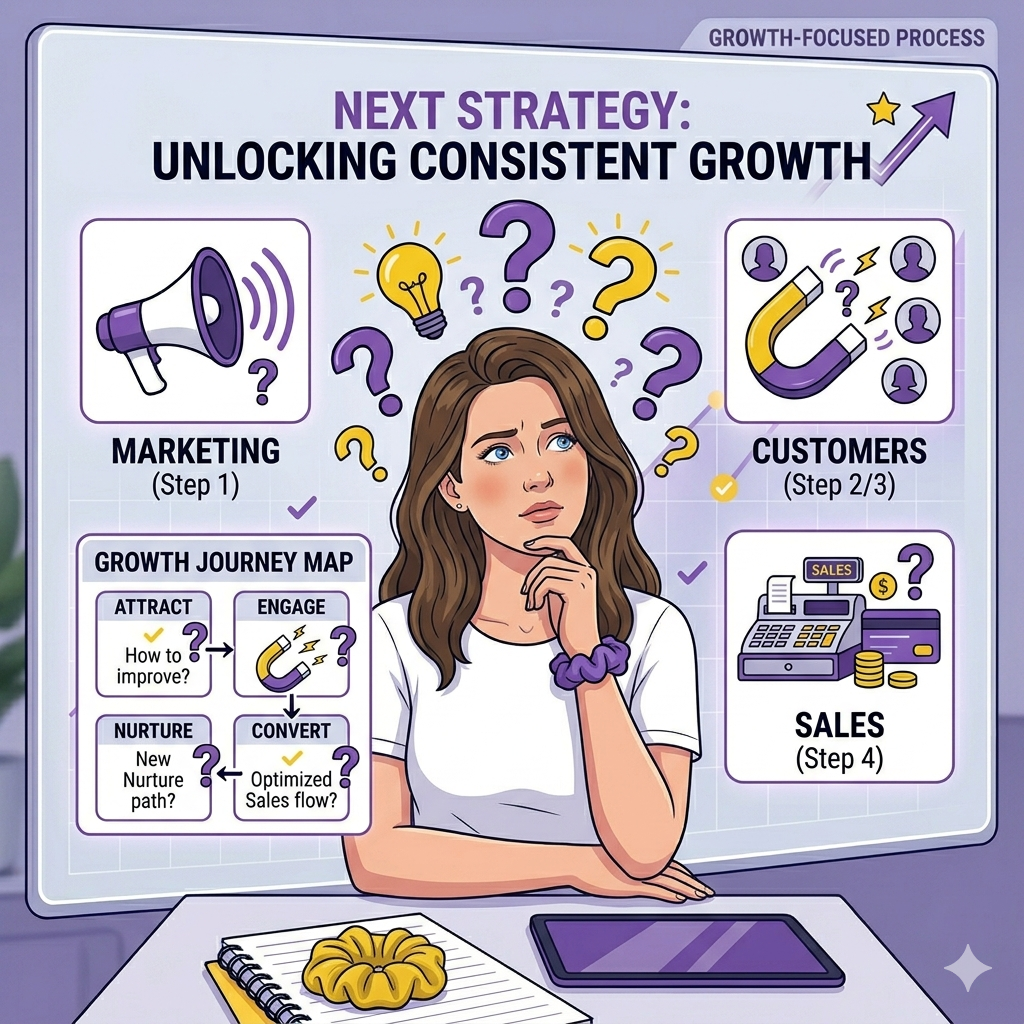
When it comes to building a sales system for a small business, many entrepreneurs have similar concerns. Let’s address the most common questions so you can move forward with clarity and confidence.
1. What is a sales system?
A sales system is a structured, repeatable process that guides a potential customer from first contact to making a purchase.
Instead of relying on random actions, a system ensures that every step, from attracting leads to converting leads into customers, is clear and consistent.
2. How do I build a sales system as a beginner?
Start simple.
You don’t need complex tools or advanced strategies. Focus on the basics:
- Attract people through content or referrals
- Capture their contact details
- Nurture them with value and trust
- Guide them to buy with a clear offer
If you’ve been struggling with structure, you can also revisit how to create a winning business plan for startups to understand how to organize your business processes effectively.
3. Do I need tools to create a sales system?
Not necessarily.
You can start with simple tools like:
- Google Forms
As your business grows, you can introduce more advanced tools to improve efficiency. Tools mentioned in the 11 essential tools that support small business growth in 2026 can help you scale your system over time.
4. How long does it take to see results?
It depends on your consistency and execution.
Some businesses start seeing improvement within a few weeks, while others take longer. The key is to apply the system consistently and refine it as you go.
The Key Insight
Building a sales system is not about perfection. It is about progress.
The more you apply and improve your system, the better your results will become over time.
FINAL THOUGHTS: BUILD ONCE, SELL CONSISTENTLY
At this point, one thing should be clear: growth in business is not about doing more; it is about doing the right things in a structured way.
If you’ve been struggling with inconsistent income or constantly chasing customers, it’s not because your business cannot grow. It’s because you haven’t fully built a sales system for a small business yet.
Stop Chasing, Start Building
The shift you need to make is simple but powerful:
👉 Stop chasing leads
👉 Start building a system
When you rely on random effort, your results will always be unpredictable. But when you build a system, your actions become repeatable, and your results become more consistent.
Your System Is Your Growth Engine
Let’s bring everything together. A working system includes:
- A lead generation system that attracts the right people
- A clear way to capture and organize leads
- A nurturing process that builds trust
- A conversion process that turns interest into sales
When these parts work together, your business becomes more stable and easier to scale.
If you want to strengthen your overall growth strategy, revisit 9 small business growth strategies for beginners and 11 essential tools that support small business growth in 2026 to support your system.
Consistency Will Do the Heavy Lifting
You don’t need to be perfect. You need to be consistent.
- Show up regularly
- Follow your process
- Improve as you go
This is how you move from struggling to understanding how to get consistent sales without depending on luck or constant hustle.
Final Takeaway
Build once, improve continuously, and let your system work for you.
A strong sales system for a small business is not just a strategy; it is the foundation for long-term growth, stability, and freedom in your business.