
Introduction
Finding the right small business ideas can be the difference between building a profitable company and spending months or even years on a business that never gains traction. Every year, thousands of people start businesses with excitement and high expectations, yet many struggle because they choose an idea based on trends instead of real market demand.
The truth is that a great business idea is not necessarily the newest or most popular one.
It is the one that solves a real problem, serves the right customers, and has the potential to grow over time.
If you are planning to start your first business, you may be asking questions like:
- Which business ideas require the least capital?
- Which businesses have the highest profit potential?
- Can I start a business while working full-time?
- Which online businesses are worth considering in 2026?
- How do I know if my business idea will actually make money?
This guide answers those questions and many more.
Instead of giving you another long list of random business ideas, this article is designed to help you make an informed decision. Every category includes opportunities with different startup costs, skill requirements, and income potential, making it easier to find a business that fits your goals and current situation.
Whether you have no money to invest, want to build an online business, prefer offering services, or are interested in using artificial intelligence, you will discover practical ideas that you can start and grow.
However, choosing a business idea is only the first step.
After selecting an idea, you need to validate it, register your business, attract customers, and build systems that support long-term growth. That is why this guide also connects you to additional resources that will help you move from having an idea to running a successful business.
If your budget is limited, How to Start a Business With No Money in 2026: The Complete Bootstrapping Blueprint will show you practical ways to launch with minimal capital.
Once you are ready to make your business official, How to Register a Small Business Step by Step: The Ultimate Beginner’s Checklist explains the legal steps you should follow before opening your doors to customers.
According to the U.S. Small Business Administration, successful businesses begin with careful planning, market research, and a clear understanding of customer needs rather than simply pursuing popular trends.
By the time you finish this guide, you will not only have a list of profitable business ideas but also a clear roadmap for choosing the one that matches your skills, budget, and long-term vision. More importantly, you will know the next steps to turn that idea into a real business.
How to Choose the Right Small Business Idea Before Investing

Choosing from hundreds of small business ideas can feel exciting, but it can also be overwhelming. Many entrepreneurs make the mistake of rushing into a business because it looks profitable on social media or because someone else is making money from it.
That approach rarely leads to long-term success.
Before investing your time or money, take a step back and evaluate whether the business is the right fit for you and whether the market actually needs it.
Here are six factors to consider before committing to any business idea.
1. Solve Problems Instead of Chasing Trends
The most successful businesses exist because they solve problems.
People do not buy products or services simply because they are new. They buy because those products or services make life easier, save time, reduce costs, or help them achieve a goal.
For example, a graphic designer helps businesses create a professional brand identity. A cleaning service saves homeowners valuable time. An AI automation agency helps companies become more productive.
When evaluating a business idea, ask yourself:
- What problem does this business solve?
- Who experiences this problem?
- Are people already paying for a solution?
Businesses built around real problems usually have stronger long-term demand than those built around short-lived trends.
If you are still trying to narrow your focus, Stop Wasting Time: Discover the Business Niche That Can Make You Real Money in 2026 explains how to identify profitable niche opportunities before you invest.
2. Evaluate Market Demand
A great idea without customers is simply a hobby.
Before launching a business, research whether people are actively searching for the product or service you want to offer.
Some practical ways to measure demand include:
- Using Google Search to see what people are asking.
- Exploring Google Trends to identify search interest over time.
- Reading customer discussions on online communities.
- Reviewing competitors and their customer feedback.
- Looking for businesses that have consistent demand throughout the year.
The goal is not to avoid competition completely.
Competition often proves that customers are willing to spend money.
What matters is finding ways to provide better value or serve a more specific audience.
The Google tool Google Trends is an excellent free resource for comparing interest in different business ideas before making a decision.
3. Match the Business to Your Skills and Interests
You do not need to know everything before starting a business.
However, choosing an idea that matches your existing skills or genuine interests gives you an advantage.
For example:
- A photographer may naturally build a photography business.
- A teacher could create online courses or tutoring services.
- Someone with marketing experience could launch a digital marketing agency.
- A creative entrepreneur might enjoy graphic design or print-on-demand products.
You can always learn new skills, but starting with strengths you already have often reduces your learning curve and helps you deliver better results from the beginning.
4. Understand the Startup Costs
Every business requires some level of investment.
The amount may range from almost nothing for a freelance service to thousands of dollars for inventory, equipment, or commercial space.
Before choosing a business, calculate:
- Equipment costs
- Software subscriptions
- Marketing expenses
- Business registration fees
- Operating costs
- Emergency funds
Understanding these costs helps you avoid financial surprises.
If you have very little capital, How to Start a Business With No Money in 2026: The Complete Bootstrapping Blueprint shares practical ways to launch without taking on unnecessary debt.
5. Look Beyond Quick Profits
Some business ideas generate income quickly but have limited growth potential.
Others require patience before becoming highly profitable.
Think beyond your first sale.
Ask yourself:
- Can this business grow over time?
- Can I expand my products or services?
- Can I hire employees later?
- Can I serve customers beyond my local area?
- Will demand still exist in five years?
Businesses with strong scalability often create more long-term opportunities.
6. Validate Before Investing
Validation is one of the smartest things you can do before spending significant money.
Instead of building everything first, test your idea.
You might:
- Create a simple landing page.
- Offer your service to a few customers.
- Collect pre-orders.
- Share your idea on social media.
- Ask potential customers for feedback.
Validation helps confirm that people are genuinely interested before you make a larger investment.
According to SCORE, testing assumptions with real customers is one of the most effective ways to reduce startup risk. You can also find practical startup guidance through SCORE’s business resources.
Choosing the right business idea is not about finding a perfect opportunity.
It is about finding an opportunity that matches your strengths, solves a genuine problem, and has enough demand to support long-term growth.
Now that you know how to evaluate opportunities, let’s explore the first category of profitable businesses you can start in 2026: online small business ideas.
Online Small Business Ideas (15 Ideas)

One of the biggest advantages of online businesses is that they usually require lower startup costs than traditional brick-and-mortar businesses. Many can be started from home with just a laptop, an internet connection, and the willingness to learn.
If you are looking for small business ideas that offer flexibility, scalability, and the potential to reach customers worldwide, the following opportunities are worth considering.
1. Blogging
Startup Cost: Low
Profit Potential: High
Skills Needed: Writing, SEO, content marketing
Difficulty: Medium
Scalability: Excellent
Best For: People who enjoy teaching or sharing knowledge
A blog allows you to build authority while generating income through affiliate marketing, display advertising, sponsored content, and digital products. Although blogging requires patience, it can become a valuable long-term business asset.
2. Affiliate Marketing
Startup Cost: Low
Profit Potential: High
Skills Needed: Content marketing, SEO, audience building
Difficulty: Medium
Scalability: Excellent
Best For: Content creators and bloggers
Affiliate marketers earn commissions by recommending products or services. Success comes from building trust with an audience rather than simply placing affiliate links everywhere.
3. SEO Agency
Startup Cost: Low
Profit Potential: High
Skills Needed: Search engine optimization, analytics
Difficulty: High
Scalability: High
Best For: Digital marketers
Every business wants more visibility on search engines. If you understand SEO, you can help companies improve their rankings and attract qualified traffic.
4. AI Automation Agency
Startup Cost: Low to Medium
Profit Potential: Very High
Skills Needed: AI tools, workflow automation
Difficulty: Medium
Scalability: Excellent
Best For: Tech-savvy entrepreneurs
Businesses increasingly want to automate repetitive tasks. Offering AI automation services can help clients save time while creating recurring revenue for your business.
To learn how artificial intelligence supports modern marketing, read AI Marketing Strategies for Small Businesses in 2026.
5. Freelance Writing
Startup Cost: Very Low
Profit Potential: High
Skills Needed: Writing, research
Difficulty: Medium
Scalability: Medium
Best For: Strong communicators
Companies constantly need blog posts, website copy, newsletters, and product descriptions. Skilled writers can work with clients from anywhere in the world.
6. Social Media Management
Startup Cost: Low
Profit Potential: High
Skills Needed: Content creation, communication
Difficulty: Medium
Scalability: High
Best For: Creative entrepreneurs
Many business owners do not have time to manage their social media accounts. You can help them create content, schedule posts, and engage with customers.
For practical guidance, explore Stop Posting Blindly: Social Media Marketing Strategies for Small Businesses.
7. Graphic Design
Startup Cost: Low
Profit Potential: High
Skills Needed: Design software, creativity
Difficulty: Medium
Scalability: High
Best For: Creative professionals
Businesses always need logos, flyers, social media graphics, presentations, and marketing materials.
8. Digital Products
Startup Cost: Low
Profit Potential: Very High
Skills Needed: Content creation, marketing
Difficulty: Medium
Scalability: Excellent
Best For: Experts and educators
You can sell ebooks, templates, planners, spreadsheets, checklists, or other downloadable products repeatedly without managing inventory.
9. Online Courses
Startup Cost: Low to Medium
Profit Potential: Very High
Skills Needed: Teaching, presentation
Difficulty: Medium
Scalability: Excellent
Best For: Professionals with specialized knowledge
If you have expertise in business, marketing, design, fitness, or another field, creating an online course can generate long-term income.
10. YouTube Channel
Startup Cost: Low
Profit Potential: High
Skills Needed: Video creation, storytelling
Difficulty: Medium
Scalability: Excellent
Best For: Content creators
YouTube offers multiple income opportunities through advertising, sponsorships, affiliate marketing, and digital product sales.
11. Virtual Assistant
Startup Cost: Very Low
Profit Potential: Medium to High
Skills Needed: Organization, communication
Difficulty: Easy
Scalability: Medium
Best For: Detail-oriented individuals
Virtual assistants help businesses manage emails, calendars, customer support, scheduling, and administrative tasks.
12. Web Design
Startup Cost: Low
Profit Potential: High
Skills Needed: Web development, design
Difficulty: Medium
Scalability: High
Best For: Creative problem-solvers
Every modern business needs a professional website. Learning web design can open doors to long-term client relationships.
13. Copywriting
Startup Cost: Very Low
Profit Potential: High
Skills Needed: Persuasive writing
Difficulty: Medium
Scalability: High
Best For: Marketing-focused entrepreneurs
Copywriters help businesses create compelling sales pages, advertisements, landing pages, and email campaigns that convert readers into customers.
14. Email Marketing Services
Startup Cost: Low
Profit Potential: High
Skills Needed: Email strategy, automation
Difficulty: Medium
Scalability: High
Best For: Digital marketers
Email remains one of the highest-return marketing channels. Businesses often hire specialists to build campaigns, automate follow-ups, and improve customer retention.
15. Podcasting
Startup Cost: Low to Medium
Profit Potential: Medium to High
Skills Needed: Speaking, interviewing, content planning
Difficulty: Medium
Scalability: High
Best For: Entrepreneurs who enjoy conversations and education
A podcast helps build authority while creating opportunities through sponsorships, affiliate partnerships, consulting, and product sales.
Which Online Business Should You Choose?
If you enjoy creating content, blogging, YouTube, affiliate marketing, or digital products may be the best fit.
If you prefer working directly with clients, consider freelance writing, SEO, web design, graphic design, or social media management.
If technology excites you, AI automation services offer one of the fastest-growing opportunities in today’s market.
According to the OECD, digital transformation continues to create new opportunities for entrepreneurs who adopt online business models and emerging technologies. You can explore more research through OECD Digital Economy resources.
Online businesses offer flexibility and global reach, but they are only one category of opportunities. Next, let’s explore profitable e-commerce business ideas that allow you to sell physical and digital products to customers around the world.
E-commerce Business Ideas (10 Ideas)

E-commerce has transformed the way people buy products. Customers can now shop from anywhere at any time, making online stores one of the fastest-growing business models in the world.
If you enjoy selling products rather than services, these small business ideas can help you build an e-commerce business with strong income potential. The key is choosing products that solve real customer problems and creating an excellent shopping experience.
1. Print-on-Demand Store
Startup Cost: Low
Profit Potential: High
Skills Needed: Graphic design, marketing
Difficulty: Easy to Medium
Scalability: Excellent
Best For: Creative entrepreneurs
Print-on-demand allows you to sell custom T-shirts, mugs, hoodies, phone cases, notebooks, and other products without holding inventory. Your supplier prints and ships each order after a customer makes a purchase.
2. Dropshipping Business
Startup Cost: Low
Profit Potential: Medium to High
Skills Needed: Product research, digital marketing
Difficulty: Medium
Scalability: High
Best For: Beginners
With dropshipping, you market products while a supplier stores and ships them directly to customers. Success depends on choosing quality suppliers and building trust with your audience.
3. Handmade Products
Startup Cost: Low to Medium
Profit Potential: High
Skills Needed: Craftsmanship, creativity
Difficulty: Medium
Scalability: Medium
Best For: Creative makers
If you enjoy creating handmade jewelry, candles, artwork, home décor, or gifts, an online store can help you reach customers far beyond your local area.
4. Digital Downloads
Startup Cost: Very Low
Profit Potential: Very High
Skills Needed: Content creation, design
Difficulty: Easy
Scalability: Excellent
Best For: Designers, educators, and creators
Digital downloads such as planners, templates, ebooks, printable worksheets, and business resources require no inventory and can be sold repeatedly.
5. Subscription Box Business
Startup Cost: Medium
Profit Potential: High
Skills Needed: Product sourcing, logistics
Difficulty: Medium
Scalability: High
Best For: Entrepreneurs focused on recurring revenue
Subscription boxes deliver curated products to customers on a monthly or quarterly basis. Popular niches include beauty, fitness, snacks, books, and pet supplies.
6. Private Label Products
Startup Cost: Medium to High
Profit Potential: High
Skills Needed: Branding, supplier management
Difficulty: Medium
Scalability: Excellent
Best For: Entrepreneurs building a long-term brand
Private labeling allows you to sell products manufactured by another company under your own brand name. This helps create stronger customer loyalty and higher profit margins.
7. Local Online Store
Startup Cost: Low to Medium
Profit Potential: High
Skills Needed: Customer service, local marketing
Difficulty: Easy to Medium
Scalability: Medium
Best For: Local entrepreneurs
Many customers prefer buying from businesses within their community. Selling groceries, office supplies, electronics, or specialty products online while offering local delivery can provide a competitive advantage.
8. Fashion and Clothing Store
Startup Cost: Medium
Profit Potential: High
Skills Needed: Product selection, branding
Difficulty: Medium
Scalability: High
Best For: Fashion enthusiasts
Fashion remains one of the largest e-commerce industries. Success often comes from targeting a specific audience rather than trying to sell every type of clothing.
9. Beauty Products Store
Startup Cost: Medium
Profit Potential: High
Skills Needed: Branding, customer education
Difficulty: Medium
Scalability: High
Best For: Entrepreneurs passionate about beauty and skincare
Customers regularly purchase skincare, cosmetics, hair care, and wellness products, making this an industry with strong repeat business potential.
10. Pet Products Store
Startup Cost: Medium
Profit Potential: High
Skills Needed: Product research, customer service
Difficulty: Medium
Scalability: High
Best For: Animal lovers
Pet owners consistently spend money on food, toys, grooming products, accessories, and healthcare items. This creates ongoing opportunities for businesses serving the pet industry.
Tips for Building a Successful E-commerce Business
Choosing the right products is only the beginning.
To succeed, focus on:
- Solving a specific customer problem.
- Offering excellent customer service.
- Writing clear product descriptions.
- Using high-quality product photos.
- Building trust through reviews and testimonials.
- Marketing consistently across multiple channels.
Many online stores fail because they focus only on launching and neglect marketing and customer experience.
If you are planning to build an online store, How to Start an E-Commerce Business walks you through the essential setup process.
To avoid expensive mistakes, read The Biggest E-Commerce Mistakes New Store Owners Make in 2026 and Why Your E-Commerce Store Is Not Making Sales in 2026. You should also learn 10 E-Commerce Marketing Strategies That Actually Drive Sales in 2026 to attract consistent customers.
For additional guidance on starting and growing an online store, the Shopify offers practical resources through Shopify’s entrepreneurship guides.
Selling products online can become highly profitable, but many entrepreneurs prefer offering skills and expertise instead of managing inventory. In the next section, you’ll discover 15 profitable service-based business ideas that can often be started with little upfront investment.
Service-Based Business Ideas (15 Ideas)

Service businesses remain some of the most profitable small business ideas because they often require little upfront investment while allowing you to earn based on your knowledge, skills, or experience.
Unlike product-based businesses, you usually don’t need to buy inventory before making your first sale. Instead, you focus on solving problems, delivering value, and building strong relationships with your clients.
If you’re looking for a business you can launch quickly, these service-based ideas are worth considering.
1. Business Consulting
Startup Cost: Low
Profit Potential: Very High
Skills Needed: Business strategy, communication
Difficulty: Medium
Scalability: High
Best For: Experienced professionals
Businesses are always looking for expert advice to improve operations, increase sales, and solve growth challenges. If you have experience in a specific industry, consulting can become a highly profitable business.
2. Cleaning Services
Startup Cost: Low to Medium
Profit Potential: High
Skills Needed: Time management, customer service
Difficulty: Easy
Scalability: High
Best For: First-time entrepreneurs
Residential and commercial cleaning services continue to experience strong demand. As your client base grows, you can hire employees and expand into larger contracts.
3. Event Planning
Startup Cost: Low
Profit Potential: High
Skills Needed: Organization, communication
Difficulty: Medium
Scalability: Medium
Best For: Organized individuals
From weddings to corporate events and birthday celebrations, businesses and families often hire event planners to manage every detail and reduce stress.
4. Photography
Startup Cost: Medium
Profit Potential: High
Skills Needed: Photography, editing
Difficulty: Medium
Scalability: Medium
Best For: Creative entrepreneurs
Professional photographers can specialize in weddings, family portraits, commercial branding, product photography, or events.
5. Accounting and Bookkeeping
Startup Cost: Low
Profit Potential: High
Skills Needed: Accounting, financial management
Difficulty: Medium
Scalability: High
Best For: Finance professionals
Small businesses need help managing expenses, preparing financial reports, and staying compliant with tax requirements.
6. Digital Marketing Agency
Startup Cost: Low
Profit Potential: Very High
Skills Needed: SEO, social media, advertising
Difficulty: Medium
Scalability: Excellent
Best For: Marketing professionals
Businesses are constantly searching for experts who can help them generate leads, increase visibility, and improve sales.
7. Fitness Coaching
Startup Cost: Low to Medium
Profit Potential: High
Skills Needed: Fitness knowledge, motivation
Difficulty: Medium
Scalability: High
Best For: Health enthusiasts
Offer personal training, online coaching, meal planning, or group fitness programs to help clients achieve their health goals.
8. Laundry Services
Startup Cost: Medium
Profit Potential: High
Skills Needed: Organization, customer service
Difficulty: Easy
Scalability: High
Best For: Local entrepreneurs
Busy professionals and families value convenience, making laundry and dry-cleaning services a reliable business opportunity.
9. Mobile Phone Repair
Startup Cost: Medium
Profit Potential: High
Skills Needed: Technical repair skills
Difficulty: Medium
Scalability: High
Best For: Technically skilled individuals
With millions of smartphones in use, repair services remain in demand for cracked screens, battery replacements, and software issues.
10. Printing and Branding Business
Startup Cost: Medium
Profit Potential: High
Skills Needed: Graphic design, printing
Difficulty: Medium
Scalability: High
Best For: Creative entrepreneurs
Services such as banner printing, business cards, flyers, branded T-shirts, mugs, and promotional materials are essential for businesses of all sizes.
11. Car Wash Business
Startup Cost: Medium
Profit Potential: High
Skills Needed: Customer service, operations
Difficulty: Easy
Scalability: Medium
Best For: Local business owners
Mobile or fixed-location car wash services can generate consistent income, especially in busy urban areas.
12. Catering Services
Startup Cost: Medium
Profit Potential: High
Skills Needed: Cooking, food safety
Difficulty: Medium
Scalability: High
Best For: Passionate cooks
Corporate events, weddings, and private parties regularly require catering services, creating opportunities for recurring business.
13. Interior Design
Startup Cost: Low
Profit Potential: High
Skills Needed: Creativity, planning
Difficulty: Medium
Scalability: Medium
Best For: Design enthusiasts
Interior designers help homeowners and businesses create functional, attractive spaces while managing budgets and project timelines.
14. Tutoring
Startup Cost: Very Low
Profit Potential: Medium to High
Skills Needed: Teaching, communication
Difficulty: Easy
Scalability: High
Best For: Teachers and subject experts
Whether online or in person, tutoring remains a flexible business that serves students, professionals, and lifelong learners.
15. Translation Services
Startup Cost: Very Low
Profit Potential: Medium to High
Skills Needed: Language proficiency
Difficulty: Medium
Scalability: High
Best For: Multilingual professionals
Businesses expanding into international markets often need translators for websites, legal documents, marketing materials, and customer communication.
How to Grow a Service-Based Business
Starting is only the first step.
To build a successful service business, focus on delivering outstanding customer experiences and developing systems that consistently attract new clients.
Some proven strategies include:
- Asking satisfied customers for referrals.
- Collecting testimonials and reviews.
- Building a professional website.
- Creating valuable content that demonstrates your expertise.
- Following up with past customers.
- Networking within your local community.
If you’re wondering how to attract your first paying clients, How to Get Your First 10 Customers in 30 Days provides practical strategies you can implement immediately.
As your client base grows, Sales System for a Small Business: Stop Chasing Leads & Build a Predictable Machine in 2026 will help you build a repeatable process for generating consistent revenue. If your business serves customers in a specific city or region, GET FOUND FAST: 5 Local Marketing Strategies for Small Businesses explains how to increase your visibility and attract more local customers.
According to the International Labour Organization, service industries continue to be a major source of entrepreneurship and employment opportunities worldwide. Additional insights are available through ILO Entrepreneurship Resources.
If you prefer running a business from the comfort of your home instead of traveling to clients or operating a physical location, the next section explores 10 profitable home-based small business ideas that combine flexibility with strong earning potential.
Home-Based Small Business Ideas (10 Ideas)

Starting a business no longer requires renting an office or opening a physical store. Many successful entrepreneurs have built profitable companies from a spare bedroom, garage, or even their kitchen table.
If you’re looking for small business ideas that offer flexibility, lower overhead costs, and a better work-life balance, a home-based business could be the perfect choice. Many of these businesses can start as side hustles and gradually grow into full-time income.
1. Baking Business
Startup Cost: Low to Medium
Profit Potential: High
Skills Needed: Baking, food safety, customer service
Difficulty: Medium
Scalability: High
Best For: Passionate bakers
If you enjoy baking cakes, bread, cookies, or pastries, you can sell to individuals, cafés, restaurants, and local events. As demand grows, you can expand into custom orders or wholesale supply.
2. Candle Making
Startup Cost: Low
Profit Potential: High
Skills Needed: Creativity, product design
Difficulty: Easy
Scalability: Medium
Best For: Creative entrepreneurs
Handmade candles remain popular for home décor, gifts, and special occasions. Offering unique scents and premium packaging can help your brand stand out.
3. Soap Making
Startup Cost: Low
Profit Potential: High
Skills Needed: Product formulation, branding
Difficulty: Easy to Medium
Scalability: High
Best For: Beauty and wellness enthusiasts
Natural and handmade soaps continue to attract customers looking for eco-friendly and skin-friendly alternatives to commercial products.
4. Tailoring and Clothing Alterations
Startup Cost: Low to Medium
Profit Potential: High
Skills Needed: Sewing, measuring, garment repair
Difficulty: Medium
Scalability: Medium
Best For: Skilled tailors
Many people need clothing alterations, custom outfits, school uniforms, or traditional wear. This creates a steady demand throughout the year.
5. Childcare Services
Startup Cost: Low to Medium
Profit Potential: High
Skills Needed: Childcare, patience, communication
Difficulty: Medium
Scalability: Medium
Best For: Individuals who enjoy working with children
Parents often need reliable childcare while they work. Depending on your local regulations, you can start with a small number of children and expand over time.
6. Pet Sitting
Startup Cost: Very Low
Profit Potential: Medium
Skills Needed: Animal care, responsibility
Difficulty: Easy
Scalability: Medium
Best For: Animal lovers
As more people travel or work long hours, pet sitting and pet care services continue to grow in popularity.
7. Resume Writing
Startup Cost: Very Low
Profit Potential: High
Skills Needed: Writing, communication
Difficulty: Easy
Scalability: High
Best For: Strong writers
Job seekers are often willing to pay for professionally written resumes, cover letters, and LinkedIn profile optimization to improve their chances of getting hired.
8. Voice-Over Services
Startup Cost: Low
Profit Potential: High
Skills Needed: Clear speaking voice, audio editing
Difficulty: Medium
Scalability: High
Best For: Confident speakers
Businesses, YouTube creators, advertisers, and course creators regularly hire voice-over artists for commercials, videos, podcasts, and training materials.
9. Bookkeeping Services
Startup Cost: Very Low
Profit Potential: High
Skills Needed: Accounting, organization
Difficulty: Medium
Scalability: High
Best For: Detail-oriented entrepreneurs
Many small businesses outsource bookkeeping instead of hiring full-time accountants, creating opportunities for skilled professionals working from home.
10. Handmade Crafts Business
Startup Cost: Low
Profit Potential: High
Skills Needed: Creativity, craftsmanship
Difficulty: Easy to Medium
Scalability: Medium
Best For: Creative individuals
From jewelry and greeting cards to home décor and personalized gifts, handmade products can be sold through online marketplaces, social media, or your own website.
Why Home-Based Businesses Continue to Grow
Home-based businesses offer several advantages, including:
- Lower startup and operating costs.
- Greater flexibility and control over your schedule.
- The ability to start part-time while keeping your current job.
- Easier testing of new products and services before expanding.
- More opportunities to reach customers online.
However, working from home also requires discipline. Setting a work schedule, creating a dedicated workspace, and separating business finances from personal expenses can help you stay productive and professional.
If you’re looking for even more affordable opportunities, 7 Best Small Business Ideas for Beginners With Low Capital and High Profit Margins provides additional ideas that require minimal investment but offer strong growth potential.
According to International Trade Centre, digital technology has made it easier than ever for home-based entrepreneurs to reach customers nationally and internationally. You can learn more through International Trade Centre resources.
If you want to position yourself in one of the fastest-growing industries, the next section explores 10 AI business ideas that are creating exciting opportunities for entrepreneurs in 2026 and beyond.
AI Business Ideas (10 Ideas)
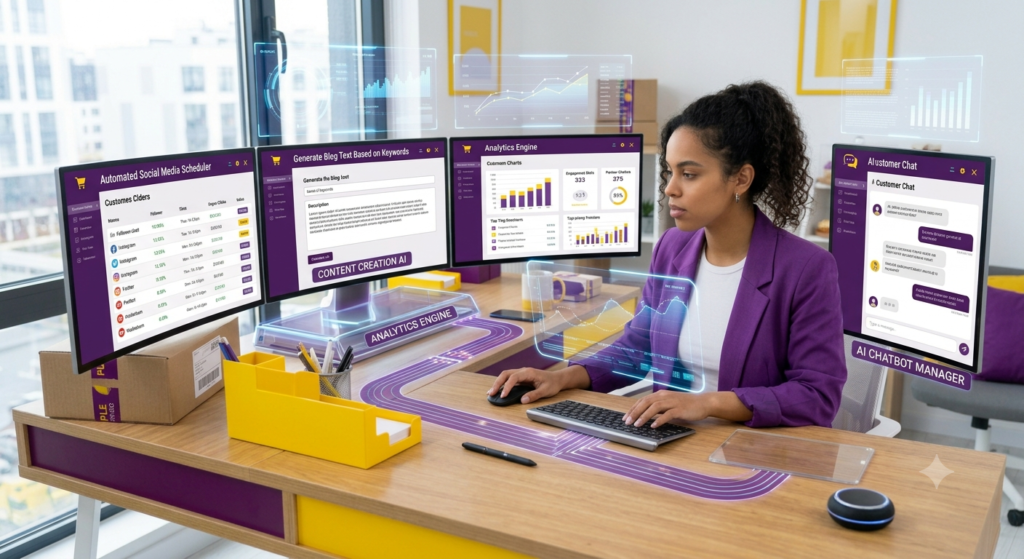
Artificial intelligence is no longer reserved for large technology companies. Today, entrepreneurs and small business owners are using AI to automate repetitive tasks, improve customer experiences, and create entirely new services.
If you’re searching for small business ideas that have strong growth potential over the next decade, AI-related businesses deserve your attention. The demand for AI solutions continues to increase as more companies look for affordable ways to become more productive and competitive.
Here are 10 AI business ideas you can start in 2026.
1. AI Consulting
Startup Cost: Low
Profit Potential: Very High
Skills Needed: AI knowledge, business strategy
Difficulty: Medium
Scalability: High
Best For: Business consultants and technology enthusiasts
Many business owners know AI is important but don’t know where to begin. As an AI consultant, you can help clients identify opportunities, select the right tools, and implement practical AI solutions.
2. AI Content Creation Agency
Startup Cost: Low
Profit Potential: High
Skills Needed: Writing, editing, prompt engineering
Difficulty: Medium
Scalability: Excellent
Best For: Content creators and marketers
Businesses constantly need blog posts, social media content, email campaigns, and marketing materials. By combining AI with human editing, you can deliver high-quality content faster while maintaining a consistent brand voice.
3. AI Chatbot Setup Services
Startup Cost: Low
Profit Potential: High
Skills Needed: Chatbot platforms, customer support
Difficulty: Medium
Scalability: High
Best For: Tech-savvy entrepreneurs
Companies increasingly use AI chatbots to answer customer questions, capture leads, and provide support around the clock. Helping businesses implement these systems can become a valuable service.
4. AI Automation Agency
Startup Cost: Low
Profit Potential: Very High
Skills Needed: Workflow automation, API integrations
Difficulty: Medium to High
Scalability: Excellent
Best For: Problem solvers
Businesses waste countless hours on repetitive tasks. An AI automation agency helps clients automate activities such as lead management, appointment scheduling, reporting, and customer follow-ups.
5. AI Video Editing Services
Startup Cost: Low
Profit Potential: High
Skills Needed: Video editing, AI software
Difficulty: Medium
Scalability: High
Best For: Video creators
AI-powered editing tools can dramatically reduce the time required to create professional videos for YouTube, social media, online courses, and advertisements.
6. AI Customer Support Solutions
Startup Cost: Low
Profit Potential: High
Skills Needed: Customer service, AI platforms
Difficulty: Medium
Scalability: High
Best For: Entrepreneurs interested in customer experience
Offer businesses AI-powered customer support systems that handle common inquiries while allowing human staff to focus on more complex issues.
7. AI SEO Services
Startup Cost: Low
Profit Potential: High
Skills Needed: SEO, keyword research, AI tools
Difficulty: Medium
Scalability: High
Best For: Digital marketers
AI can accelerate keyword research, content optimization, competitor analysis, and technical SEO. Businesses increasingly need experts who know how to combine AI with proven SEO strategies.
8. Prompt Engineering Services
Startup Cost: Very Low
Profit Potential: High
Skills Needed: Critical thinking, prompt writing
Difficulty: Medium
Scalability: High
Best For: AI enthusiasts
Many organizations need effective prompts to generate accurate content, automate workflows, or improve AI outputs. This emerging specialty continues to grow as AI adoption increases.
9. AI Training and Workshops
Startup Cost: Very Low
Profit Potential: High
Skills Needed: Teaching, AI knowledge
Difficulty: Medium
Scalability: High
Best For: Educators and consultants
Businesses often need practical training to help employees use AI responsibly and effectively. Offering workshops, webinars, or online courses can become a reliable income source.
10. Workflow Automation Services
Startup Cost: Low
Profit Potential: Very High
Skills Needed: Business processes, automation tools
Difficulty: Medium to High
Scalability: Excellent
Best For: Entrepreneurs who enjoy solving operational problems
You can help businesses automate repetitive processes such as invoice generation, CRM updates, email sequences, data entry, and reporting. As companies grow, the value of efficient workflows continues to increase.
Why AI Businesses Have Strong Growth Potential
Artificial intelligence is transforming almost every industry.
However, businesses don’t simply need more AI tools.
They need people who understand how to apply those tools to real business challenges.
That creates opportunities for entrepreneurs who can bridge the gap between technology and business results.
If you decide to build an AI-focused business, prioritize learning, continuous improvement, and ethical AI practices. Companies are more likely to work with professionals who understand both the technology and the importance of human oversight.
To learn how AI can improve your own marketing efforts, read AI Marketing Strategies for Small Businesses in 2026. It explains practical ways to use AI for content creation, social media, email marketing, automation, and customer engagement.
According to the World Economic Forum, artificial intelligence is expected to reshape millions of jobs while creating significant opportunities for entrepreneurs who develop in-demand digital skills. You can explore more through World Economic Forum AI insights.
Now that you’ve explored dozens of opportunities across different industries, the next step is comparing them side by side. A clear comparison makes it much easier to choose the business idea that best matches your budget, skills, and long-term goals.
Compare the Best Small Business Ideas at a Glance
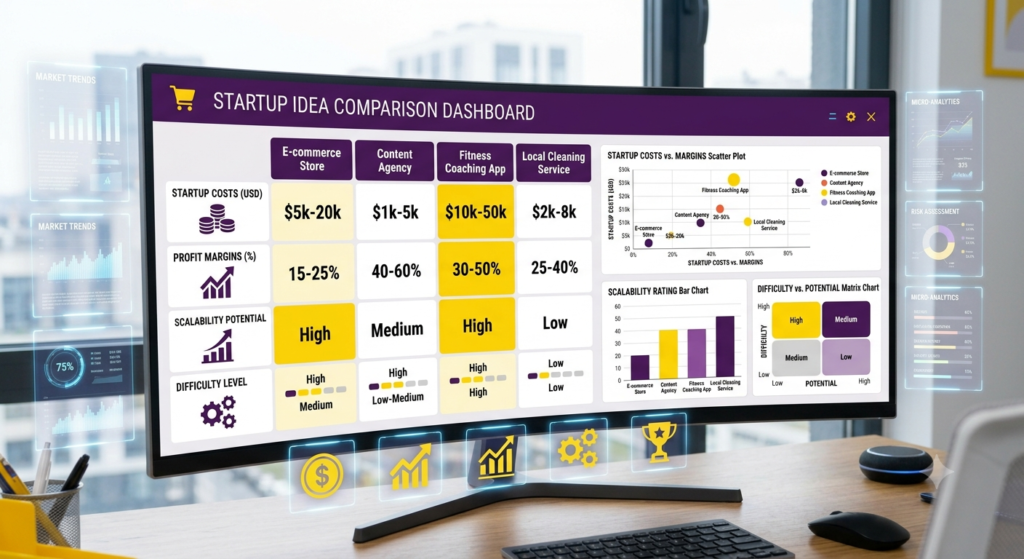
After exploring different categories of small business ideas, you may still be wondering which option is the best fit for you.
The truth is that there is no single business that works perfectly for everyone.
The right choice depends on your available capital, current skills, desired lifestyle, and long-term goals.
Someone with strong communication skills may succeed faster with consulting or digital marketing. A creative person may enjoy graphic design, print-on-demand, or handmade products. Someone interested in technology may find opportunities in AI automation or software services.
Use the comparison table below as a starting point to evaluate different opportunities.
| Business Idea Category | Startup Cost | Profit Margin | Time to First Income | Difficulty | Scalability | Best For |
| Blogging | Low | High | Medium to Long Term | Medium | Excellent | Content creators and educators |
| Affiliate Marketing | Low | High | Medium | Medium | Excellent | Marketers building audiences |
| AI Automation Agency | Low | Very High | Medium | Medium to High | Excellent | Tech-focused entrepreneurs |
| Digital Products | Very Low | Very High | Medium | Medium | Excellent | Experts and creators |
| Freelance Writing | Very Low | High | Fast | Medium | Medium | Strong writers |
| Social Media Management | Low | High | Fast | Medium | High | Creative marketers |
| Graphic Design | Low | High | Fast | Medium | High | Designers |
| E-commerce Store | Medium | Medium to High | Medium | Medium | High | Product-focused entrepreneurs |
| Print-on-Demand | Low | Medium to High | Medium | Easy to Medium | High | Creative beginners |
| Consulting | Low | Very High | Fast | Medium | High | Experienced professionals |
| Cleaning Service | Low to Medium | High | Fast | Easy | High | Local entrepreneurs |
| Digital Marketing Agency | Low | Very High | Medium | Medium | Excellent | Marketing professionals |
| Printing Business | Medium | High | Fast | Medium | High | Creative and local entrepreneurs |
| Home Baking | Low to Medium | High | Fast | Medium | Medium | Food entrepreneurs |
| AI Services | Low | Very High | Medium | Medium | Excellent | Future-focused entrepreneurs |
How to Choose Based on Your Situation
If You Have Little or No Money
Focus on businesses that sell skills rather than products.
Examples:
- Freelancing
- Consulting
- Social media management
- Writing
- Virtual assistance
- Digital marketing services
These businesses allow you to start with your existing knowledge and reinvest your earnings into growth.
For more strategies on starting with limited resources, read How to Start a Business With No Money in 2026: The Complete Bootstrapping Blueprint.
If You Want Fast Income
Service businesses often generate revenue faster because you can find clients before building complicated systems.
Examples:
- Cleaning services
- Photography
- Consulting
- Printing services
- Repair services
- Local marketing services
However, fast income should not be your only goal. The best businesses combine immediate revenue opportunities with long-term growth potential.
If You Want a Scalable Online Business
Consider:
- Blogging
- Digital products
- Online courses
- AI businesses
- Software-related services
- E-commerce
These models can reach customers beyond your local market and create multiple income streams.
If You Want a Local Business
Local businesses can become highly profitable when they solve everyday problems in their community.
Examples:
- Cleaning
- Laundry
- Catering
- Printing
- Car wash
- Repair services
The advantage of local businesses is that trust and relationships can become a major competitive advantage.
You can learn how to attract more customers in your area through GET FOUND FAST: 5 Local Marketing Strategies for Small Businesses.
The Most Important Factor: Execution
A good business idea with poor execution will fail.
A simple business idea with excellent execution can become highly successful.
Many entrepreneurs spend months searching for the “perfect” idea while avoiding the real work:
- Understanding customers.
- Testing offers.
- Improving skills.
- Marketing consistently.
- Building relationships.
The goal is not to find a business idea that guarantees success.
The goal is to choose a realistic opportunity and execute better than most people.
Before investing heavily, remember to validate your idea, understand your customers, and create a simple plan for attracting your first buyers.
In the next section, we will discuss the common mistakes entrepreneurs make when choosing a business idea and how you can avoid them.
Common Mistakes When Choosing a Small Business Idea

Choosing from different small business ideas is exciting, but making the wrong decision at the beginning can waste your time, money, and energy.
Many entrepreneurs do not fail because they lack motivation. They fail because they choose a business without properly understanding the market, customers, and challenges involved.
By avoiding these common mistakes, you increase your chances of building a business that can survive and grow.
1. Following Trends Blindly
One of the biggest mistakes beginners make is choosing a business only because it is trending.
You may see someone making money from a particular business on social media and assume the same opportunity will work for you.
But trends change quickly.
A business that is profitable for one person may not be profitable for another because of differences in location, skills, resources, and customer access.
Before starting any business, ask:
- Does this solve a real problem?
- Are customers actively looking for this solution?
- Can I provide better value than existing competitors?
A sustainable business is built on customer needs, not temporary excitement.
2. Ignoring Customer Demand
Many entrepreneurs fall in love with their idea but forget to ask whether customers actually want it.
Your passion matters, but customers determine whether a business survives.
Before investing, talk to potential customers and understand:
- What challenges they have.
- What solutions they currently use.
- What they dislike about existing options.
- How much they are willing to pay.
Customer research can reveal opportunities you may not have considered.
A business idea becomes stronger when it connects your skills with a real market demand.
3. Starting Too Many Businesses at Once
Another common mistake is trying to start multiple businesses before making one successful.
You might think:
“I will start an online store, a YouTube channel, an agency, and a local business at the same time.”
The problem is that your attention becomes divided.
Building a successful business requires focus.
Instead of chasing every opportunity, choose one idea, test it, improve it, and grow it before expanding.
Successful entrepreneurs often build one strong foundation before creating additional income streams.
4. Expecting Quick Profits
Many beginners expect immediate results.
They launch a website, create a social media page, or offer a service and expect customers within days.
Sometimes that happens, but often it does not.
Building a profitable business requires:
- Learning what customers want.
- Improving your offer.
- Creating trust.
- Developing marketing systems.
- Staying consistent.
Patience is not about waiting without action. It is about continuously improving while giving your strategy enough time to work.
If your business struggles to attract customers, Why Your Small Business Is Not Making Sales (And How to Fix It Fast) explains common reasons businesses fail to convert attention into revenue.
5. Skipping Validation
Some entrepreneurs invest heavily before confirming whether their idea has potential.
They purchase inventory, build expensive websites, or rent locations without testing customer interest.
A smarter approach is to start small.
You can validate an idea by:
- Offering a simple version of your product or service.
- Getting feedback from potential customers.
- Making your first few sales.
- Testing different marketing messages.
Validation reduces risk and helps you make better decisions.
6. Lack of Planning
A business idea without a plan is only a wish.
You do not need a complicated 50-page business plan before starting, but you should understand:
- Who your customers are.
- What problem you solve.
- How you will make money.
- How customers will find you.
- What resources you need.
A simple strategy can help you avoid unnecessary mistakes.
For a deeper understanding of business planning, explore 5 Must-Have Elements in a Small Business Marketing Plan (That Drive Real Growth).
7. Choosing an Idea That Does Not Match Your Reality
A business opportunity may look attractive, but it must fit your current situation.
Consider:
- Your available capital.
- Your current skills.
- Your available time.
- Your location.
- Your personal goals.
For example, someone with limited funds may be better starting a service business before investing in an inventory-based business.
The best business idea is not always the one with the highest theoretical profit.
It is the one you can realistically execute and improve.
Final Thought
Choosing the right business idea is an important decision, but remember that ideas alone do not create successful businesses.
Execution, consistency, customer understanding, and continuous learning are what transform an idea into a profitable company.
Now that you understand what to avoid, the next step is turning your chosen idea into reality with a practical 90-day business launch plan.
Your 90-Day Business Launch Plan
Choosing one of these small business ideas is only the beginning.
Many people spend months researching opportunities but never move into action. They keep searching for a better idea, waiting for the perfect time, or believing they need more money before they can start.
The truth is that progress comes from taking small, consistent steps.
A simple 90-day launch plan can help you move from an idea to a real business by focusing on the most important stages:
Choose → Validate → Build → Launch → Grow
This plan is designed for beginners who want a clear direction without feeling overwhelmed.
Month 1: Choose and Validate Your Business Idea
The first month is about research and preparation.
Your goal is not to build a perfect business yet. Your goal is to confirm that your idea has potential.
Week 1: Choose One Business Idea
Start by selecting one opportunity that matches:
- Your skills.
- Your interests.
- Your available resources.
- Your target customer’s needs.
Avoid choosing based only on what looks profitable online.
Ask yourself:
- Who is my ideal customer?
- What problem am I solving?
- Why would someone choose my solution?
- Who are my competitors?
A clear customer and problem are more important than having a complicated business model.
Week 2: Research Your Market
Spend time understanding your customers.
Study:
- Their biggest challenges.
- Their buying habits.
- Existing solutions.
- Competitors in your market.
- Opportunities to provide better value.
This research will help you create an offer that customers actually want.
Week 3: Test Your Idea
Before investing heavily, test your idea.
You can:
- Talk to potential customers.
- Offer a small version of your service.
- Create sample products.
- Collect feedback.
- Try to make your first sale.
Your first goal is not perfection.
Your first goal is proof that people are willing to pay.
Week 4: Create Your Basic Business Plan
Create a simple plan covering:
- Your target audience.
- Your products or services.
- Your pricing.
- Your marketing approach.
- Your short-term goals.
A simple plan gives you direction and prevents random decision-making.
For more guidance on building a foundation, read How to Start a Business With No Money in 2026: The Complete Bootstrapping Blueprint.
Month 2: Register and Build Your Business
Once your idea has been validated, it is time to create the foundation of your business.
Week 5: Make Your Business Official
Depending on your location and business structure, you may need to:
- Choose a business name.
- Register your business.
- Obtain required licenses.
- Understand tax responsibilities.
Making your business official improves credibility and prepares you for long-term growth.
Learn the complete process through How to Register a Small Business Step by Step: The Ultimate Beginner’s Checklist.
Week 6: Build Your Brand Foundation
Your brand is more than a logo.
Create:
- A clear business message.
- A professional identity.
- A simple website or online presence.
- Social media profiles.
- A way for customers to contact you.
Your goal is to make it easy for people to understand who you help and how you can help them.
Week 7: Create Your Offer and Sales Process
Many beginners focus on products but forget about the customer journey.
Define:
- What exactly are you selling?
- Who is it for?
- What problem does it solve?
- How will customers purchase?
- How will you follow up?
A business grows faster when it has a simple system for turning interested people into customers.
Week 8: Prepare Your Marketing Channels
Choose the channels where your customers spend time.
Depending on your business, this may include:
- Social media.
- Search engines.
- Email marketing.
- Local networking.
- Partnerships.
Do not try to be everywhere at once.
Start with the channels that give you the best chance of reaching your ideal customers.
Month 3: Launch, Market, and Acquire Customers
The third month is about getting your business in front of real customers.
Week 9: Launch Your Business
Start promoting your offer.
Your launch does not need to be complicated.
You can:
- Announce your business online.
- Contact potential customers.
- Offer introductory deals.
- Ask your network for referrals.
- Share educational content.
The goal is to create conversations and opportunities.
Week 10: Focus on Customer Acquisition
A business cannot grow without customers.
Focus on:
- Finding your first 10 customers.
- Collecting testimonials.
- Improving your sales message.
- Building relationships.
For practical customer acquisition strategies, read How to Get Your First 10 Customers in 30 Days.
Week 11: Build Your Marketing System
Do not depend only on random promotion.
Create repeatable systems for:
- Creating content.
- Following up with leads.
- Asking for referrals.
- Retaining customers.
Your goal is to move from chasing customers to building predictable growth.
Explore Sales System for a Small Business: Stop Chasing Leads & Build a Predictable Machine in 2026 to understand how to create a stronger sales process.
Week 12: Review and Improve
At the end of 90 days, analyze:
- What worked?
- What did not work?
- Where did customers come from?
- What should you improve?
Successful entrepreneurs are constantly learning and adjusting.
The Business Growth Framework
Every successful business follows a simple journey:
Idea → Validation → Registration → Marketing → Customers → Systems → Growth
Your first 90 days are not about creating a perfect company.
They are about creating momentum.
The entrepreneurs who succeed are usually not those with the most resources. They are the ones who take action, learn quickly, and improve consistently.
Your chosen business idea can become a real opportunity, but only if you move from planning to execution.
Next, let’s answer some of the most common questions beginners have before starting a small business.
Frequently Asked Questions About Small Business Ideas
Choosing among different small business ideas can create many questions, especially if you are starting for the first time.
Below are answers to some of the most common questions beginners ask before launching a business.
What is the best small business to start in 2026?
The best small business to start in 2026 depends on your skills, resources, location, and goals.
Some promising opportunities include:
- AI automation services.
- Digital marketing.
- Consulting.
- Online education.
- E-commerce.
- Content businesses.
- Local service businesses.
Instead of looking for the “perfect” business, focus on finding a business that solves a real problem and has customers willing to pay for the solution.
A simple service business that solves an urgent problem can often outperform a complicated idea with no clear customer demand.
Which businesses require the least startup capital?
Businesses based on skills usually require the lowest investment.
Examples include:
- Freelance writing.
- Consulting.
- Virtual assistance.
- Social media management.
- Graphic design.
- Online tutoring.
- Digital marketing services.
These businesses allow you to start with your existing knowledge and gradually reinvest your earnings into growth.
If you have limited funds, focus on building valuable skills before spending money on unnecessary tools or equipment.
Which business has the highest profit margin?
Businesses with digital products and knowledge-based services often have some of the highest profit margins because they do not require physical inventory.
Examples include:
- Online courses.
- Software services.
- Consulting.
- Digital products.
- AI services.
- Marketing agencies.
However, profitability depends on execution, pricing, customer demand, and your ability to deliver results.
A high-margin business still fails if it cannot attract and retain customers.
What business can I start from home?
Many businesses can be started from home, including:
- Blogging.
- Affiliate marketing.
- Digital product creation.
- Online coaching.
- Baking.
- Tailoring.
- Bookkeeping.
- Freelancing.
- Handmade crafts.
- Virtual assistant services.
Home-based businesses are attractive because they allow beginners to test ideas with lower risk before expanding.
How do I know if a business idea is profitable?
A profitable business idea usually has three important elements:
1. A real customer problem
People need a reason to buy.
2. A clear target audience
You should know exactly who your customers are.
3. A willingness to pay
Interest is not enough. Customers must be willing to spend money.
You can validate profitability by researching competitors, speaking with potential customers, testing your offer, and making your first sales.
Can I start a business while working full-time?
Yes, many entrepreneurs start businesses while keeping their jobs.
Starting part-time can actually reduce financial pressure and allow you to test your idea before depending on it completely.
You can begin by:
- Learning a valuable skill.
- Serving your first few customers.
- Building your online presence.
- Creating systems during your free time.
The important thing is consistency.
A few focused hours every week can create significant progress over time.
How many small business ideas should I consider before choosing one?
Researching different opportunities is helpful, but spending too much time searching can become a form of procrastination.
A better approach is:
- Explore different options.
- Shortlist two or three ideas.
- Evaluate demand, costs, and skills.
- Choose one.
- Test and improve it.
The goal is not to find an idea with zero risk.
The goal is to choose a realistic opportunity and give it your best effort.
Should I start an online business or a local business?
Both models can be successful.
An online business offers:
- Global reach.
- Lower operating costs.
- More scalability.
A local business offers:
- Strong customer relationships.
- Faster trust-building.
- Opportunities based on community needs.
The best choice depends on your strengths and market.
Many modern entrepreneurs combine both approaches by serving local customers while using online marketing to attract more people.
Choosing a business idea is only the beginning of your entrepreneurial journey. The next step is turning that idea into action through validation, registration, marketing, and consistent improvement.
Conclusion: Choose an Idea, Take Action, and Build Your Business
Finding the right small business ideas is an important first step, but an idea alone will never build a successful business.
Many people spend months searching for the perfect opportunity while delaying the most important step: taking action.
The reality is that successful entrepreneurs are not always the people who start with the biggest budgets, the most connections, or the most revolutionary ideas.
They are often the people who:
- Choose a realistic opportunity.
- Understand their customers.
- Start small and improve.
- Build systems.
- Stay consistent even when results take time.
Throughout this guide, we explored different opportunities, including online businesses, e-commerce, service-based businesses, home-based businesses, and AI-powered opportunities.
But the best business idea for you is the one that matches your current situation.
If you have limited money, start with a skill-based business that allows you to generate income without large investments.
If you want scalability, explore digital products, online services, AI solutions, or e-commerce.
If you enjoy serving your community, a local service business can create strong relationships and long-term opportunities.
The next step is simple:
Choose one idea.
Validate it.
Create a plan.
Register your business.
Build your marketing system.
Get your first customers.
Then improve and grow.
Remember, your first version does not need to be perfect. Every successful business started as an idea that was tested, improved, and developed over time.
If you are ready to begin your entrepreneurial journey, explore these related resources:
- How to Start a Business With No Money in 2026: The Complete Bootstrapping Blueprint
- How to Register a Small Business Step by Step: The Ultimate Beginner’s Checklist
- 5 Must-Have Elements in a Small Business Marketing Plan (That Drive Real Growth)
- Stop Posting Blindly: Social Media Marketing Strategies for Small Businesses
- GET FOUND FAST: 5 Local Marketing Strategies for Small Businesses
Your business journey does not start when everything is perfect.
It starts when you decide to take the first step.
Choose your idea, commit to learning, and build something valuable that can create opportunities for you and the people you serve.