
Introduction

Many entrepreneurs are turning to AI marketing strategies for small businesses because marketing has become one of the most time-consuming parts of running a business. Between creating content, managing social media, responding to customers, writing emails, analyzing data, and generating leads, it often feels like there are never enough hours in the day.
If you have ever felt overwhelmed by marketing, you are not alone.
Many small business owners wear multiple hats. On a typical day, you might be handling customer service, managing operations, processing orders, and trying to market your business at the same time. Larger companies can hire marketing teams to handle these responsibilities, but most small businesses do not have that luxury.
This is one reason artificial intelligence has become such a powerful opportunity.
AI is changing how businesses create content, communicate with customers, analyze marketing performance, and automate repetitive tasks. What once required a team of specialists can now be accomplished by a single entrepreneur using the right tools and workflows.
However, there is an important distinction that many people miss.
Successful businesses do not use AI to replace human thinking.
They use AI to enhance productivity.
AI can help generate ideas, speed up content creation, automate repetitive tasks, and uncover valuable customer insights. But strategy, creativity, relationship-building, and decision-making still require a human touch.
The businesses seeing the best results in 2026 are not the ones blindly relying on AI.
They are the ones using AI strategically.
When combined with strong marketing fundamentals, AI can help small businesses compete more effectively, save time, reduce costs, and improve marketing performance.
Throughout this guide, you will learn practical AI marketing strategies for small businesses that can help you create content faster, improve social media marketing, strengthen email campaigns, better understand customers, and build marketing systems that support long-term growth.
If you are already investing time into social media marketing, you should also read Stop Posting Blindly: Social Media Marketing Strategies for Small Businesses because AI works best when it supports an existing marketing strategy rather than replacing one.
The goal is simple.
Use AI to work smarter, not harder.
Why AI Marketing Strategies for Small Businesses Matter in 2026

Marketing has changed dramatically over the last few years.
Customers have more choices, more information, and higher expectations than ever before. They expect businesses to respond quickly, provide valuable content, personalize their experiences, and maintain a consistent presence across multiple channels.
For many small business owners, meeting these expectations can feel overwhelming.
This is exactly why AI marketing strategies for small businesses have become increasingly important in 2026.
The Marketing Landscape Is More Competitive
Years ago, simply having a website or social media page could help a business stand out.
Today, almost every business is online.
Customers are constantly exposed to advertisements, emails, videos, blog posts, and social media content. Getting noticed has become much harder.
Small businesses often find themselves competing against larger companies with bigger budgets, larger teams, and more resources.
The challenge is no longer access to marketing channels.
The challenge is executing marketing consistently and effectively.
Small Businesses Have Limited Resources
Most entrepreneurs face the same problem.
There is never enough time.
You may have great ideas for content, email campaigns, and customer outreach, but there are only so many hours available each day.
Hiring a full marketing team is often unrealistic for businesses operating on tight budgets.
This is where AI can provide a significant advantage.
Instead of spending hours on repetitive tasks, AI can help complete many of them in minutes.
AI Creates a Competitive Advantage
One of the biggest benefits of AI for small business marketing is leverage.
Leverage allows a small team or even a solo entrepreneur to accomplish more without dramatically increasing costs.
For example, AI can help:
- Generate content ideas
- Draft social media posts
- Write email campaigns
- Analyze customer data
- Create marketing reports
- Automate follow-up sequences
The result is greater productivity and efficiency.
Common Misconceptions About AI Marketing
Many people fear that AI will replace marketers and business owners.
That is not what is happening.
AI is best viewed as a productivity tool.
It helps accelerate execution, but it does not replace strategy, creativity, empathy, or relationship-building.
Customers still want authentic interactions.
They still want businesses that understand their needs.
AI can support those efforts, but it cannot replace them.
A Real-World Example
Imagine a solo entrepreneur running a consulting business.
A few years ago, creating a month of content might have required:
- Several days of writing
- Hours of brainstorming
- Manual research
- Graphic design work
Today, AI can assist with much of that process.
The entrepreneur can use AI to generate content ideas, draft outlines, create social media captions, and repurpose content into multiple formats.
What previously required a small team can now be managed by one person with the right workflow.
That does not eliminate the need for expertise.
It simply allows expertise to be delivered more efficiently.
AI Should Support Your Marketing Plan
One mistake many businesses make is adopting AI without a clear strategy.
Technology alone does not create growth.
Growth comes from using the right tools to support clear business objectives.
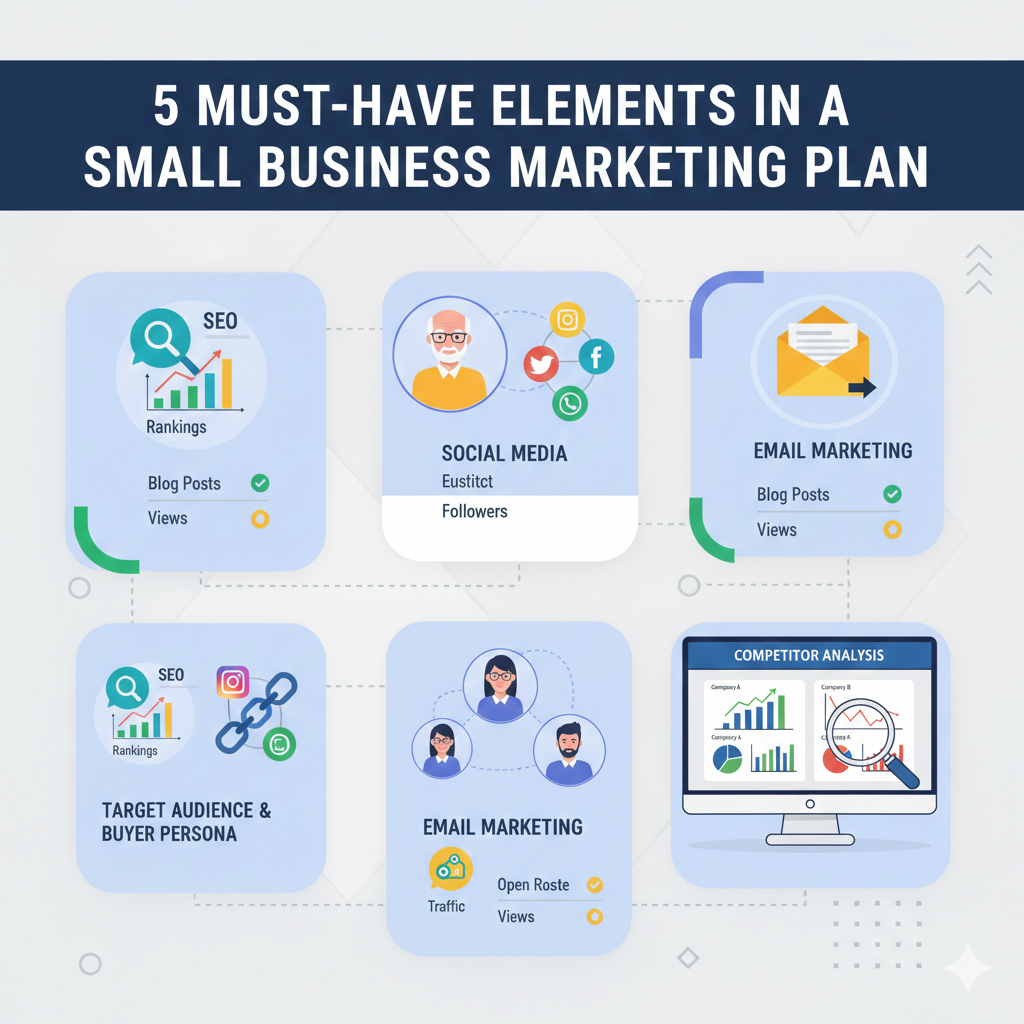
Before implementing AI, it is important to have a solid marketing foundation. 5 Must-Have Elements in a Small Business Marketing Plan (That Drive Real Growth) explains how successful businesses align their marketing activities with measurable goals.
For businesses interested in learning more about how organizations are using AI to improve productivity and customer experiences, Google AI for Business provides useful insights and real-world applications.
The next question is practical: how exactly can AI help save time in your marketing activities? Let’s start with one of the biggest opportunities: content creation.
How AI Helps Small Businesses Save Time on Content Creation
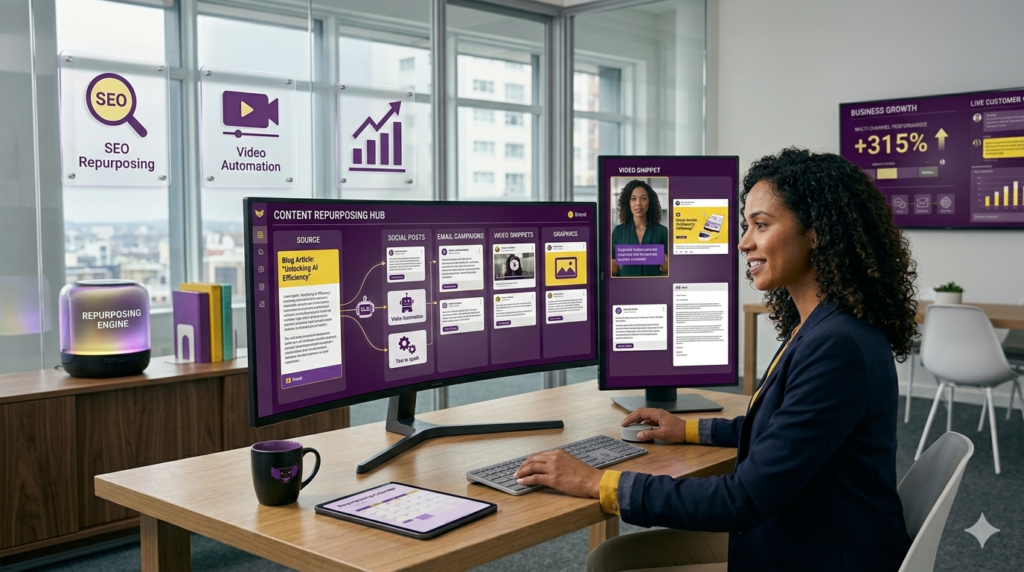
Content marketing is one of the most effective ways to attract customers, build trust, and establish authority. Unfortunately, it is also one of the most time-consuming marketing activities.
Many business owners know they should be publishing blog posts, posting on social media, sending emails, and creating videos. The problem is finding enough time to do it consistently.
This is where AI marketing strategies for small businesses can make a significant difference.
Rather than starting from a blank page every time, AI can help speed up the entire content creation process while allowing you to focus on adding your expertise and personal insights.
Generate Blog Post Ideas Faster
One of the biggest challenges in content marketing is deciding what to create.
Many entrepreneurs spend hours trying to come up with topics.
AI can help generate:
- Blog post ideas
- Content outlines
- Frequently asked questions
- Keyword suggestions
- Supporting subtopics
For example, if you run a landscaping business, AI can quickly suggest content around lawn care, seasonal maintenance, common mistakes, and customer concerns.
This reduces brainstorming time and helps maintain a consistent publishing schedule.
Create Social Media Content More Efficiently
Social media often demands a constant flow of content.
Without a system, it can feel exhausting.
AI can assist with:
- Caption writing
- Content ideas
- Post variations
- Hashtag suggestions
- Content calendars
Instead of creating every post from scratch, you can use AI to generate a first draft and then customize it to match your brand voice.
This approach often cuts content creation time dramatically.
Improve Email Marketing Productivity
Many businesses struggle to send regular email campaigns because writing emails takes time.
AI can help create:
- Newsletter drafts
- Promotional emails
- Welcome sequences
- Follow-up emails
- Subject line ideas
The final message should always be reviewed and personalized, but AI can eliminate much of the heavy lifting.
Develop Video Scripts Quickly
Video content continues to grow in importance.
However, scripting videos can be challenging.
AI can help structure:
- Educational videos
- Product demonstrations
- Tutorials
- Social media videos
- YouTube content
This allows you to spend more time recording and less time staring at a blank document.
Write Better Product Descriptions
For e-commerce businesses, writing descriptions for dozens or hundreds of products can become overwhelming.
AI can help draft product descriptions that highlight:
- Features
- Benefits
- Use cases
- Customer outcomes
You can then edit the content to ensure accuracy and maintain your unique voice.
Repurpose Existing Content
One of the smartest uses of AI content creation is repurposing.
Many business owners create one piece of content and move on to the next.
AI helps extract more value from every asset.
For example, a single blog post can become:
- Five Facebook posts
- Three Instagram captions
- One LinkedIn article
- One email newsletter
- Several short video ideas
This approach allows you to maintain visibility without constantly creating new content from scratch.
A Practical Example
Imagine you publish a blog article about customer acquisition.
Using AI, you could quickly transform that article into:
- A week’s worth of social media posts
- A customer email
- A short educational video script
- A LinkedIn post
- A downloadable checklist
Instead of creating five separate pieces of content, you create one strong asset and repurpose it across multiple channels.
This is one of the biggest productivity advantages AI offers.
AI Helps You Create More With Less Time
The goal is not to let AI replace your expertise.
The goal is to eliminate repetitive work so you can focus on strategy, creativity, and customer relationships.
When used correctly, AI allows small business owners to produce more high-quality content without spending every waking hour on marketing.
If you are using content to grow your audience on social media, Stop Posting Blindly: 5 Social Media Marketing Strategies for Small Businesses provides a framework for turning content into engagement and business growth.
For businesses exploring AI-powered content workflows, OpenAI provides examples of how generative AI can assist with writing, brainstorming, research, and productivity.
Creating content is only one part of the marketing process. Next, let’s explore how AI can improve social media marketing through automation, optimization, and audience insights.
AI Marketing Strategies for Small Businesses Using Social Media Automation

Social media can be one of the most effective marketing channels for a small business. It helps build brand awareness, attract customers, generate leads, and strengthen relationships.
The challenge is that social media requires consistent effort.
Many entrepreneurs start strong, posting regularly for a few weeks before becoming overwhelmed by the constant demand for new content.
This is where AI marketing strategies for small businesses can help.
AI does not just assist with content creation. It can also improve scheduling, optimization, audience insights, and performance tracking.
When used strategically, AI allows you to spend less time managing social media and more time growing your business.
Automate Content Scheduling
One of the easiest ways to save time is through content scheduling.
Instead of creating and posting content daily, AI-powered scheduling tools can help organize and publish content in advance.
Benefits include:
- Consistent posting
- Better content planning
- Improved productivity
- Reduced stress
Many businesses batch-create content for an entire week or month and use scheduling tools to publish automatically.
This helps maintain visibility even during busy periods.
Generate Better Content Ideas
Running out of content ideas is a common problem.
AI can analyze trends, customer questions, and industry discussions to generate relevant content suggestions.
For example, AI can help identify:
- Frequently asked customer questions
- Emerging industry topics
- Trending conversations
- Seasonal opportunities
- Content gaps
This ensures your content remains useful and timely.
Identify Trends Faster
Social media trends move quickly.
By the time many businesses notice a trend, it may already be losing momentum.
AI tools can monitor conversations, hashtags, and engagement patterns to help identify opportunities earlier.
This allows businesses to participate in relevant discussions while they are still gaining traction.
However, not every trend deserves your attention.
Always evaluate whether a trend aligns with your audience and business goals before participating.
Support Audience Engagement
Responding to customers remains important.
While AI should not replace genuine human interactions, it can assist with routine tasks.
Examples include:
- Suggested responses
- Message organization
- Frequently asked questions
- Customer support assistance
This helps businesses respond more efficiently while maintaining a personal touch.
Improve Performance Tracking
Many entrepreneurs post content without analyzing results.
This makes improvement difficult.
AI-powered analytics tools can help identify:
- Top-performing posts
- Audience preferences
- Engagement patterns
- Best posting times
- Conversion opportunities
Instead of guessing what works, businesses can make decisions based on actual data.
Optimize Content Performance
AI can also help improve existing content.
For example, it may recommend:
- Better captions
- Stronger headlines
- Improved posting schedules
- More effective calls-to-action
- Higher-performing content formats
Small improvements often compound over time.
The Real Advantage of Social Media Automation
The greatest benefit of automation is not simply saving time.
It is creating consistency.
Many businesses fail on social media because they disappear for weeks or months at a time.
AI-supported workflows make it easier to maintain a regular presence, which strengthens trust and increases visibility.
A Practical Example
Imagine a local service business that creates one educational video each week.
Using AI, that single video can be transformed into:
- Multiple social media posts
- Short video clips
- Captions
- Email content
- Blog ideas
The business gains significantly more value from every piece of content created.
This approach increases efficiency without sacrificing quality.
Automation Should Support Relationships
One mistake businesses make is trying to automate everything.
Customers still value authenticity.
AI should handle repetitive tasks while allowing you to focus on conversations, customer service, and relationship-building.
The businesses that benefit most from AI are those that combine automation with genuine human engagement.
If your business relies on local visibility, GET FOUND FAST: 5 Local Marketing Strategies for Small Businesses explains how social media can work alongside local marketing efforts to attract nearby customers.
For businesses exploring AI-powered marketing and automation tools, HubSpot AI Resources provides practical guidance on automation, content optimization, and marketing productivity.
Social media is only one area where AI can create efficiency. Another major opportunity lies in email marketing, where AI can help businesses personalize communication and improve customer relationships at scale.
How AI Improves Email Marketing for Small Businesses
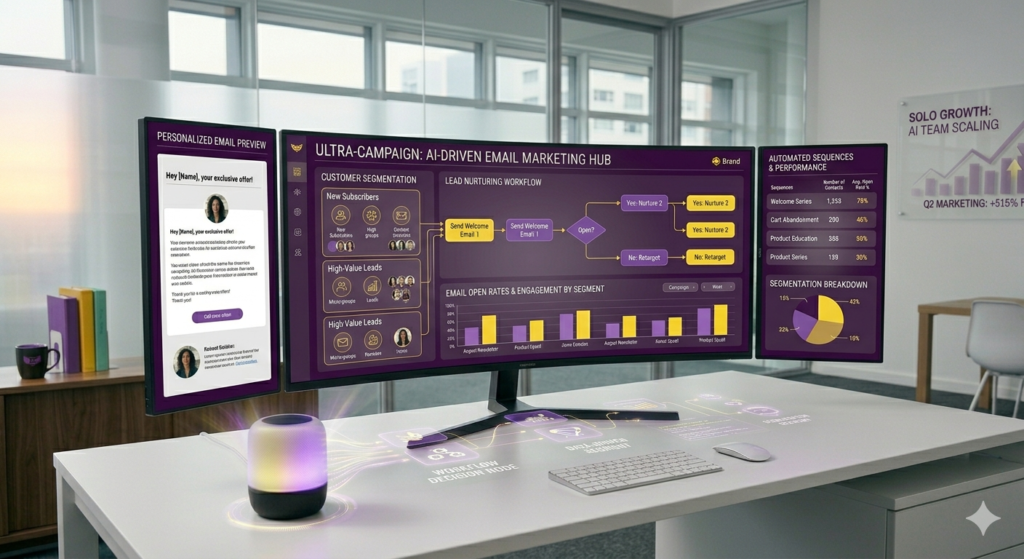
Email marketing remains one of the highest-return marketing channels available to small businesses. Unlike social media platforms, where algorithms control visibility, email gives you direct access to your audience.
The challenge is that effective email marketing requires time, consistency, and personalization.
Many business owners start collecting email addresses but struggle to send regular campaigns because creating emails, segmenting audiences, and analyzing performance can become overwhelming.
This is where AI marketing strategies for small businesses can make a significant impact.
AI helps businesses send smarter emails, improve engagement, and nurture customer relationships without dramatically increasing workload.
Create More Personalized Email Campaigns
Customers are more likely to engage with emails that feel relevant to them.
Generic messages sent to everyone often produce weak results.
AI can help personalize email campaigns by analyzing customer behavior, interests, and interactions.
Examples include:
- Product recommendations
- Personalized content
- Relevant offers
- Follow-up messages
- Customer-specific promotions
The more relevant an email feels, the greater the likelihood of engagement.
Improve Subject Lines
Even the best email is ineffective if nobody opens it.
Subject lines play a major role in determining open rates.
AI tools can generate multiple subject line variations and identify patterns that typically perform well.
This helps businesses improve:
- Open rates
- Click-through rates
- Overall campaign performance
While AI can suggest options, testing different approaches remains important because every audience behaves differently.
Automate Customer Follow-Up
One of the biggest strengths of AI email marketing is automation.
Instead of manually following up with every prospect, businesses can create automated sequences that deliver value over time.
Examples include:
- Welcome emails
- Lead nurturing sequences
- Customer onboarding
- Abandoned cart reminders
- Re-engagement campaigns
Automation ensures prospects continue hearing from your business even when you are focused on other priorities.
Segment Your Audience More Effectively
Not every customer should receive the same message.
AI helps organize contacts into meaningful groups based on factors such as:
- Purchase history
- Engagement levels
- Interests
- Demographics
- Website activity
This allows businesses to deliver more relevant communication and improve conversion rates.
Analyze Campaign Performance
Many entrepreneurs send emails without carefully reviewing results.
AI-powered analytics can help identify:
- Which emails perform best
- Which subject lines generate opens
- Which links attract clicks
- Which campaigns produce sales
These insights help improve future campaigns and eliminate guesswork.
Strengthen Lead Nurturing
Most customers do not buy immediately.
They need time to learn about your business, build trust, and evaluate options.
AI helps businesses nurture leads consistently through automated communication.
Instead of relying on memory or manual follow-up, systems ensure prospects continue receiving helpful information that moves them closer to a purchasing decision.
A Practical Example
Imagine someone downloads a free business planning template from your website.
Rather than stopping there, an AI-assisted email sequence could automatically:
- Deliver the template
- Share educational content
- Answer common questions
- Highlight customer success stories
- Introduce relevant products or services
The subscriber receives value while becoming more familiar with your brand.
Email Marketing Works Best Within a Sales System
AI can improve efficiency, but it is most effective when integrated into a larger customer acquisition process.
Email should not exist in isolation.
It should support lead generation, relationship building, and sales.
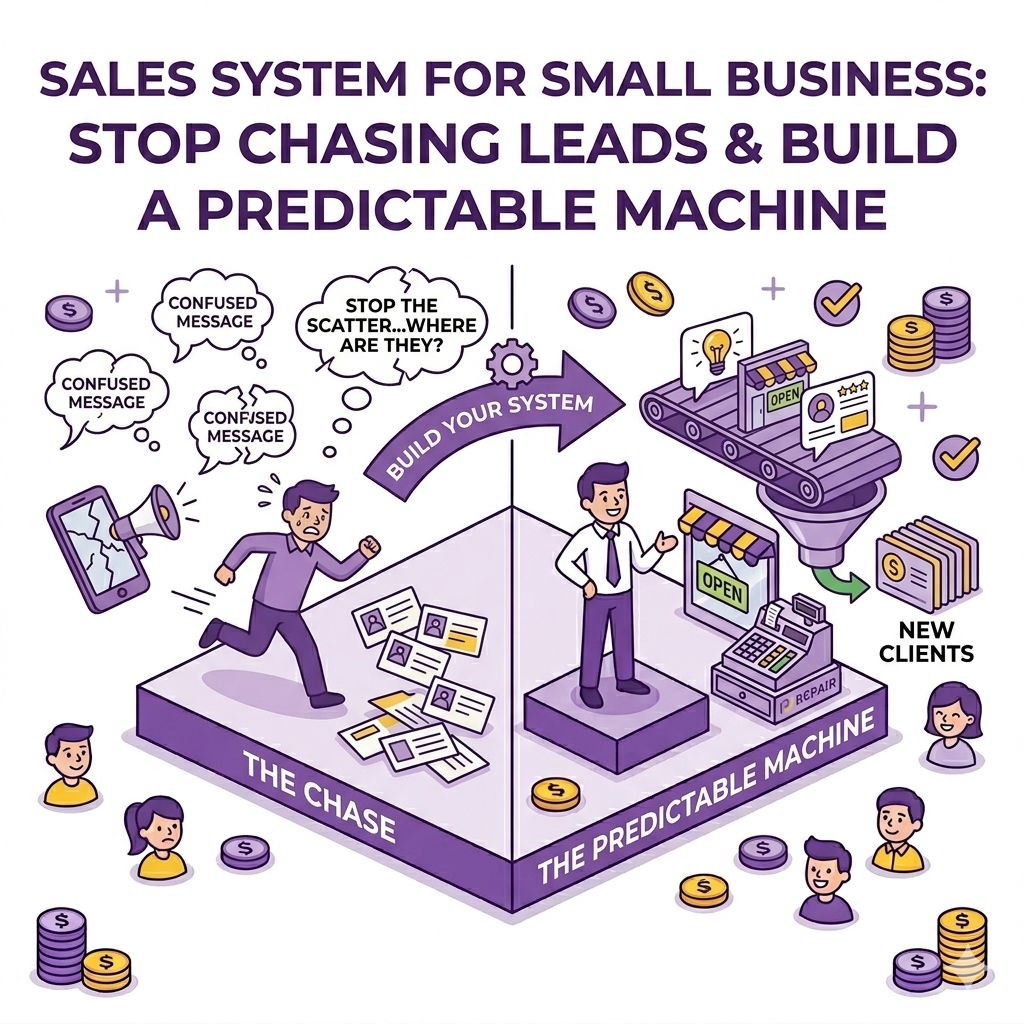
This is why Sales System for a Small Business: Stop Chasing Leads & Build a Predictable Machine in 2026 is such an important companion resource. It explains how marketing activities connect to a repeatable sales process.
For businesses exploring AI-assisted email automation and personalization, Mailchimp AI Marketing Tools provides useful examples of how artificial intelligence can improve email marketing performance.
Email marketing becomes even more powerful when combined with customer insights. Next, let’s explore how AI helps businesses understand customer behavior and make smarter marketing decisions using data.
AI Marketing Strategies for Small Businesses Using Customer Data
One of the most powerful benefits of AI marketing strategies for small businesses is the ability to turn customer data into actionable insights.
Many entrepreneurs collect valuable information every day without realizing it.
Website visits, email opens, social media engagement, purchases, inquiries, and customer feedback all contain clues about what customers want.
The problem is that manually analyzing this information can be difficult and time-consuming.
AI helps businesses uncover patterns, understand customer behavior, and make smarter marketing decisions.
Understand Customer Behavior More Clearly
Many business owners rely on assumptions when making marketing decisions.
They assume they know:
- What customers want
- Which products are most popular
- Why customers buy
- Why prospects leave without purchasing
Sometimes those assumptions are correct.
Often they are not.
AI helps identify actual customer behavior based on data rather than guesswork.
This allows businesses to make more informed decisions.
Predict Customer Interests
One of the most valuable applications of artificial intelligence marketing is predicting what customers may be interested in next.
AI can analyze:
- Past purchases
- Website activity
- Email engagement
- Content interactions
- Product preferences
Using this information, businesses can recommend relevant products, services, or content.
This improves customer experiences while increasing conversion opportunities.
Improve Audience Segmentation
Not all customers have the same needs.
A first-time visitor should not receive the same message as a loyal customer.
AI helps create more precise audience segments based on customer behavior.
Examples include:
- New leads
- Active customers
- High-value customers
- Inactive subscribers
- Frequent buyers
This allows businesses to deliver more relevant marketing messages.
Identify Buying Patterns
Many customers follow predictable buying behaviors.
AI can help businesses identify:
- Peak purchasing periods
- Popular products
- Seasonal demand
- Customer preferences
- Conversion triggers
Understanding these patterns helps improve marketing timing and promotional strategies.
Make Better Marketing Decisions
Every marketing decision carries risk.
The more information you have, the better those decisions become.
AI helps businesses evaluate:
- Campaign performance
- Customer engagement
- Conversion trends
- Marketing effectiveness
- Growth opportunities
Instead of relying on intuition alone, business owners can make decisions supported by evidence.
A Practical Example
Imagine an online business notices that many visitors read articles about business planning but rarely purchase products immediately.
AI analysis reveals that these visitors often return within two weeks and eventually download planning resources before making a purchase.
With this insight, the business creates targeted email sequences and relevant offers specifically for those visitors.
As a result, conversions increase because marketing efforts align with actual customer behavior.
Data Should Guide, Not Control
While AI provides valuable insights, data should support decision-making rather than replace human judgment.
Customer relationships still require empathy, experience, and understanding.
The best results occur when business owners combine data-driven insights with real-world knowledge of their customers.
Why Customer Insights Matter
Many marketing problems are not caused by poor products or weak services.
They occur because businesses do not fully understand their audience.
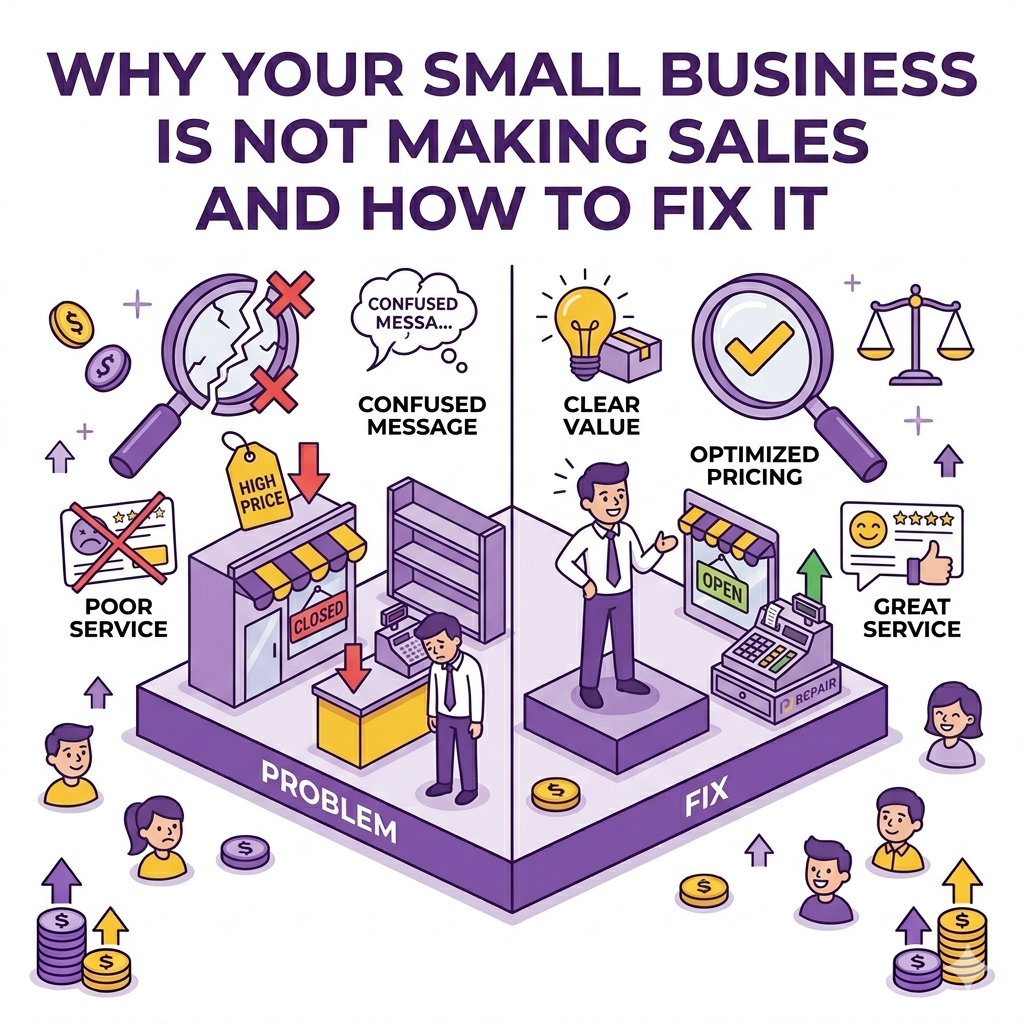
If you are struggling to convert leads into customers, Why Your Small Business Is Not Making Sales (And How to Fix It Fast) explores common sales and marketing issues that often prevent growth.
For businesses interested in improving data analysis and customer insights, Google Analytics Academy offers free training on understanding user behavior and marketing performance.
Understanding customer data is powerful, but choosing the right AI tools is equally important. Next, let’s explore the best AI marketing tools for small businesses in 2026 and how to select the right ones for your needs.
The Best AI Marketing Tools for Small Businesses in 2026
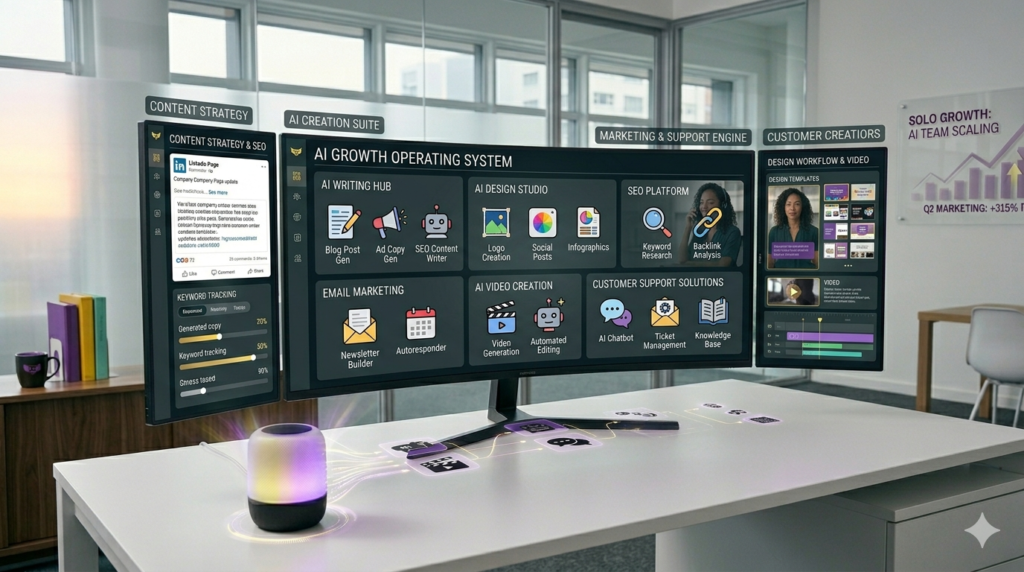
The market is flooded with AI tools.
Every week, new platforms promise faster content creation, better marketing results, and increased productivity. While many of these tools are useful, trying to use all of them can quickly become overwhelming.
The goal of AI marketing strategies for small businesses is not to collect software.
The goal is to choose a few tools that solve real business problems and save meaningful amounts of time.
AI Writing Tools
Content creation is one of the most common uses of artificial intelligence.
AI writing tools can help with:
- Blog outlines
- Social media captions
- Email campaigns
- Video scripts
- Product descriptions
- Brainstorming
These tools work best when they support your expertise rather than replace it.
The most effective content still includes your experiences, insights, and unique perspective.
AI Graphic Design Tools
Many small businesses cannot afford a full-time graphic designer.
AI-powered design tools help create:
- Social media graphics
- Marketing materials
- Presentations
- Advertisements
- Brand visuals
These tools reduce design time while helping maintain professional-looking content.
However, brand consistency remains important.
Templates and automation should support your visual identity rather than replace it.
AI Video Creation Tools
Video continues to dominate online marketing.
AI video tools can help:
- Generate captions
- Edit videos
- Repurpose long videos into short clips
- Create voiceovers
- Produce simple marketing videos
For businesses using video content regularly, these tools can save several hours each week.
AI SEO Tools
Search engine optimization can be complex.
AI SEO tools help businesses:
- Research keywords
- Identify content opportunities
- Analyze competitors
- Optimize articles
- Improve search visibility
These insights help create content that aligns more closely with customer search intent.
AI Email Marketing Tools
Modern email platforms increasingly use artificial intelligence to support:
- Personalization
- Audience segmentation
- Subject line testing
- Automated campaigns
- Performance analysis
These capabilities help businesses communicate more effectively with subscribers.
AI Customer Support Tools
Customer service often consumes significant amounts of time.
AI-powered support tools can assist with:
- Frequently asked questions
- Chat support
- Ticket management
- Customer inquiries
- Basic troubleshooting
This allows business owners to focus on more complex customer interactions.
How to Choose the Right AI Tool
One mistake many entrepreneurs make is selecting tools based solely on popularity.
A better approach is to evaluate each tool based on your specific needs.
Consider Your Budget
The most expensive tool is not always the best option.
Start with tools that provide clear value relative to cost.
Many businesses achieve excellent results using affordable or free plans.
Prioritize Ease of Use
A powerful tool is useless if it is too complicated to use consistently.
Look for platforms with intuitive interfaces and strong support resources.
Check Integration Capabilities
The best tools work well with your existing systems.
Consider whether a tool integrates with:
- Email platforms
- CRM systems
- Social media tools
- Analytics software
- Website platforms
Good integration reduces manual work.
Think About Scalability
Choose tools that can grow with your business.
Switching platforms repeatedly can become expensive and disruptive.
Start Small and Expand
Many entrepreneurs make the mistake of adopting five or ten AI tools at once.
This often creates confusion rather than efficiency.
Start with one or two tools that solve your biggest challenges.
Master those first.
Then expand gradually as your needs evolve.
The businesses that benefit most from AI are not necessarily the ones using the most tools.
They are the ones using the right tools effectively.
If your goal is long-term growth rather than short-term productivity alone, How to Scale Fast: 9 Proven Growth Strategies for New Business Owners explains how systems, processes, and technology work together to support sustainable expansion.
For businesses evaluating AI solutions, OpenAI and HubSpot AI Resources provide useful information about practical business applications of artificial intelligence.
While AI tools can be powerful, they are not foolproof. Next, let’s look at the common mistakes businesses make when implementing AI marketing and how to avoid them.
Common Mistakes When Using AI Marketing Strategies for Small Businesses
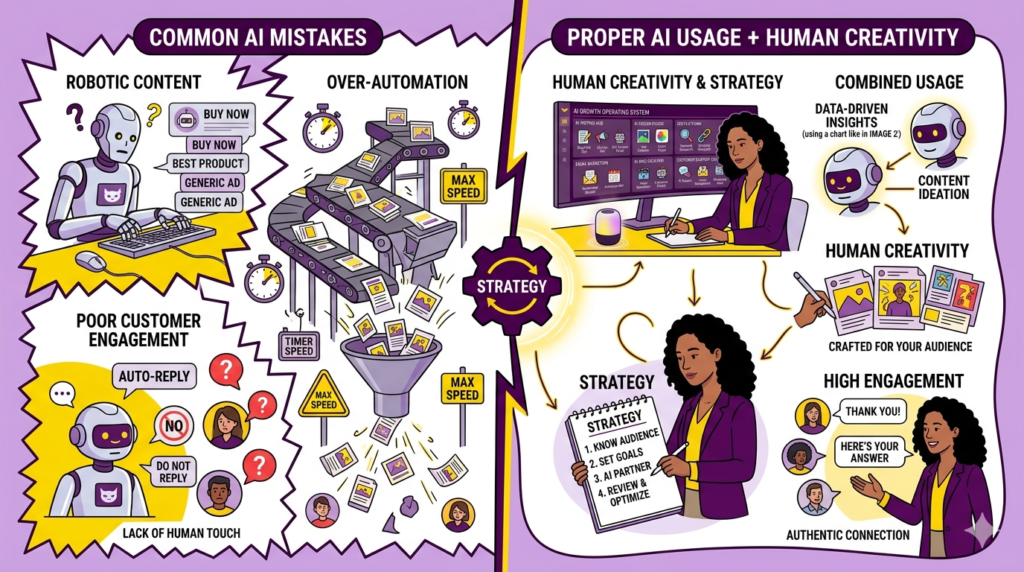
While AI marketing strategies for small businesses can improve productivity and efficiency, they are not a magic solution.
Many businesses adopt AI expecting instant results and end up disappointed because they use the technology incorrectly.
The problem is usually not the tool.
The problem is the way the tool is being used.
Understanding the most common mistakes can help you avoid wasted time, poor customer experiences, and ineffective marketing campaigns.
Over-Automating Everything
Automation can save time, but too much automation can damage customer relationships.
Customers still want to interact with real people.
If every email, social media response, and customer interaction feels robotic, trust can decline quickly.
AI should handle repetitive tasks while allowing genuine human engagement where it matters most.
Publishing AI Content Without Editing
One of the biggest mistakes business owners make is copying AI-generated content and publishing it immediately.
AI can create a strong first draft, but it often lacks:
- Personal experiences
- Industry insights
- Brand personality
- Customer-specific context
Before publishing any content, review it carefully and add your expertise.
This is what separates valuable content from generic content.
Losing Your Brand Voice
Customers connect with businesses because of their unique personality and perspective.
If all content sounds identical to every other AI-generated article online, standing out becomes difficult.
Use AI as a starting point.
Then customize the content so it reflects your brand values, communication style, and customer needs.
Ignoring Human Creativity
AI excels at processing information and generating ideas.
However, creativity, innovation, and emotional connection remain human strengths.
The most successful businesses combine AI efficiency with human creativity.
They use technology to support ideas, not replace them.
Using Too Many Tools
New AI tools appear almost every day.
Many entrepreneurs fall into the trap of constantly switching platforms.
This creates unnecessary complexity.
Instead of managing ten different tools, focus on a few that solve your most important problems.
Simplicity often leads to better execution.
Neglecting Customer Relationships
Marketing is ultimately about people.
No amount of automation can replace trust, communication, and relationship-building.
Customers buy from businesses they know, like, and trust.
AI can help start conversations and maintain consistency, but lasting relationships still require a human touch.
Focus on Strategy First
Many businesses adopt AI before establishing clear marketing objectives.
This often leads to activity without results.
Technology should support a strategy, not become the strategy itself.
Before adding new tools, make sure you understand:
- Your target audience
- Your marketing goals
- Your customer journey
- Your sales process
AI Is a Tool, Not a Shortcut
The businesses seeing the best results from AI are not looking for shortcuts.
They are using technology to improve existing systems and processes.
If you find your business struggling despite adopting new tools, 9 Common Mistakes That Are Slowing Your Small Business Growth highlights additional issues that often prevent businesses from reaching their potential.
The good news is that avoiding these mistakes is relatively straightforward. The next section brings everything together with a simple AI marketing workflow that small business owners can start implementing immediately.
A Simple AI Marketing Workflow for Small Business Owners
One reason many entrepreneurs struggle with AI is that they use it randomly.
They generate a few social media captions one day, ask for blog ideas the next day, and experiment with different tools without a clear process.
The result is inconsistency.
To get the most value from AI marketing strategies for small businesses, you need a workflow.
A workflow turns AI from an occasional productivity tool into a system that supports marketing growth every week.
The following framework is simple enough for beginners while still being powerful enough to scale with your business.
Step 1: Research and Planning With AI
Every successful marketing campaign starts with research.
Before creating content, use AI to help identify:
- Customer pain points
- Frequently asked questions
- Content opportunities
- Industry trends
- Keyword ideas
This helps ensure your marketing focuses on topics your audience actually cares about.
Instead of guessing what customers want, you begin with data and insights.
Step 2: Content Creation
Once you have a plan, use AI to accelerate content creation.
AI can help generate:
- Blog outlines
- Social media posts
- Email drafts
- Video scripts
- Lead magnets
Remember that AI should provide the foundation.
Your expertise, experiences, and insights should shape the final version.
This combination creates content that is both efficient and authentic.
Step 3: Content Scheduling and Distribution
Creating content is only half the battle.
The next step is making sure people actually see it.
Use scheduling tools to distribute content consistently across:
- Social media platforms
- Email campaigns
- Blogs
- Community groups
- Professional networks
Consistency is one of the biggest advantages AI-supported systems provide.
Step 4: Lead Generation and Customer Nurturing
Marketing should eventually lead to business growth.
Every piece of content should encourage a next step.
Examples include:
- Joining your email list
- Downloading a resource
- Booking a consultation
- Requesting a quote
- Visiting a sales page
AI can help automate follow-up sequences and nurture leads while you focus on serving customers.
Step 5: Analytics and Optimization
The final step is improvement.
Review performance regularly.
Use AI-assisted analytics to identify:
- High-performing content
- Customer interests
- Conversion opportunities
- Weak points in your marketing process
Then use those insights to improve future campaigns.
The Complete AI Marketing Framework
When combined, these steps create a repeatable process:
Research → Create → Publish → Convert → Improve
This framework helps eliminate guesswork and creates a system that becomes more effective over time.
A Practical Example
Imagine a business owner creating one blog post each week.
Using this workflow, that blog post becomes:
- Multiple social media posts
- An email newsletter
- A short video script
- Lead generation content
- Customer education material
One asset fuels multiple marketing channels.
This approach maximizes productivity while reducing workload.
Focus on Progress, Not Perfection
Many entrepreneurs delay implementation because they feel they need the perfect system.
They do not.
Start with one workflow.
Master it.
Then improve it gradually.
The businesses that benefit most from AI are often the ones that consistently apply simple systems rather than chasing every new tool or trend.
If your long-term goal is sustainable business growth, How to Scale Fast: 9 Proven Growth Strategies for New Business Owners provides additional frameworks for building systems that support expansion.
For businesses interested in improving marketing measurement and optimization, Google Analytics Academy offers free training that complements AI-powered decision-making.
Now that we’ve covered the workflow, let’s answer some of the most common questions entrepreneurs have about AI marketing.
Frequently Asked Questions
What is the best AI marketing tool for small businesses?
There is no single best AI marketing tool for every business.
The right choice depends on your goals, budget, and marketing activities.
For example:
- AI writing tools help with content creation.
- AI design tools support graphic creation.
- AI email platforms improve customer communication.
- AI analytics tools help with performance tracking.
Many small businesses start with one tool that solves their biggest challenge and expand from there.
Can AI replace a marketing team?
Not completely.
AI can automate repetitive tasks, generate content ideas, analyze data, and improve productivity. However, it cannot fully replace strategy, creativity, customer relationships, and business judgment.
The most successful businesses use AI to support people, not replace them.
Think of AI as a highly efficient assistant rather than a complete marketing department.
How much time can AI save small business owners?
The amount varies depending on how it is used.
Many entrepreneurs report saving several hours each week by using AI for:
- Content creation
- Research
- Email marketing
- Social media planning
- Data analysis
Businesses that develop structured workflows often experience the greatest time savings.
Is AI marketing expensive?
Not necessarily.
Many AI tools offer free plans or affordable subscriptions.
In many cases, the productivity gains outweigh the cost.
The key is selecting tools that solve specific business problems rather than subscribing to multiple platforms you rarely use.
Start small and expand only when needed.
How can beginners start using AI in marketing?
The easiest approach is to focus on one area first.
For example, you could begin by using AI for:
- Blog post ideas
- Social media captions
- Email drafts
- Content planning
Once you become comfortable with one application, gradually explore additional use cases.
The goal is progress, not complexity.
For businesses interested in learning more about practical AI applications, OpenAI and Google AI for Business provide resources and examples that demonstrate how artificial intelligence can support marketing and business operations.
Conclusion
The rise of artificial intelligence has created new opportunities for entrepreneurs willing to adapt.
As we’ve explored throughout this guide, AI marketing strategies for small businesses are not about replacing human creativity, expertise, or customer relationships. They are about helping small business owners achieve more with the time and resources they already have.
From content creation and social media management to email marketing, customer insights, and marketing automation, AI can eliminate many repetitive tasks that often slow business growth.
This allows entrepreneurs to focus on what matters most.
Building relationships.
Serving customers.
Making better decisions.
Creating value.
The businesses gaining the greatest advantage in 2026 are not necessarily the ones using the most advanced AI tools.
They are the ones using AI strategically.
They understand that technology works best when combined with clear goals, strong marketing fundamentals, and consistent execution.
If you are just getting started, do not try to automate everything at once.
Choose one area of your marketing.
Build a simple workflow.
Measure the results.
Then expand gradually as your confidence and experience grow.
The future of small business marketing will belong to entrepreneurs who learn how to combine human expertise with artificial intelligence.
Those who start early will often have an advantage over competitors who wait too long to adapt.
To continue building your marketing systems, explore these related resources:
- Stop Posting Blindly: Social Media Marketing Strategies for Small Businesses
- Sales System for a Small Business: Stop Chasing Leads & Build a Predictable Machine in 2026
- 5 Must-Have Elements in a Small Business Marketing Plan (That Drive Real Growth)
AI is not a shortcut to success.
It is a tool.
When used wisely, it can help your business save time, improve productivity, attract more customers, and grow faster in an increasingly competitive marketplace.