
Introduction

Many small business owners struggle with social media marketing strategies because they approach social media without a clear plan. They post whenever they remember, copy what competitors are doing, follow random trends, and hope that more content will eventually lead to more customers.
Unfortunately, that approach rarely works.
Every day, businesses invest hours creating posts, videos, stories, and graphics that generate a few likes and comments but produce little impact on actual business growth. This often leads to frustration because, despite being active on social media, sales remain flat and customer inquiries stay low.
The biggest mistake is not a lack of effort. It is posting without a strategy.
Many entrepreneurs assume that being active on social media automatically means they are marketing their business. In reality, there is a significant difference between random posting and strategic social media marketing. One creates activity. The other creates results.
Another common misconception is that likes, views, and followers always translate into revenue. While engagement can be valuable, a growing audience means very little if it does not contribute to customer acquisition, lead generation, or sales. A business can have thousands of followers and still struggle to generate consistent income.
Successful social media marketing for small business owners starts with understanding why content is being created in the first place. Every post should support a larger objective, whether that objective is increasing brand awareness, generating leads, building trust, growing an email list, or converting prospects into paying customers.
A local business owner who posts random product photos every week may see limited results. Another business owner with a clear content strategy, defined audience, and consistent messaging can generate inquiries, appointments, and sales from the same platforms.
That is why strategy matters more than posting frequency.
In this guide, you will learn proven social media marketing strategies for small businesses that help attract the right audience, increase engagement, build trust, and turn followers into customers. Instead of posting blindly, you will discover how to create a system that supports real business growth in 2026.
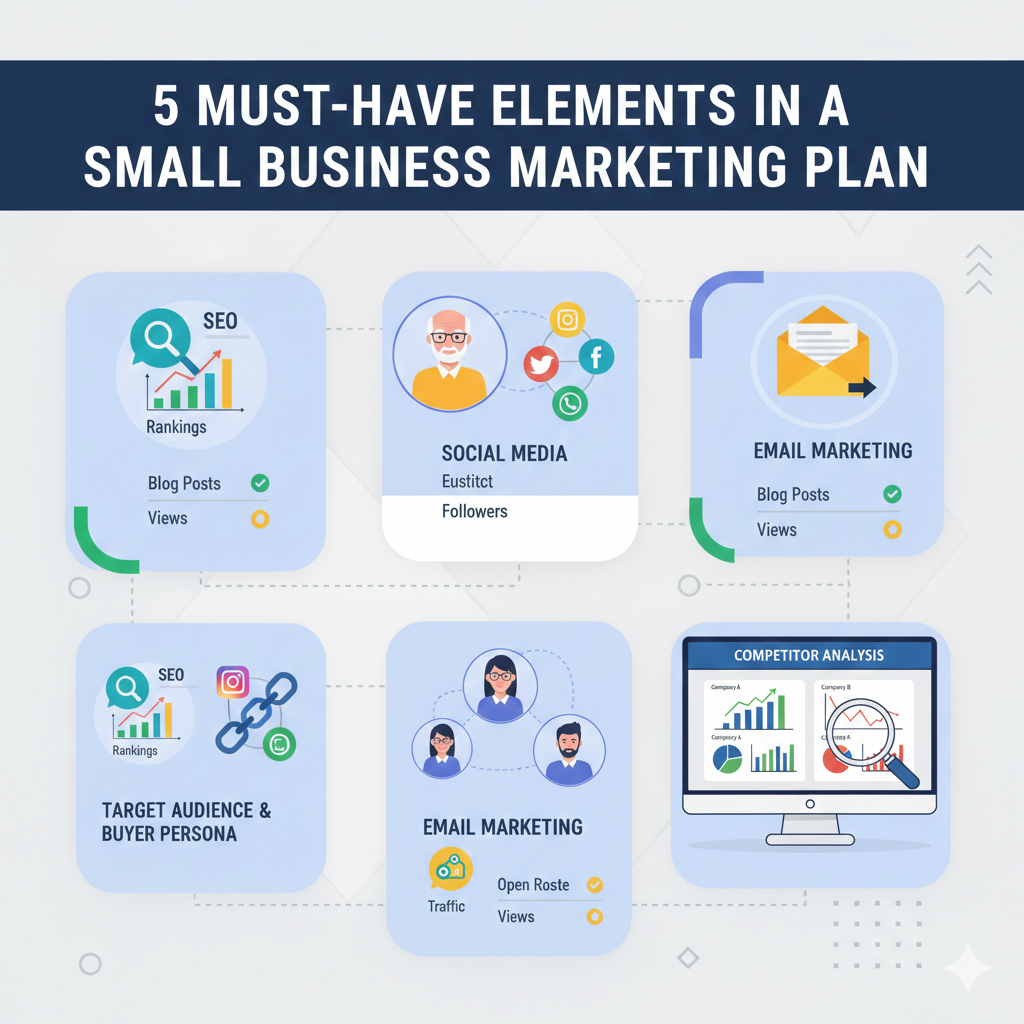
Before focusing on social media specifically, it helps to understand how social media fits into your broader marketing efforts. 5 Must-Have Elements in a Small Business Marketing Plan (That Drive Real Growth) explains the foundation every business should have before investing significant time into any marketing channel.
Why Most Small Business Social Media Marketing Strategies Fail
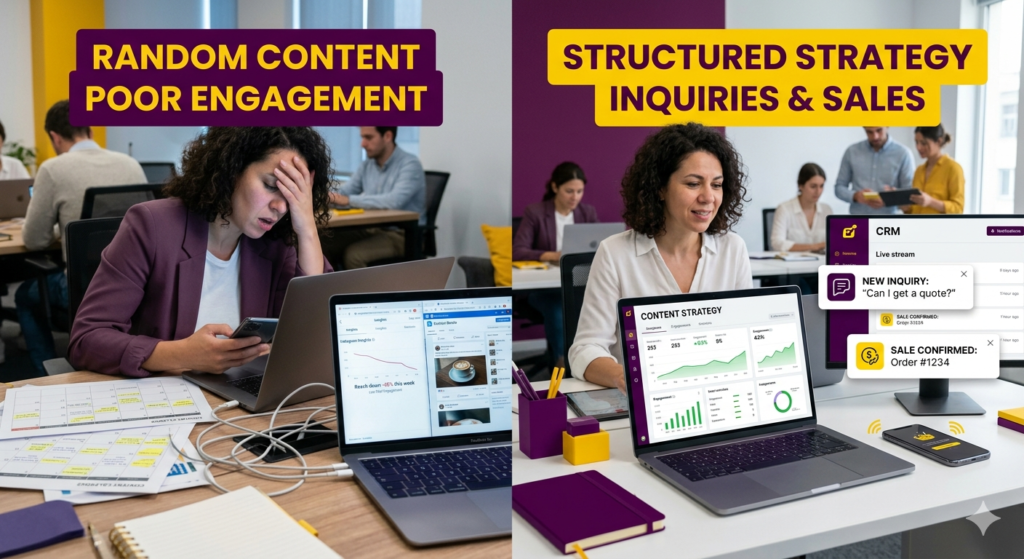
Many business owners believe social media success comes from posting more often. When engagement drops, they create more content. When followers stop growing, they post even more. Yet despite the extra effort, results often remain disappointing.
The problem is rarely the amount of content being published. The problem is usually the lack of a clear social media marketing strategy.
This is why many social media marketing strategies for small businesses fail long before they have a chance to generate meaningful growth.
Posting Without Clear Goals
One of the biggest mistakes small business owners make is posting without knowing exactly what they want to achieve.
For example, are you trying to:
- Generate leads?
- Increase sales?
- Build brand awareness?
- Grow an email list?
- Drive website traffic?
- Book consultations?
Without clear goals, it becomes impossible to measure success.
A business that wants more sales should create different content than a business focused on brand awareness. Every piece of content should support a specific business objective.
Inconsistent Branding
Another common problem is inconsistency.
Many businesses present themselves differently across platforms.
Their logo changes.
Their messaging changes.
Their tone changes.
Their offers change.
This creates confusion and weakens trust.
Strong brands are recognizable because they consistently communicate who they are, who they serve, and what they stand for.
Chasing Trends Blindly
Trends can increase visibility, but they should never replace strategy.
Many entrepreneurs spend hours copying viral videos, trending audio, and popular content formats without considering whether those trends align with their audience or business goals.
A trend may generate views, but views alone do not guarantee customers.
The most successful businesses use trends selectively and only when they support their marketing objectives.
Focusing Only on Followers
Many people measure success by follower count.
While audience growth can be beneficial, followers are not the ultimate goal.
Customers are.
Revenue is.
Business growth is.
A business with 1,000 highly engaged followers who trust the brand will often outperform a business with 50,000 followers who rarely interact or buy.
This is why smart social media growth for businesses focuses on attracting the right audience rather than simply chasing larger numbers.
Not Understanding the Customer
Perhaps the biggest reason social media marketing for small business owners fails is a lack of customer understanding.
Some businesses create content based on what they want to say instead of what customers want to hear.
Successful content addresses:
- Customer problems
- Customer goals
- Customer frustrations
- Customer questions
- Customer desires
When content solves real problems, engagement and conversions naturally improve.
A Simple Comparison
Imagine two local businesses.
The first business post is randomly whenever time allows. Some posts promote products, others share quotes, and many have no clear purpose.
The second business follows a structured content strategy. Every post educates, engages, builds trust, or guides potential customers toward a specific action.
After several months, the difference becomes obvious.
The first business stays busy posting.
The second business attracts leads, builds relationships, and generates sales.
The lesson is simple: activity is not the same as progress.
If your social media efforts are generating attention but not revenue, Why Your Small Business Is Not Making Sales (And How to Fix It Fast) can help identify common conversion problems that many entrepreneurs overlook.
Many of these challenges are also connected to broader growth issues discussed in 9 Common Mistakes That Are Slowing Your Small Business Growth.
According to Meta Business Help Center, businesses achieve stronger results when content creation is tied directly to defined business objectives rather than vanity metrics alone.
Now that we’ve identified why most social media strategies fail, let’s build a framework that helps small businesses create a social media marketing strategy before posting a single piece of content.
Build a Social Media Marketing Strategy for Small Businesses Before Posting

Before creating content, choosing hashtags, or worrying about follower counts, you need a plan. The most effective social media marketing strategies for small businesses begin long before the first post goes live.
Many small business owners treat social media like a daily task. They wake up, think of something to post, publish it, and move on. The problem with this approach is that it creates activity without direction.
A strong social media strategy ensures every piece of content supports a larger business objective.
Think of the process as a simple framework:
Goals → Audience → Content → Engagement → Conversion
When these five elements work together, social media becomes a growth tool rather than a time-consuming obligation.
Define Your Business Objectives
The first question is simple:
What do you want social media to accomplish for your business?
Different businesses have different objectives.
Some want:
- More brand awareness
- More leads
- More website traffic
- More email subscribers
- More sales
- More appointments
Your objective will influence everything from the content you create to the platforms you prioritize.
For example, if your goal is lead generation, your content should focus on educating prospects and encouraging them to take the next step.
If your goal is brand awareness, your content may focus more on visibility and audience growth.
Without clear objectives, it becomes difficult to know whether your efforts are succeeding.
Know Your Target Audience
One of the most important social media tips for small businesses is understanding exactly who you are trying to reach.
Many entrepreneurs create content for everyone.
The result is content that resonates with no one.
Ask yourself:
- Who is my ideal customer?
- What problems are they facing?
- What goals do they have?
- What questions are they asking?
- Which social platforms do they use most?
The better you understand your audience, the easier it becomes to create content they actually care about.
Choose Your Content Pillars
Content pillars are the main topics your business will consistently discuss.
They provide structure and help prevent the common problem of running out of ideas.
A small business might use pillars such as:
- Education
- Customer success stories
- Industry insights
- Behind-the-scenes content
- Promotions
For example, a digital marketing consultant may create content around:
- Marketing tips
- Business growth strategies
- Customer case studies
- Entrepreneur mindset
- Service offers
These pillars ensure consistency while keeping content relevant.
Establish Measurable Goals
A successful small business social media strategy requires measurable targets.
Examples include:
- Generate 20 leads per month
- Increase website traffic by 30%
- Grow email subscribers by 100 in 90 days
- Book 10 consultations monthly
Specific goals help you evaluate progress and make better decisions.
Plan for Engagement and Conversion
Many businesses stop after creating content.
That is a mistake.
Content attracts attention, but engagement builds relationships, and conversion generates revenue.
Every content strategy should answer two questions:
- How will we encourage engagement?
- How will we move people toward becoming customers?
This is where calls-to-action, lead magnets, direct messages, email lists, and sales systems become important.
Social media should not exist in isolation. It should support your overall business growth strategy.
If you are building a business with limited resources, How to Start a Business With No Money in 2026: The Complete Bootstrapping Blueprint shows how strategic marketing can help you gain traction without large advertising budgets.
For entrepreneurs who are still establishing their business foundation, How to Register a Small Business Step by Step: The Ultimate Beginner’s Checklist explains important steps for building a legitimate and scalable business.
According to the Instagram Creators Guide, businesses that consistently create content for a clearly defined audience typically achieve stronger engagement and long-term growth than those that publish without a structured strategy.
Once your strategy is in place, the next step is choosing the right social media platforms. Not every platform is right for every business, and trying to be everywhere often leads to burnout and poor results.
Choose the Right Social Media Platforms for Your Small Business

One of the biggest mistakes entrepreneurs make when implementing social media marketing strategies for small businesses is trying to be active on every platform at the same time.
A new business launches a Facebook page, Instagram account, TikTok profile, LinkedIn page, Pinterest account, YouTube channel, and X account. Within a few weeks, content creation becomes overwhelming, and consistency disappears.
The truth is simple.
You do not need to be everywhere.
You need to be where your customers are.
Choosing the right platform is not about popularity. It is about finding the best fit between your audience, content style, and business goals.
Stop Trying to Be Everywhere
Many small businesses spread themselves too thin.
Instead of building a strong presence on one or two platforms, they struggle to maintain weak activity across six or seven.
A better approach is to focus your resources where they can generate the highest return.
It is better to dominate one platform than be invisible on five.
As your business grows, you can always expand to additional channels.
Facebook for Community Building
Despite the rise of newer platforms, Facebook remains one of the strongest tools for local businesses.
Facebook works particularly well for:
- Local service businesses
- Restaurants
- Retail stores
- Community-focused brands
- Event promotion
Features such as groups, events, reviews, and local targeting make Facebook valuable for building relationships and engaging nearby customers.
Instagram for Visual Brands
Instagram is ideal for businesses that can showcase products, experiences, transformations, or visual results.
Examples include:
- Fashion brands
- Beauty businesses
- Fitness coaches
- Photographers
- Restaurants
- Home décor businesses
Strong visuals, short-form videos, and stories help businesses build trust while increasing visibility.
TikTok for Organic Reach
TikTok continues to provide significant organic reach opportunities.
Unlike many platforms that require large audiences to gain visibility, TikTok can expose content to new audiences even when an account has few followers.
TikTok works particularly well for:
- Educational content
- Business tips
- Product demonstrations
- Behind-the-scenes videos
- Storytelling content
Small businesses willing to create authentic content often see impressive reach.
LinkedIn for B2B Businesses
If your customers are professionals, executives, consultants, or organizations, LinkedIn deserves serious attention.
LinkedIn is effective for:
- Consultants
- Agencies
- Coaches
- Professional service providers
- Software companies
Thought leadership content often performs exceptionally well on this platform.
Pinterest for Long-Term Traffic
Many entrepreneurs overlook Pinterest.
That is a mistake.
Pinterest functions more like a visual search engine than a traditional social network.
Content can continue generating traffic for months or even years after publication.
Pinterest works particularly well for:
- Bloggers
- E-commerce stores
- DIY brands
- Home improvement businesses
- Food businesses
- Educational content creators
YouTube for Authority Building
YouTube requires more effort, but it offers significant long-term benefits.
Video content helps businesses:
- Demonstrate expertise
- Build trust
- Improve search visibility
- Generate leads over time
Well-optimized videos can continue attracting viewers long after they are published.
Match Platforms to Business Goals
The best platform depends on your audience and objectives.
For example:
- A local bakery may prioritize Facebook and Instagram.
- A marketing consultant may focus on LinkedIn and YouTube.
- An online store may use Instagram, TikTok, and Pinterest.
- A local service business may combine Facebook with local SEO efforts.
The goal is not to follow trends blindly. The goal is to invest effort where customers are most likely to discover and engage with your business.
If your business relies heavily on attracting customers within a specific geographic area, GET FOUND FAST: 5 Local Marketing Strategies for Small Businesses complements social media by helping increase visibility in local search and community channels.
Platform trends and best practices continue evolving, and resources such as the TikTok Business Learning Center and LinkedIn Marketing Solutions provide useful guidance for businesses looking to maximize platform performance.
Choosing the right platforms creates the foundation. The next challenge is creating content that attracts customers instead of simply collecting likes and views.
Create Content That Attracts Customers Instead of Just Likes

One of the biggest misconceptions about social media marketing strategies for small businesses is that success is measured by likes, comments, and follower counts.
While engagement is important, it is not the ultimate goal.
Business growth is.
Many entrepreneurs celebrate a post that reaches thousands of people, only to realize that it generated no leads, no inquiries, and no sales. Meanwhile, another post with fewer views may attract several qualified prospects because it addressed a real customer problem.
This is why effective social media marketing for small business owners focuses on attracting customers rather than chasing vanity metrics.
Understand the Purpose of Every Post
Before publishing content, ask yourself:
“What business objective does this post support?”
Every piece of content should do at least one of the following:
- Educate
- Build trust
- Create engagement
- Demonstrate expertise
- Generate leads
- Encourage action
Random content creates random results.
Strategic content creates predictable outcomes.
Educational Content
Educational content is often the most effective type of content for small businesses.
People use social media to learn, solve problems, and find answers.
When your content helps them achieve those goals, trust grows naturally.
Examples include:
- How-to guides
- Industry tips
- Common mistakes to avoid
- Frequently asked questions
- Step-by-step tutorials
For example, a business consultant could create content about business planning, customer acquisition, or marketing fundamentals.
A fitness coach could share workout tips and nutrition advice.
Educational content positions your business as a helpful resource rather than just another seller.
Problem-Solving Content
Customers are constantly looking for solutions.
Content that addresses specific problems often performs better than generic advice.
Examples include:
- Why your marketing is not generating leads
- Common reasons websites fail to convert visitors
- Mistakes that hurt customer retention
- Problems small business owners face during startup
The more specific the problem, the more relevant the content becomes.
Storytelling Content
People connect with stories more than facts alone.
Stories help customers understand:
- Your journey
- Customer experiences
- Business lessons
- Challenges overcome
- Success achieved
Storytelling makes businesses more relatable and memorable.
Instead of simply stating expertise, stories demonstrate it.
Social Proof Content
Trust increases when people see evidence that your business delivers results.
Social proof content includes:
- Testimonials
- Reviews
- Client wins
- Case studies
- Before-and-after examples
This type of content helps potential customers visualize the value of working with you.
Behind-the-Scenes Content
Many consumers enjoy seeing what happens behind the scenes.
This type of content humanizes your business and builds stronger connections.
Examples include:
- Daily operations
- Team activities
- Project development
- Business milestones
- Product creation processes
Authenticity often outperforms perfection.
Promotional Content
Promotional content is necessary, but it should not dominate your feed.
Many businesses make the mistake of constantly selling.
Customers quickly lose interest when every post feels like an advertisement.
Promotional content works best when balanced with value-driven content.
The 70-20-10 Content Rule
A useful framework for small business social media strategy is the 70-20-10 rule.
70% Value Content
Focus on educating, helping, and informing your audience.
Examples:
- Tips
- Tutorials
- Insights
- Problem-solving content
20% Engagement Content
Encourage interaction and conversation.
Examples:
- Polls
- Questions
- Opinions
- Community discussions
10% Promotional Content
Promote products, services, offers, and calls-to-action.
This balance helps maintain audience interest while still supporting business goals.
Real-World Example
Consider a marketing consultant who wants to attract small business clients.
Instead of posting daily advertisements for consulting services, the consultant shares:
- Marketing tips
- Customer acquisition strategies
- Case studies
- Common business mistakes
- Success stories
Over time, business owners begin viewing the consultant as a trusted source of information.
When they eventually need help, they already know who to contact.
That is the power of value-driven content.
Content Should Lead Somewhere
Great content attracts attention, but attention alone is not enough.
Every content strategy should connect to a larger business objective.
Whether that objective is collecting leads, booking consultations, growing an email list, or generating sales, content should guide people toward the next step.
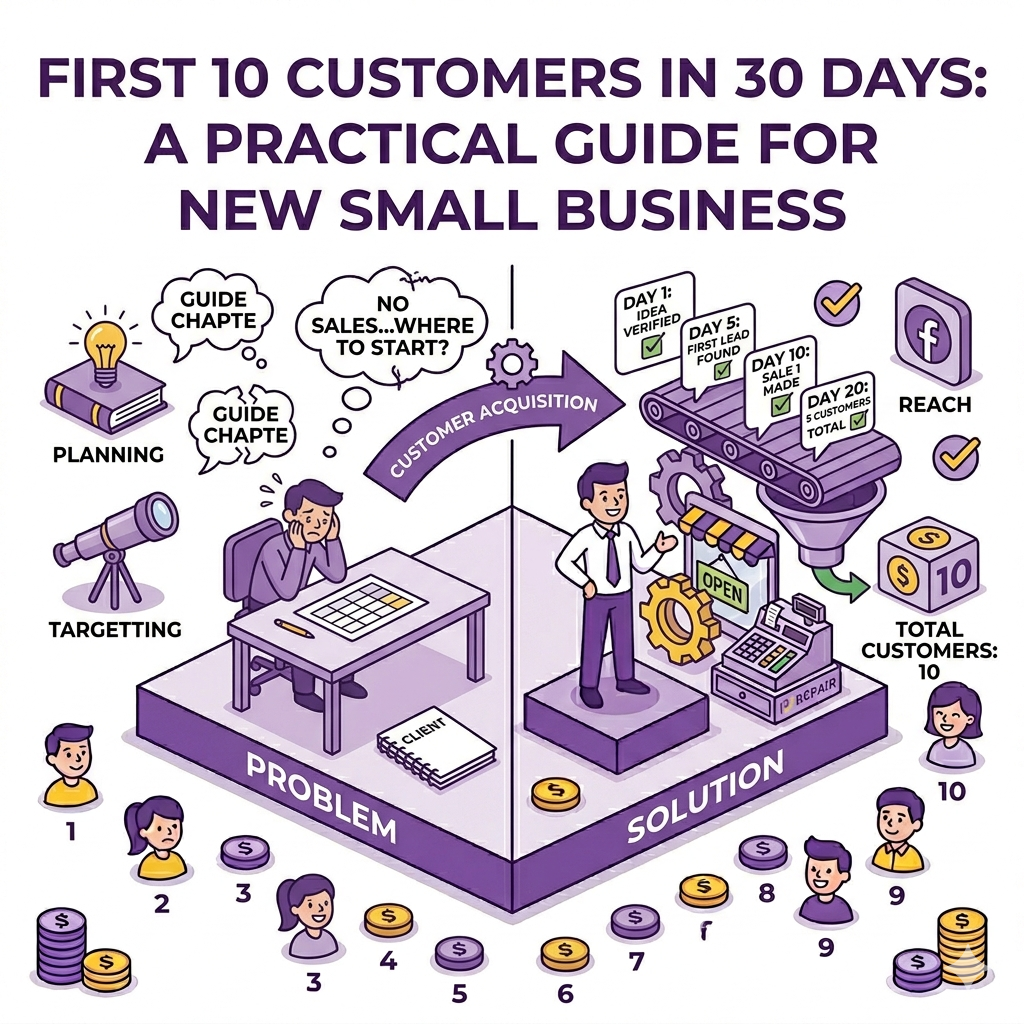
If you are still working toward your first customers, First 10 Customers in 30 Days: A Practical Guide for New Small Businesses provides actionable customer acquisition strategies.
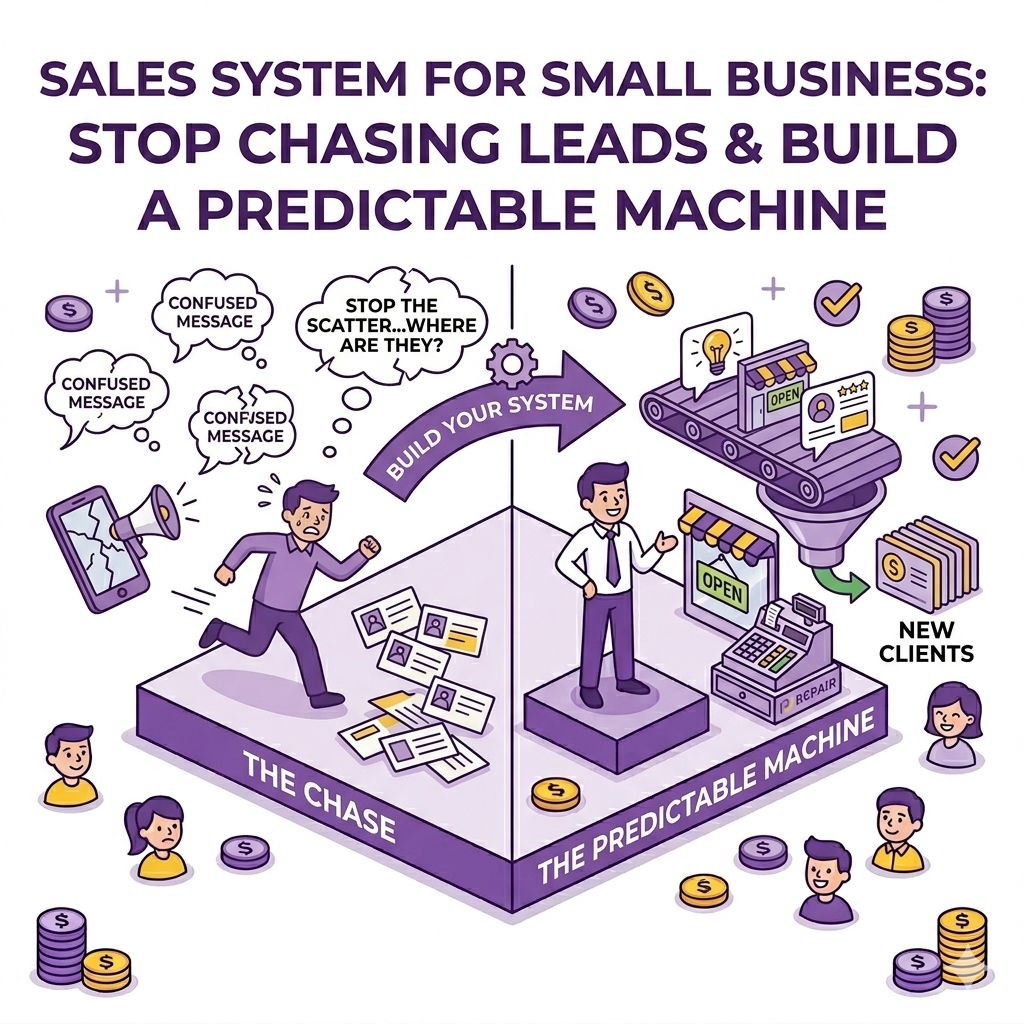
Once attention is generated, a structured sales process becomes essential. Sales System for a Small Business: Stop Chasing Leads & Build a Predictable Machine in 2026 explains how to convert interest into revenue consistently.
For additional content creation best practices, the Meta Business Help Center provides guidance on creating engaging and valuable content across social platforms.
Creating valuable content is only part of the equation. The next challenge is building meaningful engagement that strengthens relationships and increases customer trust.
Social Media Marketing Strategies for Small Businesses That Increase Engagement

Many business owners believe engagement is something that simply happens after publishing content.
In reality, engagement is something you actively create.
One of the most effective social media marketing strategies for small businesses is learning how to build conversations instead of broadcasting messages. Social media was designed to be social. Businesses that understand this often build stronger relationships, attract more loyal followers, and create greater trust than businesses that focus only on posting.
The goal is not just to gain attention.
The goal is to create meaningful interactions.
Respond Quickly to Comments and Messages
When people take time to comment on your content or send a direct message, they are allowing you to start a conversation.
Unfortunately, many businesses ignore these opportunities.
A delayed response can make potential customers feel unimportant.
Quick responses demonstrate:
- Professionalism
- Reliability
- Customer focus
- Trustworthiness
Even a simple acknowledgment can strengthen relationships and encourage future interactions.
Create Conversations Instead of Monologues
Many businesses use social media as a digital billboard.
They post announcements, promotions, and updates without inviting participation.
Engagement improves when content encourages people to share opinions, experiences, and ideas.
Examples include:
- Asking questions
- Requesting feedback
- Seeking opinions
- Starting discussions
- Inviting personal experiences
People are far more likely to engage when they feel included in the conversation.
Use Polls and Interactive Content
Interactive content makes participation easy.
Examples include:
- Polls
- Quizzes
- Surveys
- Question stickers
- This-or-that posts
These formats lower the barrier to engagement because they require minimal effort from the audience.
At the same time, they provide valuable insights into customer preferences and interests.
Encourage User-Generated Content
User-generated content is one of the most powerful forms of social proof.
It occurs when customers create content featuring your products, services, or brand experiences.
Examples include:
- Customer photos
- Testimonials
- Reviews
- Success stories
- Product demonstrations
People trust other customers more than they trust advertising.
Encouraging customers to share their experiences can significantly strengthen credibility.
Focus on Community Building
The strongest brands build communities rather than audiences.
An audience consumes content.
A community participates.
Community-focused businesses:
- Respond consistently
- Recognize followers
- Celebrate customer success
- Encourage discussion
- Provide ongoing value
Over time, customers begin interacting not only with the business but also with each other.
This creates deeper engagement and stronger brand loyalty.
Build Trust Through Consistency
Consistency is often more important than intensity.
Many businesses post heavily for a few weeks and then disappear.
This inconsistency makes it difficult to build momentum.
A reliable posting schedule helps:
- Increase familiarity
- Build trust
- Improve engagement
- Strengthen brand recognition
Consistency applies not only to posting frequency but also to messaging, tone, and customer interactions.
Engagement Is a Relationship Strategy
Many entrepreneurs focus on content creation while overlooking relationship building.
The businesses that win on social media are often the businesses that make people feel heard, valued, and understood.
Engagement is not about tricking algorithms.
It is about strengthening human connections.
Those connections often become leads, customers, referrals, and long-term advocates.
A Practical Example
Imagine two businesses.
The first publishes content regularly but rarely responds to comments.
The second responds to questions, thanks followers for feedback, participates in discussions, and actively engages with its community.
After several months, the second business is likely to have stronger relationships, higher trust levels, and more loyal customers.
That difference often translates directly into revenue.
If your content is generating attention but struggling to convert into sales, Why Your Small Business Is Not Making Sales (And How to Fix It Fast) explores several common reasons businesses fail to turn interest into paying customers.
For additional guidance on building engagement and audience relationships, the Instagram Creators Guide offers practical recommendations for fostering meaningful interactions on social media platforms.
Engagement builds trust, but trust alone does not pay the bills. The next step is learning how to turn social media followers into paying customers through a structured conversion process.
Turn Social Media Followers Into Paying Customers
One of the most frustrating experiences for small business owners is building an audience that never buys.
You spend months creating content, growing followers, responding to comments, and increasing engagement, yet revenue barely changes.
This is where many social media marketing strategies for small businesses break down.
They focus heavily on visibility and engagement but fail to address conversion.
The truth is simple.
Followers do not automatically become customers.
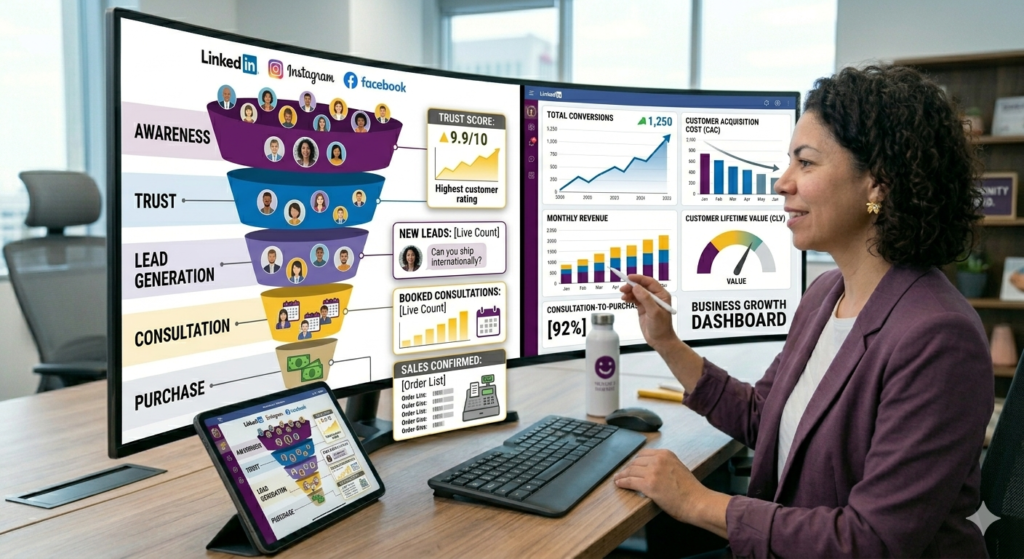
They need a clear path that moves them from awareness to action.
Understand the Customer Journey
Most people do not buy the first time they discover a business.
Before making a purchase, they often go through several stages:
- Awareness
- Interest
- Trust
- Evaluation
- Purchase
Your social media content should support this journey.
Educational content creates awareness.
Engagement builds interest.
Social proof strengthens trust.
Calls-to-action encourage purchases.
When these elements work together, conversions become much easier.
Create Effective Calls-to-Action
Many businesses create valuable content but never tell people what to do next.
This is a missed opportunity.
A call-to-action (CTA) provides direction.
Examples include:
- Download the guide
- Visit the website
- Book a consultation
- Send a message
- Join the email list
- Request a quote
The best CTAs are clear, specific, and relevant to the content being shared.
Use Lead Magnets
Not everyone is ready to buy immediately.
Lead magnets allow businesses to capture contact information and continue nurturing potential customers.
Examples include:
- Checklists
- Templates
- Free guides
- Mini courses
- Resource libraries
- Free consultations
Lead magnets work particularly well because they provide value before asking for a sale.
Leverage Direct Messages
Direct messages can be powerful conversion tools when used appropriately.
Many customers prefer asking questions privately before making purchasing decisions.
Businesses should encourage conversations while avoiding aggressive sales tactics.
The objective is to help prospects make informed decisions.
When trust is established, conversions often follow naturally.
Build an Email List
One of the biggest mistakes businesses make is relying entirely on social media platforms.
Algorithms change.
Reach fluctuates.
Accounts can be restricted.
An email list gives you direct access to your audience regardless of platform changes.
Social media should help move followers into owned channels whenever possible.
This creates greater stability and long-term marketing control.
Send Traffic to Landing Pages
A landing page is designed for a specific objective.
Unlike a general website page, a landing page focuses attention on one action.
Examples include:
- Booking appointments
- Downloading resources
- Joining waitlists
- Registering for events
- Requesting consultations
The simpler the process, the higher the likelihood of conversion.
Build a Simple Sales Funnel
A social media funnel does not need to be complicated.
A basic example might look like this:
Social Media Content → Lead Magnet → Email Sequence → Consultation → Customer
This structure helps transform casual followers into qualified prospects.
Without a conversion process, businesses often lose opportunities even when engagement is strong.
Real-World Example
Consider a local business consultant.
Instead of promoting services in every post, the consultant shares educational content that helps entrepreneurs solve common business challenges.
At the end of selected posts, readers are invited to download a free business planning checklist.
The checklist captures email addresses.
Those subscribers receive valuable follow-up content and occasional consultation offers.
Over time, a portion of subscribers become paying clients.
This approach feels more natural than constantly pushing sales messages.
Social Media Is Not the Final Destination
Many entrepreneurs treat social media as the entire marketing system.
It is not.
Social media should support a larger customer acquisition process.
Its role is to attract attention, build trust, and guide prospects toward meaningful actions.
When connected to a structured sales process, social media becomes far more valuable.
If you want to build a repeatable system that converts prospects into customers, Sales System for a Small Business: Stop Chasing Leads & Build a Predictable Machine in 2026 provides a framework for turning marketing activity into predictable revenue.
To ensure social media supports broader business goals, 5 Must-Have Elements in a Small Business Marketing Plan (That Drive Real Growth) explains how different marketing channels should work together.
For businesses interested in improving conversion tracking and customer journeys, Google Analytics Academy offers valuable training resources.
Once a conversion strategy is in place, the next step is using the right tools to save time, improve efficiency, and manage social media more effectively.
Social Media Marketing Tools Every Small Business Should Use
Successful social media marketing strategies for small businesses do not depend on having dozens of expensive tools. In fact, many entrepreneurs become overwhelmed because they spend more time searching for tools than implementing their marketing strategy.
The goal is not to collect software.
The goal is to use a few practical tools that save time, improve consistency, and support business growth.
Content Scheduling Tools
Consistency is one of the biggest factors in social media success.
Content scheduling tools help businesses plan and publish content in advance instead of scrambling for ideas every day.
Scheduling allows you to:
- Maintain a consistent posting schedule
- Save time
- Plan campaigns strategically
- Focus more on engagement and customer interactions
For most small businesses, platforms such as Meta Business Suite provide enough functionality to manage Facebook and Instagram content effectively.
Graphic Design Tools
Professional-looking content does not require a professional designer.
Tools like Canva help small business owners create:
- Social media graphics
- Promotional posts
- Infographics
- Presentations
- Marketing materials
The key is maintaining visual consistency rather than creating overly complex designs.
Analytics Tools
If you are not measuring performance, you are guessing.
Analytics tools help businesses understand:
- Which content performs best
- Where traffic comes from
- Audience behavior
- Conversion performance
Tracking data allows you to make smarter decisions and improve results over time.
AI Content Assistants
AI tools can help with:
- Content brainstorming
- Caption ideas
- Content repurposing
- Research assistance
- Content planning
However, AI should support your creativity, not replace your expertise.
The businesses that stand out are the ones that combine technology with authentic human insight.
Customer Relationship Tools
Social media generates conversations.
Customer relationship management tools help organize those interactions and ensure potential customers do not slip through the cracks.
Even a simple system for tracking leads, inquiries, and follow-ups can improve conversion rates significantly.
Focus on Execution, Not Software
Many small business owners delay action because they believe they need better tools.
In reality, a simple setup is often enough:
- Canva for design
- Meta Business Suite for scheduling
- Google Analytics for measurement
- ChatGPT for content support
- MailerLite for email marketing
These tools can handle most of the needs of a growing business.
The businesses that grow fastest are not necessarily the ones with the most software. They are the ones who consistently implement what they learn.
If your business is preparing for growth beyond social media, How to Scale Fast: 9 Proven Growth Strategies for New Business Owners explores systems and strategies that support long-term expansion.
For platform-specific resources and updates, Meta Business Suite Resources guides scheduling, analytics, and content management.
Having the right tools is helpful, but even the best software cannot compensate for poor strategy. Next, let’s look at the common social media marketing mistakes that continue to hold many small businesses back.
Common Social Media Marketing Mistakes Small Businesses Must Avoid

Even the best social media marketing strategies for small businesses can produce poor results when common mistakes go unchecked. Many entrepreneurs work hard on social media but unknowingly sabotage their progress through habits that limit reach, engagement, and conversions.
Avoiding these mistakes can often improve results faster than learning new tactics.
Posting Inconsistently
One of the most common mistakes is disappearing for long periods and then returning with a flood of content.
Many businesses post heavily for a week, become busy with other responsibilities, and then abandon social media for several weeks.
This inconsistency makes it difficult to:
- Build trust
- Maintain visibility
- Grow engagement
- Strengthen brand recognition
Consistency is often more important than posting volume.
A realistic schedule that you can maintain is usually better than an ambitious schedule that quickly becomes unsustainable.
Buying Followers
Growing an audience takes time.
Unfortunately, some businesses try to accelerate the process by purchasing followers.
The problem is that purchased followers rarely engage, become customers, or contribute to business growth.
In many cases, they actually hurt performance because engagement rates decline.
A smaller audience of genuine potential customers is far more valuable than a large audience that has no interest in your business.
Ignoring Analytics
Many entrepreneurs create content without reviewing performance data.
This means they continue repeating strategies that may not be working.
Analytics help identify:
- High-performing content
- Audience preferences
- Traffic sources
- Conversion opportunities
Data-driven decisions almost always outperform assumptions.
Over-Promoting
Customers do not follow businesses simply to see advertisements.
They follow businesses that provide value.
When every post focuses on selling, engagement often declines.
A balanced content strategy includes:
- Education
- Entertainment
- Engagement
- Promotion
Promotion is important, but it should not dominate your content.
Copying Competitors
Competitor research can be useful.
Blind imitation is not.
Many businesses copy content styles, messaging, and marketing tactics without understanding why they work.
The result is content that feels generic and lacks authenticity.
Your audience wants your perspective, your expertise, and your experiences.
That is what differentiates your business.
Not Having a Conversion Strategy
This is perhaps the most expensive mistake.
Some businesses generate attention, engagement, and even followers but never create a system that converts those people into leads or customers.
Without a conversion strategy, social media becomes a popularity contest instead of a business growth tool.
Every marketing effort should connect to a larger objective.
The Bigger Lesson
Most social media failures are not caused by algorithms.
They are caused by poor habits, weak systems, and a lack of strategic focus.
Businesses that consistently avoid these mistakes often gain a significant advantage over competitors who continue posting without a clear plan.
If you want to identify additional growth obstacles, 9 Common Mistakes That Are Slowing Your Small Business Growth explores several challenges that affect marketing performance and overall business success.
For businesses that sell products online, The Biggest E-Commerce Mistakes New Store Owners Make in 2026 highlights mistakes that often impact both social media marketing and sales.
According to LinkedIn Marketing Solutions, businesses that combine consistent content, audience insights, and measurable objectives typically achieve stronger long-term marketing outcomes.
Now that we’ve covered the most common mistakes, let’s put everything together with a practical 30-day social media marketing plan that small businesses can implement immediately.
A 30-Day Social Media Marketing Plan for Small Businesses
Learning social media marketing strategies for small businesses is valuable, but implementation is what produces results. Many entrepreneurs consume marketing advice for months without taking consistent action.
The good news is that you do not need a complicated system to get started.
This simple 30-day plan provides a practical framework for building visibility, engagement, and customer acquisition through social media.
Week 1: Audience Research and Content Planning
Before creating content, invest time in understanding your audience.
Ask questions such as:
- Who is my ideal customer?
- What challenges do they face?
- What goals are they trying to achieve?
- What questions do they frequently ask?
- Which social platforms do they use most?
Once audience research is complete, establish three to five content pillars that align with your expertise and customer interests.
Examples may include:
- Educational content
- Customer success stories
- Industry insights
- Behind-the-scenes content
- Promotional content
At the end of Week 1, create a simple content calendar for the coming month.
Week 2: Content Creation and Scheduling
This week focuses on execution.
Create your content in batches whenever possible.
Batch creation saves time and improves consistency.
Develop:
- Social media posts
- Graphics
- Short-form videos
- Stories
- Promotional content
Use scheduling tools to plan content rather than posting manually every day.
The objective is to establish a consistent publishing rhythm.
Week 3: Engagement and Community Building
During this phase, focus less on publishing and more on relationships.
Activities should include:
- Responding to comments
- Replying to direct messages
- Engaging with other accounts
- Participating in conversations
- Encouraging customer feedback
Remember that social media success is often driven by relationships rather than reach alone.
Strong engagement builds trust, and trust creates customers.
Week 4: Analytics Review and Optimization
The final week focuses on measurement.
Review your analytics and identify:
- Best-performing content
- Highest engagement posts
- Traffic sources
- Lead generation performance
- Conversion opportunities
Look for patterns.
Which topics generated the most interest?
Which content formats performed best?
Which calls-to-action produced results?
Use these insights to improve next month’s strategy.
The Simple Growth Cycle
The most effective social media marketing strategies for small businesses follow a repeatable process:
Research → Create → Engage → Analyze → Improve
Repeating this cycle consistently often produces better results than constantly chasing new tactics.
If you need a broader marketing framework that connects social media to your overall growth strategy, 5 Must-Have Elements in a Small Business Marketing Plan (That Drive Real Growth) provides a strong foundation.
As your business grows, How to Scale Fast: 9 Proven Growth Strategies for New Business Owners can help you build systems that support sustainable expansion.
For additional training on measuring marketing performance, Google Analytics Academy offers free educational resources that can help businesses make better data-driven decisions.
Now let’s answer some of the most common questions small business owners have about social media marketing.
Frequently Asked Questions
What is the best social media platform for small businesses?
The best platform depends on your audience, business model, and goals.
For many local businesses, Facebook and Instagram remain excellent choices because they help build community relationships and increase visibility. Service-based businesses often perform well on LinkedIn, while TikTok can provide strong organic reach for businesses willing to create short-form video content.
Instead of trying to succeed on every platform, focus on the one or two platforms where your ideal customers spend the most time.
How often should a small business post on social media?
Consistency matters more than frequency.
A business that consistently publishes valuable content three times per week will often outperform one that posts multiple times daily for a short period and then disappears.
Choose a posting schedule that is realistic and sustainable.
The goal is to maintain a steady presence while continuing to engage with your audience.
Can social media generate customers without paid ads?
Yes.
Many businesses attract customers through organic social media marketing.
This typically happens through:
- Educational content
- Community engagement
- Customer referrals
- Social proof
- Strong calls-to-action
While paid advertising can accelerate growth, organic content remains a powerful customer acquisition tool when used strategically.
How long does social media marketing take to work?
Social media marketing is usually a long-term strategy rather than a quick fix.
Some businesses begin seeing results within a few weeks, while others may require several months of consistent effort before significant growth occurs.
Factors that influence results include:
- Content quality
- Audience targeting
- Engagement levels
- Platform selection
- Consistency
Patience and persistence are essential.
What type of content performs best for small businesses?
The most effective content usually helps customers solve problems.
Examples include:
- Educational content
- How-to guides
- Customer success stories
- Frequently asked questions
- Behind-the-scenes content
- Industry insights
Content that provides value tends to outperform content that focuses solely on promotion.
For additional platform-specific guidance, the TikTok Business Learning Center and Instagram Creators Guide offer practical resources for businesses looking to improve their content and engagement strategies.
Conclusion
Successful social media marketing strategies for small businesses are not built on random posting, viral trends, or chasing vanity metrics.
They are built on strategy.
Throughout this guide, we explored why many small businesses struggle on social media and how a structured approach can produce better results. From defining clear business goals and choosing the right platforms to creating valuable content, increasing engagement, and converting followers into customers, every step plays an important role in business growth.
One of the biggest lessons is that posting frequency alone does not guarantee success.
A business that publishes purposeful content with a clear objective will often outperform a business that posts constantly without a plan.
Social media should support your business goals.
It should help you build trust, strengthen relationships, attract qualified prospects, and create opportunities for sales. When used strategically, social media becomes more than a marketing channel. It becomes a powerful business growth tool.
Remember that consistency compounds over time.
The businesses that achieve long-term success on social media are rarely the ones looking for shortcuts. They are the ones that continue showing up, delivering value, engaging with their audience, and improving their strategy month after month.
If you want to continue building a stronger marketing foundation, these resources can help:
- 5 Must-Have Elements in a Small Business Marketing Plan (That Drive Real Growth)
- Sales System for a Small Business: Stop Chasing Leads & Build a Predictable Machine in 2026
- GET FOUND FAST: 5 Local Marketing Strategies for Small Businesses
Stop posting blindly. Start marketing strategically.
When every post has a purpose, every interaction builds trust, and every piece of content supports a larger goal, social media can become one of the most valuable growth assets in your business.