
Introduction

Many online businesses are losing money today because of simple e-commerce mistakes they do not even notice. Some store owners think the problem is low traffic, bad luck, or too much competition. But in reality, many online stores quietly lose sales because of poor branding, weak product pages, bad user experience, and a lack of customer trust.
One thing I have noticed is that many beginners focus heavily on launching ads before fixing the foundation of their stores. They spend money driving visitors to websites that are not properly optimized for conversions. This is one of the biggest reasons why online stores fail, even when traffic looks good on the surface.
In 2026, customers have become smarter and more selective. People now compare multiple online stores before making buying decisions. They check reviews, product presentation, delivery policies, mobile experience, and even social proof before trusting a business with their money.
According to Shopify’s e-commerce marketing guide, trust and customer experience now play a major role in e-commerce store sales. Small issues like slow-loading pages, poor mobile design, or weak product descriptions can quietly destroy conversions without store owners realizing it.
Another mistake I see often is relying only on paid advertising. While ads can bring visitors quickly, they cannot fix deeper store problems. This is why many businesses struggle to improve e-commerce sales long-term.
Strong online stores usually combine branding, SEO, content marketing, customer trust, and optimization together.
Many of these growth fundamentals are also discussed in 10 Essential Tips for a Successful E-Commerce Business, where long-term business systems matter more than quick wins.
In this guide, you will learn the most common e-commerce conversion mistakes secretly reducing your sales in 2026 and how to fix them before they damage your business growth further.
1. Poor Branding Is One of the Biggest E-Commerce Mistakes
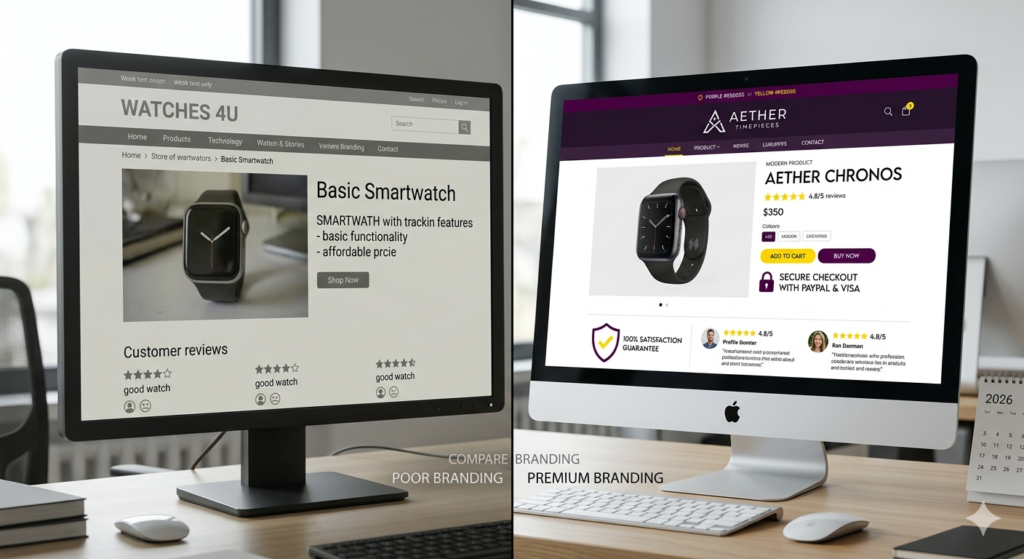
Poor branding is one of the most common e-commerce mistakes silently reducing online sales in 2026. Many store owners underestimate how quickly customers judge an online business.
When someone visits your store for the first time, they immediately analyze how trustworthy your business looks. If the design feels outdated, confusing, or inconsistent, most visitors leave without exploring further.
This is one reason why online stores fail even when they have quality products.
Weak Logos and Inconsistent Design
One mistake I see often is businesses using low-quality logos and random visual styles across their stores.
For example:
- Different font styles
- Inconsistent colors
- Poor banner designs
- Cluttered layouts
- Low-quality graphics
These small branding problems create trust issues instantly.
Customers want to feel confident before buying online. If your store looks unprofessional, many people assume the products or services may also be unreliable.
A strong brand identity helps customers remember your business and feel safer making purchases.
Many branding-related growth problems are also explained in 9 Common Mistakes That Are Slowing Your Small Business Growth, where weak positioning often reduces customer trust.
Poor Color Combinations and Store Layout
Color psychology affects customer behavior more than many beginners realize.
Using too many aggressive colors or inconsistent themes can make your website feel stressful or confusing.
Good e-commerce branding usually focuses on:
- clean layouts
- easy readability
- consistent colors
- organized sections
- visual balance
Your store should guide visitors naturally instead of overwhelming them.
According to Nielsen Norman Group’s website credibility research, users often judge business trustworthiness heavily based on visual presentation and user experience.
Why Branding Affects Trust Instantly
Online customers cannot physically inspect products before buying.
Because of this, branding becomes part of the buying decision itself.
Professional branding signals:
- legitimacy
- safety
- reliability
- consistency
- professionalism
Weak branding creates doubt.
Sometimes businesses think they have a marketing problem when the real issue is poor perception.
Low-Quality Product Presentation
Product presentation is another hidden conversion killer.
Blurry images, poor lighting, and copied supplier photos reduce professionalism quickly.
In 2026, customers expect:
- high-quality product images
- multiple viewing angles
- lifestyle photography
- short demo videos
- mobile-friendly visuals
Better product presentation improves both trust and e-commerce store sales.
Building a Professional Online Identity
Strong online brands do not happen accidentally.
They are built intentionally through:
- consistent messaging
- professional design
- customer-focused communication
- quality visuals
- trust-building experiences
This is why successful businesses spend time improving their brand identity instead of focusing only on ads.
Some of these long-term business principles are also discussed in Why Your Small Business Is Not Making Sales and How to Fix It Fast, where customer perception plays a major role in business growth.
2. Ignoring Mobile Optimization Hurts E-Commerce Store Sales

Ignoring mobile optimization is one of the most damaging e-commerce mistakes businesses still make in 2026.
Most online shoppers now browse products directly from smartphones. But surprisingly, many stores still deliver poor mobile experiences that frustrate customers and reduce conversions.
I have seen businesses spend heavily on ads only for visitors to leave because the mobile version of the website feels difficult to use.
This quietly kills sales.
Mobile Shopping Trends in 2026
Mobile commerce continues to dominate online shopping behavior.
According to Statista’s mobile commerce research, mobile shopping now accounts for a massive percentage of global e-commerce activity.
Customers expect:
- fast-loading pages
- simple navigation
- responsive layouts
- easy checkout experiences
- mobile-friendly product pages
If your website performs poorly on smartphones, your e-commerce store sales will suffer regardless of traffic levels.
Slow-Loading Mobile Pages
Website speed matters even more on mobile devices.
Many businesses overload their stores with:
- large images
- unnecessary animations
- too many plugins
- excessive popups
- heavy scripts
The result is slow loading times.
Most customers will not wait several seconds for pages to load. They simply leave and visit another store instead.
According to Google PageSpeed Insights, slow-loading websites often experience higher bounce rates and lower engagement.
This is one reason why online stores fail silently without owners realizing the real issue.
Poor Mobile Navigation
Some stores look good on desktop but become frustrating on smartphones.
Common mobile navigation problems include:
- tiny buttons
- difficult menus
- overlapping text
- broken layouts
- hard-to-read product pages
Customers should be able to browse products smoothly without confusion.
A clean mobile experience improves trust and keeps visitors engaged longer.
Checkout Issues on Smartphones
Complicated mobile checkouts destroy conversions quickly.
If customers struggle to complete purchases, they abandon carts immediately.
Common checkout mistakes include:
- too many form fields
- forced account creation
- confusing payment options
- Poor button placement
- broken mobile payment systems
Simple checkout systems usually convert better.
Many customer experience problems affecting online sales are also discussed in 10 Essential Tips for a Successful E-Commerce Business, where usability and simplicity play major roles in conversion optimization.
Mobile-First Optimization Strategies
Businesses should now design stores with mobile users in mind first instead of treating mobile optimization as an afterthought.
You can improve mobile performance by:
- Compressing images
- Simplifying layouts
- Reducing unnecessary apps
- Improving font readability
- Testing on multiple devices
- Optimizing page speed
Mobile optimization is no longer optional in e-commerce.
It directly affects customer trust, engagement, and conversions.
Many brands struggling to improve e-commerce sales are actually losing customers because their mobile experience quietly pushes visitors away before purchases happen.
3. Weak Product Descriptions Reduce E-Commerce Conversions
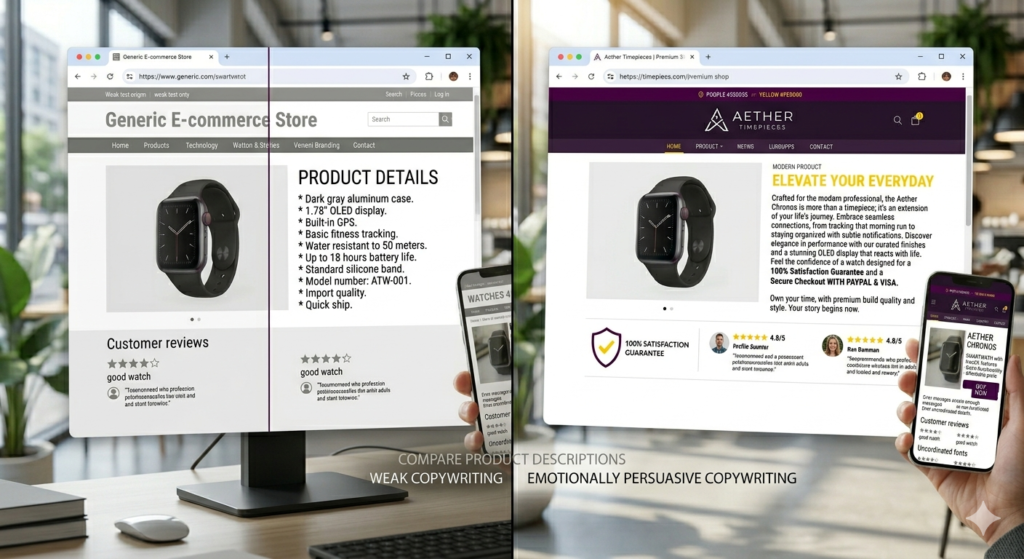
Weak product descriptions are one of the most overlooked e-commerce conversion mistakes in online business today.
Many store owners spend hours designing websites and running ads, but barely invest time in improving product descriptions. The result is usually low conversions, even when traffic is coming in consistently.
I have seen stores with decent products struggle badly simply because their descriptions fail to persuade customers emotionally.
Features vs Benefits
One of the biggest beginner e-commerce mistakes is focusing only on product features.
Features explain what a product has.
Benefits explain how the product improves the customer’s life.
For example:
Instead of writing:
“5000mAh battery capacity.”
A stronger approach is:
“Stay connected all day without constantly searching for a charger.”
Customers care more about outcomes than technical specifications alone.
Strong product descriptions help customers visualize results, convenience, and emotional value.
Writing Emotionally Persuasive Descriptions
Emotions influence buying decisions heavily in e-commerce.
People may justify purchases logically later, but emotions often trigger the initial decision.
Good product descriptions can create feelings like:
- confidence
- excitement
- comfort
- convenience
- relief
- status
This is especially important in competitive markets where many businesses sell similar products.
Instead of sounding robotic, your descriptions should feel conversational and customer-focused.
Many conversion-related business problems are also discussed in Why Your Small Business Is Not Making Sales and How to Fix It Fast, where communication and customer psychology strongly affect sales performance.
SEO Product Description Optimization
Product descriptions also help search engines understand your products.
This means SEO matters even on product pages.
You should naturally include relevant keywords like:
- e-commerce store sales
- improve e-commerce sales
- online store conversion tips
- product page optimization
However, avoid keyword stuffing.
Google now prioritizes readable and helpful content instead of repetitive keyword usage.
According to Google Search Central, helpful content should focus primarily on user experience and usefulness.
Using Storytelling to Sell Products
Storytelling can make products feel more relatable and memorable.
Instead of only describing the item itself, explain situations where customers may use it.
For example:
- How it solves daily frustrations
- How it saves time
- How it improves convenience
- How it creates confidence
Stories help customers emotionally connect with products.
This is one reason successful brands often focus heavily on customer experiences inside their marketing content.
Why Generic Descriptions Fail
Many online stores still copy supplier descriptions directly from marketplaces.
This creates generic content that sounds repetitive and unoriginal.
Copied descriptions also hurt SEO because search engines may find identical content across multiple websites.
Strong e-commerce brands usually create unique product descriptions tailored to their audience.
Businesses using customer-focused marketing strategies from 7 Instagram Growth Strategies Small Businesses Are Using in 2026 often perform better because their messaging feels more personal and relatable instead of generic.
Good product descriptions do more than explain products.
They build trust, reduce hesitation, improve SEO, and increase conversions at the same time.
4. Depending Only on Paid Ads Is a Dangerous E-Commerce Mistake
One of the biggest e-commerce mistakes many businesses make is depending entirely on paid advertising to generate sales.
Paid ads can produce fast traffic, but they are not a long-term business strategy on their own.
I have seen many store owners scale quickly with Facebook or TikTok ads only to struggle later when advertising costs increase or campaigns stop performing.
This is one major reason why online stores fail after early success.
Rising Advertising Costs
Advertising has become more expensive across almost every platform in 2026.
Businesses now compete aggressively for customer attention on:
- TikTok
- YouTube
As competition increases, customer acquisition costs continue rising.
This creates serious pressure on profit margins, especially for smaller businesses with limited budgets.
According to WordStream’s digital advertising benchmarks, many industries now experience significantly higher advertising costs compared to previous years.
For beginners, this can quickly become unsustainable.
Why Ads Without Systems Fail
Many businesses rely on ads without building strong systems behind them.
Traffic alone cannot fix weak business foundations.
If your store has:
- poor branding
- weak product pages
- low customer trust
- confusing checkout systems
- poor mobile experience
Then, ads simply send more people into a broken conversion process.
This wastes money quickly.
Long-term success usually comes from improving the entire customer journey instead of depending only on traffic generation.
The Importance of Organic Traffic
Organic traffic creates more stability for e-commerce businesses.
Unlike ads, organic traffic continues to generate visitors without requiring constant daily spending.
Examples of organic traffic sources include:
- SEO
- blogging
- YouTube
- email marketing
- social media content
Businesses combining paid and organic marketing often build stronger long-term growth systems.
Many sustainable growth strategies are also discussed in 10 Essential Tips for a Successful E-Commerce Business, where long-term visibility matters more than temporary traffic spikes.
SEO and Content Marketing for Online Stores
SEO remains one of the most underrated e-commerce business tips today.
Many online stores ignore blogging and search optimization completely.
But search traffic often converts well because customers are actively searching for solutions.
Content marketing also helps businesses:
- build trust
- improve authority
- answer customer questions
- increase visibility
- attract repeat visitors
This is why successful brands now invest heavily in educational content instead of relying only on promotions.
According to Ahrefs’ SEO statistics, organic search remains one of the highest-performing long-term traffic channels for businesses online.
Building Sustainable Customer Acquisition Systems
The strongest e-commerce businesses build systems instead of chasing temporary wins.
This includes:
- SEO traffic
- email lists
- customer retention
- repeat purchases
- social media communities
- brand authority
Paid ads should support your business growth, not completely control it.
Businesses that diversify their traffic sources usually survive market changes more effectively.
Many entrepreneurs ignore this until advertising becomes too expensive to sustain profits.
That is why focusing only on paid traffic is one of the most dangerous online store mistakes in 2026.
5. Poor Website User Experience Secretly Kills E-Commerce Store Sales
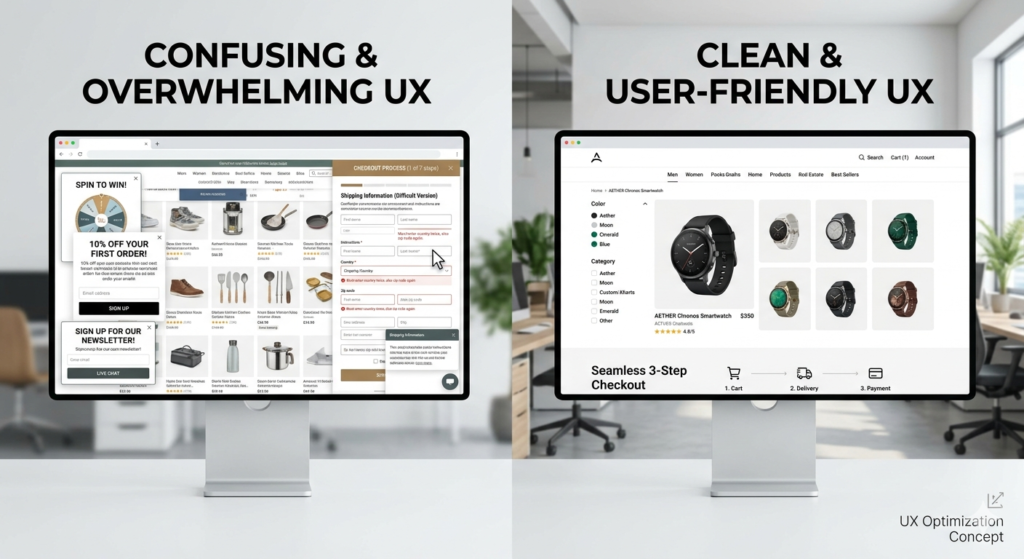
Poor user experience is one of the hidden e-commerce conversion mistakes many businesses completely overlook.
Sometimes store owners think they have a traffic problem when the real issue is how customers interact with the website itself.
If visitors feel confused, distracted, or frustrated while browsing your store, they usually leave without buying.
This quietly reduces e-commerce store sales over time.
Confusing Navigation Menus
Customers should be able to find products easily.
But many online stores create confusing navigation systems filled with too many categories, unclear menus, and cluttered layouts.
When people cannot quickly locate products, frustration increases.
Good navigation should feel simple and natural.
Your website should guide visitors smoothly from browsing to checkout without confusion.
Strong online stores usually organize products using:
- simple categories
- clean menus
- search functionality
- clear product filters
- organized layouts
A clean structure improves both customer experience and conversions.
Too Many Popups and Distractions
Another common e-commerce UX mistake is overwhelming visitors with too many distractions.
Some stores bombard users with:
- aggressive popups
- autoplay videos
- unnecessary animations
- excessive banners
- too many notifications
While email collection matters, excessive interruptions often reduce trust and create frustration.
A clean shopping experience usually performs better than a chaotic one.
According to Baymard Institute’s usability research, complicated website experiences significantly increase cart abandonment rates.
Complicated Checkout Processes
Checkout is one of the most critical parts of the customer journey.
Yet many businesses unintentionally make it difficult.
Common checkout mistakes include:
- forcing account creation
- too many form fields
- unclear shipping costs
- limited payment methods
- confusing checkout steps
The longer and more stressful the checkout process becomes, the more customers abandon purchases.
Simple checkout systems convert better because they reduce friction.
Many customer experience problems affecting online sales are also explained in Why Your Small Business Is Not Making Sales and How to Fix It Fast where poor user experience often reduces customer trust and conversions.
Weak Call-to-Action Buttons
Call-to-action buttons play a bigger role in conversions than many people realize.
Weak CTA examples include:
- Submit
- Continue
- Proceed
Stronger CTA buttons create more clarity and urgency.
Examples include:
- Buy Now
- Get Yours Today
- Start Your Order
- Claim Your Discount
Your CTA buttons should stand out visually and guide users toward action naturally.
Improving User Experience for Conversions
A good user experience focuses on making shopping easy, comfortable, and trustworthy.
You can improve user experience by:
- simplifying navigation
- reducing distractions
- improving website speed
- optimizing mobile usability
- using clearer CTA buttons
- simplifying checkout
Small improvements in user experience can significantly improve e-commerce sales over time.
Many businesses focus heavily on attracting traffic while ignoring how visitors actually experience their websites after arriving.
This is one reason why online stores fail silently despite generating decent traffic numbers.
6. Selling the Wrong Products Is a Common E-Commerce Mistake
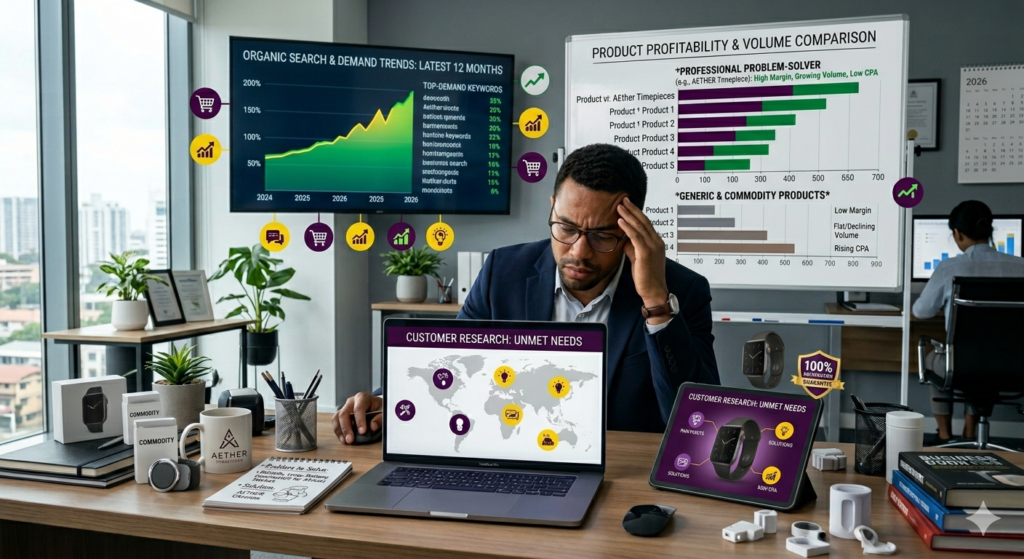
Sometimes the biggest problem is not marketing, branding, or traffic.
Sometimes the product itself simply lacks demand.
Selling the wrong products is one of the most common e-commerce mistakes beginners make in online business.
I have seen businesses spend months trying to improve ads and conversions when the real issue was that customers were never deeply interested in the products from the beginning.
Low-Demand Products
Not every product has a strong market demand.
Many beginners choose products randomly because they personally like them or saw someone else selling them online.
Unfortunately, personal preference does not always translate into profitable sales.
Low-demand products usually struggle because:
- Customers do not actively search for them
- The problem-solving value is weak
- Emotional demand is low
- Competition may already dominate the market
This is one reason why online stores fail even after investing heavily in advertising.
Trend-Chasing Without Research
Another dangerous mistake is blindly chasing trends.
Some products become popular temporarily on TikTok or Instagram, causing many businesses to rush into the market without proper research.
The problem is that trends often fade quickly.
By the time many beginners launch their stores, competition has already increased heavily.
Successful businesses usually balance trends with long-term product demand.
This creates more sustainable e-commerce growth.
Problem-Solving Products vs Random Products
Products that solve real problems usually perform better than random novelty items.
Strong products often improve:
- convenience
- comfort
- organization
- confidence
- productivity
- appearance
Customers are more likely to buy products that make their lives easier or solve emotional frustrations.
This is why understanding customer psychology matters so much in e-commerce.
Many business positioning lessons related to customer needs are also discussed in 7 Profitable Small Business Ideas to Generate $1000 Monthly in 2026, where solving real market problems increases long-term business potential.
Understanding Customer Demand
Before launching products, businesses should research customer demand carefully.
This includes studying:
- customer frustrations
- online reviews
- market trends
- competitor stores
- search demand
- social media conversations
Understanding what customers already want reduces business risk significantly.
According to Google Trends, analyzing search interest over time can help businesses identify whether product demand is growing or declining.
Product Validation Strategies
Product validation helps businesses avoid expensive mistakes.
Some useful validation methods include:
- testing products with small ad budgets
- analyzing competitor engagement
- collecting audience feedback
- checking search demand
- using pre-orders
- monitoring social media interest
Strong product research improves the chances of building profitable e-commerce store sales long-term.
Many online stores struggle not because marketing is terrible, but because the products themselves fail to create enough customer interest or emotional demand.
7. Ignoring Customer Trust Signals Hurts Online Store Sales
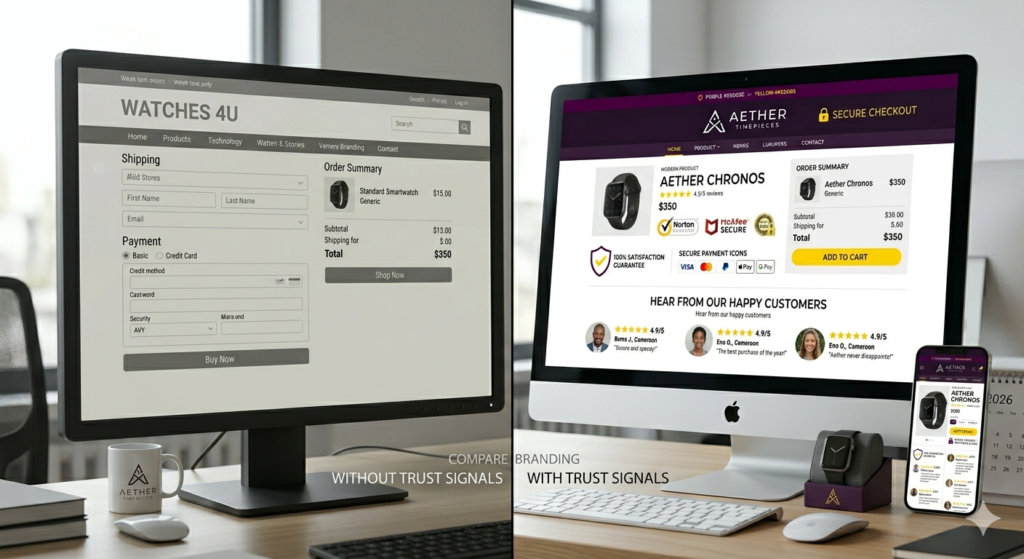
Customer trust is one of the biggest factors affecting e-commerce store sales in 2026.
People have become far more careful when shopping online. Customers now analyze websites closely before entering payment details or placing orders.
If your store lacks trust signals, many visitors will leave without buying, even if your products look good.
This is one of the most damaging e-commerce conversion mistakes businesses ignore.
Missing Customer Reviews
Customer reviews help reduce buying hesitation.
People naturally trust other buyers more than advertisements.
When shoppers see positive reviews, they feel more confident that the product actually delivers results.
Stores without reviews often appear risky or unproven.
Even a few authentic reviews can improve trust significantly.
Good reviews usually include:
- customer experiences
- product photos
- before-and-after results
- honest feedback
- practical use cases
Social proof helps customers feel safer making decisions.
Lack of Trust Badges
Trust badges reassure customers during the checkout process.
Without visible security indicators, many shoppers become uncomfortable entering payment information.
Important trust signals include:
- secure checkout badges
- payment provider logos
- SSL certificates
- money-back guarantees
- verified payment systems
These small elements can improve e-commerce sales by reducing customer fear.
According to Baymard Institute’s checkout usability research, trust indicators play a major role in reducing cart abandonment.
Weak Refund and Shipping Policies
Customers want clarity before buying online.
Unclear refund policies or hidden shipping details often create suspicion.
Many businesses lose conversions because customers cannot easily find information about:
- delivery times
- return processes
- refund eligibility
- shipping fees
- customer support
Clear policies build transparency and trust.
This is especially important for new online stores still trying to establish credibility.
No Social Proof
Social proof goes beyond reviews.
Customers also look for signs that other people trust your business.
Strong social proof may include:
- customer testimonials
- user-generated content
- influencer mentions
- social media engagement
- real customer photos
- community activity
This helps businesses appear more legitimate and active.
Many social trust-building strategies are also discussed in 7 Instagram Growth Strategies Small Businesses Are Using in 2026, where visibility and engagement influence customer perception heavily.
Why Trust Drives Conversions
Trust reduces customer anxiety.
When people trust your business, they are more comfortable completing purchases.
Strong trust signals improve:
- conversion rates
- customer retention
- repeat purchases
- average order value
- long-term brand loyalty
Businesses often focus heavily on traffic while ignoring customer confidence.
But even small trust problems can quietly destroy conversions and reduce profitability over time.
This is one reason why successful e-commerce brands invest heavily in customer experience, transparency, and credibility instead of relying only on aggressive marketing tactics.
8. Poor Marketing Content Is an Overlooked E-Commerce Mistake

Poor marketing content is one of the hidden reasons many businesses struggle to improve e-commerce sales today.
Some online stores constantly post products on social media without creating content that actually connects with customers. Others focus only on promotions while ignoring education, storytelling, and audience engagement.
The result is usually low visibility, weak trust, and poor conversions.
Boring Social Media Content
Many businesses treat social media like a product catalog instead of a relationship-building platform.
Constantly posting product pictures with prices often leads to low engagement because customers quickly lose interest.
People usually engage more with content that:
- educates
- entertains
- inspires
- solves problems
- tells stories
This is one reason why some brands grow rapidly online while others struggle to gain attention.
Strong social media content helps businesses stay visible and memorable.
Lack of Educational Marketing
Educational content builds authority.
Customers trust businesses more when they consistently provide useful information instead of constantly trying to sell.
Good educational marketing may include:
- tutorials
- buying guides
- industry tips
- product demonstrations
- problem-solving content
This approach positions your business as helpful instead of overly promotional.
According to HubSpot’s content marketing statistics, educational content continues to play a major role in building customer trust and engagement online.
Weak Storytelling Strategies
Storytelling helps brands feel more human.
People connect emotionally with stories far more than direct advertisements.
For example, customers enjoy seeing:
- founder journeys
- customer transformations
- behind-the-scenes content
- business growth stories
- product creation processes
Stories create emotional connection and relatability.
This improves trust and customer loyalty over time.
Many businesses using strategies from 7 Instagram Growth Strategies Small Businesses Are Using in 2026 grow faster because their content feels more engaging and authentic, instead of purely promotional.
Building Brand Authority Through Content
Authority is becoming increasingly important in e-commerce.
Customers now research brands carefully before buying products online.
Consistent high-quality content helps businesses:
- build trust
- improve SEO
- increase visibility
- attract loyal followers
- improve customer confidence
This is why successful brands invest heavily in content marketing systems instead of relying only on advertisements.
Strong content also supports long-term organic traffic growth.
Creating Engaging Customer-Focused Content
Customer-focused content performs better because it speaks directly to audience problems and goals.
Instead of constantly asking:
“How do I sell more?”
Businesses should ask:
“How do I help my audience better?”
This mindset improves content quality naturally.
Many customer communication lessons related to business growth are also discussed in 9 Common Mistakes That Are Slowing Your Small Business Growth, where poor audience connection often limits long-term visibility and trust.
Good marketing content does more than attract attention.
It builds relationships, authority, trust, and long-term customer loyalty at the same time.
9. Giving Up Too Early Prevents Long-Term E-Commerce Store Sales Growth
One of the biggest reasons why online stores fail is that many business owners quit too early.
E-commerce is often advertised online as a fast way to make money, causing many beginners to expect instant results. But real business growth usually takes longer than people expect.
I have seen many store owners abandon good business ideas simply because they did not see quick profits within the first few months.
Unrealistic Expectations in E-Commerce
Social media often creates unrealistic expectations about online business success.
People see screenshots of sales, luxury lifestyles, and viral success stories without seeing the years of work behind them.
This creates pressure and discouragement.
The truth is that many successful brands spent years improving their systems before achieving consistent profitability.
Businesses usually need time to:
- build trust
- optimize conversions
- improve marketing
- grow visibility
- understand customers
- test products
Expecting instant success often leads to frustration and poor decision-making.
Why Consistency Matters
Consistency is one of the most underrated e-commerce growth strategies.
Many businesses fail because they constantly change direction before giving strategies enough time to work.
For example:
- changing products too quickly
- redesigning stores constantly
- switching marketing strategies every week
- quitting content creation early
Long-term consistency helps businesses gather data, improve systems, and build audience trust gradually.
This is especially important for SEO and content marketing because organic growth compounds over time.
Continuous Optimization and Testing
Successful e-commerce brands constantly improve their businesses.
They test:
- product pages
- pricing strategies
- ad creatives
- website layouts
- checkout systems
- content strategies
Small improvements made consistently can create major growth over time.
Businesses that refuse to test and adapt often struggle to improve e-commerce sales long-term.
According to Shopify’s e-commerce growth resources, continuous optimization remains one of the most important factors behind long-term online store success.
Learning From Failed Campaigns
Failure is part of business growth.
Not every product, ad, or campaign will succeed immediately.
But smart businesses use failures as learning opportunities instead of reasons to quit completely.
Many successful entrepreneurs improve by analyzing:
- customer feedback
- low-performing products
- failed ads
- abandoned carts
- audience behavior
This helps businesses make smarter decisions moving forward.
Building Long-Term Growth Systems
The strongest online businesses focus on systems instead of temporary wins.
This includes building:
- SEO traffic
- email lists
- customer loyalty
- repeat purchases
- strong branding
- audience trust
Many long-term growth lessons are also discussed in 10 Essential Tips for a Successful E-Commerce Business, where sustainable systems matter more than chasing short-term hype.
E-commerce success rarely happens overnight.
Businesses that stay consistent, keep learning, and improve gradually usually have a much higher chance of building profitable long-term growth.
How to Fix These E-Commerce Mistakes Starting Today

The good news is that most e-commerce mistakes can be fixed once you identify the real problems affecting your store.
Many businesses assume they need more traffic when the actual solution is improving trust, user experience, branding, and customer communication.
Small improvements made consistently can create significant long-term growth.
Audit Your Online Store
Start by reviewing your store from a customer’s perspective.
Ask yourself:
- Does the website look trustworthy?
- Is the store easy to navigate?
- Are product pages convincing?
- Does the mobile version work properly?
- Is checkout simple?
Sometimes, simple problems quietly reduce conversions without business owners realizing it.
Store audits help identify hidden weaknesses affecting e-commerce store sales.
Improve Branding and Trust
Professional branding builds customer confidence immediately.
Focus on improving:
- logo quality
- visual consistency
- product presentation
- trust badges
- customer reviews
- refund policies
Strong branding makes your business feel more legitimate and reliable.
Many trust-building principles are also discussed in Why Your Small Business Is Not Making Sales and How to Fix It Fast, where customer perception directly affects conversions.
Optimize Product Pages
Product pages should focus on customer benefits instead of only technical details.
Improve your product pages by:
- using better images
- Writing persuasive descriptions
- Adding customer reviews
- Improving SEO
- Simplifying layouts
Strong product pages help reduce hesitation and increase conversions.
Focus on SEO and Organic Traffic
Depending only on ads is risky in the long term.
SEO and content marketing help businesses attract customers consistently without paying for every visitor.
This includes:
- blogging
- keyword optimization
- Pinterest marketing
- email marketing
- educational content
Businesses investing in long-term visibility often build stronger growth systems over time.
Many organic growth strategies are also explained in 7 Instagram Growth Strategies Small Businesses Are Using in 2026, where audience engagement and visibility improve customer trust naturally.
Improve Customer Experience
Customer experience affects every stage of the buying process.
You can improve user experience by:
- simplifying navigation
- reducing distractions
- improving mobile performance
- speeding up pages
- simplifying checkout
Small usability improvements can significantly improve e-commerce sales over time.
Create a Long-Term Marketing Strategy
Successful businesses think long term.
Instead of chasing temporary trends constantly, focus on building systems that continue producing results over time.
This includes:
- consistent content creation
- SEO growth
- audience building
- customer retention
- brand authority
The strongest e-commerce brands grow steadily because they focus on sustainability, trust, and continuous improvement instead of shortcuts.
Frequently Asked Questions
What are the most common e-commerce mistakes?
Some of the most common e-commerce mistakes include poor branding, weak product descriptions, ignoring mobile optimization, confusing website navigation, depending only on paid ads, and failing to build customer trust.
Many businesses also struggle because they sell low-demand products or create poor marketing content that fails to connect with customers emotionally.
These small issues may seem minor individually, but together they can quietly reduce conversions and hurt long-term business growth.
Why do online stores fail even with traffic?
Traffic alone does not guarantee sales.
Many online stores attract visitors successfully but fail to convert them into customers because of weak branding, poor user experience, low trust, or confusing checkout systems.
For example, if a website loads slowly, lacks reviews, or feels unprofessional, customers often leave without buying.
This is one reason why businesses should focus not only on traffic generation but also on conversion optimization and customer experience.
Many of these conversion-related challenges are also discussed in Why Your Small Business Is Not Making Sales and How to Fix It Fast, where trust and communication strongly affect sales performance.
How can I improve my e-commerce conversion rate?
You can improve e-commerce sales by focusing on:
- better product pages
- faster website speed
- stronger branding
- simplified checkout
- mobile optimization
- customer reviews
- SEO and content marketing
Small improvements across multiple areas usually create better long-term results than relying on one strategy alone.
Businesses that continuously test and optimize their stores often achieve stronger conversion rates over time.
What mistakes reduce online store trust?
Some trust-destroying mistakes include:
- poor website design
- blurry product images
- lack of customer reviews
- hidden shipping costs
- unclear refund policies
- missing trust badges
- slow-loading pages
Customers need reassurance before purchasing online.
Professional presentation and transparency help significantly reduce hesitation and improve customer confidence.
How long does it take for an e-commerce store to become profitable?
There is no exact timeline because profitability depends on factors like product demand, marketing strategy, competition, pricing, and customer trust.
Some businesses become profitable within months, while others take longer to build momentum.
In most cases, consistent optimization, SEO, content marketing, and audience building play a major role in achieving sustainable long-term growth.
Businesses that stay consistent and improve gradually usually perform better than those constantly chase shortcuts.
Conclusion
Many online businesses struggle with e-commerce mistakes that quietly reduce conversions and damage long-term growth without realizing it.
Problems like poor branding, weak product descriptions, a poor mobile experience, low customer trust, and overreliance on paid ads can slowly erode e-commerce sales even when traffic appears strong.
The good news is that most of these problems can be fixed.
Small improvements in branding, SEO, customer experience, content marketing, and product presentation often create significant long-term results when applied consistently.
One thing I always remind business owners is that successful e-commerce growth rarely happens overnight. Strong online brands are built gradually through testing, learning, optimization, and consistency.
Businesses that focus on trust, customer experience, and sustainable traffic systems usually have a much better chance of surviving long-term.
If you want to improve your online store, optimize conversions, strengthen branding, or build better growth systems for your business, you can also explore the resources and business growth strategies available through INSPIRED TO PROSPER.
The e-commerce industry will continue evolving, but businesses that focus on delivering value, building trust, and improving customer experience will always stay ahead.