
Introduction
Many online store owners believe the only way to get customers is by running ads.
Every day, new e-commerce businesses launch Facebook, Instagram, TikTok, and Google Ads, hoping to generate instant sales. While paid advertising can produce results, it has also become significantly more expensive in recent years.
Customer acquisition costs continue to rise as more businesses compete for the same audience. This means many store owners find themselves spending more money to acquire each customer while seeing smaller profit margins.
I have seen many businesses become completely dependent on advertising platforms. Their stores generate sales as long as the ads are running. The moment they pause their campaigns, traffic and sales disappear almost immediately.
This creates a dangerous situation because the business does not truly own its traffic source.
Successful brands understand an important difference between paid traffic and organic traffic.
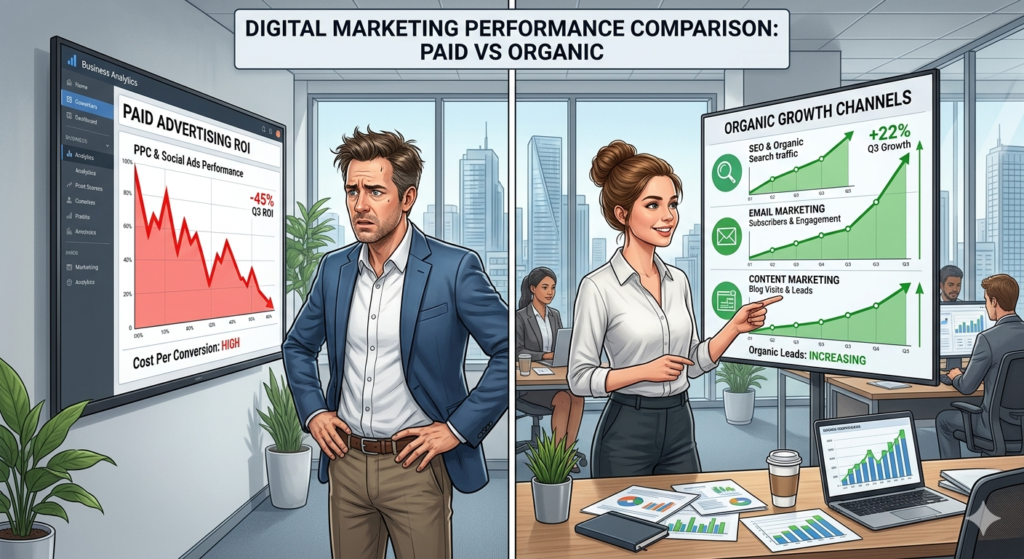
Paid traffic is rented attention.
Organic traffic is owned attention.
When you run ads, you are essentially renting access to an audience from platforms like Facebook, Google, TikTok, or Instagram. Once you stop paying, that access disappears.
Organic traffic works differently.
Traffic generated through SEO, content marketing, email marketing, social media communities, customer referrals, and brand authority can continue producing visitors long after the original effort was made.
This is why the most successful online stores focus on building traffic assets instead of relying entirely on paid advertising.
In fact, many of the sales challenges businesses experience are explained in Why Your E-Commerce Store Is Not Making Sales in 2026, where traffic alone is not enough to generate consistent revenue.
In this guide, you will learn how to attract customers to an online store without running ads by using proven organic e-commerce marketing strategies. We will cover SEO, content marketing, social media, email marketing, customer reviews, partnerships, personal branding, and long-term customer acquisition systems that continue generating growth even when you are not spending money on advertising.
Why Relying Only on Ads Limits How You Attract Customers to an Online Store
If you have ever run Facebook or Google ads, you already know how exciting it feels to see visitors arriving at your store.
The problem is that many businesses mistake traffic for growth.
Sales may increase while ads are running, but the moment the campaigns stop, everything slows down. This is why many store owners become trapped in a cycle of constantly spending money just to maintain sales.
Before exploring organic traffic strategies, it is important to understand why depending entirely on ads can become a serious obstacle to long-term growth.
The Problem With Depending on Paid Traffic
Paid advertising can be a powerful tool when used correctly.
However, it should support a business, not become the business itself.
Many online stores build their entire customer acquisition strategy around advertising platforms. As a result, they become vulnerable to changes they cannot control.
For example:
- Rising advertising costs
- Account restrictions
- Platform policy changes
- Increased competition
- Declining ad performance
When any of these happen, sales can drop overnight.
This is one reason why many online stores struggle to build predictable growth.
Rising Customer Acquisition Costs
Customer acquisition costs have increased significantly across most advertising platforms.
According to WordStream’s Google Ads Benchmarks Guide, businesses across many industries continue to see rising advertising costs as competition intensifies.
This creates a major challenge for smaller stores.
If your average customer costs more to acquire than the profit they generate, scaling becomes extremely difficult.
Many businesses discover this problem only after spending hundreds or thousands of dollars on advertising.
What Happens When Ad Campaigns Stop?
Imagine turning off your advertising account today.
Would customers still discover your store tomorrow?
Next week?
Next month?
For many businesses, the answer is no.
This highlights the biggest weakness of paid traffic.
The results often disappear as soon as the budget disappears.
Organic traffic works differently because content, SEO rankings, email subscribers, and customer referrals can continue to drive visitors long after the original work is completed.
This is one reason why businesses that rely entirely on advertising often experience unstable growth.
The Risks of Building a Business on Rented Platforms
One lesson I learned early in digital marketing is that platforms do not belong to us.
Facebook owns Facebook.
Google owns Google.
TikTok owns TikTok.
When your entire business depends on one platform, you are building on rented land.
A single algorithm update or policy change can dramatically affect visibility and sales.
This is why many experts recommend building owned assets such as:
- Email lists
- SEO traffic
- Blog content
- Customer communities
- Brand authority
These assets continue creating value regardless of platform changes.
Many store owners facing these challenges are actually making some of the same errors discussed in 9 E-Commerce Mistakes That Secretly Kill Your Sales, where overreliance on paid advertising often limits long-term profitability.
Why Sustainable Brands Diversifies Traffic Sources
The strongest e-commerce brands rarely depend on a single traffic source.
Instead, they combine multiple customer acquisition channels, such as:
- Search engine optimization
- Content marketing
- Email marketing
- Social media communities
- Customer referrals
- Strategic partnerships
This creates stability.
If one channel slows down, the business still has several others generating customers.
Now that we understand why depending only on ads can limit growth, the next question becomes obvious:
How do successful stores attract customers consistently without paying for every click?
The answer starts with one of the most powerful long-term traffic strategies available today: e-commerce SEO.
How E-Commerce SEO Helps Attract Customers to an Online Store

Now that we have established why relying only on ads is risky, the next step is understanding how successful brands generate customers consistently without paying for every click.
One of the most effective ways to attract customers to an online store is through search engine optimization (SEO).
Unlike paid advertising, SEO continues working long after the initial effort is made. A well-optimized online store can generate traffic, leads, and sales for months or even years from a single piece of content.
This is why SEO remains one of the most powerful sources of free traffic for online stores.
What E-Commerce SEO Is
E-commerce SEO is the process of optimizing your store so that products, category pages, and blog content appear in search engine results when customers search for related topics.
For example, if someone searches:
- best wireless earbuds for workouts
- affordable office chairs
- skincare products for acne
A properly optimized store has a chance to appear in those search results.
The goal is simple.
Instead of chasing customers, you position your store where customers are already searching.
According to Google Search Central’s SEO Starter Guide, search optimization helps search engines understand your content and connect it with the right audience.
Why Search Traffic Converts Better Than Many Social Channels
One reason SEO performs so well is because of intent.
A person scrolling Instagram may not be actively looking to buy.
A person searching Google usually has a specific need.
They are already looking for answers, solutions, products, or recommendations.
This often leads to higher-quality traffic.
In fact, many businesses struggling with conversions are dealing with issues discussed in WHY YOUR SMALL BUSINESS IS NOT MAKING SALES (AND HOW TO FIX IT FAST), where attracting visitors and converting them are two completely different challenges.
Product Page SEO Fundamentals
Many store owners optimize their homepage but ignore their product pages.
This is a mistake.
Every product page should include:
- a clear product title
- keyword-rich descriptions
- optimized images
- descriptive alt text
- customer reviews
- internal links where relevant
Product pages should answer customer questions before they are asked.
The more useful the page becomes, the better the experience for both users and search engines.
Category Page Optimization
Category pages are often overlooked, yet they can become major traffic drivers.
Instead of displaying only products, strong category pages include:
- short category descriptions
- keyword-focused introductions
- FAQs
- related product links
- helpful buying information
This gives search engines more context while helping customers navigate your store more easily.
Keyword Research for Online Stores
Keyword research helps you understand exactly what potential customers are searching for.
Tools such as Google Keyword Planner and Ahrefs Keyword Explorer can help identify opportunities.
Focus on keywords that show buying intent.
For example:
- Buy running shoes online
- best laptop backpack
- affordable standing desk
These searches often indicate customers who are closer to making a purchase.
Internal Linking Strategies
Internal links help visitors discover more content while helping search engines understand your website structure.
For example, if someone is learning about conversion optimization, they may also benefit from reading 9 E-Commerce Mistakes That Secretly Kill Your Sales.
Likewise, readers struggling with poor sales performance may find additional insights in Why Your E-Commerce Store Is Not Making Sales in 2026.
Strategic internal linking keeps visitors engaged longer and strengthens topical authority.
Common SEO Mistakes Online Stores Make
Some of the most common SEO mistakes include:
- ignoring keyword research
- publishing duplicate product descriptions
- neglecting category pages
- poor internal linking
- slow website speed
- weak mobile optimization
These issues may seem small individually, but together they can significantly reduce visibility.
SEO is not an overnight strategy.
However, when done consistently, it becomes one of the most reliable ways to attract customers organically.
And once SEO begins generating traffic, content marketing becomes the next powerful tool for turning that traffic into trust, authority, and sales.
How Content Marketing Attracts Customers to an Online Store Naturally

Getting people to visit your online store is only part of the challenge.
The next challenge is building enough trust to turn those visitors into customers.
This is where content marketing becomes incredibly powerful.
Many store owners focus entirely on selling products, but successful brands spend a lot of time educating, helping, and guiding potential customers before asking for a sale.
Content marketing allows you to do exactly that.
Instead of interrupting people with advertisements, you attract them by providing useful information they are already searching for.
This is one of the most effective forms of organic e-commerce marketing available today.
Why Educational Content Builds Trust
People buy from businesses they trust.
One of the fastest ways to build trust is by consistently helping your audience solve problems.
For example, if you sell fitness equipment, you can create content about:
- workout routines
- weight loss tips
- home gym setups
- fitness mistakes to avoid
If you sell skincare products, you can create content about:
- skincare routines
- acne prevention
- ingredient comparisons
- product selection guides
When readers repeatedly find value in your content, they begin seeing your brand as a trusted resource.
According to HubSpot’s Content Marketing Statistics Report, educational content remains one of the most effective ways to build customer trust and influence purchasing decisions.
Creating Blog Content Around Customer Problems
One mistake many businesses make is writing content only about themselves.
Customers care more about solving their own problems.
Instead of creating articles about your products, create articles about the challenges your audience faces.
For example:
- how to choose the right product
- common mistakes buyers make
- beginner guides
- troubleshooting articles
- industry trends
This strategy helps your content rank for valuable search terms while attracting potential customers earlier in the buying journey.
Many businesses that struggle with visibility are often dealing with challenges covered in Why Your E-Commerce Store Is Not Making Sales in 2026, where traffic generation and customer trust work together to drive conversions.
Using Buying Guides and Comparison Articles
Buying guides are powerful because they attract people who are actively researching products.
Examples include:
- best products for beginners
- product comparisons
- buying checklists
- feature breakdowns
- product recommendations
These articles help customers make informed decisions while positioning your store as a helpful authority.
Because the customer is already researching solutions, this type of content often attracts highly qualified traffic.
Answering Frequently Asked Customer Questions
Every business receives questions from customers.
Those questions are content opportunities.
If customers repeatedly ask:
- How does this product work?
- Which option should I choose?
- Is this suitable for beginners?
- How long does shipping take?
Then those questions deserve detailed content.
Answering customer questions helps improve SEO while reducing buying hesitation.
Google also tends to reward content that directly satisfies search intent.
Building Topical Authority in Your Niche
Topical authority means becoming known as a trusted source within a specific industry.
Instead of publishing random articles, successful brands build clusters of related content around their niche.
For example, an e-commerce store selling business products might publish content about:
- marketing
- branding
- customer acquisition
- growth strategies
- business systems
Over time, search engines begin recognizing the website as an authority in that topic area.
This can improve rankings across multiple related keywords.
Turning Blog Visitors Into Customers
Content alone does not generate revenue.
The goal is to guide readers toward the next step.
This may include:
- joining an email list
- downloading a free resource
- reading related articles
- exploring products
- booking a consultation
For example, readers learning about common online store challenges may also benefit from 9 E-Commerce Mistakes That Secretly Kill Your Sales, which explores conversion-killing problems many businesses overlook.
Content marketing works because it creates a bridge between traffic and trust.
And once trust begins to grow, social media becomes another powerful channel for expanding your reach and attracting customers without relying on paid advertising.
How Social Media Helps Attract Customers to an Online Store Without Ads
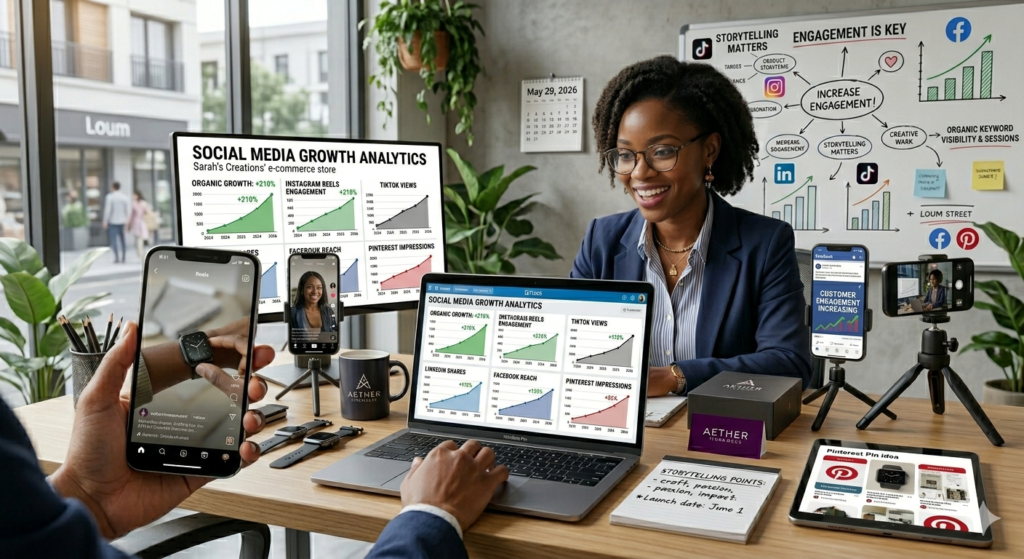
Once content marketing starts bringing visitors to your website, the next step is expanding your reach.
This is where social media becomes one of the most valuable tools for organic e-commerce marketing.
Many people think social media only works if you run ads.
That is not true.
Some of the fastest-growing online brands in 2026 generate thousands of visitors every month through organic content alone.
The secret is understanding that social media is not primarily a sales platform.
It is a relationship-building platform.
People rarely follow a business because they want to see endless product promotions.
They follow brands that educate, entertain, inspire, or solve problems.
Choosing the Right Platform for Your Niche
Not every social media platform produces the same results.
The best platform depends on your audience and products.
For example:
- Visual products
- Lifestyle brands
- Fashion
- Beauty
- Fitness
TikTok
- Viral content
- Product demonstrations
- Short educational videos
- Trend-driven audiences
- Home decor
- DIY
- Fashion
- Food
- Long-term traffic generation
- Community building
- Groups
- Local businesses
- Relationship marketing
- B2B products
- Professional services
- Founder branding
- Business-related niches
Instead of trying to dominate every platform, focus on one or two channels where your audience already spends time.
Educational Content vs Promotional Content
One of the biggest mistakes businesses make is posting nothing but product promotions.
Customers quickly lose interest when every post is trying to sell something.
A better approach is to follow a content balance that prioritizes value.
Examples include:
- educational tips
- industry insights
- customer success stories
- behind-the-scenes content
- problem-solving advice
Promotional content should support your strategy, not dominate it.
Many brands struggling with engagement are making some of the same mistakes discussed in 9 E-Commerce Mistakes That Secretly Kill Your Sales, where poor content strategy often limits customer growth.
Creating Shareable Posts
Organic growth accelerates when people share your content.
Shareable content often includes:
- practical tips
- checklists
- statistics
- tutorials
- relatable stories
- surprising insights
Before publishing a post, ask yourself:
“Would someone feel motivated to share this with a friend?”
If the answer is no, the content may need improvement.
Building a Community Around Your Brand
Successful social media marketing is not just about attracting followers.
It is about building a community.
Communities create:
- trust
- loyalty
- engagement
- referrals
- repeat customers
Reply to comments.
Answer questions.
Start conversations.
Show genuine interest in your audience.
The stronger the community becomes, the easier it becomes to attract customers organically.
Leveraging Short-Form Video Content
Short-form video continues to dominate social media in 2026.
Platforms reward engaging video content because it keeps users active longer.
Effective short-form videos often include:
- product demonstrations
- tutorials
- customer stories
- quick tips
- behind-the-scenes content
- industry insights
According to HubSpot’s Video Marketing Research, video remains one of the highest-performing content formats for engagement and brand awareness.
Using Social Proof to Increase Reach
People trust people.
This is why social proof plays such a powerful role in social media growth.
Examples include:
- customer reviews
- user-generated content
- testimonials
- customer success stories
- influencer mentions
When people see others benefiting from your products, trust increases naturally.
Many businesses have successfully used strategies from 7 Instagram Growth Strategies Small Businesses Are Using in 2026 to build visibility, engagement, and customer trust without relying heavily on paid promotions.
Social media helps you attract attention.
Content marketing helps build trust.
But there is another asset that gives you direct access to your audience without depending on algorithms.
That asset is email marketing.
How Email Marketing Attracts Repeat Customers to an Online Store

After working hard to attract visitors through SEO, content marketing, and social media, the last thing you want is for those visitors to disappear forever.
Unfortunately, that happens every day.
Someone visits your website, browses a few pages, leaves, and never returns.
This is why email marketing remains one of the most important customer acquisition and retention channels for online stores.
Unlike social media followers, your email list is an asset you own.
No algorithm changes can take it away.
No platform restrictions can reduce your reach overnight.
This makes email one of the most reliable ways to attract customers to an online store and generate repeat sales.
Why Email Remains One of the Highest ROI Channels
Email marketing consistently delivers one of the highest returns on investment in digital marketing.
The reason is simple.
You are communicating directly with people who have already shown interest in your business.
According to Campaign Monitor’s Email Marketing Statistics, email marketing continues to be one of the most effective channels for customer retention and revenue generation.
Instead of paying repeatedly to reach the same audience, you can communicate with subscribers whenever you have valuable information or offers to share.
Building an Email List From Day One
One mistake many online stores make is waiting too long to build an email list.
Even if your traffic is small today, every visitor matters.
You can collect email subscribers through:
- website forms
- popups
- landing pages
- lead magnets
- product waitlists
- giveaways
The earlier you start building your list, the larger your audience becomes over time.
Lead Magnets for E-Commerce Stores
A lead magnet is something valuable offered in exchange for an email address.
Examples include:
- discount codes
- buying guides
- checklists
- templates
- free resources
- exclusive content
The best lead magnets solve a problem related to your products or audience.
For example, a fitness store could offer a workout guide, while a business-focused store might provide a marketing checklist.
Welcome Sequences
Most subscribers are most engaged immediately after joining your email list.
This is why welcome sequences are important.
A welcome sequence introduces new subscribers to:
- your brand story
- your mission
- your best content
- your products
- your customer success stories
It helps build trust before asking for a sale.
Many businesses that struggle with conversions are often missing this relationship-building step, which is one of the issues discussed in Why Your E-Commerce Store Is Not Making Sales in 2026.
Product Recommendation Emails
Not every subscriber wants the same thing.
Product recommendation emails allow you to personalize offers based on customer interests and behavior.
Examples include:
- related products
- best sellers
- recently viewed items
- seasonal recommendations
- complementary products
Personalization often improves engagement and conversion rates because the content feels more relevant.
Customer Retention Campaigns
Getting a customer is valuable.
Keeping a customer is even more valuable.
Retention campaigns help encourage repeat purchases through:
- follow-up emails
- loyalty rewards
- educational content
- product usage tips
- exclusive offers
Businesses that focus only on acquiring new customers often overlook the value of existing customers.
In many cases, repeat customers become one of the biggest drivers of long-term revenue.
Email marketing helps transform one-time visitors into subscribers and subscribers into loyal customers.
But even the strongest email strategy becomes more effective when supported by something customers trust deeply before making a purchase: reviews and social proof.
How Customer Reviews Attract More Customers to an Online Store
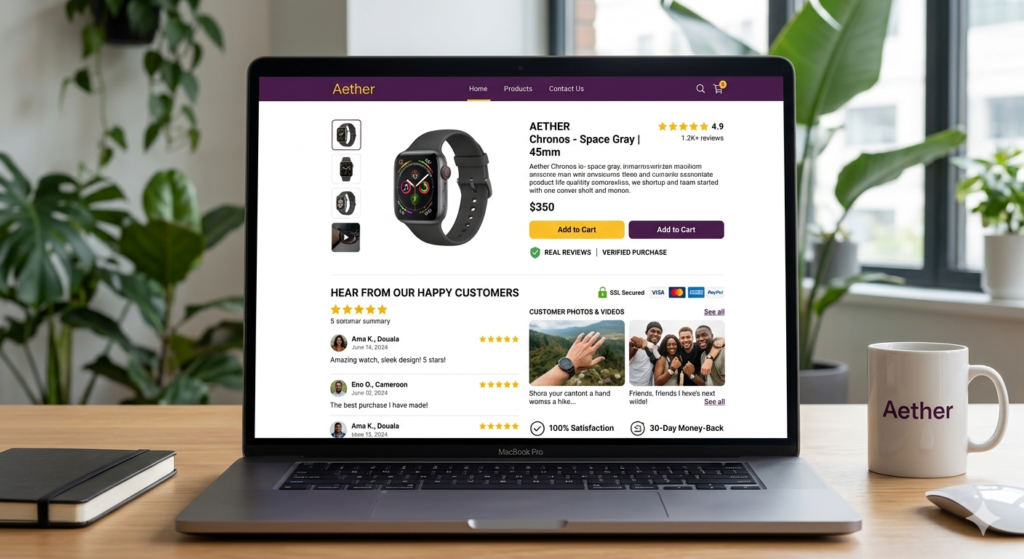
You can have great products, strong SEO, useful content, and an active social media presence, but if customers do not trust your business, sales will still be difficult to generate.
Trust is one of the most important factors in online shopping.
Unlike physical stores, customers cannot touch products, speak with staff face-to-face, or inspect items before purchasing.
Because of this, they look for reassurance from other customers.
This is where reviews and social proof become powerful customer acquisition tools.
Why Social Proof Influences Buying Decisions
People naturally look at what others are doing before making decisions.
If dozens or hundreds of customers have purchased a product and shared positive experiences, new buyers feel more confident.
This psychological principle is known as social proof.
It helps reduce uncertainty and increases trust.
According to Nielsen’s Global Trust in Advertising Report, consumers consistently trust recommendations and reviews from other people more than traditional advertising.
That makes customer reviews one of the most valuable forms of free marketing available.
Collecting Customer Reviews
Many businesses want reviews but never actually ask for them.
In reality, satisfied customers are often willing to leave feedback when encouraged to do so.
You can collect reviews through:
- post-purchase emails
- follow-up messages
- loyalty programs
- customer surveys
- review request campaigns
The key is making the process simple.
The easier it is to leave feedback, the more reviews you are likely to receive.
User-Generated Content Strategies
User-generated content is any content created by your customers.
Examples include:
- product photos
- unboxing videos
- testimonials
- social media posts
- product demonstrations
This type of content often performs exceptionally well because it feels authentic.
Potential buyers see real people using and enjoying the product, which builds confidence.
User-generated content also provides a steady stream of marketing material without requiring large production budgets.
Testimonials and Case Studies
Testimonials are powerful.
Case studies are even more powerful.
Instead of simply saying a product is effective, case studies show exactly how customers achieved results.
Good case studies often include:
- the customer’s challenge
- The solution provided
- measurable results
- customer feedback
These stories help potential buyers see themselves achieving similar outcomes.
Many businesses improve trust and conversions after implementing customer-focused strategies like those discussed in 9 E-Commerce Mistakes That Secretly Kill Your Sales, where missing trust signals often reduce purchasing confidence.
Building Trust Through Customer Experiences
The strongest marketing message is often a happy customer sharing their experience.
Customer experiences help answer important questions such as:
- Does the product work?
- Is the business trustworthy?
- Is the purchase worth the money?
- What results can I expect?
When people see positive experiences from real customers, hesitation decreases significantly.
Customer reviews help attract new customers because they create trust before a sales conversation even begins.
And while reviews help persuade potential buyers, another powerful growth strategy involves leveraging the audiences that other people and businesses have already built.
That is where partnerships come into play.
How Partnerships Help Attract Customers to an Online Store

Many online store owners spend all their time trying to build an audience from scratch.
While there is nothing wrong with growing your own audience, there is often a faster way to gain visibility.
You can borrow trust from audiences that already exist.
This is one reason partnerships remain one of the most overlooked online store growth strategies.
A good partnership allows both businesses to benefit while reaching new customers without spending heavily on advertising.
Influencer Collaborations
Influencer marketing is often associated with paid sponsorships, but many collaborations can be structured in mutually beneficial ways.
Micro-influencers, in particular, often have highly engaged audiences that trust their recommendations.
Instead of focusing only on follower counts, look for influencers whose audience closely matches your target customers.
For example:
- fitness influencers for fitness products
- business creators for business tools
- Beauty influencers for skincare products
- home decor creators for furniture brands
A trusted recommendation can expose your store to thousands of potential buyers.
Strategic Partnerships
Strategic partnerships involve collaborating with businesses that serve the same audience without directly competing with you.
For example:
- a graphic design business partnering with a marketing agency
- a fitness coach partnering with a supplement brand
- a business consultant partnering with a software company
Both businesses can recommend each other to their audiences, creating a win-win relationship.
This often generates highly qualified traffic because trust already exists.
Affiliate Marketing
Affiliate marketing allows other people to promote your products in exchange for a commission on sales.
The advantage is simple.
You only pay when results are generated.
Affiliates can include:
- bloggers
- content creators
- industry experts
- website owners
- niche communities
According to Shopify’s Affiliate Marketing Guide, affiliate programs can become powerful customer acquisition channels when managed properly.
Guest Posting Opportunities
Guest posting remains an effective way to increase visibility and authority.
By contributing valuable content to established websites in your industry, you can:
- reach new audiences
- build backlinks
- strengthen SEO
- establish expertise
- drive referral traffic
The focus should always be on providing value first.
Strong guest content often leads interested readers back to your website naturally.
Community Partnerships
Communities already gather people with shared interests.
These communities can include:
- Facebook groups
- LinkedIn groups
- online forums
- industry associations
- local business communities
Participating genuinely in these communities helps build credibility and relationships over time.
The goal is not immediate selling.
The goal is becoming a trusted contributor.
Cross-Promotions With Complementary Brands
Cross-promotion is another simple but effective strategy.
Two businesses serving similar audiences can promote each other’s products, content, or resources.
For example, a business selling online store templates could collaborate with a business consultant helping entrepreneurs grow their companies.
This allows both brands to gain exposure to relevant audiences.
Many businesses successfully combine partnership strategies with the content and SEO methods discussed in First 10 Customers in 30 Days: A Practical Guide for New Small Businesses, creating multiple traffic sources instead of relying on one channel.
Partnerships help you leverage existing trust and visibility.
However, there is another strategy that can attract customers even faster because people often connect with individuals more than brands.
That strategy is personal branding.
How Personal Branding Attracts Customers to an Online Store Faster

People do business with companies.
But more importantly, people trust people.
This is why personal branding has become one of the most powerful customer acquisition strategies in 2026.
Many online stores focus exclusively on promoting products while hiding the person behind the business.
The problem is that customers often connect more strongly with people than logos.
When customers know who you are, what you stand for, and why you started your business, trust grows much faster.
Why People Buy From People
Think about some of the brands you follow online.
In many cases, you probably know the founder, creator, or expert behind the business.
That is not an accident.
People naturally trust human stories more than corporate messaging.
A personal brand helps customers feel like they know the person behind the business.
This creates:
- credibility
- trust
- familiarity
- loyalty
- engagement
These factors often influence buying decisions more than many business owners realize.
Founder-Led Marketing
Founder-led marketing simply means putting yourself at the front of your brand.
Instead of only posting products, you share:
- insights
- experiences
- lessons learned
- opinions
- business updates
Customers enjoy following real journeys.
They want to see the people behind the products they buy.
This approach is especially effective for small businesses because it helps differentiate you from larger competitors.
Sharing Business Stories
Stories help people connect emotionally with your brand.
You can share stories about:
- why you started the business
- mistakes you have made
- lessons learned
- customer successes
- business milestones
Stories create authenticity.
They make your business feel human rather than transactional.
Many successful entrepreneurs have built loyal audiences simply by documenting their journey openly and consistently.
Building Credibility Online
Credibility is earned through visibility and value.
You build credibility by:
- publishing helpful content
- sharing expertise
- solving problems
- teaching your audience
- showing results
The more value you provide, the more people begin seeing you as a trusted authority.
This is one reason why content marketing and personal branding work so well together.
For example, consistently publishing educational content like 9 Common Mistakes That Are Slowing Your Small Business Growth helps position a brand as a trusted source of business knowledge rather than just another company trying to sell products.
Becoming a Trusted Voice in Your Niche
Trust takes time.
But once established, it becomes one of the strongest competitive advantages a business can have.
Customers are more likely to buy from businesses that consistently:
- educate
- inspire
- help
- communicate honestly
- demonstrate expertise
Over time, your personal brand becomes an asset that attracts customers naturally.
Leveraging Expertise to Build Authority
You do not need to be famous to build authority.
You simply need to know more than the people you are helping.
Share what you learn.
Share what works.
Share what does not work.
Document your experiences and provide practical insights.
Authority grows through consistency.
And when authority combines with SEO, content marketing, social media, email marketing, reviews, and partnerships, something powerful begins to happen.
You stop relying on isolated marketing tactics and start building a complete customer acquisition system that generates growth consistently.
How Successful Online Stores Build Customer Acquisition Systems
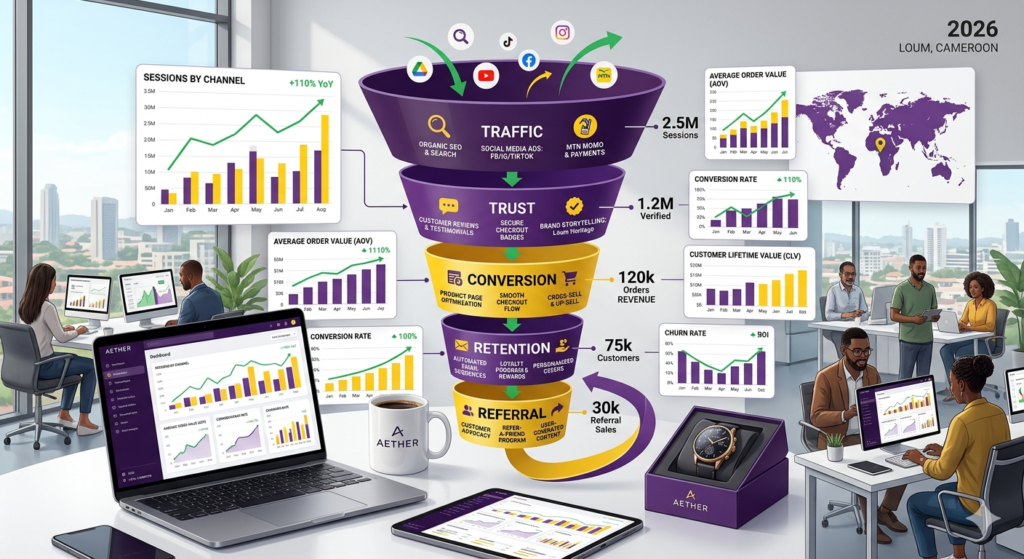
By now, you have seen that attracting customers without ads is not about finding one magic strategy.
It is about building a system.
Many struggling online stores jump from one tactic to another. One month they focus on SEO. The next month, they chase social media trends. Then they switch to email marketing.
The problem is that isolated tactics rarely create predictable growth.
Successful stores build customer acquisition systems where every marketing channel works together.
A simple framework looks like this:
Traffic → Trust → Conversion → Retention → Referral
Let’s break it down.
Turning Visitors Into Subscribers
Traffic is only valuable if you can maintain a relationship with visitors.
Whether traffic comes from:
- SEO
- social media
- partnerships
- referrals
- content marketing
The goal should be to capture contact information whenever possible.
This is where:
- email lists
- lead magnets
- newsletters
- free resources
become important.
Instead of losing visitors forever, you create opportunities to continue the conversation.
Turning Subscribers Into Customers
Once someone joins your audience, trust-building becomes the priority.
Subscribers often need:
- educational content
- product information
- customer success stories
- buying guides
- helpful resources
before they are ready to purchase.
This is why content marketing and email marketing work so well together.
Many businesses that struggle with conversions are experiencing some of the issues discussed in Why Your E-Commerce Store Is Not Making Sales in 2026, where attracting attention and building trust must happen simultaneously.
Turning Customers Into Repeat Buyers
The first sale is important.
The second sale is often more profitable.
Successful online stores focus heavily on customer retention through:
- follow-up emails
- loyalty programs
- educational resources
- personalized recommendations
- excellent customer support
Retaining existing customers is usually cheaper than constantly acquiring new ones.
Creating Referral Systems
Happy customers can become one of your best marketing assets.
Referral systems encourage customers to recommend your products to friends, family, and colleagues.
Examples include:
- referral rewards
- affiliate programs
- customer ambassador programs
- share-and-earn campaigns
Referrals work because trust already exists before the recommendation is made.
Building Traffic Assets Instead of Chasing Traffic
The biggest difference between struggling stores and successful stores is mindset.
Struggling stores chase traffic.
Successful stores build assets.
Traffic assets include:
- blog content
- SEO rankings
- email lists
- customer communities
- brand authority
- referral networks
These assets continue generating results long after the initial work has been completed.
Businesses that apply strategies from 9 E-Commerce Mistakes That Secretly Kill Your Sales often discover that sustainable growth comes from building systems rather than relying on temporary marketing wins.
Now that we have covered the framework, the next step is turning theory into action.
Let’s look at a practical 90-day roadmap you can follow to start attracting customers to an online store without running ads.
90-Day Plan to Attract Customers to an Online Store Without Running Ads
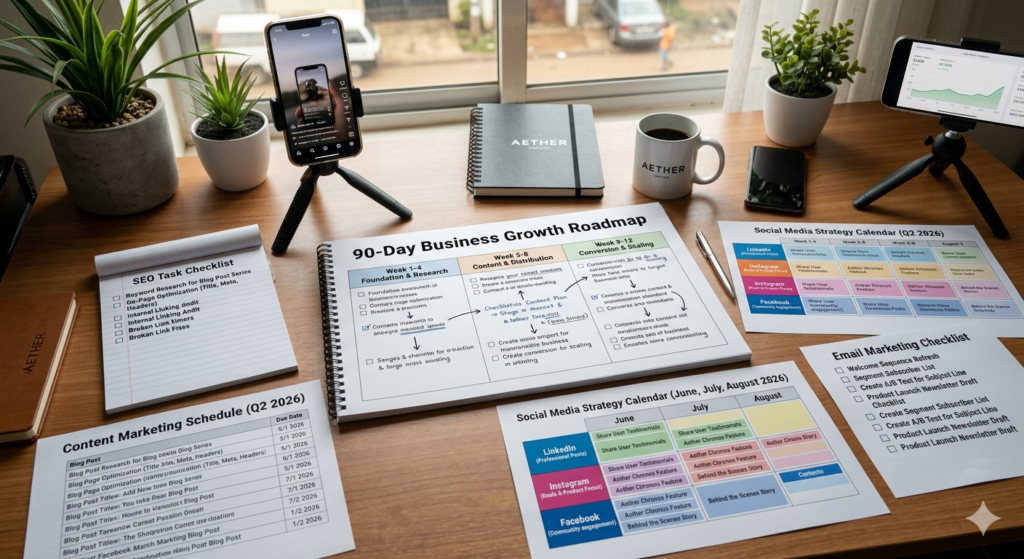
Reading strategies is helpful.
Implementing them is what produces results.
One reason many online store owners struggle is that they try to do everything at once. They start SEO, social media, email marketing, content creation, partnerships, and product optimization all in the same week.
The result is usually overwhelming and inconsistent.
A better approach is to build your customer acquisition system step by step.
Here is a simple 90-day roadmap you can follow.
Month 1: Build Your Foundation
The first month should focus on creating the assets that will support long-term growth.
SEO Foundation
Start by optimizing:
- product pages
- category pages
- meta titles
- meta descriptions
- image alt text
- internal links
Content Creation
Publish content targeting customer questions and problems.
Focus on:
- buying guides
- tutorials
- industry insights
- comparison articles
- frequently asked questions
The goal is to begin building topical authority in your niche.
Store Optimization
Review your:
- branding
- navigation
- checkout process
- product descriptions
- trust signals
Traffic is far more valuable when your store is optimized to convert visitors into customers.
Month 2: Grow Your Audience
Once your foundation is in place, begin increasing visibility.
Social Media Growth
Choose one or two platforms and post consistently.
Focus on:
- educational content
- short-form videos
- customer stories
- problem-solving content
Many businesses have successfully used strategies from 7 Instagram Growth Strategies Small Businesses Are Using in 2026 to build organic visibility and customer engagement.
Email List Building
Add lead magnets and signup opportunities throughout your website.
Begin collecting subscribers through:
- newsletters
- free resources
- downloadable guides
- exclusive content
Remember, your email list is an asset you own.
Community Engagement
Start participating in:
- Facebook groups
- LinkedIn communities
- niche forums
- industry discussions
Focus on helping people rather than selling immediately.
Month 3: Accelerate Growth
With traffic and audience-building systems in place, it is time to increase momentum.
Partnerships
Reach out to:
- complementary brands
- influencers
- bloggers
- industry experts
Look for collaboration opportunities that benefit both parties.
Customer Reviews
Actively request reviews and testimonials from customers.
Social proof helps increase trust and improve conversion rates.
Many businesses overlook this step, even though trust-building is one of the themes explored in 9 E-Commerce Mistakes That Secretly Kill Your Sales.
Referral Systems
Create simple referral programs that encourage customers to share your business.
Even a small number of referrals can generate highly qualified leads.
The Goal of the First 90 Days
The purpose of this roadmap is not to achieve overnight success.
The goal is to build assets that continue generating customers long after the first 90 days have passed.
When SEO, content marketing, social media, email marketing, partnerships, and referrals work together, you create a sustainable system for attracting customers without depending entirely on paid advertising.
Now that you have a practical action plan, let’s answer some of the most common questions store owners ask about attracting customers without running ads.
Frequently Asked Questions
Can I Attract Customers to an Online Store Without Paid Ads?
Yes.
Many successful online stores generate consistent sales without relying heavily on paid advertising.
Instead, they focus on building long-term traffic assets such as:
- SEO
- content marketing
- email marketing
- social media communities
- partnerships
- customer referrals
While organic growth usually takes longer than paid advertising, it often produces more sustainable results over time because traffic continues coming even when you are not spending money on ads.
What Is the Fastest Free Traffic Source for Online Stores?
The answer depends on your niche and execution.
For most businesses, social media platforms like Instagram, TikTok, and Facebook can generate traffic relatively quickly if content performs well.
However, SEO often becomes the most reliable long-term source of free traffic because articles and product pages can continue attracting visitors for months or years.
Businesses that combine both SEO and social media usually see the best results.
For example, applying lessons from 7 Instagram Growth Strategies Small Businesses Are Using in 2026 alongside SEO can create multiple traffic sources instead of depending on one channel.
How Long Does SEO Take to Generate Customers?
SEO is a long-term strategy.
While some pages may rank within a few weeks, most businesses should expect several months of consistent effort before seeing significant results.
Factors affecting SEO timelines include:
- competition
- website authority
- content quality
- keyword difficulty
- consistency
According to Google Search Central SEO Documentation, creating helpful and relevant content remains one of the most important factors for long-term search visibility.
Which Social Media Platform Is Best for E-Commerce?
There is no universal answer because different audiences use different platforms.
Generally:
- Instagram works well for visual products.
- TikTok excels with short-form video content.
- Pinterest performs strongly for lifestyle and search-driven niches.
- Facebook helps build communities.
- LinkedIn is effective for B2B businesses.
The best approach is to focus on the platform where your target audience is already active.
How Do Successful Online Stores Get Customers Consistently?
Successful stores rarely depend on a single traffic source.
Instead, they build systems that combine:
- SEO
- content marketing
- email marketing
- social media
- reviews
- referrals
- partnerships
This creates stability and reduces risk.
Many businesses struggling with growth are often facing challenges discussed in Why Your E-Commerce Store Is Not Making Sales in 2026, where traffic generation, trust-building, and conversion optimization must work together.
The most successful online stores focus on building assets that continue attracting customers long after the initial work has been completed.
Conclusion
Many online store owners believe paid advertising is the only way to grow an e-commerce business.
The reality is very different.
While ads can generate traffic quickly, they are not the only path to attracting customers. In fact, some of the most successful online stores focus heavily on building assets that continue producing results long after the initial effort has been made.
Throughout this guide, we explored how to attract customers to an online store using:
- SEO
- content marketing
- social media
- email marketing
- customer reviews
- partnerships
- personal branding
- customer acquisition systems
Each strategy plays a different role, but together they create a sustainable growth engine.
The goal is not to master everything overnight.
Instead, focus on implementing one strategy at a time and improving consistently.
Start by building a strong SEO foundation.
Create content that solves customer problems.
Grow your email list.
Build relationships on social media.
Collect customer reviews.
Develop partnerships that expand your reach.
Over time, these assets compound and make your business less dependent on paid advertising.
Many businesses that struggle to grow organically often make mistakes covered in 9 E-Commerce Mistakes That Secretly Kill Your Sales. Fixing those issues alongside the strategies in this guide can dramatically improve long-term results.
The most successful brands are not constantly chasing traffic.
They are building systems that attract customers, earn trust, generate sales, and encourage referrals automatically.
If you want more practical strategies to grow your online business, improve your marketing, and build sustainable customer acquisition systems, explore the resources available through INSPIRED TO PROSPER.
Start small, stay consistent, and focus on building assets that continue working for your business long into the future.