

Introduction

Many small business owners believe that having a great product or service is enough to attract customers. Unfortunately, that is rarely the case.
Across cities, towns, and neighborhoods, excellent businesses are struggling to generate consistent sales. Not because they lack quality, but because potential customers simply do not know they exist. Meanwhile, other businesses with average products continue to grow because they have mastered local marketing strategies for small businesses and made themselves visible where customers are already searching.
This visibility problem has become one of the biggest challenges facing local entrepreneurs in 2026. Consumers now rely heavily on Google searches, online reviews, maps, social media recommendations, and local community groups before making buying decisions. If a business is not showing up in those places, it is often overlooked, regardless of how good its products or services may be.
A few months ago, I came across a local bakery that had some of the best products in its area. Customers who discovered the business loved the quality and often returned. Yet sales remained inconsistent. The problem was not the product. The problem was visibility. Their Google Business Profile was incomplete, they had very few online reviews, and they rarely appeared in local search results.
After improving their local marketing efforts, collecting customer reviews, updating their online presence, and engaging more actively within their community, inquiries began increasing steadily. More people discovered the business, trust improved, and sales followed.
This example highlights an important lesson. There is a difference between being known by a few people and being discoverable by many potential customers.
That is why local marketing matters more than ever today. The businesses winning in local markets are not always the biggest. They are often the most visible, trusted, and accessible.
In this guide, you will learn five proven local marketing strategies for small businesses that can help you get found faster, attract more local customers, build trust within your community, and create a predictable system for long-term growth.
Before diving into these strategies, it is important to understand why local marketing has become one of the most powerful growth drivers for small businesses in 2026 and beyond.
For a broader marketing foundation, you may also find 5 Must-Have Elements in a Small Business Marketing Plan (That Drive Real Growth) helpful as you build your overall marketing strategy.
Why Local Marketing Strategies for Small Businesses Matter More Than Ever
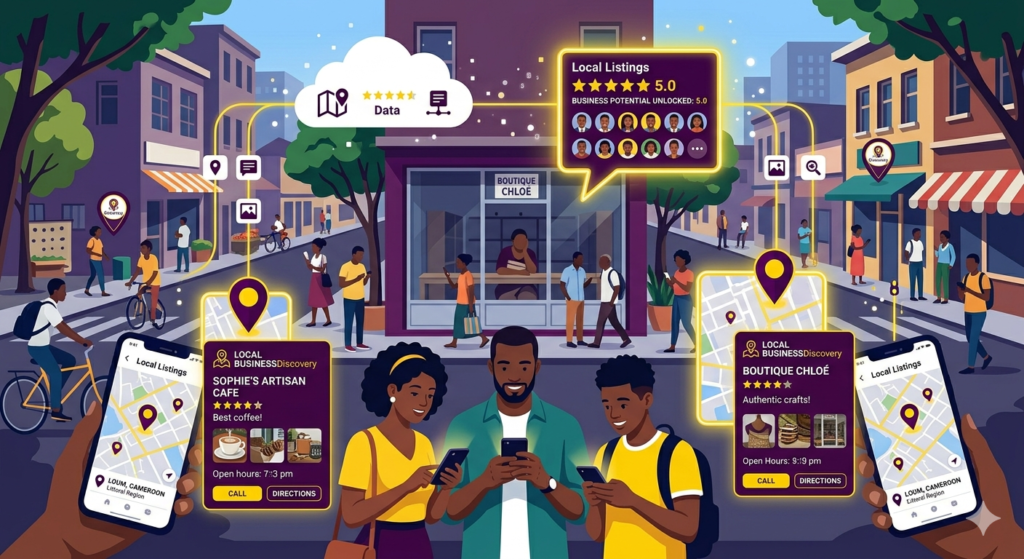
The way customers discover and choose businesses has changed dramatically over the last few years. In the past, people relied heavily on word-of-mouth recommendations, newspaper advertisements, radio promotions, or simply walking past a storefront. While those methods can still generate results, today’s consumers often begin their buying journey online, even when they intend to purchase from a local business.
When someone needs a restaurant, plumber, salon, bakery, mechanic, accountant, or cleaning service, their first instinct is usually to pull out a smartphone and search. They look for businesses nearby, read reviews, compare ratings, check photos, and evaluate credibility before making contact. This shift in consumer behavior has made local marketing strategies for small businesses more important than ever.
One of the biggest reasons local marketing works so well is that it targets people with immediate intent. Someone searching for “best bakery near me” or “plumber in Douala” is not casually browsing. They are actively looking for a solution. This makes local searches some of the highest-converting opportunities available to small businesses.
Local businesses also enjoy a significant trust advantage. Many consumers prefer supporting businesses within their community because they value convenience, familiarity, and personalized service. Unlike large corporations, local businesses often can build stronger relationships with customers and respond more quickly to their needs.
Another advantage is cost efficiency. Large-scale advertising campaigns can be expensive, especially for new businesses with limited budgets. Effective local business marketing often delivers better results because it focuses on attracting nearby customers who are more likely to buy. A well-optimized local presence can generate leads for months without the constant expense of paid advertising.
Consider a local salon that struggled to attract new clients despite offering excellent services. Instead of increasing advertising spend, the owner focused on improving local visibility. They optimized their online profiles, encouraged satisfied customers to leave reviews, and actively engaged in local community groups. Within a few months, inquiries increased substantially because more people could find and trust the business.
This principle applies across nearly every industry. Visibility creates opportunities. Trust converts opportunities into customers.
If your business is attracting attention but still struggling to generate sales, Why Your Small Business Is Not Making Sales (And How to Fix It Fast) provides additional insights into what may be limiting your results.
According to Google Business Profile Help Center, businesses that maintain accurate and complete profiles improve their chances of being discovered by nearby customers searching for relevant products and services.
Now that the importance of local marketing is clear, let’s begin with the most powerful strategy available to local businesses today: optimizing your Google Business Profile to dominate local search results.
Local Marketing Strategy #1: Dominate Local Search With Google Business Profile
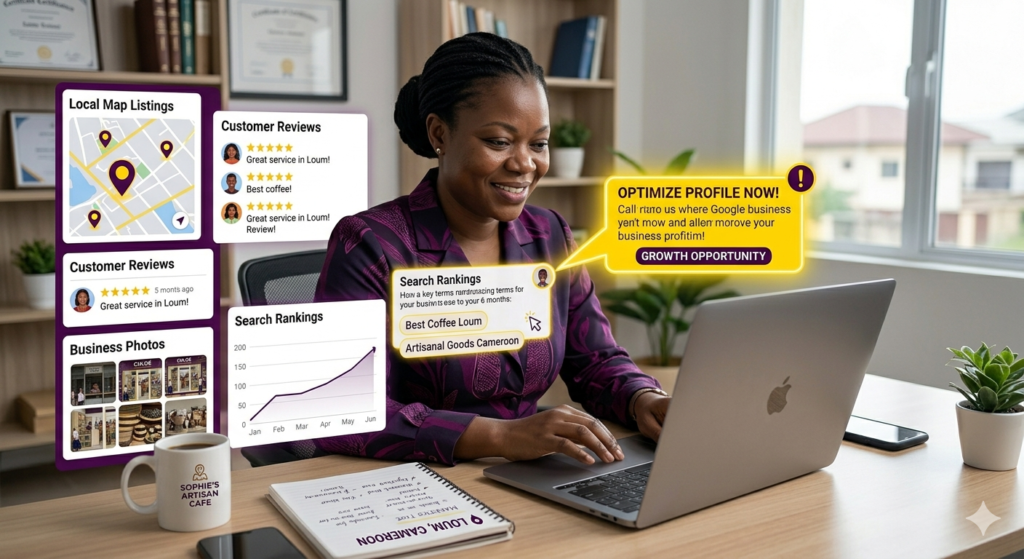
If there is one local marketing strategy for small businesses that can produce results faster than almost any other, it is optimizing your Google Business Profile.
Think about your own buying behavior. When searching for a nearby restaurant, repair service, pharmacy, salon, or store, where do you usually look first? For most people, the answer is Google.
When someone searches for a local service, Google often displays a map section showing nearby businesses, ratings, reviews, photos, and contact information. This is where many customers make their decision. If your business appears there with a strong profile, you immediately gain a visibility advantage over competitors who have neglected this opportunity.
What Is Google Business Profile?
Google Business Profile is a free platform that allows businesses to manage how they appear across Google Search and Google Maps.
A properly optimized profile can display:
- Business name
- Address
- Phone number
- Website
- Operating hours
- Customer reviews
- Photos
- Products and services
- Business updates
- Frequently asked questions
For local business marketing, this profile often becomes the first impression potential customers have of your business.
Why Local SEO Starts Here
Many business owners focus on websites and social media while ignoring their Google Business Profile. That is a mistake.
Local SEO for small businesses starts with helping Google understand:
- Who you are
- What you offer
- Where you operate
- Why customers should trust you
The more complete and accurate your profile is, the more likely Google is to show your business when people search for related services in your area.
Complete Google Business Profile Optimization Checklist
Choose the Correct Business Categories
Your primary category tells Google exactly what your business does.
For example:
- Restaurant
- Hair Salon
- Marketing Agency
- Bakery
- Plumbing Service
- Auto Repair Shop
Adding relevant secondary categories can help your business appear for additional searches.
Add High-Quality Photos and Videos
Many local businesses still use poor-quality images or no images at all.
Customers want to see:
- Your storefront
- Products
- Team members
- Completed projects
- Customer experiences
Businesses with quality photos often receive more engagement because people can visualize what to expect before making contact.
Write Strong Service Descriptions
Avoid generic descriptions.
Instead of writing:
“Best service in town.”
Write:
“We help small businesses increase sales through social media marketing, local SEO, content creation, and customer acquisition strategies.”
Specific descriptions help both customers and search engines understand your services.
Publish Weekly Updates
One of the most overlooked local advertising strategies is posting regular updates on your Google Business Profile.
You can share:
- New products
- Promotions
- Events
- Customer success stories
- Business announcements
Regular activity signals that your business is active and engaged.
Actively Manage Reviews
Reviews are one of the strongest trust signals in local search.
When potential customers compare businesses, they often look at:
- Number of reviews
- Average rating
- Recent feedback
- Business responses
Encourage satisfied customers to leave honest reviews after positive experiences.
Equally important, respond professionally to every review, including negative ones.
Common Google Business Profile Mistakes
Many small businesses lose visibility because they:
- Leave profiles incomplete
- Use incorrect categories
- Ignore reviews
- Upload poor-quality images
- Fail to update business information
- Never publish posts or updates
These mistakes reduce trust and hurt local search performance.
Real-World Example
A local home cleaning company had a Google Business Profile but rarely received inquiries. After reviewing the profile, several issues became obvious.
The business had only three photos, incomplete service descriptions, and very few customer reviews.
Over the next three months, they:
- Added professional project photos
- Updated service descriptions
- Requested reviews from satisfied clients
- Posted weekly updates
The result was a noticeable increase in profile views, phone calls, and service inquiries. The company did not dramatically increase its advertising budget. It simply became easier for local customers to find and trust the business.
Why Ongoing Optimization Matters
Many competitors teach business owners how to set up a profile, but never explain that optimization is an ongoing process.
The businesses that dominate local search results continue to:
- Collect reviews
- Publish updates
- Add photos
- Monitor performance
- Improve customer engagement
Local SEO is not a one-time task. It is a continuous visibility strategy.
If you are building a complete customer acquisition system, Sales System for a Small Business: Stop Chasing Leads & Build a Predictable Machine in 2026 explains how visibility can be connected to a structured sales process that consistently turns prospects into customers.
For Google’s official optimization recommendations, review the Google Business Profile Help Center, which guides profile management, reviews, posts, and local visibility.
Optimizing your Google Business Profile gives your business a strong local foundation. However, visibility does not stop there. The next strategy focuses on creating hyperlocal content that attracts customers before they are ready to buy and positions your business as the obvious local choice.
Local Marketing Strategy #2: Build Hyperlocal Content That Attracts Customers
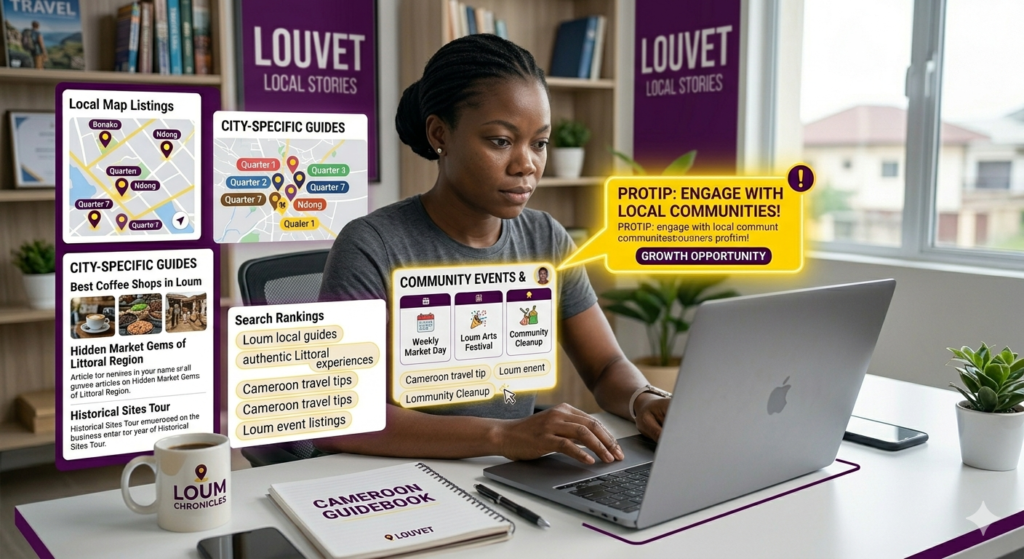
Many small business owners hear about local SEO for small businesses and immediately think about keywords, directories, and Google Business Profile optimization. While those elements are important, they are only part of the picture.
To truly dominate local search and attract a steady flow of local customers, businesses need content that speaks directly to the communities they serve. This is where hyperlocal content becomes one of the most powerful local marketing strategies for small businesses.
What Is Hyperlocal Content?
Hyperlocal content is content created specifically for a particular city, neighborhood, district, or community.
Instead of targeting broad topics, hyperlocal content focuses on local interests, local problems, local events, and local customer needs.
For example, a cleaning company could write:
- Best Cleaning Tips for Homeowners in Douala
- How Humidity Affects Home Cleaning in Coastal Cities
- Common Office Cleaning Challenges for Businesses in Douala
These topics connect directly with the local audience and help attract highly relevant traffic.
Why Hyperlocal Content Works
People often search using location-specific phrases.
Examples include:
- Best bakery in Douala
- Accountant near Akwa
- Wedding photographer in Bonapriso
- Hair salon in Bonamoussadi
When your content addresses these local searches, search engines gain more confidence in showing your business to nearby customers.
Hyperlocal content also helps build trust because it demonstrates familiarity with the local environment and customer challenges.
Create City-Specific Content
One of the easiest ways to implement hyperlocal marketing is by creating content around the city or region you serve.
A marketing consultant could publish:
- Small Business Marketing Tips for Entrepreneurs in Douala
- How Local Businesses in Cameroon Can Get More Customers Online
- Local Marketing Strategies for Small Businesses in Growing Urban Markets
These articles naturally attract local business owners searching for relevant advice.
Answer Local Customer Questions
Every community has unique concerns.
Pay attention to:
- Frequently asked questions
- Social media discussions
- Customer conversations
- Community groups
- Online forums
When businesses consistently answer local questions, they position themselves as trusted experts while attracting search traffic.
Cover Local Events and Community Activities
Local events create excellent content opportunities.
Examples include:
- Business expos
- Community fairs
- Charity events
- Industry conferences
- Local networking events
By discussing local events and sharing insights, businesses increase relevance within their communities while creating fresh content that search engines appreciate.
Create Local Guides
Local guides perform exceptionally well because they provide value beyond selling.
Examples include:
- Small Business Resources in Douala
- Best Networking Opportunities for Entrepreneurs
- Complete Local Business Startup Guide
- Where New Business Owners Can Find Customers
Useful guides attract attention, generate shares, and strengthen authority.
Publish Local Case Studies
Case studies are one of the most underused neighborhood marketing ideas.
Instead of making broad claims, show real results.
For example:
- How a Local Restaurant Increased Foot Traffic
- How a Service Business Doubled Inquiries Through Local SEO
- How a Small Retail Store Improved Customer Retention
Real examples create credibility while demonstrating expertise.
Build Location Landing Pages
Businesses serving multiple areas should create dedicated pages for each location.
Instead of one generic services page, consider:
- Marketing Services in Douala
- Marketing Services in Yaoundé
- Marketing Services in Bafoussam
These pages help businesses rank for location-specific searches and improve local visibility.
Real-World Example
A local landscaping company struggled to rank in search results despite having a decent website.
Rather than focusing solely on service pages, they started publishing hyperlocal content covering neighborhood landscaping challenges, seasonal maintenance tips, and local gardening recommendations.
Within months, organic traffic increased because search engines recognized the business as a valuable local resource. More importantly, the traffic was highly targeted and converted into real inquiries.
Why Most Competitors Miss This Opportunity
Many local marketing articles stop after discussing Google Business Profile optimization.
That is a major gap.
Local visibility is strongest when profile optimization and content marketing work together.
Google helps customers find your business.
Hyperlocal content helps customers trust your expertise before they even contact you.
Combined, these strategies create a powerful customer acquisition engine.
If you want to strengthen your overall content marketing approach, How to Market Your Small Business in 2026 Without Wasting a Kobo on Ads provides additional strategies for attracting customers through valuable content rather than relying solely on paid advertising.
For additional research and local trend discovery, Google Trends can help identify topics and search interests within specific regions and industries.
Creating hyperlocal content helps businesses become visible. However, visibility alone does not guarantee growth. The next strategy focuses on turning existing customers into a reliable source of new customers through a structured referral system.
Local Marketing Strategy #3: Create a Customer Referral Engine

Many small business owners spend most of their time searching for new customers while overlooking one of the most powerful growth opportunities already available to them: their existing customers.
A satisfied customer can become more than a buyer. They can become a promoter, an advocate, and a source of consistent referrals. This is why building a referral system remains one of the most effective local marketing strategies for small businesses.
The reality is simple. People trust recommendations from friends, family members, colleagues, and neighbors more than advertisements. When someone receives a referral from a trusted source, much of the trust-building process has already happened before the first conversation takes place.
Why Referrals Convert Faster
Referrals typically generate higher-quality leads because they come with built-in credibility.
When a customer says:
“You should try this business. They did a great job for me.”
The referred prospect is already entering the relationship with a positive impression.
Compared to cold leads, referral leads often:
- Convert faster
- Require less persuasion
- Have higher trust levels
- Generate higher customer retention
- Produce stronger lifetime value
This makes referrals one of the most cost-effective local customer acquisition methods available.
Build a Referral System, Not a Referral Hope Strategy
Many businesses receive occasional referrals by accident.
Successful businesses generate referrals intentionally.
Instead of hoping customers will recommend you, create a structured process that encourages and supports referrals.
A simple referral system should include:
- Delivering exceptional customer experiences
- Asking for referrals consistently
- Making referrals easy
- Following up properly
- Rewarding customer advocacy when appropriate
Know the Right Time to Ask
One common mistake is asking for referrals too early.
The best time to request a referral is immediately after delivering value and receiving positive feedback.
Examples include:
- After completing a project
- After receiving a compliment
- After solving a problem
- After earning a positive review
At these moments, customer satisfaction is highest.
Make Referrals Easy
Customers may be willing to refer your business, but still fail to do so because the process is complicated.
Reduce friction by providing:
- Direct contact information
- Referral links
- Business cards
- Shareable social media content
- Referral forms
The easier the process, the more referrals you are likely to receive.
Consider Referral Rewards
Not every referral program requires financial incentives.
In some industries, simple appreciation is enough.
Possible rewards include:
- Discounts
- Service upgrades
- Exclusive bonuses
- Recognition
- Loyalty rewards
The goal is to encourage repeat advocacy without making referrals feel forced.
Turn Customers Into Advocates
The strongest referral systems focus on customer experience first.
Businesses that consistently exceed expectations naturally generate conversations.
Customers talk about businesses that:
- Solve problems effectively
- Deliver outstanding service
- Communicate professionally
- Produce exceptional results
A referral system works best when it amplifies an already positive customer experience.
Create a Referral Follow-Up Process
Referrals should never disappear into a black hole.
When someone refers a prospect:
- Respond quickly.
- Thank the referring customer.
- Follow up professionally with the prospect.
- Update the referrer when appropriate.
- Continue nurturing the relationship.
This creates positive experiences for everyone involved and increases the likelihood of future referrals.
Real-World Example
A local home maintenance company tracked customer acquisition sources for six months.
The results were surprising.
Nearly 40% of new customers came through referrals, yet the company had no formal referral system.
After introducing a simple referral process, sending follow-up messages, and rewarding loyal customers with service discounts, referrals increased significantly.
The company reduced reliance on advertising while generating more qualified leads.
Why Most Businesses Miss This Opportunity
Many business owners focus entirely on attracting strangers while ignoring people who already trust them.
That approach is expensive.
A strong referral engine allows businesses to create predictable growth using relationships they have already built.
In many cases, referrals become the bridge between visibility and sustainable growth.
If you want to build a complete lead-generation process that supports referrals, follow-ups, and customer retention, Sales System for a Small Business: Stop Chasing Leads & Build a Predictable Machine in 2026 provides a practical framework for creating a repeatable customer acquisition system.
Research published by Nielsen Consumer Trust Studies consistently shows that recommendations from people consumers know remain among the most trusted forms of marketing worldwide.
Referrals help businesses grow through trust. However, there is another powerful source of trust that many local businesses overlook: strategic partnerships within their communities. Let’s explore how partnership marketing can dramatically increase visibility and customer acquisition.
Local Marketing Strategy #4: Build Strategic Partnerships in Your Community

One of the fastest ways to increase visibility without spending heavily on advertising is to leverage relationships that already exist within your community. This is where strategic partnerships become one of the most overlooked local marketing strategies for small businesses.
Many entrepreneurs believe they must compete with every business around them. In reality, some of the best growth opportunities come from collaboration rather than competition.
Strategic partnerships allow businesses to access new audiences, increase trust, and generate referrals by working with complementary businesses that serve similar customers.
What Is Partnership Marketing?
Partnership marketing occurs when two or more businesses work together to promote each other in ways that create mutual benefit.
The key is finding businesses that serve the same audience but do not directly compete with you.
For example:
- A gym can partner with a nutrition coach.
- A photographer can partner with an event planner.
- A salon can partner with a beauty products supplier.
- A web designer can partner with a digital marketer.
- A bakery can partner with an event decorator.
Both businesses benefit because they gain exposure to qualified prospects who already trust the partner business.
Why Partnership Marketing Works
Trust is often the biggest barrier in local customer acquisition.
When a trusted business recommends another business, much of that trust transfers automatically.
Instead of introducing yourself to strangers, you are being introduced through a trusted source.
This significantly reduces customer hesitation and increases conversion rates.
Identify Complementary Businesses
The first step is identifying businesses that serve your ideal customers.
Ask:
- Who serves my customers before they need me?
- Who serves my customers after they use my services?
- Which businesses solve related problems?
The answers often reveal partnership opportunities that many competitors overlook.
Create Cross-Promotion Opportunities
Partnerships do not have to be complicated.
Simple collaboration ideas include:
- Sharing each other’s content
- Recommending services
- Co-hosting events
- Offering bundled promotions
- Featuring each other in newsletters
- Running joint giveaways
These activities increase visibility while strengthening community relationships.
Participate in Local Events
Community events create natural opportunities to build partnerships.
Examples include:
- Trade fairs
- Business expos
- Networking events
- Charity programs
- Community festivals
- Educational workshops
Attending these events allows businesses to meet potential partners while increasing local visibility.
Join Business Associations
Many local business owners underestimate the value of professional associations and networking groups.
Membership often provides access to:
- Referral opportunities
- Strategic partnerships
- Educational resources
- Local credibility
- Industry insights
Strong business relationships often begin in these environments.
Collaborate With Schools and Community Organizations
Schools, nonprofit organizations, churches, sports clubs, and community groups often have highly engaged local audiences.
Supporting local initiatives can help businesses:
- Increase brand awareness
- Demonstrate community commitment
- Build trust
- Generate positive word-of-mouth
People tend to support businesses that actively contribute to their communities.
Work With Local Influencers and Personalities
Local influencers may not have millions of followers, but they often have something more valuable: community trust.
A recommendation from a respected local personality can expose your business to highly relevant audiences.
The focus should not be on follower count alone.
Look for:
- Credibility
- Engagement
- Community influence
- Audience relevance
Real-World Example
A local gym struggled to consistently attract new members.
Instead of increasing advertising spend, the owner formed partnerships with a nutrition coach, a physiotherapist, and a sports apparel retailer.
Each business promoted the others through referrals, social media content, and local events.
Within months, the gym was receiving a steady stream of qualified prospects from partner businesses while simultaneously helping its partners grow.
The partnership created a win-win situation for everyone involved.
Why Competitors Often Ignore Partnership Marketing
Most local business marketing guides focus heavily on SEO, social media, and advertising.
While those strategies are important, partnership marketing provides something many digital channels cannot easily replicate: trusted introductions.
Partnerships accelerate credibility, expand reach, and create growth opportunities without requiring large marketing budgets.
For businesses looking to accelerate growth beyond customer acquisition alone, 9 Small Business Growth Strategies for Beginners explores additional approaches that complement partnership marketing and long-term expansion.
For insights into building professional business relationships and networking opportunities, SCORE Small Business Resources offers practical guidance for entrepreneurs seeking growth through collaboration.
Partnerships help businesses borrow trust from others. The next strategy focuses on creating your own trust by becoming the recognized authority customers think of first whenever they need solutions in your industry.
Local Marketing Strategy #5: Become the Local Authority in Your Industry

Many local businesses compete on price.
Others compete on convenience.
The businesses that achieve long-term success often compete on something far more powerful: authority.
When customers view a business as the local expert, trust increases, referrals become easier, and sales conversations become shorter. This is why becoming the local authority is one of the most effective local marketing strategies for small businesses.
Authority is not about claiming to be the best. It is about consistently demonstrating expertise, providing value, and earning trust over time.
Why Authority Attracts Customers
People naturally prefer doing business with experts.
When faced with multiple options, customers often choose the business they believe understands their problem best.
Consider these scenarios:
- A homeowner needs a plumber.
- A business owner needs a marketing consultant.
- A family needs a financial advisor.
In each case, trust plays a major role in the buying decision.
The business that has already educated, helped, or informed the customer often gains a significant advantage.
Teach Before You Sell
One of the fastest ways to build authority is through educational marketing.
Instead of constantly promoting products and services, focus on helping people solve problems.
Educational content can include:
- Blog articles
- Social media posts
- Videos
- Workshops
- Webinars
- Live question-and-answer sessions
When people repeatedly learn from your business, they begin to associate your brand with expertise.
Create Valuable Local Content
Local authority grows faster when content addresses specific community needs.
Examples include:
- Industry tips for local business owners
- Common customer mistakes
- Local market trends
- Practical how-to guides
- Success stories from local clients
The goal is to become the source people trust when they need information related to your field.
Host Workshops and Educational Events
Teaching in person remains one of the strongest authority-building strategies.
Local workshops allow businesses to:
- Demonstrate expertise
- Build relationships
- Generate leads
- Increase visibility
- Earn trust quickly
Workshops do not need to be large.
Even small community sessions can produce meaningful results when the content is genuinely helpful.
Use Social Proof Strategically
Authority is strengthened when others validate your expertise.
Social proof includes:
- Customer testimonials
- Reviews
- Case studies
- Success stories
- Media mentions
- Awards and recognitions
Potential customers often trust what existing customers say more than what businesses say about themselves.
This is why collecting testimonials should be an ongoing process.
Become Active in the Community
Authority is not built solely online.
Community involvement can significantly strengthen your reputation.
Consider:
- Sponsoring local events
- Supporting charitable causes
- Participating in business associations
- Speaking at community gatherings
- Volunteering expertise
People are more likely to trust businesses that actively contribute to the communities they serve.
Seek Local PR Opportunities
Many entrepreneurs assume public relations is only for large companies.
In reality, local media outlets are often looking for expert insights and community success stories.
Opportunities may include:
- Newspaper interviews
- Podcast appearances
- Local radio discussions
- Community publications
- Industry features
Even small media appearances can increase credibility substantially.
Position Yourself as the Go-To Expert
Authority develops through consistency.
Businesses become trusted experts when they repeatedly:
- Provide useful information
- Deliver strong results
- Engage with the community
- Share knowledge generously
Over time, people begin recommending them automatically because they have earned that reputation.
Real-World Example
A local business consultant struggled to generate consistent clients despite having years of experience.
Instead of increasing advertising spend, the consultant began publishing educational content, speaking at entrepreneur events, and sharing practical business advice on social media.
Within a year, local business owners increasingly viewed the consultant as a trusted expert. Referrals increased, inquiries became more frequent, and many prospects arrived already convinced of the consultant’s expertise before the first meeting.
The business did not grow because of aggressive promotion.
It grew because the authority created trust.
Why Authority Building Outperforms Short-Term Promotion
Many businesses focus exclusively on generating immediate sales.
While short-term promotions can produce quick results, authority compounds over time.
Every article, workshop, customer success story, review, and community contribution strengthens credibility.
Eventually, customers begin seeking out your business rather than the other way around.
If your business is attracting attention but struggling to convert that attention into revenue, Why Your Small Business Is Not Making Sales (And How to Fix It Fast) explains common obstacles that prevent trust from turning into sales.
To build a broader marketing framework that supports authority growth, Must-Have Elements in a Small Business Marketing Plan (That Drive Real Growth) provides a practical foundation for long-term marketing success.
For additional insights into thought leadership and business credibility, HubSpot Marketing Resources offers valuable educational content for entrepreneurs and marketers.
Now that we’ve covered the five core local marketing strategies for small businesses, the next step is putting them into action. Let’s look at a practical 90-day implementation plan that transforms these ideas into measurable results.
The 90-Day Local Marketing Action Plan
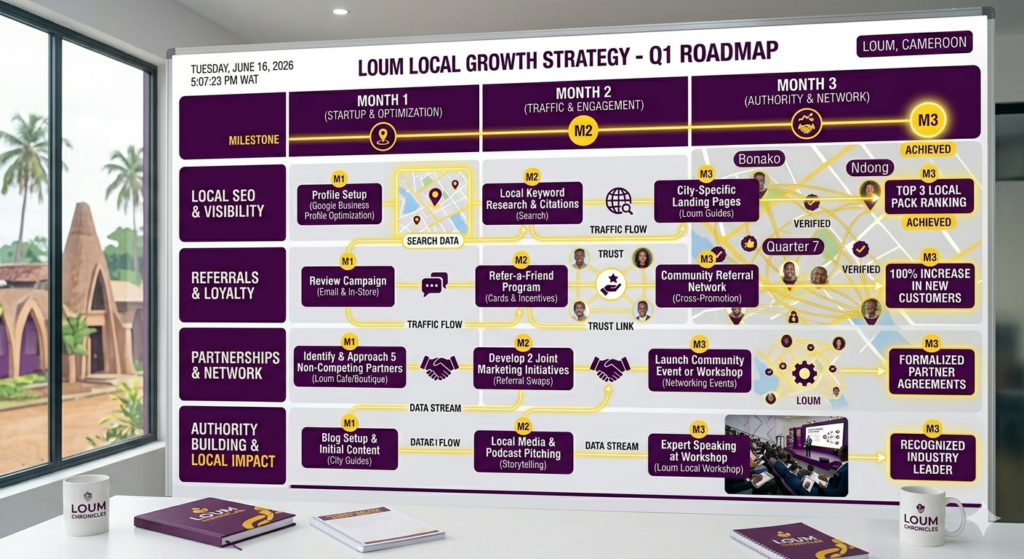
Understanding local marketing strategies for small businesses is important, but implementation is what produces results. Many business owners consume valuable information yet never apply it consistently enough to see meaningful growth.
The good news is that local marketing does not require complicated systems or huge budgets. A structured 90-day plan can help build visibility, trust, customer acquisition, and long-term growth.
Think of the process as a simple framework:
Visibility → Trust → Customers → Referrals → Growth
Each month focuses on a different stage of that journey.
Month 1: Build Your Visibility Foundation
The first 30 days should focus on helping customers find your business.
Start by optimizing your Google Business Profile completely.
Make sure you:
- Verify your business information
- Add high-quality photos
- Write detailed service descriptions
- Select accurate business categories
- Update operating hours
- Publish your first business posts
Next, begin generating customer reviews. Reach out to satisfied customers and politely ask for honest feedback.
At the same time, establish your local SEO foundation by ensuring your business information is consistent across your website, social media profiles, and local directories.
The goal during this phase is simple: increase discoverability.
For additional marketing planning guidance, 5 Must-Have Elements in a Small Business Marketing Plan (That Drive Real Growth) can help you structure your efforts more effectively.
Month 2: Create Trust and Expand Reach
Once visibility improves, focus on building trust.
Start publishing hyperlocal content that answers customer questions and addresses community-specific challenges.
Examples include:
- Local guides
- Industry tips
- Customer success stories
- Community event content
At the same time, begin partnership outreach.
Identify complementary businesses and explore collaboration opportunities such as referrals, joint promotions, or shared events.
This is also the ideal time to launch a simple customer referral program.
Remember, satisfied customers often become your best marketers.
The goal of Month 2 is to strengthen credibility while expanding your reach through relationships and valuable content.
Month 3: Accelerate Growth
With visibility and trust established, focus on growth activities.
This includes:
- Collecting testimonials
- Publishing case studies
- Hosting educational events
- Participating in community activities
- Strengthening referral relationships
- Increasing content production
Continue engaging with customers after the sale. Strong customer retention often generates more revenue than constantly chasing new leads.
Businesses that consistently follow up, provide value, and maintain relationships often outperform competitors that focus only on customer acquisition.
If you want to create a repeatable process for turning visibility into revenue, Sales System for a Small Business: Stop Chasing Leads & Build a Predictable Machine in 2026 provides a framework for building predictable growth.
According to Google Search Central Documentation, businesses that consistently provide useful content and maintain accurate business information improve both visibility and user trust over time.
The most successful local businesses do not implement everything at once. They build momentum through consistent action.
Now that you have a practical roadmap, let’s examine the common local marketing mistakes that prevent many businesses from achieving the results they want.
Common Local Marketing Mistakes Small Businesses Must Avoid
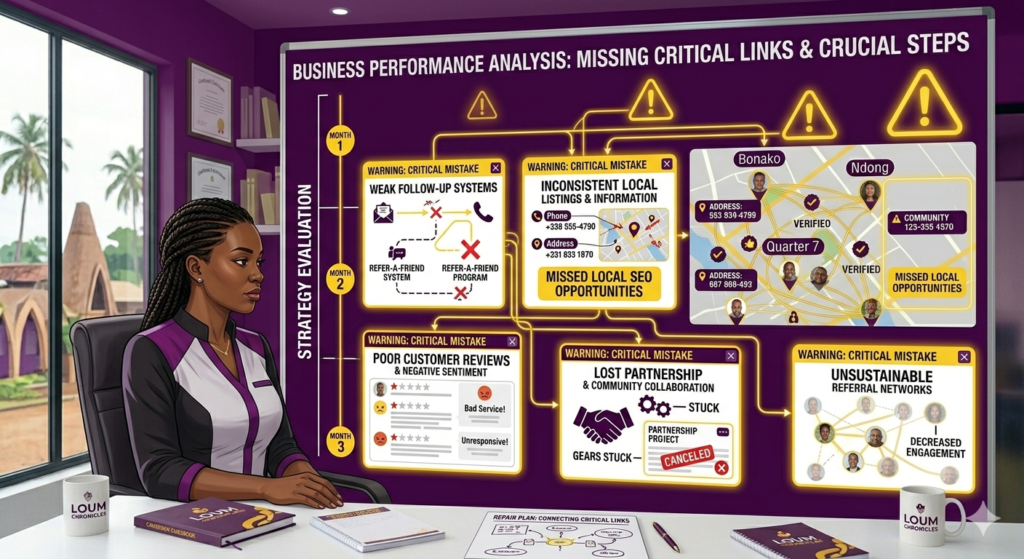
Even the best local marketing strategies for small businesses can fail when common mistakes are ignored. Many business owners invest time and effort into marketing, but unknowingly create obstacles that limit their results.
The good news is that most of these mistakes are preventable once you know what to look for.
Ignoring Customer Reviews
Reviews have become one of the most important trust signals in local business marketing.
Many business owners either forget to ask for reviews or fail to respond to them.
Potential customers often compare businesses based on:
- Review quantity
- Review quality
- Recent feedback
- Business responses
Ignoring reviews can make even a great business appear inactive or untrustworthy.
Make review generation and management a regular part of your marketing process.
Inconsistent Business Information
One of the most common local SEO mistakes is having different business details across platforms.
For example:
- Different phone numbers
- Different addresses
- Different operating hours
- Different business names
Search engines use this information to verify legitimacy. Inconsistencies can confuse both customers and search engines.
Ensure your business information remains accurate everywhere it appears online.
Relying on Only One Marketing Channel
Some businesses depend entirely on:
- Google Business Profile
- Referrals
- Paid advertising
While any single channel can generate results, relying on only one creates unnecessary risk.
Algorithms change. Platforms evolve. Customer behavior shifts.
A stronger approach combines:
- Local SEO
- Content marketing
- Referrals
- Partnerships
- Authority building
This creates a more stable customer acquisition system.
Not Tracking Results
Many entrepreneurs invest in marketing without measuring outcomes.
Without tracking, it becomes difficult to know:
- Which channels generate leads
- Which activities produce sales
- Which efforts waste time
Simple tracking systems can reveal valuable insights that improve decision-making.
Poor Follow-Up Systems
Businesses often focus heavily on generating leads but neglect follow-up.
A missed phone call, unanswered inquiry, or delayed response can cost potential customers.
Fast, professional follow-up often creates a competitive advantage because many local businesses still perform poorly in this area.
Focusing on Promotion Instead of Relationships
One of the biggest mistakes in local customer acquisition is constantly selling without building relationships.
Customers are more likely to support businesses that:
- Provide value
- Educate
- Engage with the community
- Listen to customer needs
Strong relationships create loyalty, referrals, and repeat business.
The Bigger Lesson
Most local marketing failures are not caused by a lack of tactics.
They happen because businesses fail to execute the fundamentals consistently.
Avoiding these mistakes can dramatically improve the effectiveness of every local marketing strategy discussed in this guide.
For a deeper look at growth obstacles that hold businesses back, 9 Common Mistakes That Are Slowing Your Small Business Growth explores several challenges that affect both marketing performance and overall business growth.
For additional best practices related to local search visibility and customer experience, Google Business Profile Best Practices provides useful guidance for business owners.
Now that we’ve covered the most common mistakes, let’s answer some of the questions entrepreneurs frequently ask about local marketing and customer acquisition.
Frequently Asked Questions
What is the most effective local marketing strategy?
There is no single strategy that works for every business, but optimizing your Google Business Profile is often the best starting point. It helps local customers discover your business when they are actively searching for products or services nearby.
However, the strongest results usually come from combining multiple local marketing strategies for small businesses, including local SEO, hyperlocal content creation, referral marketing, strategic partnerships, and authority building.
How can I attract local customers without advertising?
Many businesses successfully attract local customers without spending money on ads.
Effective methods include:
- Optimizing Google Business Profile
- Encouraging customer reviews
- Publishing helpful local content
- Building referral systems
- Forming community partnerships
- Participating in local events
These approaches often generate long-term visibility and trust without ongoing advertising costs.
For additional strategies, How to Market Your Small Business in 2026 Without Wasting a Kobo on Ads provides practical methods for growing organically.
How long does local SEO take to work?
Local SEO is not an overnight process.
Some businesses begin seeing improvements within a few weeks, while more competitive markets may require several months of consistent optimization.
Factors that influence results include:
- Competition level
- Review volume
- Content quality
- Website strength
- Google Business Profile optimization
The key is consistency rather than quick wins.
Do local businesses need a website?
Yes.
While a Google Business Profile is important, a website provides additional credibility and gives customers a place to learn more about your services, products, pricing, and expertise.
A website also supports local SEO and content marketing efforts.
How can small businesses compete with larger brands locally?
Small businesses often have advantages that larger companies cannot easily replicate.
These include:
- Personalized service
- Stronger community relationships
- Faster customer support
- Local expertise
- Greater flexibility
By focusing on trust, visibility, and customer experience, small businesses can successfully compete against larger competitors in local markets.
For broader business growth insights, SCORE Small Business Resources offers practical educational materials for entrepreneurs at every stage of growth.
Conclusion
Many small business owners believe they need a larger budget, more advertising, or a bigger team before they can attract more customers. In reality, growth often starts with becoming easier to find and easier to trust.
Throughout this guide, we explored five powerful local marketing strategies for small businesses to increase visibility, attract local customers, and drive long-term growth.
These strategies include:
- Dominating local search with Google Business Profile
- Creating hyperlocal content that attracts qualified customers
- Building a customer referral engine
- Developing strategic community partnerships
- Becoming the recognized authority in your industry
Each strategy works on its own, but its true power comes from working together. When visibility, trust, referrals, partnerships, and authority are combined, customer acquisition becomes more predictable and sustainable.
One of the biggest lessons successful local businesses learn is that local marketing is not a one-time activity. It is an ongoing process of building relationships, serving customers well, and consistently showing up where people are searching for solutions.
Instead of trying to implement everything at once, start with one strategy. Improve your Google Business Profile. Launch a referral program. Publish hyperlocal content. Build one strategic partnership. Small actions repeated consistently often produce bigger results than ambitious plans that never get executed.
If your goal is to build a stronger marketing foundation, generate more customers, and accelerate business growth, continue exploring the resources available on INSPIRED TO PROSPER.
You may also find these guides helpful:
- 5 Must-Have Elements in a Small Business Marketing Plan (That Drive Real Growth)
- Sales System for a Small Business: Stop Chasing Leads & Build a Predictable Machine in 2026
- How to Scale Fast: 9 Proven Growth Strategies for New Business Owners
The businesses that get found consistently are often the businesses that grow consistently. Start implementing these local marketing strategies today, and over time, your visibility, trust, customer base, and revenue can compound in ways that transform your business.