
INTRODUCTION: WHY MANY SMALL BUSINESSES STRUGGLE TO WIN HIGH-VALUE CLIENTS

B2B marketing strategies for small businesses can be the difference between constantly chasing low-paying customers and building a business that attracts high-value clients consistently. Yet, despite offering excellent products or services, many small business owners struggle to generate qualified leads, book meaningful conversations, and close profitable deals.
One of the biggest mistakes I see is treating B2B marketing the same way as consumer marketing. In business-to-business sales, decisions are rarely made on impulse. Companies take time to evaluate options, compare providers, assess risks, and ensure they are investing in the right solution. This means that what works in B2C often falls short in B2B.
Another challenge is that many entrepreneurs rely on random marketing activities. They post occasionally on social media, send a few sales messages, or run promotions without a clear strategy. When results don’t come quickly, they assume B2B marketing doesn’t work. In reality, the problem is usually the lack of a structured system.
Over the years, I’ve noticed that businesses that consistently win quality clients focus on three things: positioning, trust, and relationship building. They don’t spend all their time pitching. Instead, they educate their market, demonstrate expertise, and create systems that attract and nurture prospects over time.
Whether you’re a consultant, agency owner, service provider, or small business looking to work with other businesses, the opportunities in B2B can be significant. A single client can often generate more revenue than dozens of individual consumers.
In this guide, I’ll walk you through proven B2B marketing strategies for small businesses, including how to identify your ideal clients, generate qualified leads, build authority, use LinkedIn effectively, create a B2B sales funnel, and close high-ticket clients without sounding pushy or desperate.
By the end, you’ll have a practical framework you can start applying immediately to attract better clients and grow your business more predictably.
WHAT IS B2B MARKETING AND WHY DOES IT MATTER?
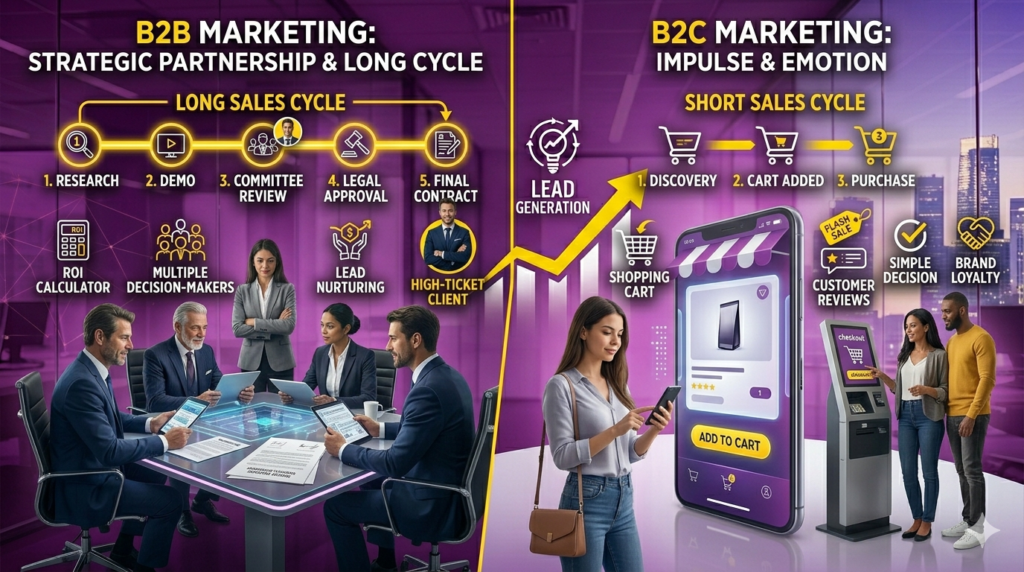
Before diving deeper into specific B2B marketing strategies for small businesses, it’s important to understand what B2B marketing actually means and why it requires a different approach from traditional consumer marketing.
B2B stands for Business-to-Business, which simply means one business sells products or services to another business. For example, a graphic design agency serving restaurants, a marketing consultant helping real estate companies generate leads, or an accounting firm providing services to small businesses are all examples of B2B businesses.
In contrast, B2C (Business-to-Consumer) focuses on selling directly to individual customers. The buying journey in B2B is usually more complex because multiple people may be involved in the decision-making process. A business owner, manager, finance officer, or procurement team may all have input before a purchase is approved.
This is one reason why B2B sales cycles tend to be longer. While a consumer might buy a product within minutes, a business client may take weeks or even months to make a decision. They want evidence, trust, credibility, and confidence that your solution will deliver results.
The upside is that B2B transactions often have much higher value. Instead of making one small sale, you may secure a contract worth thousands of dollars or establish a long-term relationship that generates recurring revenue for years.
I’ve found that many small business owners underestimate how valuable these relationships can be. A single well-positioned B2B client can sometimes produce more profit than dozens of smaller consumer sales.
This is why having a strong business foundation matters. Before investing heavily in marketing, make sure your goals, positioning, and growth strategy are clear. If you haven’t done that yet, I recommend reading How to Create a Winning Business Plan for Startups to strengthen your overall business direction.
For additional insights into how modern B2B buying behavior works, HubSpot’s B2B Marketing Guide provides useful industry research and examples.
The businesses that succeed in B2B marketing understand one simple principle: people may buy solutions, but businesses buy confidence. The more trust and certainty you create, the easier it becomes to attract and retain valuable clients.
WHY MOST SMALL BUSINESSES FAIL AT B2B MARKETING
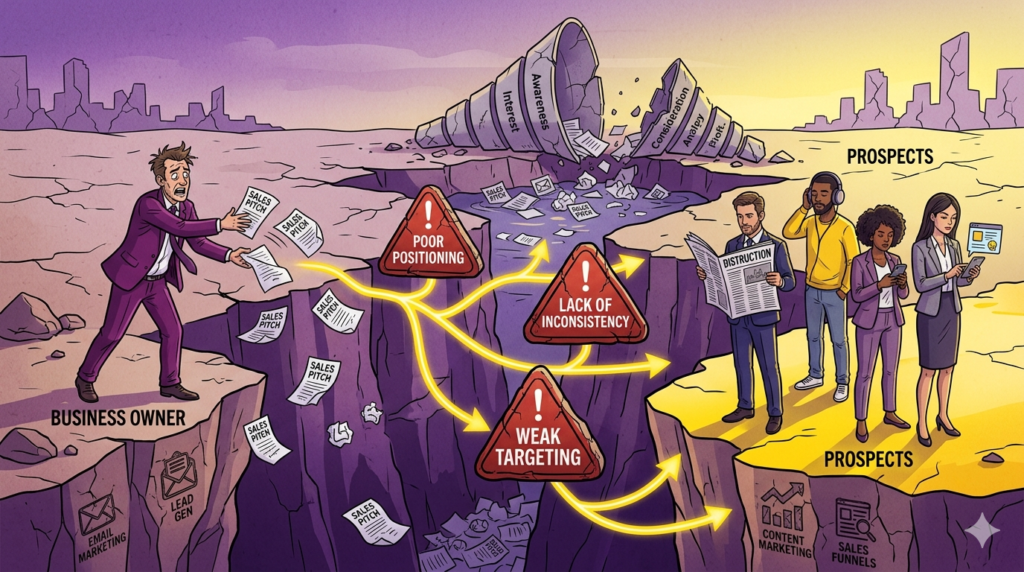
Many small businesses don’t struggle because they have bad products or poor services. They struggle because they make avoidable marketing mistakes that prevent potential clients from trusting them.
I’ve worked with business owners who were highly skilled in what they did but still couldn’t consistently attract quality clients. In most cases, the problem wasn’t their expertise. It was their marketing approach.
SELLING TOO EARLY
One of the biggest mistakes in B2B marketing is trying to sell before establishing trust.
Many entrepreneurs connect with a prospect and immediately start pitching their services. The reality is that most businesses are not ready to buy from someone they barely know.
Decision-makers want confidence before commitment.
This is why successful B2B marketers focus on educating, helping, and building relationships before making offers.
WEAK POSITIONING
Another common problem is poor positioning.
When prospects visit your website, LinkedIn profile, or social media page, can they quickly understand:
- Who you help?
- What problem you solve?
- Why they should choose you?
If the answer is unclear, your marketing becomes less effective.
Businesses that win premium clients position themselves as specialists rather than generalists.
NO NICHE FOCUS
Trying to serve everyone usually leads to serving no one.
For example, saying:
“I help businesses grow.”
is far less powerful than saying:
“I help small construction companies generate qualified leads through digital marketing.”
Specific positioning makes marketing easier because prospects immediately recognize that you understand their industry.
INCONSISTENT MARKETING
Another reason many small businesses fail is inconsistency.
They post for two weeks, stop for a month, then wonder why results aren’t coming.
Trust is built through repeated visibility. Your prospects need to see you consistently before they consider doing business with you.
LACK OF TRUST-BUILDING
Many business owners focus heavily on promotion but neglect trust signals such as:
- Testimonials
- Case studies
- Educational content
- Client success stories
- Industry expertise
Without trust, even great offers struggle to convert.
I’ve found that businesses that consistently publish useful content and demonstrate expertise usually outperform competitors that focus only on sales messages.
If you want to avoid some of the most common growth barriers entrepreneurs face, I recommend reading 9 Common Mistakes That Are Slowing Your Small Business Growth.
For additional research on trust and buyer behavior, LinkedIn’s B2B Marketing Resources provide valuable insights into how decision-makers evaluate vendors and service providers.
KEY TAKEAWAY
Most B2B marketing failures are not caused by a lack of talent. They are caused by weak positioning, poor consistency, premature selling, and failure to build trust. Fix those issues, and your client acquisition becomes much easier.
STEP 1: DEFINE YOUR IDEAL CLIENT BEFORE MARKETING

One of the most effective B2B marketing strategies for small businesses is knowing exactly who you want to attract before you spend time or money on marketing.
This sounds obvious, but I see many small business owners make the same mistake. They create content for everyone, target every industry, and accept any type of client. As a result, their message becomes too broad to resonate with anyone.
The reality is simple: the clearer your target client, the easier your marketing becomes.
START WITH INDUSTRY TARGETING
The first step is deciding which industry you want to serve.
For example:
- Construction companies
- Real estate agencies
- Restaurants
- Healthcare providers
- E-commerce businesses
- Professional service firms
When you focus on a specific industry, you can create more relevant marketing messages and better understand your clients’ challenges.
Instead of saying:
“We help businesses grow.”
You can say:
“We help accounting firms generate more qualified leads through content marketing.”
The second statement is far more powerful because it speaks directly to a specific audience.
CONSIDER COMPANY SIZE
Not every business has the same needs or budget.
A startup with two employees thinks differently from a company with fifty employees.
Ask yourself:
- Do I want to work with startups?
- Small businesses?
- Medium-sized companies?
- Established organizations?
Defining company size helps you create offers that match their resources and expectations.
UNDERSTAND THEIR PAIN POINTS
The best marketing speaks to problems.
Spend time identifying:
- What frustrates them?
- What is costing them money?
- What is slowing their growth?
- What keeps them from reaching their goals?
For example, a small business owner may struggle with inconsistent sales, while a growing company may struggle with lead quality.
The more accurately you identify pain points, the more effective your marketing becomes.
EVALUATE BUDGET CAPACITY
Not every prospect can afford your services.
Many entrepreneurs spend months chasing businesses that simply don’t have the budget to buy.
This is why I encourage business owners to identify:
- Their minimum client budget
- The value of their solution
- The type of businesses most likely to invest
Premium clients are usually easier to serve than constantly chasing low-budget opportunities.
IDENTIFY THE DECISION-MAKERS
In B2B marketing, the person using your solution is not always the person approving the purchase.
Depending on the company, you may need to influence:
- Business owners
- CEOs
- Operations managers
- Marketing directors
- Procurement teams
Understanding who makes the final decision allows you to craft more effective messaging.
VALIDATE YOUR TARGET MARKET
Before building an entire marketing strategy around a specific audience, make sure there is actual demand.
This is the same principle I discussed in How to Validate a Business Idea Before Investing: Stop Wasting Cash on Wrong Products. Validation isn’t just for business ideas. It also applies to target markets.
You need evidence that the audience you’re pursuing has both the problem and the willingness to pay for a solution.
For additional customer research techniques, HubSpot’s Ideal Customer Profile Guide offers useful frameworks for identifying high-value prospects.
KEY TAKEAWAY
The businesses that attract better clients rarely market to everyone. They know exactly who they serve, understand their pain points, and position their services accordingly. The more specific your target client profile becomes, the more effective your B2B marketing efforts will be.
STEP 2: POSITION YOUR BUSINESS AS AN EXPERT

Once you’ve identified your ideal client, the next step is positioning. In my experience, this is where many small businesses lose opportunities without realizing it.
The truth is that businesses rarely hire the cheapest option. They hire the provider they trust the most.
This is why one of the most important B2B marketing strategies for small businesses is becoming known as an expert in your field. When prospects see you as an authority, selling becomes easier because trust already exists before the first conversation.
WHY AUTHORITY MATTERS IN B2B
Business clients are risk-conscious.
If a company hires the wrong consultant, agency, designer, or service provider, the consequences can be expensive. Decision-makers want confidence that they’re making the right choice.
Authority helps reduce that perceived risk.
When your prospects consistently see valuable insights, practical advice, and evidence of expertise, they begin to view you as a trusted resource rather than just another vendor.
USE THE T.R.U.S.T FRAMEWORK
To build authority consistently, I recommend focusing on the T.R.U.S.T Framework:
T = Testimonials
Client feedback provides social proof.
Even a few genuine testimonials can significantly increase credibility because prospects see evidence that you’ve helped others achieve results.
R = Results
People care about outcomes.
Instead of saying:
“We provide marketing services.”
Say:
“We helped a local business increase qualified inquiries by 45% in six months.”
Specific results are more persuasive than generic claims.
U = Understanding
Demonstrate that you understand your clients’ problems.
When prospects feel understood, they naturally trust your recommendations more.
S = Social Proof
Social proof includes:
- Client reviews
- Case studies
- Industry recognition
- Speaking engagements
- Media mentions
These signals reassure prospects that others already trust your expertise.
T = Thought Leadership
Thought leaders educate before they sell.
This includes:
- Industry insights
- Blog articles
- LinkedIn content
- Webinars
- Practical guides
The more value you provide, the stronger your authority becomes.
CREATE EDUCATIONAL CONTENT
One of the fastest ways to position yourself as an expert is by consistently sharing helpful content.
For example:
- Answer common industry questions
- Explain mistakes clients should avoid
- Share practical frameworks
- Discuss market trends
- Publish case studies
I’ve found that businesses that educate regularly often attract higher-quality leads because prospects already trust their expertise before making contact.
DEVELOP CASE STUDIES
Case studies are especially powerful in B2B marketing.
Rather than simply telling prospects you’re good at what you do, show them.
A strong case study should explain:
- The problem
- The solution
- The results
- The lessons learned
This helps prospects visualize what working with you could look like.
BUILD TRUST BEFORE THE SALES CALL
Many competitors focus heavily on lead generation tactics but overlook authority building.
The most successful businesses do both.
By the time a prospect books a call, they should already have:
- Read your content
- Seen your expertise
- Understood your process
- Developed confidence in your ability
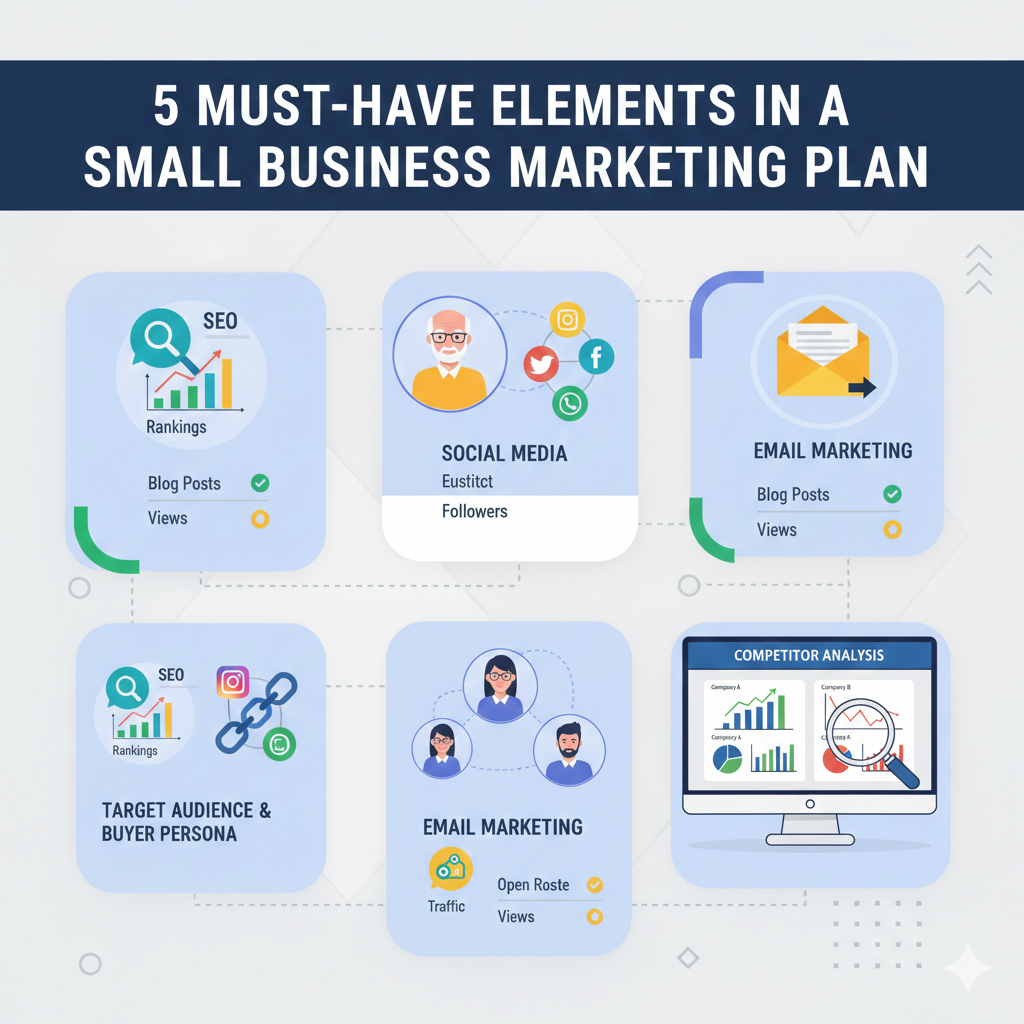
For deeper insights into content-driven marketing systems, I recommend reading 5 Must-Have Elements in a Small Business Marketing Plan That Drive Real Growth.
You can also explore Google Search Central to better understand how valuable content can increase visibility and authority online.
KEY TAKEAWAY
Authority is one of the strongest competitive advantages a small business can build. When you consistently demonstrate expertise, share valuable insights, and provide proof of results, prospects stop seeing you as just another option and start seeing you as the obvious choice.
STEP 3: BUILD A SIMPLE B2B LEAD GENERATION SYSTEM
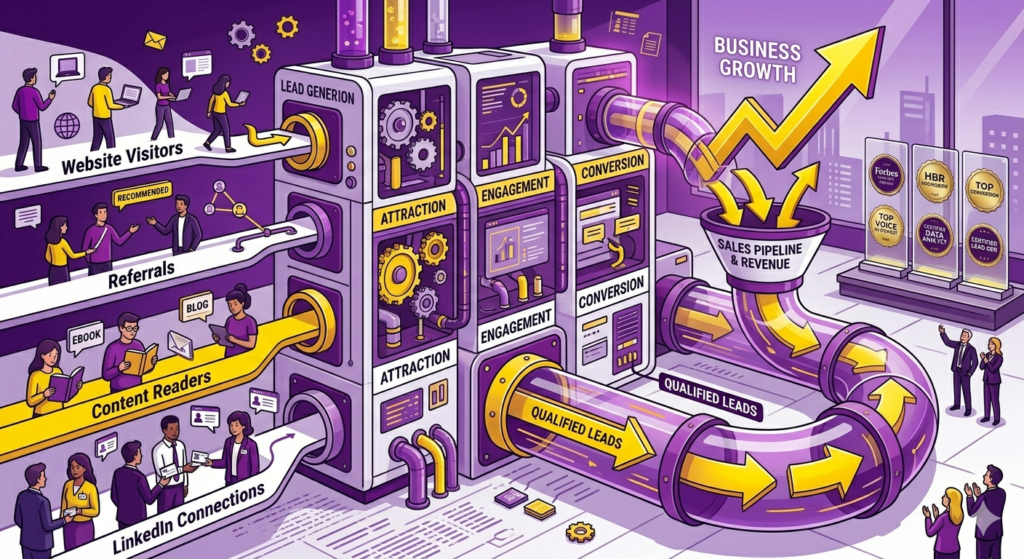
Authority is important, but authority alone doesn’t generate clients. You also need a system that consistently brings potential buyers into your pipeline.
One of the biggest mistakes I see small business owners make is relying on a single source of leads. When that source dries up, so do their opportunities.
The most effective B2B marketing strategies for small businesses include a predictable lead generation system that attracts prospects from multiple channels.
START WITH ORGANIC LEAD GENERATION
Organic lead generation is often the best place for small businesses to begin because it requires more effort than money.
Some of the most effective organic channels include:
- LinkedIn content
- Search engine optimization (SEO)
- Blog content
- Industry communities
- Strategic networking
- Guest appearances on podcasts and webinars
The goal is to consistently place your expertise in front of the right audience.
Over time, this creates trust and attracts inbound inquiries from businesses already interested in what you offer.
CREATE A REFERRAL SYSTEM
Referrals remain one of the highest-converting lead sources in B2B.
Unfortunately, many businesses simply hope referrals happen instead of creating a process for generating them.
A simple referral system can include:
- Asking satisfied clients for introductions
- Creating referral incentives where appropriate
- Staying in touch with former clients
- Building partnerships with complementary businesses
For example, a web designer may partner with a marketing consultant, while an accountant may collaborate with a business coach.
These partnerships can create a steady stream of qualified referrals.
OPTIMIZE YOUR WEBSITE FOR LEAD GENERATION
Many business websites act like digital brochures instead of lead-generation tools.
Your website should clearly communicate:
- Who you help
- What problem you solve
- Why clients should trust you
- What action visitors should take next
Include:
- Strong calls-to-action
- Contact forms
- Testimonials
- Case studies
- Service pages
- Lead capture opportunities
A visitor should never have to guess what to do next.
USE LEAD MAGNETS
Lead magnets help you capture contact information from potential clients.
Examples include:
- Free guides
- Templates
- Checklists
- Industry reports
- Business assessments
- Mini training sessions
The key is offering something valuable enough that your ideal client is willing to exchange their email address for it.
APPLY STRATEGIC PROSPECTING
Inbound marketing is powerful, but sometimes you need proactive outreach.
This may include:
- Personalized emails
- LinkedIn outreach
- Networking events
- Industry directories
- Strategic partnerships
Notice the word personalized.
Sending generic messages to hundreds of businesses rarely works. Taking time to understand a prospect’s situation and offering relevant insights produces much better results.
BUILD A LEAD GENERATION ENGINE
The goal is not to chase leads every day.
The goal is to create a system where:
- Content attracts attention
- Lead magnets capture interest
- Referrals generate trust
- Outreach starts conversations
- Follow-up nurtures prospects
When these pieces work together, lead generation becomes more predictable.
If you’re still building your initial client base, I recommend reading First 10 Customers in 30 Days: A Practical Guide for New Small Businesses. The strategies there complement the lead-generation process discussed in this article.
For additional lead-generation insights, HubSpot’s Lead Generation Guide provides useful examples and frameworks used by successful B2B organizations.
KEY TAKEAWAY
A successful B2B lead generation system does not depend on luck. It combines organic visibility, referrals, website optimization, lead magnets, and strategic outreach into a repeatable process that consistently brings qualified prospects into your pipeline.
STEP 4: USE LINKEDIN TO ATTRACT DECISION-MAKERS
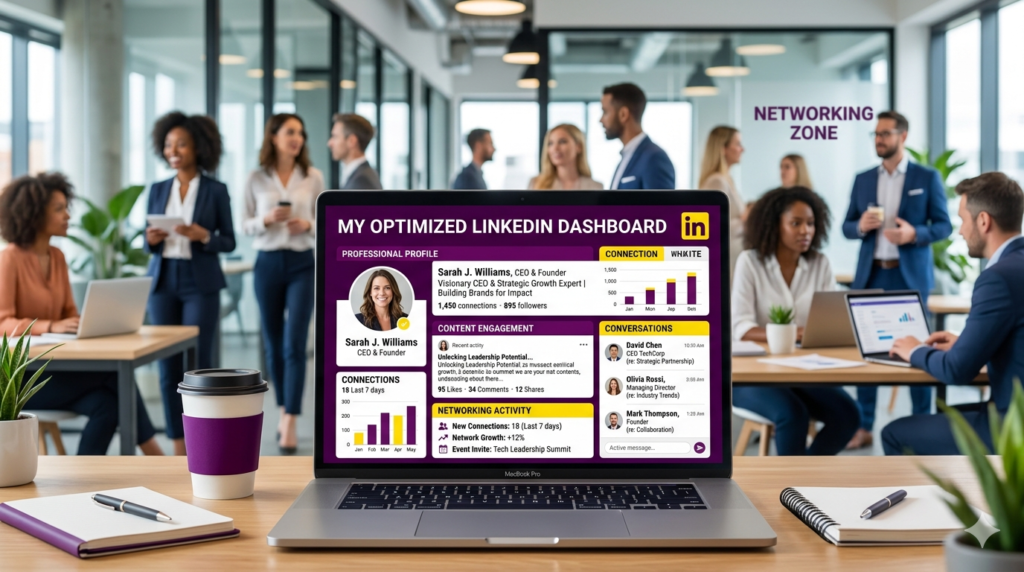
When it comes to LinkedIn marketing for small business, few platforms offer better access to decision-makers. Business owners, CEOs, directors, managers, and procurement teams are already on LinkedIn looking for ideas, solutions, and professional relationships.
Yet many small businesses use LinkedIn incorrectly.
They send cold pitches immediately after connecting, publish random content, or treat the platform like a digital résumé. As a result, they struggle to generate meaningful conversations.
I’ve found that LinkedIn works best when you focus on building relationships before selling.
OPTIMIZE YOUR PROFILE FIRST
Before reaching out to anyone, make sure your profile clearly communicates value.
Your profile should answer three questions:
- Who do you help?
- What problem do you solve?
- What results do you help clients achieve?
A weak headline like:
“Business Consultant”
is far less effective than:
“Helping Small Businesses Generate More Qualified Leads Through Strategic Marketing Systems.”
Your profile should position you as a problem solver, not just a service provider.
CREATE CONTENT THAT ATTRACTS THE RIGHT PEOPLE
Many entrepreneurs only post promotional content.
Instead, focus on content that helps your audience.
Examples include:
- Industry insights
- Common mistakes
- Case studies
- Client lessons
- Market trends
- Practical frameworks
Decision-makers are more likely to engage with content that helps them solve business problems.
Over time, this builds credibility and authority.
USE THE COMMENT STRATEGY
One of the most overlooked LinkedIn growth tactics is commenting strategically.
Instead of only creating posts, engage with content published by:
- Industry leaders
- Potential clients
- Business communities
- Professional groups
Thoughtful comments increase visibility and help you build relationships naturally.
In many cases, I’ve seen meaningful conversations start in comment sections long before a direct message is ever sent.
PERSONALIZE CONNECTION REQUESTS
Avoid generic connection requests.
Instead of:
“I’d like to add you to my professional network.”
Try something more relevant:
“I enjoyed your recent post about customer retention. I work with small businesses on marketing systems and thought it would be valuable to connect.”
Personalization increases acceptance rates and creates a better first impression.
NURTURE THROUGH DIRECT MESSAGES
One of the biggest B2B marketing mistakes is pitching immediately after connecting.
A better approach is:
- Connect
- Engage with their content
- Start conversations
- Share helpful insights
- Build trust
- Introduce your offer when appropriate
This relationship-first approach often produces higher-quality opportunities than aggressive sales tactics.
FOCUS ON LONG-TERM RELATIONSHIPS
The best LinkedIn users understand that every interaction does not need to become a sale today.
Some prospects may:
- Need your services next month
- Need them six months from now
- Refer someone else
- Become strategic partners
This is why consistency matters.
LEVERAGE LINKEDIN’S LEARNING RESOURCES
If you want to improve your LinkedIn strategy further, LinkedIn Marketing Solutions provides valuable resources, case studies, and best practices for B2B marketing professionals.
KEY TAKEAWAY
LinkedIn is not just a lead-generation platform. It is a relationship-building platform. When you optimize your profile, share valuable content, engage consistently, and focus on helping before selling, you position yourself in front of the people who make buying decisions and significantly improve your chances of winning high-value clients.
STEP 5: CREATE CONTENT THAT BUILDS TRUST AND AUTHORITY

If there is one thing I’ve learned from working with businesses and studying successful B2B brands, it’s this: people rarely buy from companies they don’t trust.
That’s why content marketing remains one of the most powerful B2B marketing strategies for small businesses. Good content helps you demonstrate expertise, answer questions, address concerns, and build credibility long before a prospect speaks with you.
The goal is not to create content for the sake of posting. The goal is to create content that positions your business as a trusted authority.
CREATE EDUCATIONAL CONTENT
Educational content is one of the easiest ways to attract qualified prospects.
Think about the questions your ideal clients ask repeatedly.
For example:
- How can I generate more leads?
- Why are my sales declining?
- How do I improve customer retention?
- What marketing channels should I focus on?
When you consistently answer these questions, prospects begin to see you as a valuable resource.
Educational content can include:
- Blog posts
- LinkedIn articles
- Videos
- Webinars
- Guides
- Industry reports
The more useful your content is, the more trust you build.
FOCUS ON PROBLEM-SOLVING CONTENT
The best-performing B2B content solves specific problems.
Instead of creating broad content like:
“Marketing Tips for Businesses”
Create something more targeted:
“How Small Construction Companies Can Generate Qualified Leads Without Paid Ads”
Specific content attracts specific buyers.
And specific buyers are usually easier to convert.
SHARE INDUSTRY INSIGHTS
Decision-makers want to stay informed.
This creates an opportunity to position yourself as a source of valuable information.
Share:
- Emerging trends
- Market shifts
- Industry statistics
- New technologies
- Regulatory changes
By helping your audience stay ahead of industry developments, you increase your perceived expertise.
USE CLIENT SUCCESS STORIES
One of the strongest trust-building tools is showing how you’ve helped others.
A simple success story should explain:
- The client’s challenge
- Your solution
- The outcome achieved
For example:
A small consulting agency struggling to generate inquiries implemented a structured content strategy. Within a few months, they began attracting qualified prospects through organic search and LinkedIn.
Stories like these help prospects visualize the results they may achieve.
INVEST IN SEO CONTENT
Search engine optimization allows your content to continue generating leads long after it’s published.
Unlike paid advertising, SEO content can attract prospects for months or even years.
Focus on:
- Answering customer questions
- Targeting relevant keywords
- Publishing comprehensive guides
- Optimizing for user intent
This creates a long-term asset that continues working for your business.
For a deeper understanding of building an effective marketing framework, I recommend reading 5 Must-Have Elements in a Small Business Marketing Plan That Drive Real Growth.
You can also learn more about creating search-friendly content through Google Search Central, which provides official guidance on content quality and search visibility.
FOLLOW THE 70-20-10 CONTENT RULE
A simple framework I often recommend is:
- 70% Educational Content: Teach and inform
- 20% Authority Content: Case studies, insights, and results
- 10% Promotional Content: Offers, services, and calls to action
This balance helps you build trust without overwhelming your audience with sales messages.
KEY TAKEAWAY
Content is not just a marketing activity. In B2B, it is a trust-building system. When you consistently publish educational, problem-solving, and authority-focused content, you attract better prospects, strengthen credibility, and make client acquisition significantly easier.
STEP 6: BUILD A B2B SALES FUNNEL THAT NURTURES LEADS
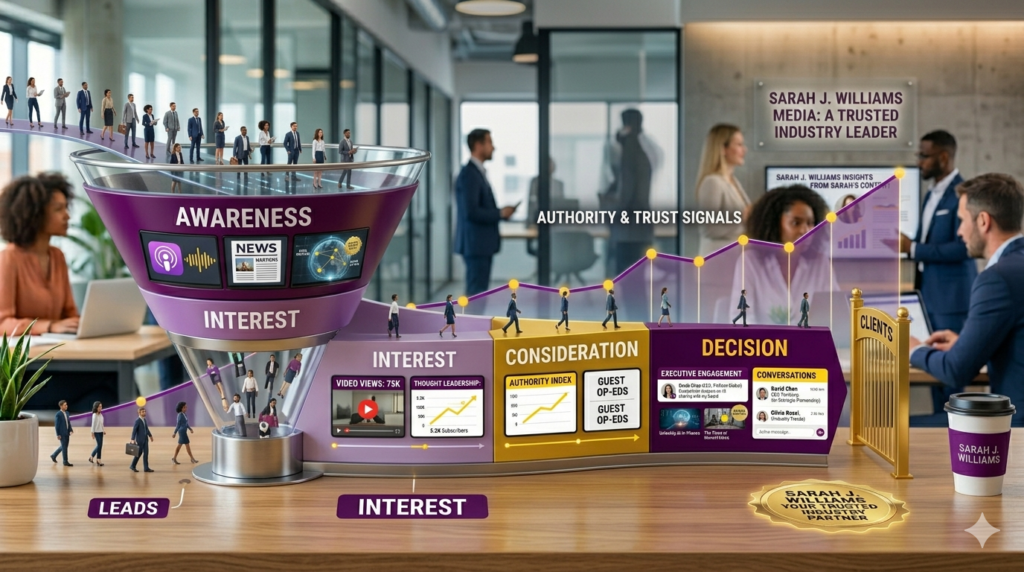
One of the most important B2B marketing strategies for small businesses is understanding that most prospects will not buy immediately. In B2B, people need time to trust, evaluate, and compare options before making a decision.
This is where a sales funnel becomes essential. Instead of hoping people are ready to buy, you guide them through a structured journey that moves them from awareness to purchase.
AWARENESS STAGE
At this stage, prospects are just discovering your business.
They may:
- Read your content
- Watch your videos
- Find you on LinkedIn
- Visit your website
Your goal here is not to sell, but to educate and attract attention.
INTEREST STAGE
Once people become aware of you, they start showing interest.
They may:
- Download a resource
- Follow your page
- Engage with your posts
- Subscribe to your email list
At this stage, you begin building deeper trust by providing more detailed and helpful content.
CONSIDERATION STAGE
Here, prospects are actively comparing solutions.
They are asking:
- Is this the right provider for me?
- Do they understand my industry?
- Can they deliver results?
This is where case studies, testimonials, and authority content become very powerful.
DECISION STAGE
This is where prospects are ready to buy or book a call.
Your role is to make the decision easy by:
- Clearly explaining your offer
- Showing proof of results
- Addressing objections
- Making the next step simple
If your funnel is strong, most objections are already handled before this stage.
FOLLOW-UP SYSTEMS
One of the biggest mistakes in B2B marketing is poor follow-up.
Many potential clients are not “no,” they are just “not yet.”
Follow-up systems can include:
- Email sequences
- Reminder messages
- Retargeting ads
- Personal check-ins
- Value-based follow-ups
Consistency in follow-up often determines who wins the client.
CONNECTING YOUR SALES FUNNEL TO A SYSTEM
A strong funnel does not work in isolation. It should connect with your lead generation, content marketing, and authority building strategies.
When all these systems work together, your business stops relying on random leads and starts generating predictable opportunities.
For a deeper understanding of structured selling systems, I recommend reading Sales System for a Small Business: Stop Chasing Leads & Build a Predictable Machine.
For additional insights into funnel strategy and conversion optimization, HubSpot’s Sales Funnel Guide provides practical examples used by successful B2B companies.
KEY TAKEAWAY
A sales funnel turns uncertainty into structure. Instead of guessing when someone is ready to buy, you guide them step by step through a clear journey. This makes your B2B marketing more predictable, more scalable, and far more effective.
STEP 7: USE EMAIL MARKETING TO STAY TOP OF MIND

Many small business owners underestimate email marketing because it isn’t as visible as social media. However, when it comes to B2B customer acquisition, email remains one of the most effective ways to build relationships and stay connected with potential clients.
The reality is simple: most prospects won’t be ready to buy the first time they discover your business. They may need weeks or even months before making a decision. Email helps ensure they don’t forget about you during that period.
WHY EMAIL MARKETING WORKS IN B2B
Unlike social media, where algorithms control visibility, email gives you direct access to your audience.
When someone joins your email list, they have already shown interest in what you offer. This makes email one of the best channels for nurturing leads and moving them closer to becoming clients.
A well-maintained email list becomes a valuable business asset because you own the relationship.
CREATE A LEAD NURTURING SEQUENCE
One of the best ways to use email is through an automated nurturing sequence.
For example:
Email 1: Welcome and introduction
Email 2: Educational content that solves a common problem
Email 3: A case study or client success story
Email 4: Helpful resources and practical tips
Email 5: Invitation to schedule a consultation or discovery call
This approach builds trust gradually instead of immediately pushing for a sale.
SHARE EDUCATIONAL CONTENT
Your emails should primarily provide value.
Examples include:
- Industry insights
- Business tips
- Case studies
- Common mistakes to avoid
- Market trends
- Helpful frameworks
The more useful your emails are, the more likely prospects are to engage with future messages.
BUILD RELATIONSHIPS, NOT JUST CAMPAIGNS
Many businesses make the mistake of only sending emails when they want to sell something.
I’ve found that the strongest client relationships come from consistent communication.
Even a simple weekly or bi-weekly email can help you remain top of mind when a prospect finally decides they need your services.
PERSONALIZE WHEN POSSIBLE
People respond better when messages feel relevant.
Whenever practical:
- Use the recipient’s name
- Segment audiences by industry
- Send targeted content
- Address specific challenges
Personalization often improves engagement and conversion rates.
USE EMAIL TO SUPPORT YOUR ENTIRE MARKETING SYSTEM
Email works best when connected to:
- Your website
- Lead magnets
- LinkedIn activity
- Content marketing
- Sales funnel
Together, these channels create a complete client acquisition system.
For deeper email marketing best practices, Mailchimp’s Email Marketing Resource Center offers useful guides and examples for businesses of all sizes.
KEY TAKEAWAY
Email marketing is not about sending more messages. It is about staying relevant, building trust, and nurturing relationships over time. When used correctly, email becomes one of the most reliable tools for turning interested prospects into long-term B2B clients.
STEP 8: HOW TO CLOSE HIGH-TICKET CLIENTS WITHOUT BEING PUSHY

Generating leads is important, but leads do not pay invoices. Clients do.
One of the biggest weaknesses I see in many articles about B2B marketing strategies for small businesses is that they stop at lead generation. They teach you how to get attention but never explain how to convert that attention into paying clients.
The truth is that closing high-ticket clients is rarely about aggressive selling. It’s about understanding business problems, demonstrating value, and helping prospects make confident decisions.
START WITH A DISCOVERY CALL
A discovery call should focus on understanding the prospect, not pitching your services.
Many business owners spend the first few minutes talking about themselves. Instead, spend most of the conversation asking questions.
Examples include:
- What are your biggest business challenges right now?
- What have you already tried?
- What results are you hoping to achieve?
- What is preventing you from reaching those goals?
The more information you gather, the better you can position your solution.
USE THE BANT FRAMEWORK
One of the most effective qualification methods in B2B sales is the BANT Framework.
B = Budget
Can the prospect afford your solution?
There’s no point spending weeks nurturing a lead that doesn’t have the resources to move forward.
A = Authority
Are you speaking with the person who can make the decision?
In many organizations, the person you initially contact may not have purchasing authority.
N = Need
Does the prospect actually have a problem you can solve?
A strong need usually creates urgency.
T = Timeline
When does the prospect plan to act?
Someone looking for a solution this month requires a different approach from someone planning six months from now.
FOCUS ON PAIN POINTS, NOT FEATURES
Many entrepreneurs sell features.
Successful B2B businesses sell outcomes.
For example, instead of saying:
“We provide social media management.”
Say:
“We help businesses generate qualified leads through a consistent social media strategy.”
Clients care more about results than technical details.
PRESENT SOLUTIONS CLEARLY
After understanding the prospect’s situation, explain how your solution addresses their specific challenges.
A simple structure works well:
- Summarize the problem
- Explain your approach
- Share relevant examples
- Outline expected outcomes
- Discuss next steps
This keeps the conversation focused and professional.
HANDLE OBJECTIONS WITH CONFIDENCE
Common objections include:
- “It’s too expensive.”
- “We need more time.”
- “We’re considering other options.”
- “We’re not ready yet.”
Instead of becoming defensive, explore the concern further.
For example:
“Can you help me understand what specifically makes the investment feel high?”
Questions often reveal the real issue behind the objection.
SELL VALUE, NOT PRICE
High-ticket clients are rarely looking for the cheapest option.
They want:
- Reliability
- Expertise
- Results
- Reduced risk
- Long-term value
When you focus only on price, you attract price-sensitive buyers.
When you focus on value, you attract serious decision-makers.
BUILD CONFIDENCE THROUGH PROOF
The strongest sales conversations include evidence.
Use:
- Testimonials
- Case studies
- Client results
- Industry experience
- Demonstrations
Proof reduces uncertainty and helps prospects feel comfortable moving forward.
For additional sales insights and enterprise-level best practices, Salesforce’s Sales Resources provide valuable guidance on modern B2B selling.
KEY TAKEAWAY
Closing high-ticket clients is not about pressure or persuasion. It’s about understanding needs, qualifying opportunities, presenting clear solutions, and demonstrating value. When prospects trust your expertise and believe you can solve their problems, closing becomes a natural next step rather than a difficult sales battle.
THE BIGGEST B2B MARKETING MISTAKES SMALL BUSINESSES MAKE
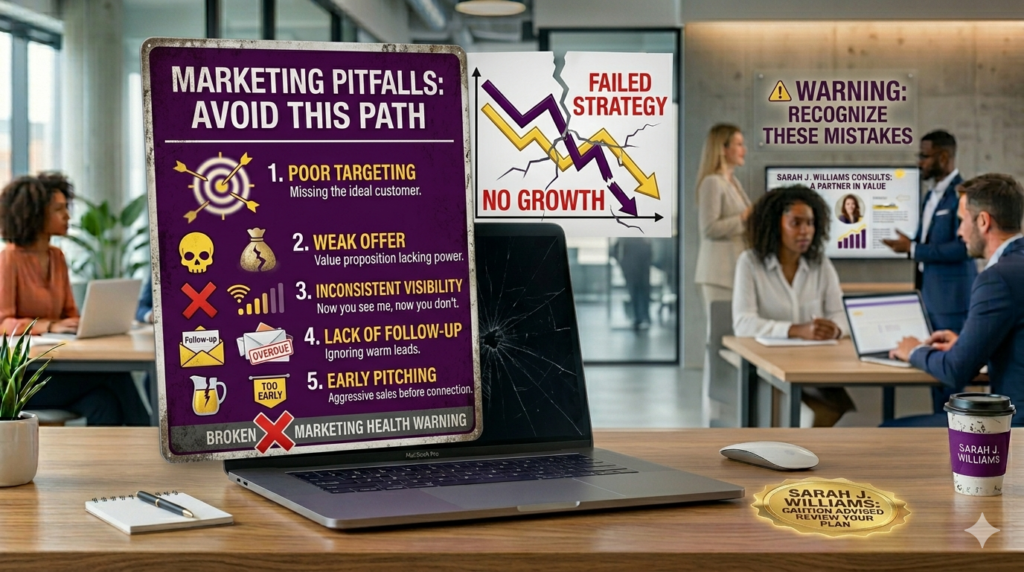
Even with the right tools and strategies, many businesses struggle to generate consistent results because they repeatedly make a few critical mistakes. The good news is that most of these mistakes are completely avoidable once you know what to look for.
I’ve seen businesses invest significant time and money into marketing only to get disappointing results because they focused on the wrong activities.
Here are some of the most common mistakes that hold back B2B growth.
PITCHING TOO SOON
One of the fastest ways to lose a potential client is trying to sell before building trust.
Many businesses connect with a prospect and immediately start talking about their services. In B2B marketing, trust usually comes before the sale.
Decision-makers want to feel confident that you understand their challenges before they consider buying from you.
TARGETING EVERYONE
A message aimed at everyone rarely resonates with anyone.
When businesses fail to define a specific target market, their marketing becomes generic and ineffective.
The most successful B2B companies know exactly:
- Who they serve
- What problems they solve
- Why clients should choose them
Specificity creates stronger positioning and better results.
IGNORING FOLLOW-UP
Many leads are lost simply because no one follows up.
A prospect who doesn’t respond today may still become a client next month.
I’ve seen businesses win valuable contracts after multiple follow-ups because they remained visible and professional while competitors disappeared.
A strong follow-up system is often the difference between average and exceptional results.
WEAK OFFERS
Sometimes the problem isn’t the marketing.
It’s the offer.
If your service is unclear, difficult to understand, or doesn’t solve an important problem, generating leads becomes much harder.
A strong offer should clearly communicate:
- The problem you solve
- The result you deliver
- Why your solution is different
INCONSISTENT VISIBILITY
Many small businesses market in bursts.
They post regularly for a few weeks, then disappear for a month.
Consistency builds familiarity, and familiarity builds trust.
Whether you’re using LinkedIn, email marketing, blogging, or networking, showing up consistently matters.
NEGLECTING AUTHORITY BUILDING
Some businesses focus entirely on selling and never invest in building authority.
Without:
- Educational content
- Case studies
- Testimonials
- Thought leadership
prospects have little reason to view you as an expert.
Authority often influences purchasing decisions long before the sales conversation begins.
FAILING TO TRACK RESULTS
Another major mistake is not measuring performance.
Track:
- Website traffic
- Lead sources
- Conversion rates
- Email engagement
- Discovery calls
- Closed deals
What gets measured gets improved.
LEARN FROM COMMON SALES PROBLEMS
Many of these marketing mistakes eventually lead to poor sales performance. If you’re currently struggling to convert leads into customers, I recommend reading Why Your Small Business Is Not Making Sales (And How to Fix It Fast) for additional insights into identifying and fixing sales bottlenecks.
You can also explore HubSpot’s Marketing Statistics to better understand how modern B2B buyers behave and what influences purchasing decisions.
KEY TAKEAWAY
Most B2B marketing failures are not caused by a lack of opportunity. They are caused by avoidable mistakes such as poor targeting, weak follow-up, inconsistent visibility, and premature selling. Correcting these issues can dramatically improve your ability to attract and convert high-value clients.
A SIMPLE 90-DAY B2B MARKETING PLAN
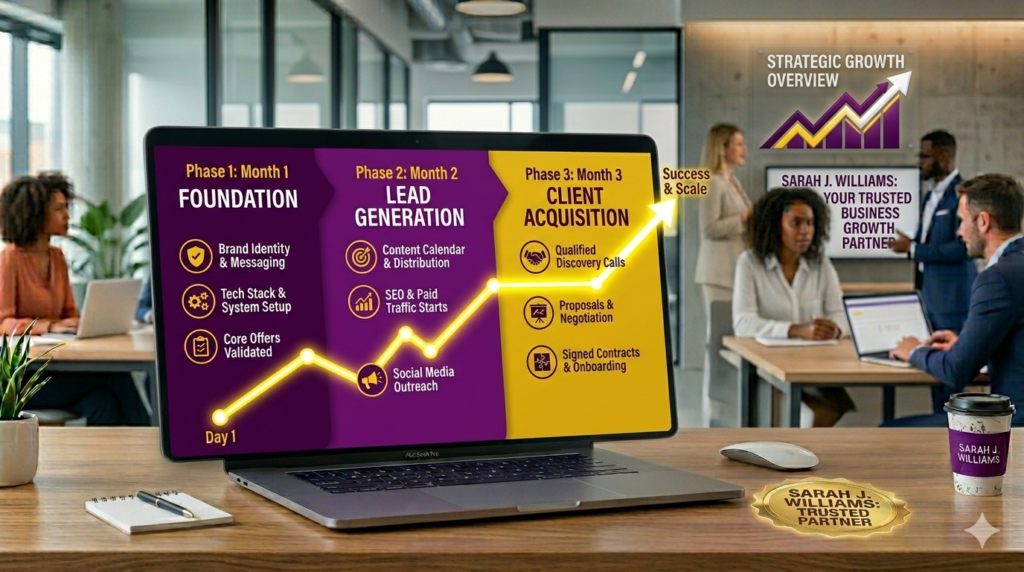
Learning B2B marketing is one thing. Executing it consistently is another.
One reason many entrepreneurs struggle is that they consume information but never turn it into a practical action plan. To help you avoid that mistake, I’ve put together a simple 90-day roadmap you can follow to start implementing the B2B marketing strategies for small businesses covered in this guide.
The goal is not perfection. The goal is momentum.
MONTH 1: BUILD YOUR FOUNDATION
The first 30 days should focus on clarity, positioning, and preparation.
Define Your Ideal Client
Identify:
- Industry
- Company size
- Pain points
- Budget range
- Decision-makers
The more specific your target market, the easier your marketing becomes.
Strengthen Your Positioning
Review your:
- Website
- LinkedIn profile
- Service pages
- Marketing message
Make sure prospects immediately understand:
- Who you help
- What you do
- Why they should trust you
Create Core Marketing Assets
Prepare:
- A lead magnet
- Client testimonials
- Case studies
- Service descriptions
- Discovery call process
This foundation will support all future marketing efforts.
If you’re still refining your growth strategy, I recommend reading 9 Small Business Growth Strategies for Beginners for additional guidance on building sustainable systems.
MONTH 2: FOCUS ON CONTENT AND LEAD GENERATION
Now it’s time to increase visibility.
Publish Valuable Content
Create:
- Blog posts
- LinkedIn content
- Educational videos
- Industry insights
Focus on solving real business problems.
Start Prospecting
Reach out to potential clients through:
- Networking events
- Strategic partnerships
Remember to personalize your communication.
Build Your Email List
Use:
- Free resources
- Business assessments
- Templates
- Checklists
Every new subscriber becomes a potential future client.
MONTH 3: NURTURE LEADS AND ACQUIRE CLIENTS
At this stage, your focus shifts from visibility to conversion.
Strengthen Follow-Up Systems
Create:
- Email sequences
- Follow-up reminders
- Discovery call processes
- Lead tracking systems
Many opportunities are won through consistent follow-up.
Book More Discovery Calls
Review your pipeline and identify prospects who may be ready for conversations.
Use the BANT framework discussed earlier to qualify opportunities effectively.
Optimize Based on Results
Ask:
- Which content performs best?
- Which channels generate leads?
- Which offers convert most often?
Then invest more time in what works.
Use Technology to Scale
As your marketing activities increase, tools become important.
CRM systems, email platforms, analytics software, and automation tools can significantly improve efficiency. For recommendations, check out 11 Essential Tools That Support Small Business Growth in 2026.
For additional planning resources, HubSpot’s Marketing Plan Templates can help organize your campaigns and objectives.
YOUR 90-DAY SUCCESS METRIC
By the end of 90 days, aim to have:
A clearly defined ideal client
An optimized LinkedIn profile
Consistent content publishing
A lead generation system
An email nurturing process
Regular discovery calls
A predictable client acquisition process
KEY TAKEAWAY
B2B marketing success rarely comes from a single campaign. It comes from consistent execution over time. If you spend the next 90 days implementing these strategies, you’ll be far ahead of most competitors who are still relying on random marketing activities and hoping for results.
FREQUENTLY ASKED QUESTIONS ABOUT B2B MARKETING
As businesses begin implementing these B2B marketing strategies for small businesses, a few questions come up repeatedly. Here are some practical answers to help you move forward with greater confidence.
WHAT IS THE BEST B2B MARKETING STRATEGY?
There is no single strategy that works for every business.
The most effective approach is usually a combination of:
- Clear positioning
- Content marketing
- LinkedIn networking
- Lead generation systems
- Email nurturing
- Consistent follow-up
Businesses that combine multiple channels generally achieve better results than those relying on a single tactic.
The key is building a system rather than searching for a marketing shortcut.
HOW DO I GET B2B CLIENTS?
The process usually follows these steps:
- Identify your ideal client
- Position yourself as an expert
- Create valuable content
- Build relationships
- Generate qualified leads
- Nurture prospects
- Close opportunities through discovery calls
Many business owners focus only on step seven and ignore the first six. That’s often why they struggle to attract consistent clients.
IS LINKEDIN NECESSARY FOR B2B MARKETING?
Not always, but it is one of the most powerful platforms available for B2B businesses.
LinkedIn gives direct access to:
- Business owners
- Executives
- Decision-makers
- Industry professionals
If your target audience is active on LinkedIn, it should be a major part of your marketing strategy.
However, email marketing, referrals, SEO, partnerships, and networking can also generate excellent results.
HOW LONG DOES B2B MARKETING TAKE TO WORK?
B2B marketing is usually a long-term process.
Some businesses begin seeing results within a few weeks, while others may take several months to build momentum.
Factors that influence results include:
- Industry competition
- Marketing consistency
- Offer quality
- Authority positioning
- Follow-up systems
The businesses that stay consistent are usually the ones that win over time.
HOW DO SMALL BUSINESSES ATTRACT HIGH-TICKET CLIENTS?
High-ticket clients are rarely attracted by aggressive selling.
They are attracted by:
- Expertise
- Trust
- Results
- Authority
- Strong relationships
Focus on solving meaningful problems, sharing valuable insights, and demonstrating proof of success.
High-value clients often care more about outcomes than price.
DO I NEED A LARGE MARKETING BUDGET?
No.
Many successful B2B businesses started with:
- LinkedIn content
- Networking
- Referrals
- Email marketing
- SEO content
These strategies require more consistency than money.
If you’re building your business on a limited budget, you may find value in 12 Low-Capital Businesses You Can Start With $100 in 2026, which highlights practical ways entrepreneurs can start and grow without significant upfront investment.
For additional research and benchmarks, HubSpot’s State of Marketing Reports provide useful data on current B2B marketing trends and buyer behavior.
FINAL THOUGHTS: FOCUS ON RELATIONSHIPS, NOT JUST LEADS
Many business owners approach B2B marketing with one goal in mind: generating more leads.
While leads are important, I’ve found that the businesses that grow most consistently focus on something deeper: relationships.
Behind every contract, proposal, and purchase decision is a person trying to solve a problem. The companies that win the most business are often the ones that invest time in understanding those problems, providing value, and building trust long before asking for a sale.
Throughout this guide, we’ve explored a complete framework for implementing effective B2B marketing strategies for small businesses. From defining your ideal client and building authority to generating leads, nurturing prospects, and closing high-ticket opportunities, each step plays a role in creating sustainable growth.
The good news is that you don’t need to implement everything at once.
Start with:
- Identifying your ideal client
- Improving your positioning
- Publishing valuable content
- Building relationships on LinkedIn
- Creating a simple follow-up system
Small actions, repeated consistently, often produce bigger results than occasional bursts of activity.
Remember, B2B marketing is not a sprint. It’s a long-term investment in visibility, credibility, and trust.
The businesses that stay consistent, continue learning, and genuinely focus on helping their clients are usually the ones that attract the best opportunities.
Don’t wait for the perfect strategy or perfect circumstances.
Start with what you have, improve as you go, and commit to building relationships rather than simply chasing leads.
That’s how sustainable B2B growth is built.