

Introduction

Many people dream of becoming business owners, but one challenge stops them before they even begin: money.
The belief that you need a large amount of startup capital is one of the biggest reasons aspiring entrepreneurs never take action. They assume successful businesses are built with investor backing, business loans, or substantial personal savings.
The reality is very different.
Some of the best small business ideas for beginners require surprisingly little money to start. In fact, many profitable businesses today can be launched from home using skills, knowledge, and free digital tools.
This shift has created more opportunities than ever for people looking for low-capital business ideas with strong income potential.
However, not every business is suitable for beginners.
A beginner-friendly business typically has:
- Low startup costs
- Simple operations
- Strong market demand
- Flexible working arrangements
- High profit margins
- Opportunities for long-term growth
The best opportunities are often in businesses where your expertise and effort create value, rather than in large investments in inventory, equipment, or office space.
This is why many entrepreneurs are now focusing on business ideas with high profit margins that can be started and scaled gradually.
If you are still unsure whether limited funds should stop you from pursuing entrepreneurship, I recommend reading How to Start a Business With No Money: The Complete Bootstrapping Blueprint. It explains how many successful founders build businesses by leveraging skills, resourcefulness, and early revenue instead of relying on external funding.
According to the U.S. Small Business Administration Entrepreneur Resources, careful planning and validation are often more important than having a large startup budget.
In this guide, you will discover seven of the best small business ideas for beginners, why they work, how much they cost to start, and how you can choose the right opportunity based on your skills, interests, and goals.
Before looking at specific business ideas, let’s first understand what makes a business opportunity truly profitable.
What Makes the Best Small Business Ideas for Beginners Profitable?
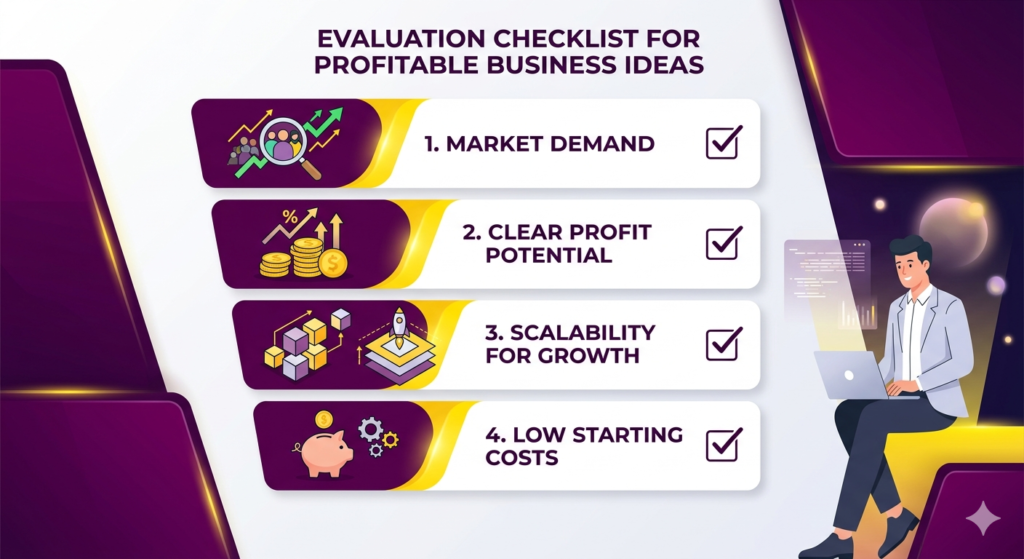
Before choosing from the best small business ideas for beginners, it is important to understand why some businesses succeed while others struggle.
One mistake many new entrepreneurs make is chasing trends without evaluating whether a business model is actually profitable.
A business may look exciting on social media, but if the startup costs are high and profit margins are low, growth can become difficult.
The most successful low-capital business ideas usually share several important characteristics.
Low Startup Costs
A beginner-friendly business should not require significant upfront investment.
The less money you need to start, the lower your financial risk.
This is one reason service-based businesses, consulting, freelancing, and digital products are popular among entrepreneurs looking for businesses with low startup costs.
High Demand Markets
Even the best product or service will struggle if there is little market demand.
Profitable businesses solve problems people actively want solved.
Before launching any business, research whether customers are already spending money on similar solutions.
This principle is discussed in How to Start a Business With No Money: The Complete Bootstrapping Blueprint, where validation is emphasized before investing time or money.
Scalable Business Models
The best businesses can grow without costs increasing at the same rate as revenue.
For example:
- Digital products can be sold repeatedly.
- Consulting can evolve into an agency.
- Content creation can generate multiple income streams.
Scalability allows businesses to increase profits over time.
Low Overhead Expenses
High overhead often reduces profitability.
Businesses that operate remotely or from home typically enjoy better profit margins because they avoid expenses such as:
- Office rent
- Large equipment purchases
- Extensive staffing costs
Recurring Revenue Opportunities
Recurring revenue creates stability.
Businesses offering subscriptions, retainers, memberships, or ongoing services often achieve more predictable income than one-time sales businesses.
According to Forbes Small Business Growth Insights, recurring revenue models are often more resilient and easier to scale than businesses dependent entirely on new customer acquisition.
Skills-Based vs Inventory-Based Businesses
For beginners, skills-based businesses usually offer the fastest path to profitability.
Why?
Because your expertise becomes the product.
You can often start immediately without purchasing inventory or managing supply chains.
This is why many of the best businesses to start with little money involve providing services, creating content, teaching, consulting, or helping businesses solve specific problems.
Now that you know how to evaluate opportunities, let’s look at the first business idea on this list and why digital marketing services remain one of the most profitable options for beginners.
Business Idea #1: Digital Marketing Services

Among the best small business ideas for beginners, digital marketing services consistently rank near the top.
Why?
Because every business needs customers, and every customer acquisition strategy depends on marketing.
Whether a company sells products, services, or software, it needs visibility to grow. This creates ongoing demand for people who can help businesses attract leads, generate sales, and build their online presence.
The best part is that digital marketing is one of the most accessible low-capital business ideas available today.
You can start with a laptop, an internet connection, and a willingness to learn.
Why Businesses Always Need Marketing
Many small business owners understand their products but struggle with marketing.
They often need help with:
- Social media management
- Content creation
- Search engine optimization (SEO)
- Email marketing
- Lead generation
- Marketing strategy
This creates opportunities for beginners who are willing to develop these skills.
In fact, many businesses face challenges similar to those discussed in Why Your Small Business Is Not Making Sales and How to Fix It Fast, making marketing support a valuable service.
Services Beginners Can Offer
You do not need to become an expert in every area immediately.
Start with one skill and improve over time.
Examples include:
- Managing social media accounts
- Writing blog posts
- Creating marketing graphics
- Email newsletter management
- Basic SEO optimization
- Content scheduling
These services can often be learned through free online resources.
Skills Required to Start
The most important skills include:
- Communication
- Content creation
- Basic marketing knowledge
- Research
- Problem-solving
Many of these skills improve naturally as you work with clients.
For beginners interested in growth-focused marketing, 5 Must-Have Elements in a Small Business Marketing Plan That Drive Real Growth provides a useful foundation for understanding how businesses approach marketing strategy.
Startup Costs
One reason digital marketing remains one of the best businesses to start with little money is the low startup cost.
In many cases, you can begin with:
- Free design tools
- Free scheduling tools
- Free communication platforms
- Free AI productivity tools
This keeps financial risk extremely low.
Profit Margin Potential
Digital marketing services often have high profit margins because the primary investment is your time and expertise.
Once skills improve, you can increase pricing, create packages, or even build a small agency.
According to HubSpot Marketing Statistics and Trends, businesses continue to increase investment in digital marketing channels, creating strong demand for marketing professionals and service providers.
How to Get Your First Client
Start by helping people within your network.
Then:
- Build a simple portfolio
- Share valuable content online
- Join business communities
- Reach out to local businesses
- Offer small projects to gain experience
Many successful marketing agencies started with a single client.
Digital marketing is an excellent business because it combines low startup costs with strong demand and scalability.
But if writing and communication are your strengths, the next business idea may be an even better fit.
Business Idea #2: Freelance Writing and Content Creation

If you enjoy writing, researching, or communicating ideas, freelance writing is one of the best small business ideas for beginners with very low startup costs and excellent profit potential.
The internet runs on content.
Businesses need blog posts, website pages, email newsletters, product descriptions, social media captions, and marketing materials to attract customers and build authority online.
Because of this, content creation remains one of the most profitable low-capital business ideas available today.
Why Content Demand Keeps Growing
Every company that wants visibility online needs content.
Whether a business is trying to rank on Google, build a social media audience, or nurture leads through email marketing, content plays a central role.
This growing demand creates opportunities for freelance writers who can help businesses communicate effectively.
According to Content Marketing Institute Research and Resources, content marketing remains one of the most effective long-term strategies for customer acquisition and brand growth.
Writing Blogs, Website Content, and Social Media Posts
As a freelance writer, you can offer services such as:
- Blog writing
- Website copywriting
- Social media content creation
- Email marketing content
- Product descriptions
- SEO content writing
You do not need to offer everything at once.
Many successful writers begin by specializing in one area before expanding.
Tools Needed to Start
One reason freelance writing is among the best businesses to start with little money is the minimal equipment required.
You can begin with:
- A laptop
- Internet access
- Google Docs
- Grammarly
- AI-assisted research tools
Many of these tools offer free versions.
For entrepreneurs interested in leveraging technology effectively, 11 Essential Tools That Support Small Business Growth in 2026 highlights several resources that can improve productivity and workflow.
Finding Clients Online
Getting clients is often easier than many beginners think.
Potential sources include:
- Facebook Groups
- Freelance marketplaces
- Business communities
- Direct outreach
The key is demonstrating value.
Publishing your own content can serve as proof of your skills and expertise.
Many writers generate their first opportunities through strategies similar to those discussed in How to Market Your Small Business in 2026 Without Wasting a Kobo on Ads.
Scaling Into an Agency
One advantage of freelance writing is scalability.
As demand increases, you can:
- Raise your rates
- Build content packages
- Hire subcontractors
- Create a content agency
This allows revenue to grow without relying entirely on your own writing capacity.
Profit Margin Potential
Freelance writing offers some of the highest profit margins among profitable small business ideas because there are very few ongoing expenses.
Your primary investment is skill development.
As your expertise improves, your earning potential can increase significantly.
Many successful content agencies began as one-person freelance businesses.
If you prefer a business model that involves products rather than services, the next opportunity offers an interesting alternative with low upfront risk and no need to hold inventory.
Business Idea #3: Print-on-Demand Business
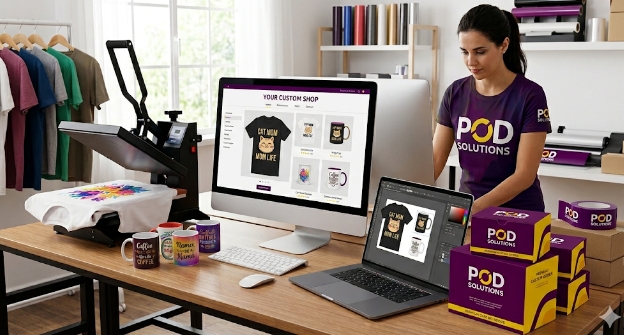
If you want to sell products but do not want the risks associated with inventory, a print-on-demand business is one of the best small business ideas for beginners.
Unlike traditional retail businesses, print-on-demand allows you to sell customized products without purchasing inventory upfront.
This makes it one of the most attractive low-investment business ideas for entrepreneurs who want to enter e-commerce without significant financial risk.
How Print-on-Demand Works
The print-on-demand model is simple.
You create designs for products such as:
- T-shirts
- Hoodies
- Mugs
- Tote bags
- Phone cases
- Notebooks
When a customer places an order, a print-on-demand supplier produces and ships the product on your behalf.
You do not need to:
- Store inventory
- Handle packaging
- Manage shipping logistics
This allows you to focus on design, branding, and marketing.
Products You Can Sell
One of the advantages of print-on-demand is flexibility.
You can create products for specific niches, such as:
- Fitness enthusiasts
- Entrepreneurs
- Students
- Pet owners
- Gamers
- Sports fans
The more targeted your audience, the easier it becomes to stand out.
Startup Costs Explained
Compared to traditional e-commerce, startup costs are extremely low.
Typically, you only need:
- A website or online store
- Product designs
- Marketing content
Many platforms allow you to start with minimal upfront investment, making this one of the businesses with low startup costs.
If you are interested in understanding the foundations of online selling, How to Start an E-Commerce Business in 2026: Step-by-Step for Beginners provides a useful overview of the process.
Marketing Strategies
Success in print-on-demand depends heavily on visibility.
Popular traffic sources include:
- SEO
- TikTok
- Email marketing
- Content marketing
Many store owners underestimate the importance of organic marketing.
In reality, businesses that apply strategies from How to Attract Customers to an Online Store Without Running Ads in 2026 often build more sustainable growth than those relying entirely on paid ads.
Advantages Over Traditional Inventory Businesses
Print-on-demand offers several advantages:
- Low startup costs
- Reduced financial risk
- No inventory management
- Flexible product testing
- Easy scalability
However, it is important to maintain realistic expectations.
Realistic Profitability Expectations
Many online videos make print-on-demand look like easy money.
The reality is different.
Building a profitable store requires:
- Market research
- Strong branding
- Consistent marketing
- Patience
According to the Shopify Print-on-Demand Guide, long-term success often comes from building a recognizable brand rather than simply uploading random designs.
For beginners willing to learn marketing and branding, print-on-demand can become a highly scalable business.
But if you prefer earning commissions by promoting products instead of creating them yourself, the next business idea may be an even better fit.
Business Idea #4: Affiliate Marketing Business
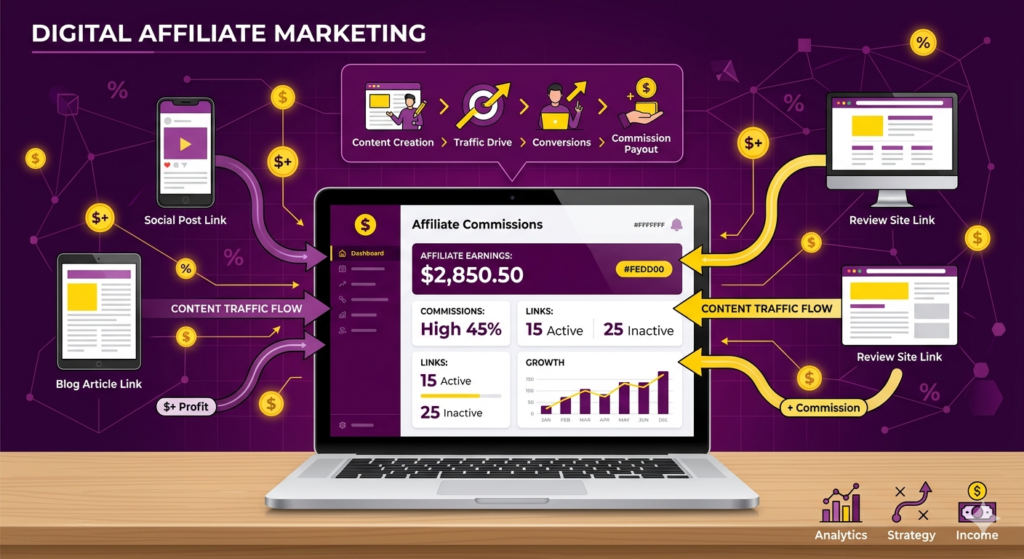
Affiliate marketing is one of the most profitable small business ideas for beginners because it allows you to earn income without creating your own products.
Instead of selling something you own, you recommend products or services from other companies and earn a commission when someone makes a purchase through your referral link.
This makes affiliate marketing one of the best businesses to start with little money, especially for people who enjoy content creation, blogging, social media, or audience building.
What Affiliate Marketing Is
The affiliate marketing model is simple:
- Join an affiliate program.
- Receive a unique referral link.
- Promote products or services.
- Earn commissions from qualifying sales.
Many major companies offer affiliate programs, including:
The challenge is not joining programs.
The challenge is generating consistent traffic.
Choosing Profitable Niches
One of the biggest mistakes beginners make is promoting random products.
The most successful affiliate marketers focus on a specific niche.
Examples include:
- Business growth
- Personal finance
- Health and fitness
- Technology
- Education
- E-commerce
A focused niche makes it easier to build authority and trust.
Building Traffic Through Content
Traffic is the fuel of affiliate marketing.
Without visitors, there are no clicks.
Without clicks, there are no commissions.
This is why content creation is so important.
You can attract traffic through:
- Blogging
- YouTube
- TikTok
- Email marketing
Businesses that consistently publish valuable content often see long-term growth because content continues attracting visitors long after it is published.
This approach aligns closely with strategies discussed in 9 Small Business Growth Strategies for Beginners, where sustainable growth is built through visibility and authority rather than quick wins.
How Commissions Work
Affiliate commissions vary depending on the product and industry.
Some programs pay:
- Fixed commissions per sale
- Percentage-based commissions
- Recurring monthly commissions
Recurring commissions are particularly attractive because one customer can generate income for months or even years.
Long-Term Income Potential
Affiliate marketing is not a get-rich-quick business.
It requires:
- Consistent content creation
- Audience building
- SEO
- Trust
However, it offers excellent scalability.
A blog post written today can continue generating traffic and commissions months or years later.
For entrepreneurs building websites or blogs, lessons from How to Market Your Small Business in 2026 Without Wasting a Kobo on Ads can help create sustainable traffic sources that support affiliate revenue.
According to the Ahrefs Affiliate Marketing Guide, successful affiliate marketers focus on solving problems and helping users make informed buying decisions rather than simply pushing products.
Affiliate marketing can become a powerful long-term income stream.
But if you already have expertise in a specific area and want to charge directly for your knowledge, the next business idea may generate revenue much faster.
Business Idea #5: Online Coaching or Consulting

If you have knowledge, experience, or a skill that helps people achieve a specific result, online coaching or consulting can be one of the best small business ideas for beginners with exceptionally high profit margins.
Unlike product-based businesses, coaching and consulting allow you to monetize expertise instead of inventory.
This means startup costs are often very low while earning potential can be significant.
That is why many entrepreneurs consider coaching one of the most attractive business ideas with high profit margins.
Turning Expertise Into Income
Many people underestimate what they know.
You do not need to be the world’s leading expert to become a coach or consultant.
You simply need knowledge that helps someone solve a problem or achieve a goal.
Examples include:
- Business growth
- Social media marketing
- Fitness
- Career development
- Graphic design
- Personal finance
- Productivity
People pay for shortcuts, guidance, and proven systems.
Coaching vs Consulting
Although many people use these terms interchangeably, they are slightly different.
Coaching typically helps people develop skills and reach goals through guidance and accountability.
Consulting usually involves providing expert recommendations and solutions based on experience.
Both models can be profitable and scalable.
Popular Coaching Niches
Some of the fastest-growing coaching markets include:
- Business coaching
- Marketing coaching
- Career coaching
- Health coaching
- Executive coaching
- Productivity coaching
The best niche is often the intersection of your expertise, experience, and market demand.
Building Authority Online
Authority is essential if you want people to trust your advice.
One of the best ways to build credibility is through content.
Publishing helpful content allows potential clients to see your expertise before they ever contact you.
For example, entrepreneurs who consistently apply lessons from 9 Small Business Growth Strategies for Beginners often position themselves as trusted voices within their industries.
You can build authority through:
- Blogging
- LinkedIn content
- YouTube videos
- Podcasts
- Email newsletters
- Social media posts
Getting Your First Paying Clients
Many beginners overcomplicate customer acquisition.
Your first clients often come from:
- Existing networks
- Referrals
- Social media audiences
- Online communities
- Direct outreach
Focus on solving real problems and delivering measurable results.
When clients see outcomes, referrals become much easier.
The customer acquisition principles discussed in First 10 Customers in 30 Days: A Practical Guide for New Small Businesses can also be applied effectively to coaching and consulting businesses.
Profit Potential
Coaching and consulting offer some of the highest margins among low-capital business ideas because there is very little overhead.
Your primary assets are:
- Knowledge
- Experience
- Communication skills
According to the International Coaching Federation Industry Research, demand for coaching services continues to grow globally as individuals and businesses seek expert guidance and accountability.
For entrepreneurs who enjoy helping others succeed, coaching or consulting can become a highly rewarding business.
But if you prefer selling products rather than expertise, the next opportunity introduces a business model that combines buying and selling for profit.
Business Idea #6: E-Commerce Reselling Business

E-commerce reselling remains one of the best small business ideas for beginners because it allows entrepreneurs to start selling products without manufacturing them.
The concept is straightforward:
You buy products at a lower price and sell them at a higher price for profit.
While simple in theory, successful reselling requires research, product selection, and effective marketing.
For beginners looking for low-capital business ideas, reselling can be a practical way to enter the world of online business.
What Reselling Involves
A reseller acts as the bridge between suppliers and customers.
Products can be sourced from:
- Local wholesalers
- Manufacturers
- Clearance sales
- Liquidation suppliers
- Individual sellers
The goal is to identify products with demand and healthy profit margins.
Many successful entrepreneurs start with a small number of products before expanding.
Finding Profitable Products
One of the biggest reasons online stores fail is poor product selection.
Not every product deserves a place in your store.
Look for products that:
- Solve specific problems
- Have consistent demand
- Offer reasonable profit margins
- Have manageable competition
This is one of the reasons many new store owners struggle, as explained in 9 E-Commerce Mistakes That Secretly Kill Your Sales.
The best products are usually problem-solving products rather than random trending items.
Local vs Online Selling
Both approaches have advantages.
Local selling allows you to:
- Build trust quickly
- Reduce shipping complexity
- Meet customers directly
Online selling offers:
- Larger markets
- Greater scalability
- More automation opportunities
Many entrepreneurs combine both approaches during the early stages.
Startup Costs and Risks
Compared to service-based businesses, reselling usually requires some investment because inventory must often be purchased first.
However, you can reduce risk by:
- Starting small
- Testing demand
- Avoiding large inventory purchases
- Validating products before scaling
If you are planning to build an online store, How to Start an E-Commerce Business in 2026: Step-by-Step for Beginners provides a detailed roadmap for getting started.
Increasing Profit Margins
Profitability often depends on more than the product itself.
You can improve margins by:
- Creating better offers
- Bundling products
- Improving customer experience
- Building a recognizable brand
- Increasing repeat purchases
Many successful online stores also apply strategies from How to Attract Customers to an Online Store Without Running Ads in 2026 to generate organic traffic instead of relying entirely on paid advertising.
According to Shopify’s Guide to Selling Online, sustainable e-commerce businesses often succeed because they focus on customer needs, branding, and long-term marketing rather than chasing short-term trends.
Reselling can be an excellent entry point into e-commerce.
However, if you prefer providing services remotely without handling products, inventory, or shipping, the next business idea may be even easier to launch.
Business Idea #7: Virtual Assistant Services

Virtual assistant services have become one of the best small business ideas for beginners because businesses are increasingly outsourcing administrative and operational tasks.
As more companies operate remotely, entrepreneurs, consultants, agencies, and small business owners need reliable support without hiring full-time employees.
This growing demand makes virtual assistance one of the most practical low-capital business ideas available today.
The best part is that you can often start with skills you already have.
Why Demand Is Increasing
Business owners want to spend more time growing their businesses and less time handling routine tasks.
As a result, many outsource responsibilities such as:
- Email management
- Calendar scheduling
- Customer support
- Data entry
- Social media assistance
- Research tasks
- Administrative support
According to Forbes Small Business Workforce Trends, remote work continues to reshape how businesses hire and manage support functions, creating more opportunities for virtual assistants.
Services Virtual Assistants Provide
One advantage of this business model is flexibility.
You can start with general services and later specialize in a niche.
Common services include:
- Inbox management
- Appointment scheduling
- Travel planning
- Social media scheduling
- Customer communication
- Project coordination
- Basic bookkeeping support
Specialized virtual assistants often earn higher rates because they solve more complex problems.
Skills Required
Most beginners already possess many of the skills needed.
Important skills include:
- Communication
- Organization
- Time management
- Attention to detail
- Basic technology skills
You do not necessarily need advanced qualifications to get started.
What matters most is reliability and professionalism.
Where to Find Clients
Finding clients is often easier than people expect.
Potential opportunities can come from:
- Facebook business communities
- Referrals
- Freelance platforms
- Local businesses
The client acquisition strategies discussed in First 10 Customers in 30 Days: A Practical Guide for New Small Businesses can help accelerate your search for early customers.
You can also build visibility by applying marketing techniques from How to Market Your Small Business in 2026 Without Wasting a Kobo on Ads.
Scaling Into a Virtual Support Agency
Many successful virtual assistants eventually expand beyond solo work.
As demand grows, you can:
- Hire additional assistants
- Offer specialized services
- Create service packages
- Build recurring monthly contracts
This transforms a simple freelance service into a scalable business model.
Profit Potential
Virtual assistant services offer strong profit margins because startup expenses are minimal.
In most cases, you only need:
- A computer
- Internet access
- Communication tools
- Organizational software
This makes it one of the most attractive businesses with low startup costs for beginners.
Now that you have explored seven profitable opportunities, the next step is understanding how to choose the right business idea based on your skills, goals, available time, and long-term vision.
How to Choose the Right Small Business Idea for Your Situation
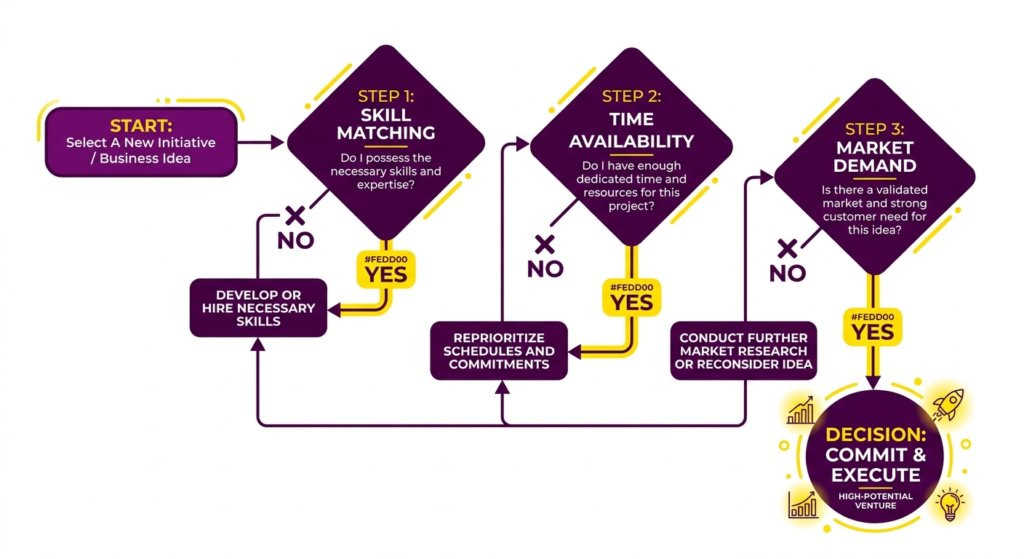
After exploring these best small business ideas for beginners, the next important step is not rushing into the first idea that looks profitable.
The real challenge is choosing the right business for you.
Many people fail not because the idea is bad, but because the idea does not match their skills, time, or situation.
This is why selecting the right low-capital business ideas requires careful thinking, not emotional decisions.
Matching Business Ideas to Your Skills
Every profitable business is built on a skill or a learnable ability.
Ask yourself:
- What am I naturally good at?
- What skills do I already have?
- What problems can I solve for others?
For example:
- If you enjoy writing → freelance writing
- If you understand social media → digital marketing services
- If you enjoy teaching → coaching, or consulting
The best businesses often align with your strengths.
Considering Available Time
Time is just as important as money when starting a business.
Some businesses require daily attention, while others can be automated or outsourced later.
If you have limited time, start with something manageable like:
- freelance services
- virtual assistance
- simple digital products
If you have more time, you can explore scalable models like e-commerce or affiliate marketing.
Understanding Market Demand
A business only succeeds if people are already willing to pay for it.
Before choosing an idea, research:
- What problems are people searching for
- What products or services are already being sold
- Who your competitors are
According to the U.S. Small Business Administration Market Research Guide, understanding market demand is one of the most critical steps in building a successful business.
Evaluating Startup Costs
Even though all the ideas in this guide are low-investment business ideas, some still require slightly more resources than others.
For example:
- Freelancing → almost zero cost
- Coaching → minimal cost
- E-commerce → moderate startup cost
Choose a model that matches your current financial reality.
Assessing Long-Term Growth Potential
A good business should not only work today but also grow in the future.
Ask:
- Can this business scale?
- Can I increase my income over time?
- Can I build systems or automation?
The most successful entrepreneurs think long-term, not just about quick profits.
Many of the growth principles discussed in 9 Small Business Growth Strategies for Beginners show how sustainable businesses are built through consistency and systems.
Final Thought on Choosing Your Idea
The goal is not to pick the “perfect” idea.
The goal is to pick an idea you can actually start and improve over time.
Once you begin, you will learn faster, adapt faster, and grow faster.
Next, we will look at how to successfully launch your small business and turn your idea into real income.
How to Launch Your Small Business Successfully
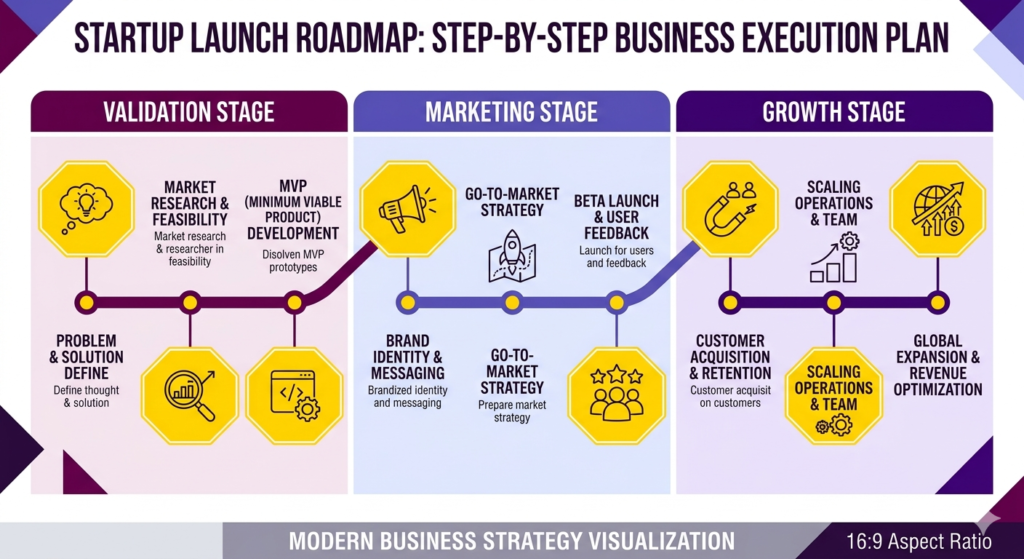
Choosing one of the best small business ideas for beginners is only the first step. The real difference between people who succeed and those who stay stuck is execution.
Many beginners delay starting because they think they need everything figured out first. In reality, successful entrepreneurs launch quickly, test their ideas, and improve along the way.
If you want to turn any of these low-capital business ideas into real income, you need a simple but focused launch process.
Validate Before Investing
Before spending time or money building anything, confirm that people actually want what you are offering.
You can validate your idea by:
- Talking to potential customers
- Posting your idea on social media
- Offering a simple pre-sale or beta service
- Asking for feedback in online communities
This approach reduces risk and increases your chances of success.
This concept is explained further in How to Start a Business With No Money: The Complete Bootstrapping Blueprint, where validation is emphasized before any investment is made.
Build a Simple Business Plan
You do not need a complex document.
A simple plan is enough to start:
- What problem am I solving?
- Who is my target customer?
- What am I offering?
- How will I reach customers?
- How will I make money?
Clarity is more important than complexity.
Many beginners overcomplicate planning and never take action.
For a deeper structure, How to Create a Winning Business Plan for Startups Step-by-Step provides a more detailed framework.
Start Marketing Early
Do not wait until everything is perfect before telling people about your business.
Start marketing immediately.
You can use:
- Social media posts
- Short-form videos
- Blog content
- Direct outreach
- Community engagement
The goal is visibility, not perfection.
Marketing early helps you understand what your audience responds to before you fully launch.
Focus on Getting Your First Customers
Your first customers are the most important.
They validate your idea and give you real feedback.
You can attract early customers by:
- Offering introductory pricing
- Providing free value first
- Reaching out to your network
- Sharing your offer consistently online
The strategies in First 10 Customers in 30 Days: A Practical Guide for New Small Businesses can help you accelerate this stage.
Reinvest Profits Strategically
Once you start earning, do not rush to spend everything.
Instead, reinvest in:
- Better tools
- Marketing efforts
- Skill improvement
- Product or service upgrades
This helps your business grow sustainably instead of staying stuck at the same level.
Final Launch Mindset
Launching a business is not about being perfect.
It is about being consistent.
Start small, learn fast, and improve as you go.
Many successful entrepreneurs began with simple ideas and no funding, but they stayed consistent long enough to see results.
Now that you understand how to launch your business, the next step is choosing one idea and taking action immediately instead of waiting.
FAQ Section

What is the best small business to start with low capital?
The best small business ideas for beginners with low capital are usually service-based businesses such as digital marketing, freelance writing, virtual assistance, or coaching.
These businesses require minimal startup costs and can be started with skills you already have.
They also allow you to generate income quickly compared to inventory-based businesses.
Which small businesses have the highest profit margins?
Businesses with the highest profit margins are typically:
- Digital services (marketing, writing, design)
- Coaching and consulting
- Affiliate marketing
- Online courses and digital products
These models are considered strong business ideas with high profit margins because they have very low overhead costs.
Can I start a profitable business with no money?
Yes.
Many entrepreneurs start with zero capital by using skills, free tools, and organic marketing strategies.
This approach is explained in How to Start a Business With No Money: The Complete Bootstrapping Blueprint, where focus is placed on validation and early customer acquisition instead of funding.
What business is easiest for beginners?
The easiest businesses are those that require minimal setup and no inventory.
Examples include:
- Freelancing
- Virtual assistance
- Social media management
- Affiliate marketing
These are popular low capital business ideas because they are flexible and easy to start.
How long does it take for a small business to become profitable?
Profitability depends on the business model and consistency.
Service-based businesses can become profitable within weeks or months, while content-based or e-commerce businesses may take longer.
The key factor is execution and consistency rather than the idea itself.
Businesses that apply strategies from 9 Small Business Growth Strategies for Beginners often achieve faster and more stable growth.
Conclusion
The journey of finding the best small business ideas for beginners is not just about choosing a list of options.
It is about choosing a direction you can actually start and grow.
You do not need perfect conditions.
You need action, consistency, and willingness to learn.
Each of the ideas in this guide shows that you can build a business with low capital if you focus on solving real problems and delivering value.
Whether you choose digital marketing, freelancing, coaching, or e-commerce, the most important step is to start.
If you are ready to go deeper, explore more business growth strategies on:
INSPIRED TO PROSPER
Your next step is simple.
Pick one idea and begin.
THANKS FOR READING
BY WISDOM SAMUEL