

Introduction

Choosing the wrong business niche is one of the fastest ways to waste months or even years of effort without seeing meaningful results. I have seen aspiring entrepreneurs spend countless hours building products, creating websites, and posting content only to discover that there was little demand for what they were offering. In many cases, the problem was not the business itself. The problem was choosing the wrong profitable business niche from the beginning.
One of the biggest misconceptions I see is the belief that passion alone guarantees success. While passion is important, it does not automatically create customers. A profitable business niche exists where customer demand, real problems, and monetization opportunities meet. When those elements are missing, even the most enthusiastic entrepreneur can struggle to generate income.
The good news is that finding a profitable business niche is not based on luck. It is a process that can be researched, tested, and validated before you invest significant time or money. In fact, before selecting any niche, I strongly recommend reading How to Validate a Business Idea Before Investing: Stop Wasting Cash on Wrong Products because validation is often the difference between a business that grows and one that quietly fails.
In this guide, I will walk you through a simple five-step framework for discovering a profitable business niche in 2026. You will learn how to identify market gaps, evaluate competition, match opportunities to your skills, test niche ideas quickly, and scale successful opportunities into long-term businesses.
If you have been jumping from one business idea to another without a clear direction, this guide will help you stop guessing and start making decisions based on real opportunities. Let’s begin by understanding what a profitable business niche actually means and why it matters so much for business success.
What a Profitable Business Niche Really Means

When I first started exploring business opportunities, I quickly realized that not every niche is worth pursuing. A profitable business niche is more than a topic you like or a trend that looks popular on social media. It is a focused market segment where people are actively spending money to solve a specific problem. The more urgent the problem, the more willing customers are to pay for a solution.
Many new entrepreneurs make the mistake of choosing a niche based solely on trends or personal interest. I’ve seen this happen countless times: someone launches a business in a trendy area only to find that the market is saturated or customers are unwilling to pay. What separates a profitable niche is a combination of demand, low competition, and the ability to scale over time.
A good way to think about it is this: your niche should be like a puzzle piece that fits both your skills and market demand. If your skills align with a niche problem people are actively paying to solve, you have a much higher chance of success. For example, instead of picking a general topic like “fitness,” focusing on “online programs for busy professionals who want to build muscle in 20 minutes a day” targets a clear audience with a defined need.
Understanding a profitable business niche also prevents wasted effort. I recommend mapping out potential niches and evaluating them based on demand, competition, and monetization potential. Before you commit, you should also check out How to Validate a Business Idea Before Investing: Stop Wasting Cash on Wrong Products, because validation ensures that your niche is not just theoretically profitable but proven in the real market.
Once you grasp what makes a niche profitable, the next step is to identify gaps in the market that you can turn into a business opportunity. This is where many beginners fail, they focus on what exists instead of what’s missing.
Step 1: Identify Market Gaps That Make Money

When I first tried to find a business niche, I realized that successful entrepreneurs aren’t just looking at what already exists they are identifying gaps where customer needs aren’t being fully met. Market gaps are opportunities where people are willing to pay for a solution that isn’t widely available yet.
One approach I use is browsing platforms like Google Trends, TikTok, and Pinterest to see what questions people are asking. Forums and communities such as Reddit can also reveal pain points that haven’t been addressed. For example, a niche in eco-friendly products for small apartment living might not be trending everywhere, but the demand is real and underserved.
I also check high-demand niches against low-interest topics to avoid saturated markets. Many people focus on “popular” niches without realizing that high search volume doesn’t always equal high profitability. For instance, while everyone is talking about general fitness, very specific niches like “time-efficient workouts for remote workers” can convert much better.
Using tools like Ubersuggest orAhrefs helps validate which gaps have both search demand and low competition. This ensures you’re not wasting time in a market that won’t pay off. Identifying these gaps early makes the next steps of validation and scaling much easier because you already know where the money is.
After pinpointing potential gaps, the next important step is evaluating competition and demand, so you can focus on niches that are both profitable and realistic for your skills.
Step 2: Evaluate Competition and Demand

Once I identify a potential market gap, the next thing I do is check if it’s worth pursuing by evaluating competition and demand. This step is crucial because a niche might look profitable, but if the market is saturated or the demand is weak, it will be hard to make consistent revenue.
I start by analyzing Google search results and e-commerce marketplaces to see how many competitors exist and how they present their offerings. A niche with a few established competitors but room for improvement is often ideal. Then, I use keyword research tools to measure search volume and competition difficulty. For instance, if a niche has moderate search volume but high engagement on social media and forums, it can be a strong candidate.
Another trick I use is spying on successful products and services in the niche. Understanding their pricing, positioning, and customer feedback helps me figure out what works and where I can differentiate. The goal is to find a sweet spot: low competition, strong demand, and the potential for high-profit margins.
If you want to dive deeper into validating niche profitability before committing, I recommend checking How to Find Profitable Business Ideas Fast. It’s a practical guide I used to ensure my business ideas are grounded in real market data.
After confirming demand and competition, the next step is to match the niche to your own skills and passion to maximize your chances of success.
Step 3: Match the Niche to Your Skills and Passion

Once I’ve identified a niche with good demand and manageable competition, the next step is to see how well it aligns with my skills and interests. This is where many beginners make mistakes: they chase profitable niches without considering if they have the knowledge, experience, or enthusiasm to stick with it.
I always start by listing my skills, hobbies, and professional experiences. Then, I compare them to the opportunities within the niche. For example, if I’m good at content creation and the niche requires educating customers, I know I can leverage my abilities to produce helpful guides, videos, or social posts. Matching skills to niche needs reduces the learning curve and lowers startup risk.
Passion also plays a key role. Running a business in a niche I enjoy makes it easier to stay consistent, especially during slow periods or initial struggles. Combining skills with interest often leads to innovative ideas that stand out from competitors.
It’s also important to consider long-term sustainability. Even if a niche is profitable, if I have no interest in the topic, I’ll likely burn out quickly. On the other hand, passion paired with skill creates a solid foundation for growth.
Once I’ve matched my niche to my skills and passion, the next step is testing it quickly without spending too much money. This allows me to validate the idea in real-world conditions before investing heavily.
Step 4: Test the Niche Quickly and Cheaply

Before committing serious time or money, the next step is to test whether the niche actually works in the real world. Many business ideas look good on paper but fail when exposed to real customer behavior. This is why fast, low-cost testing is essential.
A simple way to start is by creating a minimum viable product. This could be a basic service offer, a simple landing page, or even a social media post explaining the idea. The goal is not perfection but feedback. If people show interest, ask questions, or attempt to buy, that is a strong signal that the niche has potential.
Another effective method is pre-selling. Instead of building everything first, offer the product or service at a discounted early-access price. This helps confirm whether people are actually willing to pay, not just express interest.
Social media can also be used as a testing ground. Posting content around the niche helps measure engagement, comments, and shares. Strong engagement usually indicates real demand.
For structured validation methods, this connects closely with How to Validate a Business Idea Before Investing: Stop Wasting Cash on Wrong Products, which explains how to avoid wasting resources on unproven ideas.
Once the niche is tested and shows early signs of demand, the next step is scaling it into a consistent revenue-generating business model.
Step 5: Scale the Profitable Niche for Maximum Revenue

After testing confirms that a niche has demand, the focus shifts to scaling. Scaling involves expanding products or services, increasing reach, and turning early adopters into loyal customers. The goal is to maximize revenue while maintaining quality and customer trust.
Start by broadening the product or service range within the niche. For example, if the initial offer is a beginner course in a skill, add advanced courses, coaching sessions, or digital resources. Offering complementary products increases the lifetime value of each customer.
Content marketing plays a key role in scaling. Creating blog posts, social media content, and email campaigns around the niche establishes authority and attracts organic traffic. Using SEO strategically ensures that search engines send relevant customers to your content, reducing dependency on paid ads.
Social proof accelerates growth. Display testimonials, case studies, or user-generated content to build trust and credibility. Potential customers are more likely to buy when they see others benefiting from your products.
At the same time, monitor metrics closely. Track customer acquisition costs, conversion rates, and revenue streams. This allows you to adjust pricing, marketing strategies, and product offerings for optimal performance.
Finally, consider diversifying into related niches once the primary niche is stable. This spreads risk and opens new revenue opportunities. Scaling must be deliberate, ensuring that each expansion aligns with customer needs and the core value proposition.
For further guidance on starting without heavy funding, the strategies from How to Start a Business With No Money in 2026: The Complete Bootstrapping Blueprint offer insights on sustainable growth while keeping costs low.
Examples of Profitable Business Niches in 2026
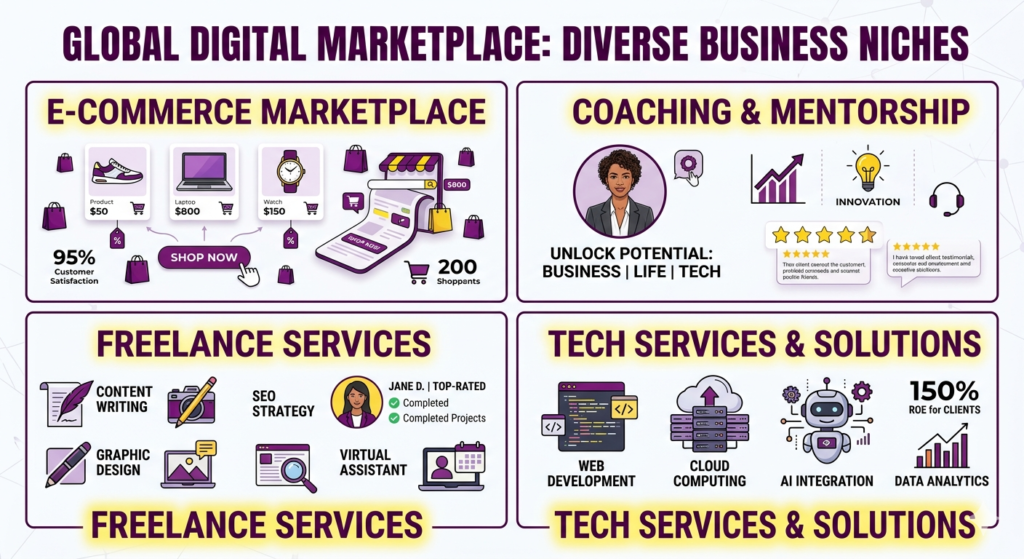
Identifying real-world examples helps visualize which niches can generate meaningful revenue. In 2026, several areas show high potential for beginners and experienced entrepreneurs alike.
E-commerce remains strong, especially in niches like print-on-demand, dropshipping, and eco-friendly products. These businesses require relatively low startup costs and leverage online marketing to reach customers. Platforms like Shopify and Etsy make entry straightforward, while integrating SEO strategies boosts visibility.
Online education and coaching are another growing sector. People invest in skill-building and personal development consistently. Creating courses or offering consulting in areas you excel attracts a loyal audience willing to pay for expertise. Resources from How to Validate a Business Idea Before Investing can help ensure your niche aligns with market demand.
Digital marketing and freelance services are evergreen. Many small businesses outsource tasks like social media management, SEO, or content creation. Starting with a skill-based service reduces upfront costs and allows for immediate client work.
Health, wellness, and personal development niches continue to grow, especially those addressing stress management, nutrition, and fitness coaching. Combining content marketing and community-building creates long-term trust and repeat clients.
Tech and AI services are emerging rapidly. From AI tools integration to automation services, small businesses seek affordable tech solutions. Learning to apply technology in niche markets can create high-margin opportunities.
External resources, like Forbes: Top Small Business Trends for 2026 and Entrepreneur: High-Growth Business Niches, provide insights into trending profitable niches and market forecasts.
Including these niches in your planning phase makes it easier to choose a business with real demand and potential for high returns.
Common Mistakes When Choosing a Business Niche

Choosing a profitable business niche sounds simple, but many beginners still make avoidable mistakes that slow down or completely stop their progress. Understanding these mistakes early can save time, money, and frustration.
One of the biggest mistakes is choosing a niche based only on trends. A niche might look exciting on social media, but trends fade quickly. When demand drops, the business struggles to survive.
Another common issue is ignoring competition research. A niche may have high demand, but if it is already dominated by strong players without any clear gap, it becomes difficult to stand out. On the other hand, some beginners avoid competition completely, which can also be a mistake because it may indicate low demand.
Many people also fail to match the niche with their skills. Starting a business without the ability to deliver value leads to poor customer experience and slow growth. A strong niche requires both demand and execution capability.
Trying to serve everyone is another major mistake. A broad audience makes marketing unclear and reduces conversion rates. Focused niches perform better because they speak directly to a specific group with a specific problem.
Lastly, many beginners skip validation and jump straight into building products or services. This leads to wasted effort on ideas that may never sell. That is why validation is a critical step, as explained in How to Validate a Business Idea Before Investing: Stop Wasting Cash on Wrong Products.
Avoiding these mistakes increases the chances of building a sustainable and profitable business niche.
How to Monetize Your Niche Quickly
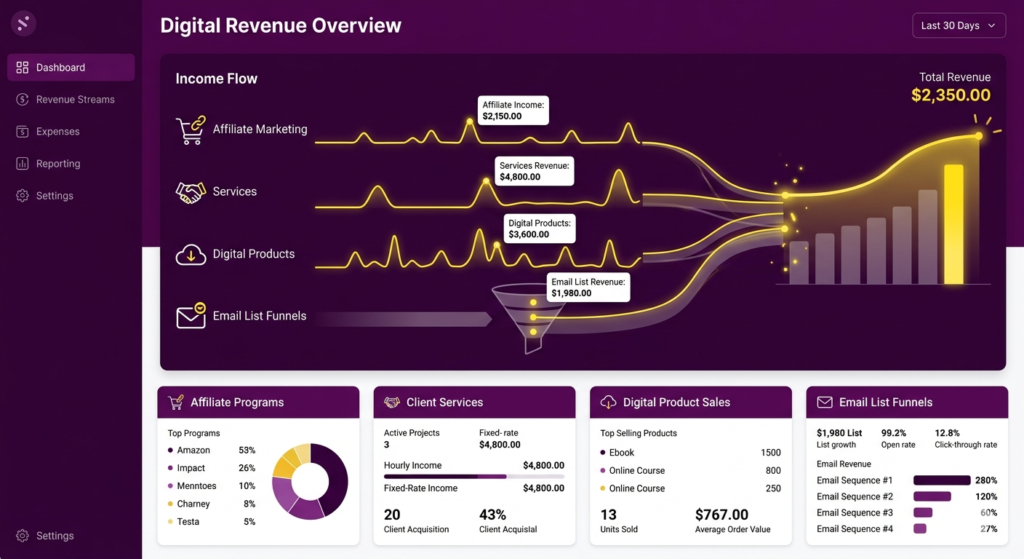
Once you have validated your profitable business niche, the next step is turning it into revenue as efficiently as possible. Monetization should start small and smart, focusing on methods that require minimal upfront investment while building long-term growth potential.
Service-based approaches are often the fastest way to generate income. Offering consulting, freelance services, or coaching in your niche allows you to leverage your skills and start earning immediately. Product-based options, like digital products, online courses, or low-cost physical items, also work but may require more initial setup and marketing.
Affiliate marketing is another excellent strategy to monetize your niche. By promoting complementary products, you can earn commissions without creating your own products. This works well alongside content marketing, where blogs, social media, or email campaigns educate your audience while subtly recommending solutions.
Building an email list and social media following is critical. These assets turn traffic into recurring customers and allow you to promote offers directly. Over time, combining content marketing, email campaigns, and affiliate promotions creates multiple revenue streams, ensuring your niche continues to generate income sustainably.
For detailed strategies on starting a business with minimal funds, refer to How to Start a Business With No Money in 2026: The Complete Bootstrapping Blueprint. Additionally, you can explore industry insights and practical tips fromForbes Entrepreneurship to understand emerging monetization trends and proven tactics.
FAQ SECTION
What is the easiest business niche to start in 2026?
The easiest niches are those that align with your existing skills and require minimal investment. For example, service-based businesses like digital marketing, freelancing, or online consulting allow you to start quickly without inventory or high overhead costs.
How do I know if a niche is profitable?
Profitability comes from demand, low competition, and scalability. You can validate a niche by checking search trends on Google Trends, analyzing competitors, and testing small-scale offers. Early customer feedback is also crucial.
Can I switch niches if my first one fails?
Yes. Pivoting is common in entrepreneurship. If your initial niche doesn’t gain traction, use the insights you gained to adjust your focus or explore a related niche with better demand. Flexibility increases your chances of long-term success.
How much research is enough before launching?
Research enough to validate demand, understand competitors, and identify your target audience. Avoid over-researching; early testing is often the fastest path to clarity. The goal is actionable insight, not perfection.
How do beginners compete in a profitable niche?
Beginners win by focusing on specific sub-niches, offering unique value, and leveraging personal expertise. Using strategies like content marketing, social media engagement, and organic SEO can help establish authority without huge budgets. For guidance on market validation, see How to Validate a Business Idea Before Investing.
CONCLUSION
Choosing the right business niche is the foundation of a successful venture. By following the 5-step framework identifying market gaps, evaluating competition and demand, matching the niche to your skills, testing quickly, and scaling strategically you increase your chances of building a profitable business in 2026.
The key is taking action instead of waiting for perfect conditions. Testing and validating your niche early prevents costly mistakes and ensures you focus on opportunities that truly generate revenue. Remember, even small experiments can provide valuable insights that guide your growth.
As you explore your profitable niche, combine strategies like content marketing, social media engagement, and building an email list to create long-term customer acquisition systems. This multi-channel approach strengthens your position and creates sustainable growth.
Start today by applying one of the steps in this guide. Don’t wait, profitability comes to those who act. For further guidance on starting your business with little or no capital, check out How to Start a Business With No Money in 2026: The Complete Bootstrapping Blueprint.
By validating your niche and acting consistently, you’re positioning yourself to grow a business that not only survives but thrives in the evolving market of 2026.