
INTRODUCTION: WHY MOST PEOPLE NEVER START A BUSINESS

If you’ve ever wondered how to find a business idea, you’re not alone. One of the biggest challenges aspiring entrepreneurs face is not funding, marketing, or sales. It’s simply deciding what business to start.
I’ve spoken with many aspiring business owners who spend months, and sometimes years, thinking about starting a business without ever taking action. They jump from one idea to another, watch countless videos, read dozens of articles, and still end up stuck in the same place. The problem is not a lack of ambition. It’s analysis paralysis.
Many people are afraid of choosing the wrong business idea. They worry about wasting money, failing publicly, or investing time into something that won’t work. As a result, they keep searching for the “perfect” idea that guarantees success.
The truth is that successful entrepreneurs rarely start with perfect ideas. They start with clear opportunities. They identify problems, understand market demand, and take action before they have everything figured out.
Think about some of today’s biggest companies. Many started with simple concepts that evolved. They weren’t built because someone had a magical idea. They were built because someone identified a need and decided to solve it.
A good example is Airbnb. The founders didn’t begin with a global accommodation platform. They started by helping travelers find affordable places to stay during a conference when hotels were fully booked. The idea grew because there was demand.
The good news is that you don’t need extraordinary creativity to find your next business opportunity. What you need is a practical system for discovering ideas that match your skills, budget, interests, and market demand.
In this guide, I’ll walk you through a step-by-step process to help you uncover profitable business opportunities in just a few hours, evaluate them thoroughly, and move forward with confidence.
THE BIGGEST MYTHS ABOUT FINDING A PROFITABLE BUSINESS IDEA
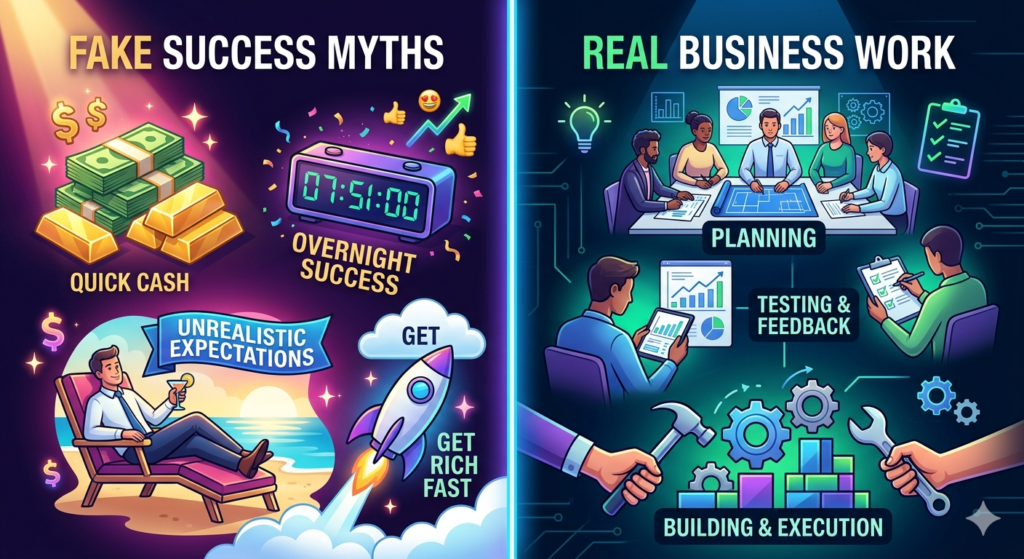
One thing I’ve noticed over the years is that many people delay starting a business because they believe a few common myths about entrepreneurship. Unfortunately, these myths keep talented people stuck on the sidelines while others with less experience move forward and learn along the way.
The first myth is that you need a revolutionary idea to succeed. This simply is not true. Most successful businesses are not built on completely new concepts. Instead, they improve existing solutions or serve a market in a better way.
Take companies like Airbnb and Uber. Neither invented accommodation nor transportation. They identified problems within existing industries and created more convenient solutions. The opportunity was not in creating something entirely new. It was in doing something better.
Another myth is that you need a lot of money to start. While some businesses require significant capital, many profitable business ideas can be started with very little investment. I’ve seen aspiring entrepreneurs launch service-based businesses using skills they already had and grow them into sustainable income streams. If budget is a concern, you may find inspiration in 12 Low-Capital Businesses You Can Start With $100 in 2026.
A third myth is that you need years of experience to become an entrepreneur. Experience certainly helps, but many successful founders started by learning as they went. What matters most is your willingness to solve problems, listen to customers, and improve over time.
Perhaps the biggest myth of all is that great business ideas appear through inspiration alone. In reality, most successful entrepreneurs discover opportunities through observation, research, and customer needs.
The businesses that often succeed are not the ones with the most creative ideas. They are the ones that solve problems people are already willing to pay to solve. Once you understand this principle, finding business opportunities becomes much easier and far less intimidating.
WHAT MAKES A BUSINESS IDEA WORTH PURSUING?
Not every idea you come up with is worth turning into a business. One of the most important entrepreneurship skills is learning how to quickly filter ideas so you don’t waste time, energy, or money on the wrong ones.
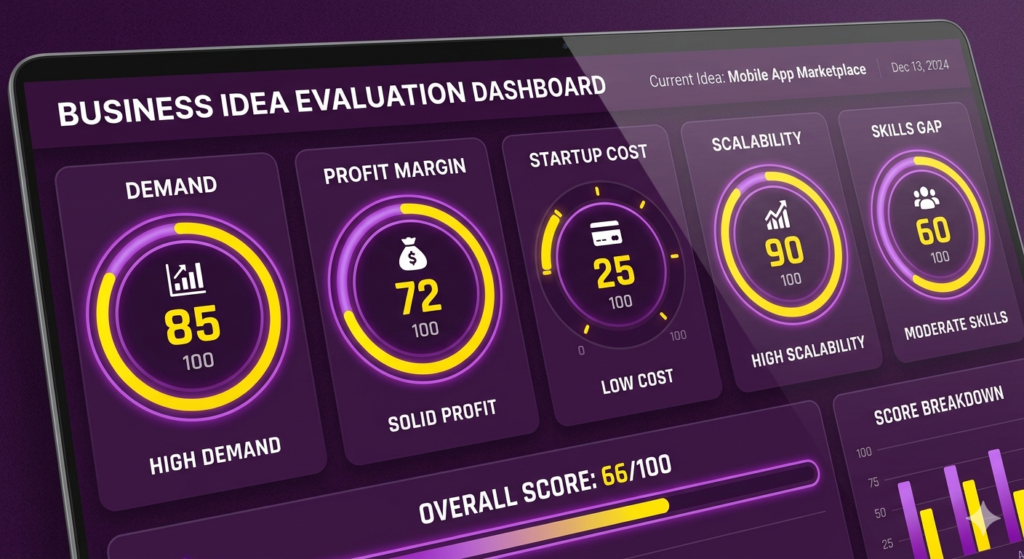
When I evaluate a business idea, I don’t look at excitement first. I look at practicality. A profitable idea usually sits at the intersection of demand, profitability, and execution ability.
There are five key factors I always consider.
1. Market Demand
If people are not already trying to solve the problem, the idea becomes risky. Demand is the foundation of every business.
2. Profit Potential
A business must be able to generate enough revenue to justify the effort. Some ideas may be interesting but not financially sustainable.
3. Startup Cost
The lower the startup cost, the faster you can test and adjust. High-cost ideas should only come after validation.
4. Scalability
Can the business grow beyond you trading time for money? Scalable ideas usually have stronger long-term potential.
5. Personal Strengths
A good idea also aligns with your skills or things you can realistically learn without overwhelming yourself.
SIMPLE BUSINESS IDEA SCORECARD
Here’s a simple way to evaluate any idea:
- Market demand: /10
- Profit potential: /10
- Startup cost (lower = higher score): /10
- Scalability: /10
- Personal fit: /10
Total Score: /50
- 40–50: Strong idea worth testing immediately
- 30–39: Needs refinement or validation
- Below 30: High risk, rethink or adjust
REAL-WORLD EXAMPLE
For example, I once spoke with an aspiring entrepreneur (called David) who wanted to start a mobile food business selling gourmet burgers. The idea sounded exciting, but when we broke it down, the startup cost was high, the competition was strong, and he had no food industry experience.
After scoring the idea, it landed around 28/50. Instead of abandoning entrepreneurship, he shifted to a lower-cost idea in food delivery coordination, which required minimal investment and allowed him to test demand first.
Within a few months, he was already generating consistent income before revisiting the original burger idea.
This is exactly why structured evaluation matters. It helps you choose ideas based on reality, not emotion.
STEP 1: IDENTIFY SKILLS YOU ALREADY HAVE
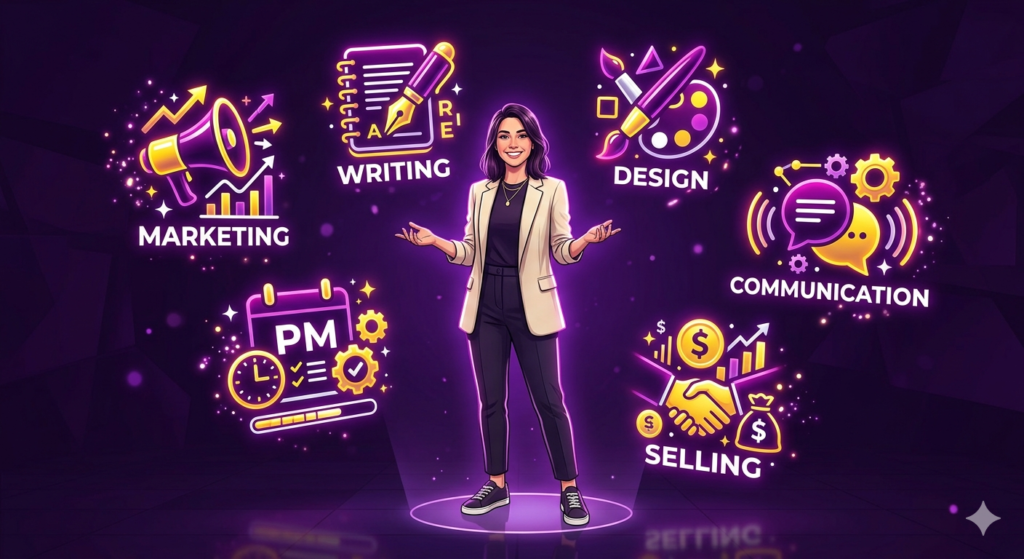
One of the fastest ways to discover a profitable business idea is to look inward before looking outward. Many people skip this step because they assume business ideas must come from something new, complicated, or highly technical. In reality, most profitable businesses start from the skills people already have but are not monetizing.
When I work with beginners trying to figure out how to find a business idea, I always start with skills. Not money. Not ideas. Skills.
There are three main types of skills you should evaluate.
1. Professional Skills
These are skills you’ve gained from work or formal experience. For example, marketing, teaching, accounting, sales, customer service, design, or administration.
2. Personal Skills
These are abilities you’ve developed through life experience. Things like communication, organization, problem-solving, or even helping others with advice.
3. Hobby-Based Skills
These are often overlooked. If you enjoy something enough to spend time on it, there is often a way to turn it into value for others.
HOW SKILLS TURN INTO BUSINESS IDEAS
Let’s take a simple example. Someone who works in social media management may think their skills are only useful for employment. But that same skill can become:
- A freelance content creation service
- A social media audit service
- A consulting offer for small businesses
- A digital product teaching beginners how to grow pages
This is how most profitable business ideas are discovered, not invented.
I once worked with a beginner, call her Sandra, who believed she had “no business skills.” After a short conversation, we discovered she was extremely good at organizing events for her church. That single skill turned into a small event coordination service that eventually helped her generate consistent side income.
PRACTICAL EXERCISE
Take 10 minutes and write down:
- What people ask you for help with
- What tasks come easily to you
- What you enjoy doing repeatedly
- What have you been paid for before
Then match each skill to a potential problem it can solve.
If you’re still unsure how skills connect to real business opportunities, I recommend reading How to Start a Business With No Money in 2026: The Complete Bootstrapping Blueprint. It will help you understand how to turn simple skills into real income without heavy investment.
Once you identify your skills, the next step is to connect them with real market problems that people are already willing to pay for.
STEP 2: FIND PROBLEMS PEOPLE ARE WILLING TO PAY TO SOLVE

If you want to understand how to find a business idea that actually works in the real world, this is the step that changes everything. Skills alone are not enough. The real money is in matching those skills with problems people are already trying to solve with their wallets.
“A business is not built around what you can do. It is built around what people need and are willing to pay for”.
The first thing I always tell people is this: not every problem is a business opportunity. Some problems are interesting but not urgent. Others are urgent, but people are not willing to pay for a solution. You want the sweet spot where the problem is both painful and expensive enough for people to take action.
HOW TO SPOT PAINFUL, PAYABLE PROBLEMS
Start by observing daily frustrations:
- What do people complain about repeatedly?
- What tasks waste their time or money?
- What do they struggle to do consistently?
- What do they try to outsource or avoid?
For example, small business owners often struggle with creating consistent content for social media. This is not just a minor inconvenience. It affects their visibility, customer acquisition, and revenue. That is why they are willing to pay for services like content creation or management.
Another example is website design. Many entrepreneurs know they need a website, but they do not have the time or technical skills to build one. This creates demand for freelancers and agencies who can solve that problem quickly.
REAL-WORLD EXAMPLE
I once observed a situation with a small business owner who was running a local food delivery service. His biggest challenge was not cooking or delivering food. It was getting consistent online orders. He was posting randomly on social media without a strategy.
When we analyzed his problem, the opportunity was not to change his business entirely, but to solve his visibility issue. A simple content strategy and local SEO setup improved his orders significantly within weeks.
This is how business ideas are born: by solving real, painful, and repeated problems.
WHERE TO FIND THESE PROBLEMS
You can find them in:
- Google search suggestions (people literally type their problems)
- Facebook groups and comment sections
- Reddit discussions and forums
- Customer reviews on competitor pages
For deeper research methods, you can explore How to Validate a Business Idea Before Investing: Stop Wasting Cash on Wrong Products. It explains how to confirm whether these problems actually have paying demand before you invest time or money.
Once you identify problems people are willing to pay to solve, you are no longer guessing. You are building from real market demand.
STEP 3: USE GOOGLE, YOUTUBE, REDDIT, AND SOCIAL MEDIA FOR BUSINESS IDEA RESEARCH
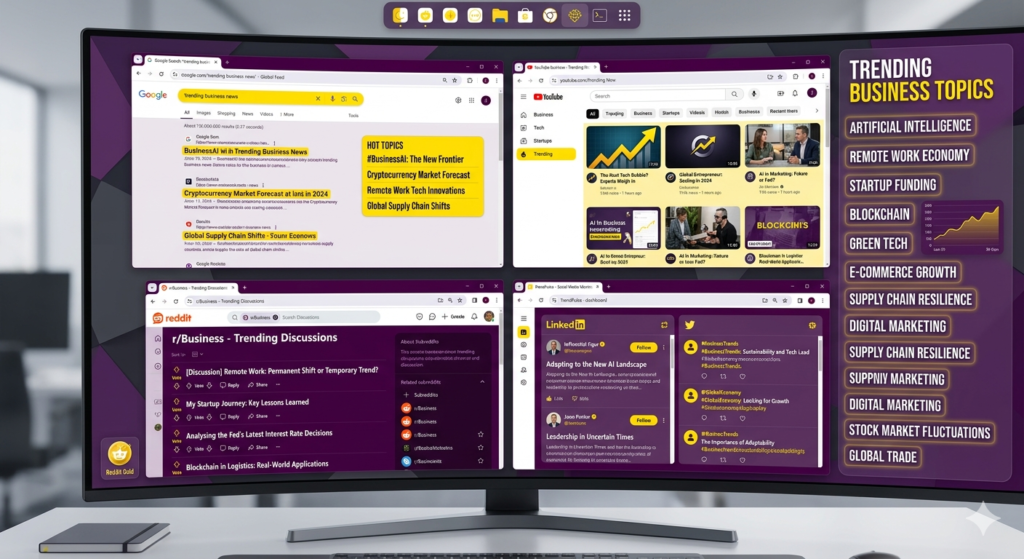
If you are serious about learning how to find a business idea, you cannot rely on guesswork or personal opinions alone. The internet is one of the most powerful tools for discovering real business opportunities because it shows you what people are already searching for, complaining about, and trying to solve.
I usually tell people this: ideas are not hidden, they are searchable.
1. GOOGLE SEARCH BEHAVIOR
Start with Google. Type simple phrases related to a problem or skill and observe the autocomplete suggestions. These suggestions are based on real searches people are making every day.
For example, typing “how to…” or “best way to…” can reveal problems people are actively trying to solve. This is a strong indicator of market demand.
You can also use Google Trends to compare interest levels over time. If a topic is growing steadily, it may be worth exploring as a business opportunity.
2. YOUTUBE COMMENT SECTIONS
YouTube is one of the most underrated research tools. I often scan comment sections under popular videos in business, fitness, finance, or lifestyle niches.
People openly express frustrations like:
- “I wish someone could do this for me.”
- “This is too complicated.”
- “I don’t know where to start.”
These comments are direct clues to potential business ideas.
3. REDDIT AND ONLINE COMMUNITIES
Reddit and niche forums are gold mines for honest feedback. People are less filtered and more direct about their problems.
Look for threads where users are asking for recommendations, complaining about services, or sharing failed attempts at solving a problem.
4. SOCIAL MEDIA PLATFORMS
Facebook groups, Instagram comments, and TikTok discussions can reveal what people struggle with in real time. Small business owners, freelancers, and consumers often openly express their pain points.
For example, in many small business groups, you will see repeated questions about:
- How to get customers
- How to run ads
- How to create content consistently
These are all potential business opportunities waiting to be solved.
REAL-LIFE INSIGHT
I once worked with a beginner entrepreneur who wanted to start an online business but had no idea what to offer. Instead of guessing, we spent two days analyzing Facebook groups for small business owners.
We discovered a recurring frustration: many business owners did not understand how to create simple marketing content for their pages. That insight later became a content creation service that she started with almost zero investment.
CONNECTING RESEARCH TO VALIDATION
Finding ideas is only the first step. The next step is confirming whether people will actually pay for them.
That is where structured validation becomes important. If you want a deeper system for testing demand before investing, I recommend reading How to Validate a Business Idea Before Investing: Stop Wasting Cash on Wrong Products. It breaks down how to move from idea discovery to real market proof.
When you combine research with validation, you stop guessing and start building based on evidence.
STEP 4: DISCOVER LOW-COMPETITION BUSINESS OPPORTUNITIES
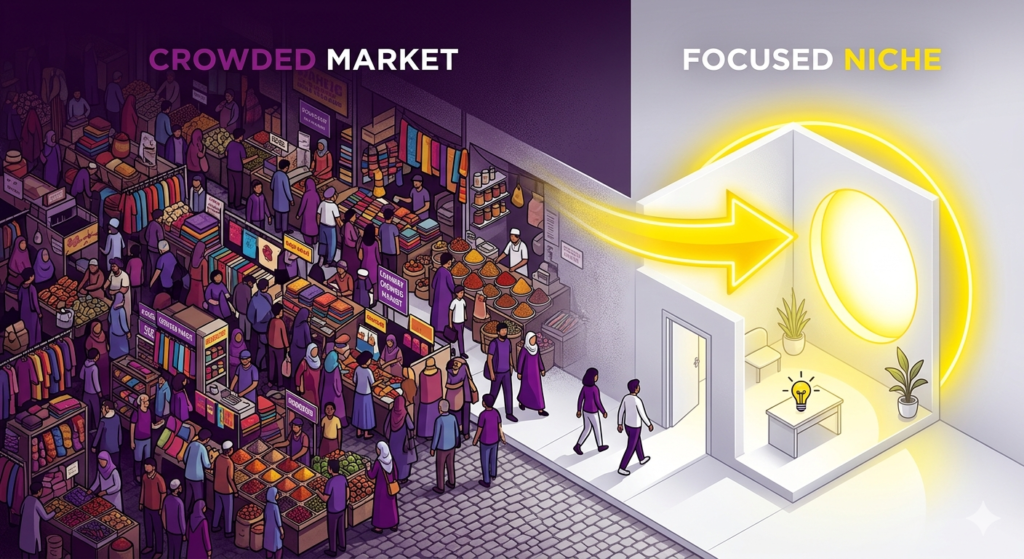
Once you understand how to find a business idea, the next challenge is not just finding any idea, but finding the right opportunity. One of the biggest mistakes beginners make is jumping into oversaturated markets without checking whether there is space for them to compete.
Competition is not always bad. In fact, it often confirms that money is already being made in that space. However, too much competition without a clear angle can make it extremely difficult for beginners to gain traction.
What you want to look for are low-competition gaps within existing markets.
HOW TO IDENTIFY MARKET GAPS
Start by asking simple questions:
- What are customers complaining about in existing businesses?
- What services are missing or poorly delivered?
- What group of people is being ignored?
- What niche is not being fully served?
For example, instead of starting a general graphic design service, you could focus specifically on social media designs for real estate agents or small restaurants. The demand is already there, but the competition becomes more manageable when you narrow your focus.
LOCAL OPPORTUNITIES MANY PEOPLE IGNORE
In many cases, the best opportunities are not online global trends, but local problems. Small businesses in your area often struggle with:
- Online visibility
- Customer acquisition
- Digital marketing
- Simple branding
These problems are consistent and ongoing, which means they create repeat business opportunities.
REAL-WORLD EXAMPLE
I once observed a freelancer who struggled to get clients in a highly competitive design market. Instead of competing with everyone, he repositioned himself to serve only small churches and community organizations.
That small shift drastically reduced competition and increased his chances of being chosen because his service felt more specific and relevant.
WHY NICHE SELECTION MATTERS
The more specific your audience, the easier it becomes to:
- Stand out
- Communicate value
- Attract customers
- Charge higher prices
Big companies like Netflix and Amazon also started by focusing on narrower markets before expanding. Netflix, for example, began with DVD rentals before becoming a global streaming platform.
FINAL INSIGHT
Finding a business idea is not just about creativity. It is about positioning. The best opportunities often sit where demand exists, but attention is low.
If you want a structured way to test whether a low-competition idea is actually worth pursuing, you can read How to Validate a Business Idea Before Investing: Stop Wasting Cash on Wrong Products. It shows how to confirm demand before you invest time or money.
When you combine low competition with real demand, you significantly increase your chances of success.
STEP 5: SHORTLIST YOUR BEST BUSINESS IDEAS
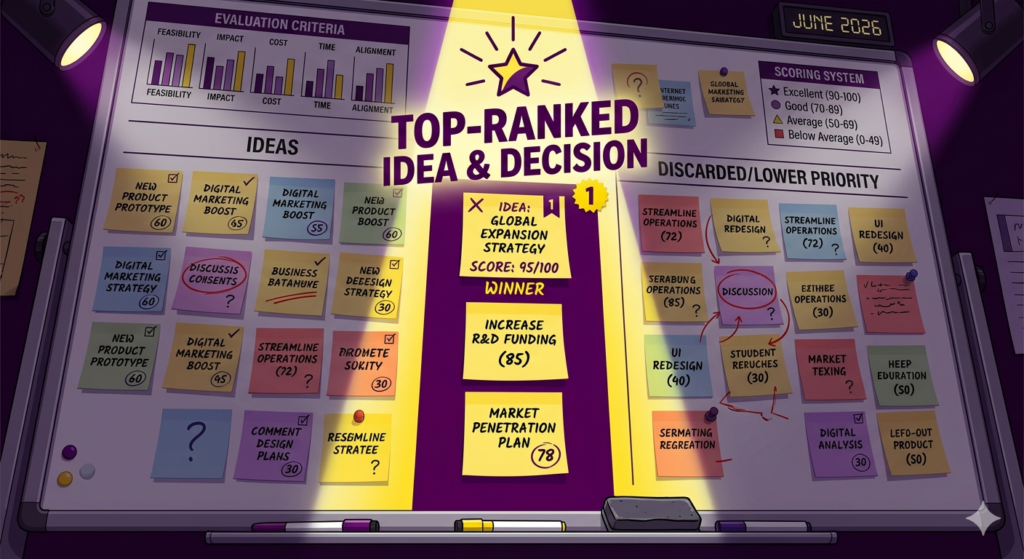
At this stage, you probably have multiple business ideas floating in your head. The mistake most beginners make here is trying to pursue all of them at once, or worse, overthinking until they take no action at all.
What I usually recommend is simple: narrow your options down using a structured scoring system. This removes emotion and forces you to look at ideas based on logic and real-world potential.
HOW TO FILTER YOUR IDEAS
Take your top 3 to 5 ideas and evaluate them using the following criteria:
- Demand: Is there a proven need for this idea?
- Profitability: Can it realistically generate income?
- Competition: Is the market too crowded or manageable?
- Startup Cost: Can you start small without a heavy investment?
- Interest Level: Do you have enough interest to stay consistent?
Each idea can be scored out of 10 for every category.
SIMPLE SCORING TABLE EXAMPLE
You can structure it like this:
- Idea A: Social media management for small businesses
- Idea B: Online tutoring service
- Idea C: Local food delivery coordination
Then score each one:
- Demand: /10
- Profitability: /10
- Competition: /10
- Startup Cost: /10
- Interest Level: /10
Total Score: /50
The idea with the highest score is usually your best starting point.
REALISTIC EXAMPLE
I once worked with someone who was stuck between three ideas: dropshipping, photography, and freelance writing. Instead of guessing, we scored each idea based on its skills and market demand.
Photography scored high on passion but low on demand in his local area. Dropshipping looked attractive, but had high competition and startup costs. Freelance writing scored the highest because it matched his skills and had low entry barriers.
He chose writing, started small, and later expanded into content strategy services.
WHY THIS STEP MATTERS
Clarity is powerful. When you try to chase too many ideas, you dilute your focus. But when you choose one direction based on structured evaluation, you increase your chances of execution.
This is also the stage where validation becomes important. Before fully committing, it’s smart to test your chosen idea in the market.
If you want a deeper breakdown of how to confirm whether your shortlisted idea will actually work, read How to Validate a Business Idea Before Investing: Stop Wasting Cash on Wrong Products. It will help you avoid investing in ideas that look good on paper but fail in reality.
Once you have a clear winner, the next step is testing it before spending serious money.
STEP 6: VALIDATE YOUR IDEA BEFORE SPENDING MONEY
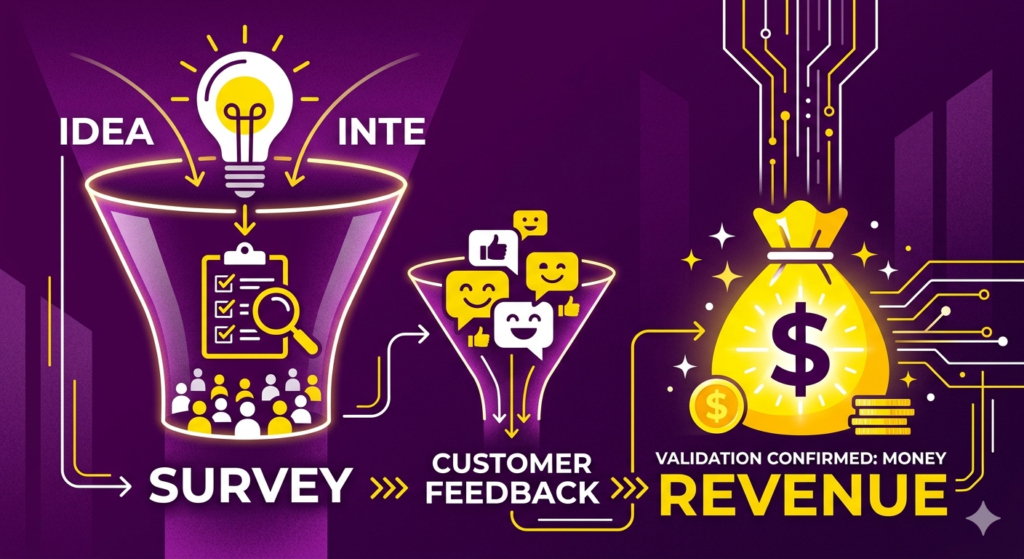
This is the stage where most people either save themselves from costly mistakes or lose money by skipping the process entirely. Once you have shortlisted a business idea, the next step is to confirm whether real customers are actually interested enough to take action.
I always say this: “an idea is not validated until someone is willing to commit time, attention, or money to it”.
WHY VALIDATION MATTERS
Many people assume that because they like an idea, others will automatically feel the same. But in business, assumptions are expensive. Validation helps you replace assumptions with real market evidence.
This is where you move from“I think people need this” to “I have proof people want this.”
SIMPLE VALIDATION METHODS
You don’t need a big budget to validate a business idea. You can start with:
1. Customer Interviews
Speak directly with potential customers and ask about their problems, current solutions, and willingness to try something new.
2. Surveys
Use simple online forms to gather opinions from your target audience. Keep questions focused on behavior, not just opinions.
3. Landing Pages
Create a simple page explaining your offer and track how many people sign up or show interest.
4. Pre-Sales
Offer your product or service before it is fully built. If people are willing to pay early, that is a strong validation signal.
5. MVP Testing
Launch a basic version of your idea to a small audience and observe real reactions.
REAL-LIFE EXAMPLE
I once observed a beginner entrepreneur who wanted to start an online skincare brand. Instead of buying a large inventory upfront, she created a simple Instagram page showcasing product concepts and asked followers which items they would actually buy.
Within two weeks, she discovered that customers were more interested in natural hair care products than skincare. That insight completely changed her direction and saved her from investing in the wrong inventory.
KEY INSIGHT
Validation is not about getting compliments. It is about getting commitments. Likes, comments, and “this is a great idea” are not enough. You need actions that show real interest.
If you want a deeper breakdown of how to properly validate before investing, I recommend reading How to Validate a Business Idea Before Investing: Stop Wasting Cash on Wrong Products. It gives you a step-by-step system to avoid wasting money on unproven ideas.
Once validation is complete, you are no longer guessing. You are building with confidence.
STEP 7: CHOOSE THE BEST IDEA AND TAKE ACTION FAST

At this point, you have explored skills, identified problems, researched the market, shortlisted ideas, and tested demand. Now comes the most important step that separates successful entrepreneurs from people who stay stuck forever: taking action.
One of the biggest reasons people never succeed in business is not because they lack good ideas. It is because they keep researching without ever committing to one direction.
I have seen people spend months trying to decide between multiple business ideas, only to end up doing nothing. In business, clarity does not come from thinking alone. It comes from action.
WHY SPEED MATTERS
The longer you delay execution, the more you lose momentum. Market conditions change, competitors move faster, and opportunities disappear. The goal is not to be perfect. The goal is to start small and learn quickly.
HOW TO CHOOSE YOUR FINAL IDEA
By now, you should already have a validated idea or at least one strong candidate from your scoring and testing process. Choose the one that:
- Solves a real problem
- Has proven demand
- Matches your skills or strengths
- Can be started with low risk
- Shows early interest or validation signals
If one idea clearly stands out, commit to it. If two ideas are close, choose the one you can start fastest with the least resistance.
START SMALL, NOT BIG
Many beginners fail because they try to build a full business immediately. Instead, start with a small version of your idea.
For example:
- Instead of building a full agency, start with one client
- Instead of launching a full product line, test one product
- Instead of building a full platform, offer a manual service first
This approach reduces risk and increases learning speed.
REAL-WORLD EXAMPLE
I once worked with an aspiring entrepreneur who was stuck between starting a cleaning service and a small logistics coordination business. Instead of waiting for perfect clarity, he chose the logistics idea because it required almost no startup cost.
He started by connecting a few local delivery requests manually. Within a short time, he realized there was a strong demand, and he gradually built systems around it. Today, that small decision has turned into a stable income stream.
FINAL MINDSET SHIFT
At some point, you must stop learning and start building. Research is only useful when it leads to execution.
Big companies like Amazon and Airbnb did not become successful because they waited for perfect conditions. They started small, tested fast, and adapted along the way.
If you want to revisit the validation process before committing fully, you can read How to Validate a Business Idea Before Investing: Stop Wasting Cash on Wrong Products. It will help you double-check your decision before moving forward.
The best business idea is not the one you think about the most. It is the one you actually start.
7 TYPES OF MONEY-MAKING BUSINESS IDEAS YOU CAN START IN 2026
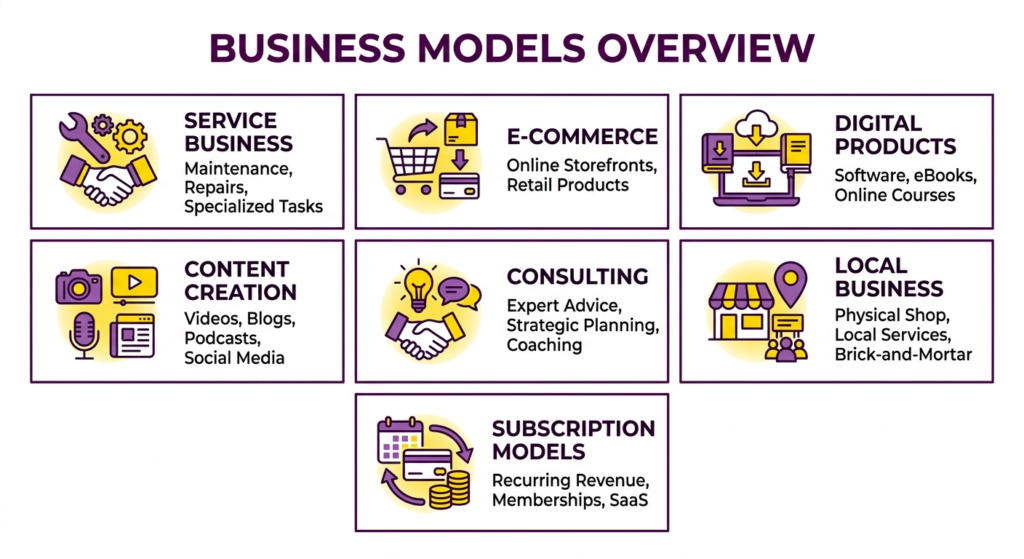
When people think about how to find a business idea, they often expect a long list of random suggestions. But instead of just throwing ideas at you, it is more useful to understand the different types of business models available. Once you understand these categories, it becomes much easier to identify opportunities that fit your skills, budget, and market.
Here are seven proven types of business ideas you can start in 2026.
1. SERVICE BUSINESSES
These involve offering skills directly to clients in exchange for payment. Examples include graphic design, social media management, writing, cleaning, and consulting. Service businesses are often the easiest to start because they require little or no upfront investment.
2. E-COMMERCE BUSINESSES
This involves selling physical or digital products online. You can run a store using platforms like Shopify or similar tools. The key is identifying products people already want and validating demand before investing heavily.
3. DIGITAL PRODUCTS
These are scalable assets like ebooks, templates, online courses, and guides. Once created, they can be sold repeatedly with minimal extra cost.
4. CONTENT BUSINESSES
This includes blogs, YouTube channels, TikTok pages, and newsletters. Monetization can come through ads, sponsorships, or selling your own services and products.
5. LOCAL BUSINESSES
These are location-based services such as food delivery, cleaning services, repairs, or small logistics operations. They often have strong demand but are less competitive online.
6. CONSULTING BUSINESSES
If you have experience in a specific area, you can help others solve problems and charge for your expertise. This works well in marketing, business growth, finance, and operations.
7. SUBSCRIPTION BUSINESSES
These models focus on recurring revenue. Customers pay monthly or yearly for continued access to a service, product, or platform.
KEY INSIGHT
The best business ideas are not always new. They are often existing models applied to a specific audience or problem. The real skill is not just finding ideas, but selecting the right one based on demand and execution ability.
If you want to go deeper into testing whether any of these ideas are actually worth pursuing, I recommend reading How to Validate a Business Idea Before Investing: Stop Wasting Cash on Wrong Products.
Understanding business models is important, but validation is what prevents costly mistakes.
COMMON MISTAKES PEOPLE MAKE WHEN CHOOSING A BUSINESS IDEA
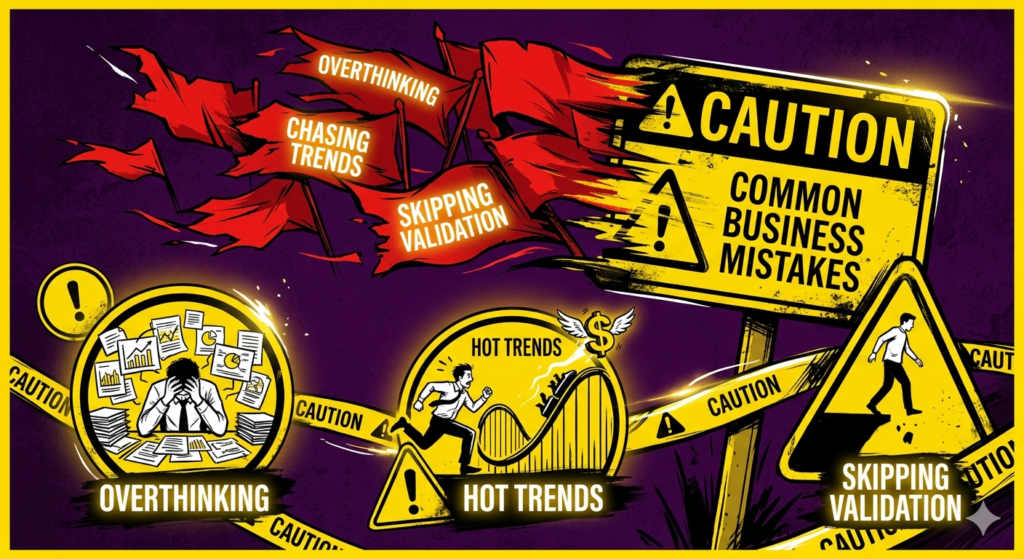
Choosing a business idea is one of the most exciting stages in entrepreneurship, but it is also where many beginners make avoidable mistakes that delay or completely stop their progress.
One of the biggest mistakes is chasing trends instead of solving real problems. Just because something is popular on social media does not mean it is a sustainable business opportunity. Trends can fade quickly, leaving you stuck with an idea that has no long-term demand.
Another common mistake is ignoring market demand. Many people fall in love with an idea before checking whether anyone actually needs it. A business idea should always be grounded in real customer problems, not assumptions or personal preferences.
Overthinking is another major issue. Some people spend months researching, planning, and comparing ideas without ever taking action. At some point, information becomes a form of procrastination rather than progress.
Starting too big is also a problem. Many beginners believe they need a full brand, website, logo, and product line before launching. In reality, most successful businesses start small, test quickly, and grow based on feedback.
Finally, not validating the idea is one of the most expensive mistakes. Without validation, you are simply guessing. And guessing in business can lead to wasted time, money, and energy.
A 48-HOUR BUSINESS IDEA DISCOVERY CHALLENGE
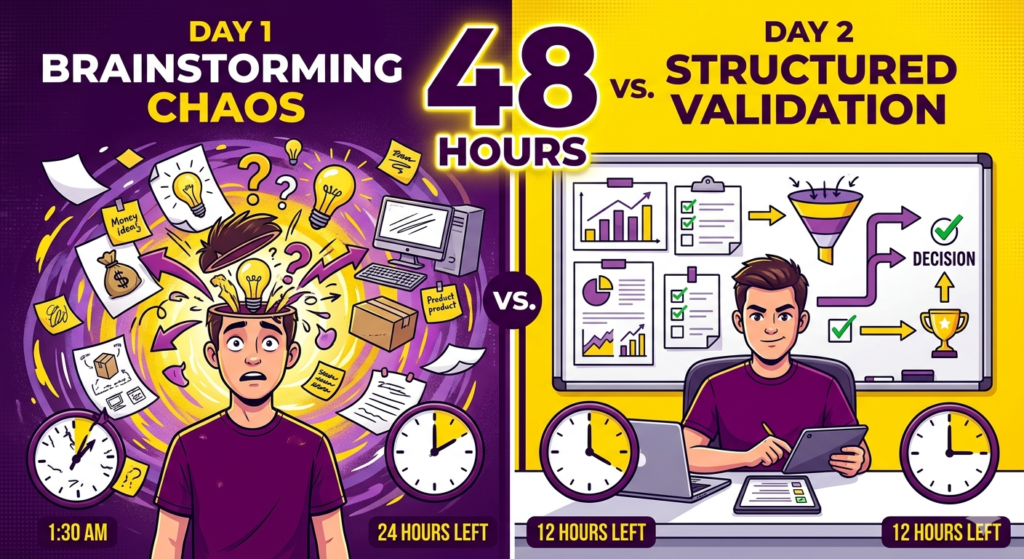
If you feel stuck and still don’t know how to find a business idea, this challenge is designed to force clarity through action. Instead of overthinking for weeks, you are going to compress the entire idea discovery process into just 48 hours.
The goal is not to find a perfect idea. The goal is to find a realistic, testable opportunity you can move forward with immediately.
DAY 1: RESEARCH AND BRAINSTORMING
On the first day, your focus is simple: collect raw business opportunities from real life and online behavior.
Start by doing the following:
- Write down 5 skills you already have
- List 5 problems people around you complain about
- Search Google for phrases like “how to…” or “best way to…” related to those problems
- Check Facebook groups, Reddit, and comment sections for repeated frustrations
- Write down at least 10 possible business ideas from what you discover
Do not judge the ideas yet. Your job on day one is volume, not perfection.
DAY 2: VALIDATION AND SELECTION
On the second day, you switch from exploration to filtering.
Take your top 3 ideas from day one and evaluate them using simple criteria:
- Is there a clear demand for this problem?
- Are people already paying for similar solutions?
- Can I start this with little or no money?
- Do I have at least basic skills, or can I learn quickly?
Then, do a quick validation check:
- Ask 5 to 10 people in your target audience about the problem
- Check if competitors already exist in the market
- Look for signs that people are actively searching for solutions
At the end of day two, choose the strongest idea based on evidence, not emotion.
KEY OUTCOME
After 48 hours, you should have:
- A shortlist of real business opportunities
- Basic validation signals from the market
- One idea you can confidently test further
This challenge is designed to remove overthinking and force real decision-making.
If you want to go deeper into testing whether your chosen idea is actually worth investing in, I recommend reading How to Validate a Business Idea Before Investing: Stop Wasting Cash on Wrong Products. It will help you confirm demand before you spend money building anything.
Clarity does not come from thinking alone. It comes from structured action.
FREQUENTLY ASKED QUESTIONS ABOUT FINDING A BUSINESS IDEA

How do I find a profitable business idea?
You find a profitable business idea by identifying real problems people are already trying to solve and then matching those problems with your skills. The most reliable ideas come from market demand, not guesswork or trends.
What business should I start with little money?
With limited capital, service-based businesses are usually the best starting point. Examples include freelancing, social media management, tutoring, consulting, and local services. These require low startup costs and can be tested quickly.
How do I know if a business idea is good?
A good business idea has clear demand, solves a painful problem, and shows signs that people are already paying for similar solutions. If people are actively searching for it or complaining about it, that is a strong signal.
Can I start a business without experience?
Yes. Many entrepreneurs start without formal experience. What matters more is your willingness to learn, test ideas, and improve based on feedback. Experience builds through execution, not just preparation.
What are the best business ideas in 2026?
There is no single “best” idea, but strong opportunities in 2026 include service businesses, digital products, content creation, e-commerce, consulting, and local service-based businesses. The best choice depends on your skills and market demand.
KEY INSIGHT
The goal is not to find a perfect idea. The goal is to find a realistic idea that solves a real problem and can be tested quickly.
If you want a deeper step-by-step process for confirming whether your idea is worth pursuing, I recommend reading How to Validate a Business Idea Before Investing: Stop Wasting Cash on Wrong Products.
Once you understand how to combine idea discovery with validation, you reduce risk and increase your chances of building a successful business.
FINAL THOUGHTS: YOUR BEST BUSINESS IDEA IS THE ONE YOU ACTUALLY START
At this point, you already understand something very important: finding a business idea is not about luck or waiting for inspiration. It is a structured process of identifying skills, discovering problems, researching demand, and validating opportunities before committing resources.
But there is one truth many beginners still struggle with. The best business idea is not the one you spend the most time thinking about. It is the one you actually start testing in the real world.
I have seen people with “average” ideas build successful businesses simply because they started early, learned fast, and adjusted along the way. I have also seen people with “perfect” ideas stay stuck for years because they kept waiting for clarity that never came.
Business rewards action, not overthinking.
If you take anything from this guide, let it be this: your goal is not to find a flawless idea. Your goal is to find a workable idea, validate it quickly, and improve it through real customer feedback.
Start small. Test fast. Learn continuously. That is how real businesses are built.
And if you ever feel unsure about whether your idea is worth pursuing, go back to validation. It is the safety net that prevents you from wasting time and money on ideas that look good on paper but fail in the market.
If you want a deeper system for testing ideas before investing, I recommend reading How to Validate a Business Idea Before Investing: Stop Wasting Cash on Wrong Products. It will help you move from uncertainty to clear market evidence.
Your next business idea is already within reach. The only thing left is action.