

Introduction

Many aspiring entrepreneurs spend months planning their business, but keep postponing one important step: business registration. Some believe registration is complicated. Others think it is expensive or unnecessary until the business starts making significant money. As a result, they continue operating informally without realising the risks involved.
The truth is that learning how to register a small business is one of the most important milestones in the entrepreneurial journey. Registration transforms an idea into a legitimate business entity. It gives customers, suppliers, and financial institutions greater confidence in your business. More importantly, it helps create a solid foundation for future growth.
Operating an unregistered business can create unnecessary challenges. You may struggle to open a business bank account, access funding opportunities, secure contracts, or establish credibility with potential customers. In some cases, failing to comply with legal requirements can lead to fines or restrictions that could have been avoided.
Registering a business is not just about meeting legal requirements. It is about positioning your business for long-term success. Once your business becomes official, you can focus on building systems, attracting customers, and creating sustainable growth opportunities.
If you are still at the early stage of your entrepreneurial journey, I recommend reading How to Start a Business With No Money in 2026: The Complete Bootstrapping Blueprint. It explains how many entrepreneurs launch businesses with limited resources before moving into formal registration.
In this guide, I will walk you through exactly how to register a small business step by step. You will learn how to choose the right business structure, prepare the required documents, complete the registration process, obtain licenses and permits, and build the systems needed to operate legally and professionally.
Before diving into the registration process, it is important to understand why business registration matters and how it can accelerate your business’s growth.
Why Learning How to Register a Small Business Matters
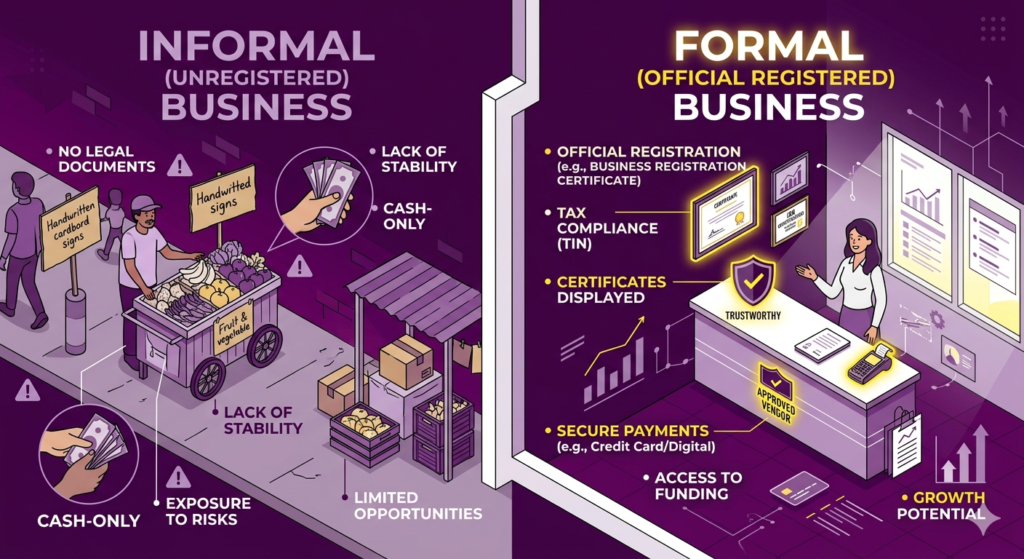
Many people start a business as a side project, a hobby, or a way to earn extra income. While there is nothing wrong with starting small, there comes a point when treating a business casually can limit its growth. Learning how to register a small business helps bridge the gap between a simple idea and a legitimate enterprise.
One of the biggest differences between a hobby and a business is commitment. A registered business demonstrates that you are serious about serving customers and building something sustainable. Customers are often more comfortable buying from businesses that appear professional and trustworthy.
Registration also provides important legal and financial benefits. Depending on the business structure you choose, registration can help separate your personal assets from your business activities. This added layer of protection becomes increasingly important as your business grows and takes on more responsibilities.
Another major advantage is access to financial services. Many banks require proof of business registration before opening a business account. Keeping personal and business finances separate makes bookkeeping easier, improves financial organisation, and can simplify tax reporting.
Credibility is another factor that should not be overlooked. Suppliers, partners, and even customers often view registered businesses as more reliable. In competitive markets, trust can become a significant advantage.
Before moving forward with registration, it is also important to have a clear business roadmap. This is where How to Create a Winning Business Plan for Startups Step-by-Step becomes valuable. A solid business plan helps clarify your goals, market opportunity, and growth strategy before making your business official.
Registration should not be viewed as paperwork alone. It is a strategic step that prepares your business for expansion, partnerships, funding opportunities, and long-term success.
Now that you understand why registration matters, the next step is to make sure you register the right business idea in the first place.
Step 1: Choose the Right Business Idea Before You Register a Small Business

One of the most common mistakes new entrepreneurs make is rushing to register a business before confirming that the idea has real market potential. While excitement is understandable, registration should not come before validation. A business that solves a genuine problem has a much higher chance of success than one built purely on assumptions.
Before learning how to register a small business, take time to evaluate whether the business idea is worth pursuing. Start by asking a simple question: Are people already spending money to solve this problem? If the answer is yes, there is likely market demand. If not, further research is needed.
A profitable business idea usually sits at the intersection of three factors: market demand, your skills, and your available resources. Choosing an opportunity that aligns with these factors reduces risk and increases the chances of long-term success.
If you’re still exploring opportunities, 7 Best Small Business Ideas for Beginners With Low Capital and High Profit Margins can help you discover beginner-friendly businesses with strong earning potential.
Validation is equally important. Instead of investing heavily from the start, test the idea through customer conversations, simple offers, social media engagement, or pre-sales. This helps confirm whether people are genuinely interested before significant time and money are committed.
For a deeper validation framework, I recommend reading How to Validate a Business Idea Before Investing: Stop Wasting Cash on Wrong Products. It explains practical ways to determine whether a business idea has real potential.
External research can also help identify opportunities. Tools such as Google Trends allow entrepreneurs to analyse market interest and identify growing industries before launching.
Once you’ve validated your business idea and confirmed market demand, the next step is choosing the legal structure that best supports your goals.
Step 2: Choose a Business Structure Before You Register a Small Business
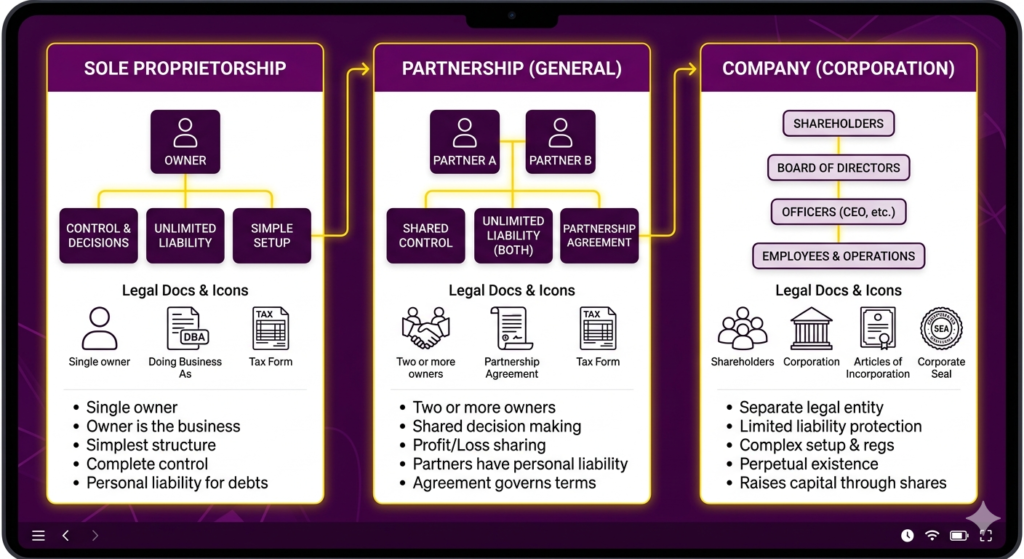
After validating your idea, the next important decision is selecting the right business structure. This choice affects taxes, legal responsibilities, ownership, decision-making, and future growth opportunities. Many entrepreneurs focus on registration forms without fully understanding the impact of their business structure.
For many beginners, a sole proprietorship is the simplest option. This structure is easy to establish and gives the owner complete control over business decisions. However, there is usually no legal separation between personal and business assets, which means personal finances may be exposed to business liabilities.
A partnership may be suitable when two or more people want to own and operate a business together. Partnerships can bring additional skills, resources, and capital, but they also require clear agreements regarding responsibilities, profit sharing, and decision-making.
Another common option is a Limited Liability Company (LLC) or its local equivalent. This structure provides a level of legal protection by separating personal assets from business obligations. Many small business owners prefer this option because it combines flexibility with liability protection.
Corporations are generally more complex and are often chosen by businesses planning to raise significant investment, issue shares, or scale aggressively. While corporations offer strong legal protection, they also come with additional administrative and regulatory requirements.
The right structure depends on your goals, risk tolerance, industry, and future plans. A freelance consultant may choose a different structure than an e-commerce company or a growing agency. Before making a decision, consider speaking with a qualified legal or financial professional who understands local business regulations.
For entrepreneurs starting with limited resources, How to Start a Business With No Money in 2026: The Complete Bootstrapping Blueprint explains how to build a strong foundation before investing heavily in legal and operational expenses.
To better understand different business structures and their implications, the U.S. Small Business Administration Business Structure Guide provides an excellent overview of common options and considerations.
Choosing the right legal business structure now can save significant time, money, and complications later. Once this decision is made, the next step is selecting a business name that represents your brand and can be legally registered.
Step 3: Choose and Verify Your Business Name Before You Register a Small Business

Your business name is one of the first things customers will notice about your brand. It appears on your registration documents, website, marketing materials, social media profiles, and customer communications. That is why choosing the right name deserves careful thought before you register a small business.
A strong business name should be easy to remember, simple to spell, and relevant to the products or services you offer. The best names communicate professionalism while giving customers a clear impression of what the business represents. Avoid names that are overly complicated, difficult to pronounce, or easily confused with existing brands.
After creating a shortlist of potential names, the next step is verifying availability. There is nothing more frustrating than investing time into branding only to discover that another business already owns the name. Most countries provide online business registries where entrepreneurs can check name availability before submitting registration applications.
Trademark considerations are equally important. A name that is available for registration may still be protected by trademark laws. Conducting a trademark search helps reduce the risk of future legal disputes and expensive rebranding efforts.
In today’s digital world, domain name availability also matters. Before finalising a name, check whether a matching website domain is available. Consistency across your website and social media accounts makes it easier for customers to find and trust your business online.
Many entrepreneurs make naming mistakes by rushing the process or choosing trendy names that quickly become outdated. Building a brand is a long-term investment, so it is worth spending extra time making the right decision.
Branding mistakes can slow growth significantly, which is why I recommend reading 9 Common Mistakes That Are Slowing Your Small Business Growth to avoid common pitfalls that affect new businesses.
To check domain availability and secure your online brand identity, platforms like Namecheap Domain Search and GoDaddy Domain Search can be useful resources.
Once your business name has been selected and verified, the next step is preparing the documents required for the registration process.
Step 4: Prepare the Documents Needed to Register a Small Business
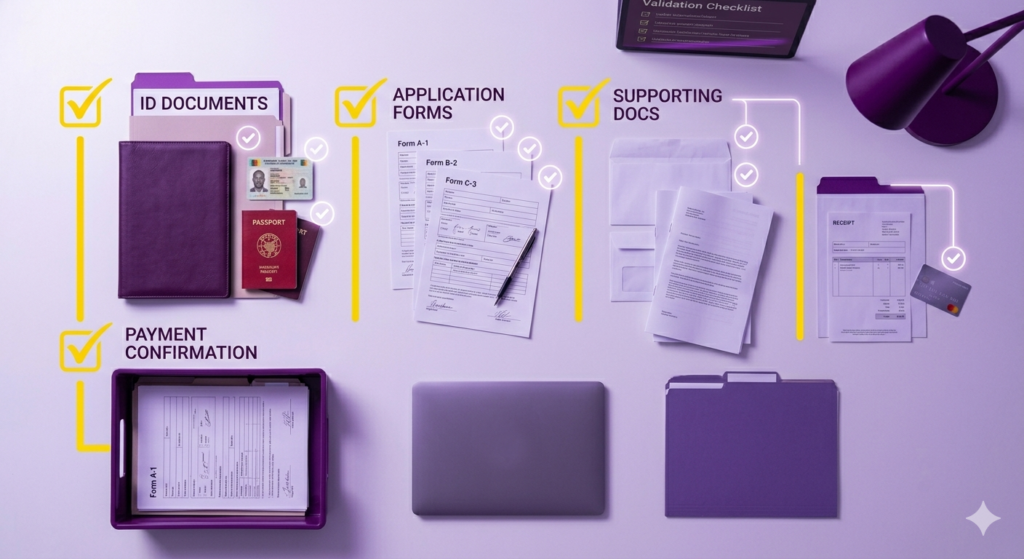
One reason many business registration applications get delayed is incomplete documentation. Before starting the registration process, it is important to gather all required information and documents. Proper preparation can save time, reduce stress, and improve the chances of approval on the first attempt.
The exact requirements vary by country and business structure, but most registration authorities will request proof of identity. This may include a national identification card, passport, driver’s license, or other government-issued documents. Make sure all identification documents are valid and up to date.
You will also need a business address. Depending on local regulations, this can be a physical office, commercial location, or even a home address if home-based businesses are permitted in your area. Some industries may require additional proof of occupancy or address verification.
Ownership information is another important requirement. If multiple people own the business, registration authorities may ask for details about each owner, their ownership percentages, and their responsibilities within the company.
Most registration applications also require a description of business activities. This explains what products or services the business intends to provide. Being clear and accurate here helps ensure your business is categorised correctly for licensing, taxation, and regulatory purposes.
Industry-specific businesses may require additional documentation. For example, food businesses, health services, educational institutions, and financial services often face stricter regulatory requirements before registration can be completed.
Keeping records organised from the beginning makes future business operations much easier. Business plans, ownership agreements, identification documents, licenses, and registration certificates should all be stored securely and easily accessible.
If you have not yet created a formal business plan, How to Create a Winning Business Plan for Startups Step-by-Step can help you prepare essential information that may be useful during registration and future growth planning.
For guidance on common registration requirements in different jurisdictions, the World Bank Entrepreneurship Resources provide valuable insights into starting and formalising a business.
With your documents prepared and organised, you are now ready to begin the actual small business registration process.
Step 5: Complete the Small Business Registration Process
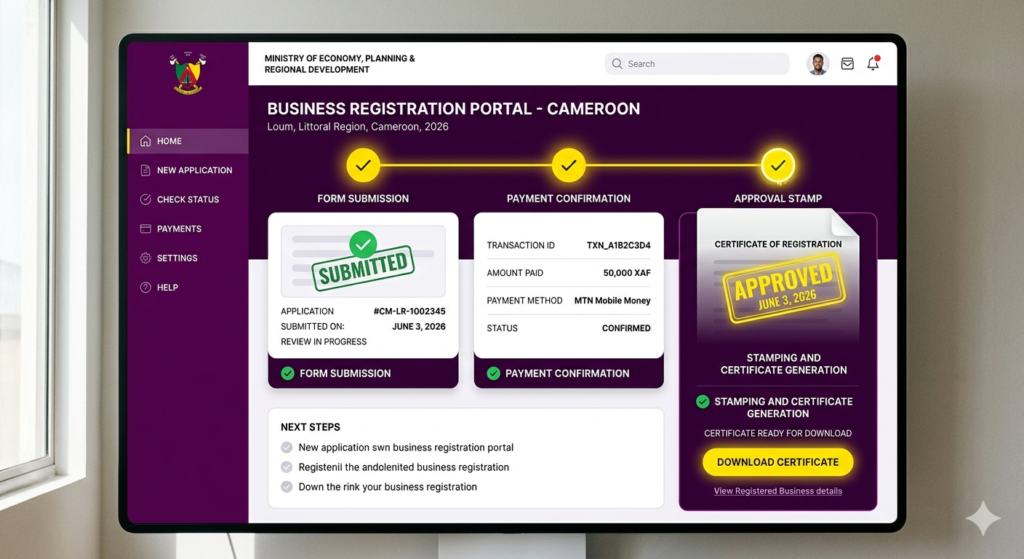
This is the stage where your idea officially becomes a recognised business. Once your documents are ready, the next step is to complete the actual registration process with the relevant government or regulatory authority. Understanding each step clearly helps avoid mistakes that can delay approval.
Most countries now offer two main options: online registration and offline registration. Online registration is usually faster and more convenient because you can submit forms, upload documents, and pay fees without visiting an office. Offline registration may still be required in some regions, especially where digital systems are not fully developed.
The registration process typically begins by filling out an official application form. This form will request details such as your business name, structure, ownership information, business address, and nature of operations. Accuracy is very important here because errors can lead to rejection or delays.
After completing the form, you will be required to submit supporting documents. These may include identification documents, proof of address, and any industry-specific paperwork, depending on your business type. Make sure all documents are clear and match the information provided in your application.
Registration fees vary depending on location and business structure. Some small businesses pay minimal fees, while others may have higher costs depending on licensing requirements. It is important to check official government websites before submitting payment to avoid scams or unofficial intermediaries.
Common mistakes during this stage include entering incorrect information, using unavailable business names, or failing to upload required documents. Double-checking every detail before submission significantly improves your chances of approval.
Once your application is submitted, it will be reviewed by the relevant authority. If everything is in order, you will receive your business registration certificate. This document serves as official proof that your business is legally recognised.
For official procedures and verification of business registration requirements, you can refer to the U.S. Small Business Administration Registration Guide, which outlines standard steps and expectations for formalising a business.
After your business is officially registered, the next important step is obtaining the necessary licenses and permits to operate legally in your industry.
Step 6: Obtain the Licenses and Permits Required to Register a Small Business Legally
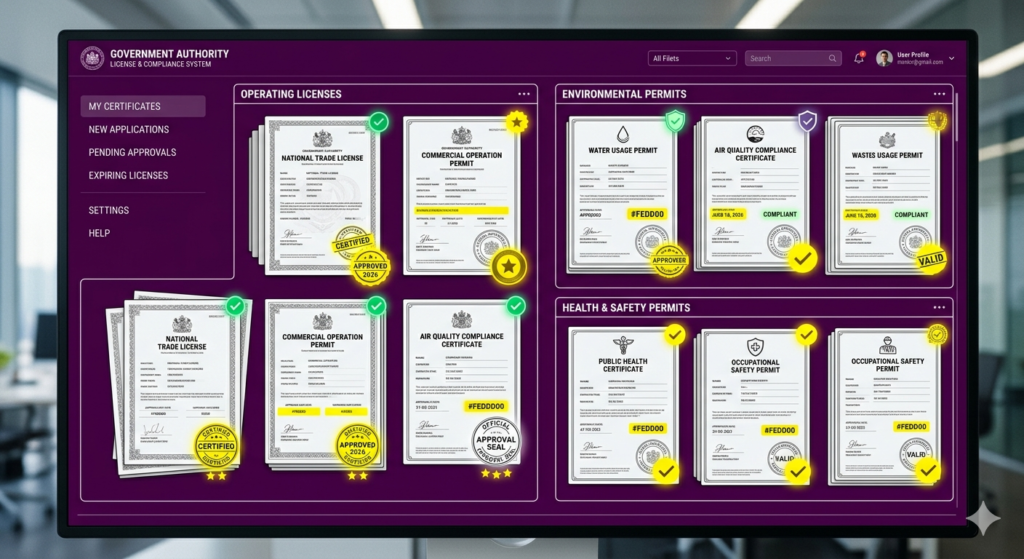
Registering your business is an important milestone, but it does not always mean you are fully allowed to operate. In many industries and locations, you also need specific licenses and permits to legally run your business. This step is essential for compliance, avoiding penalties, and building long-term credibility.
The type of license you need depends on your business activity and location. Most small businesses will require a basic business operating license issued by a local government authority. This license confirms that your business is allowed to operate within a specific area.
Beyond general licensing, some industries have additional requirements. For example, food businesses may need health and safety permits, while transportation businesses may require special operating permissions. Service-based businesses like consulting or freelancing may have fewer requirements, but tax registration is still often necessary.
Tax registration is another important part of this stage. Many governments require businesses to obtain a tax identification number so they can report income and pay taxes correctly. This ensures your business remains compliant with national financial regulations.
It is also important to check local municipal regulations. Some cities or regions have zoning laws that determine where certain businesses can operate. Ignoring these rules can lead to fines or forced closure.
Many entrepreneurs underestimate this step and assume that business registration alone is enough. However, skipping licenses and permits can create serious legal problems later, especially when scaling or working with formal clients and institutions.
To avoid confusion, it is best to consult official government resources. A helpful reference is the U.S. Small Business Administration Licenses and Permits Guide, which explains the general requirements for different business types and industries.
Once all necessary licenses and permits are secured, your business is fully compliant and ready to operate legally. The next step is setting up your financial structure properly, starting with opening a dedicated business bank account.
Step 7: Open a Business Bank Account After You Register Your Business

Once your business is officially registered and you have the required licenses, the next step is separating your personal and business finances. Opening a business bank account is not just a formality; it is a critical step for financial clarity, credibility, and long-term growth.
Mixing personal and business money is one of the most common mistakes beginners make. It creates confusion when tracking income and expenses, and it can make tax reporting more complicated. A dedicated business account helps you clearly see how your business is performing at any point in time.
Most banks will require basic documents to open a business account. These usually include your business registration certificate, identification documents, and sometimes proof of address or business activity. Requirements may vary depending on the bank and your location.
Choosing the right bank is also important. Look for one that offers low transaction fees, reliable online banking services, and easy access to financial tools that support small businesses. Some banks also provide additional services such as business loans, credit facilities, and payment processing solutions.
A business bank account also improves credibility. Customers and clients are more likely to trust payments made to a registered business account rather than a personal account. It also becomes easier to manage invoices, receive payments, and build a professional financial record.
As your business grows, maintaining proper financial systems becomes even more important. This is why setting up strong financial habits early is essential for long-term success.
For additional tools that can help you manage your business finances and operations efficiently, you can explore 11 Essential Tools That Support Small Business Growth in 2026.
For official guidance on managing small business finances and banking requirements, the U.S. Small Business Administration Banking Guide is a reliable resource.
With your business banking set up, the next step is building proper financial and tax systems to keep everything organised and compliant.
Step 8: Set Up Basic Financial and Tax Systems for Your Small Business
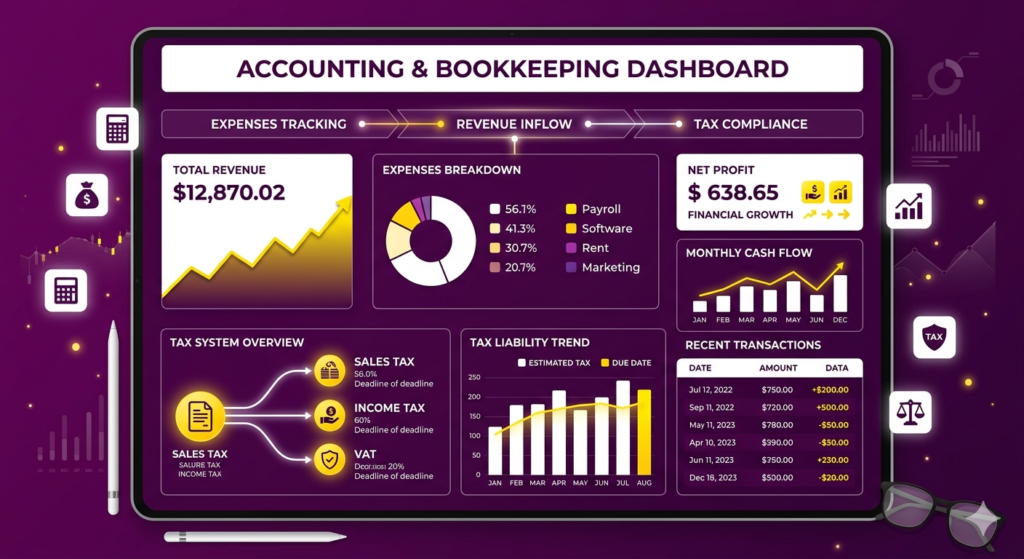
After opening a business bank account, the next important step is organising how your business tracks money, manages expenses, and handles taxes. Many small businesses struggle not because they lack sales, but because they lack proper financial systems from the beginning.
A simple bookkeeping system should be set up immediately. This helps track every income and expense clearly, so you always know whether your business is profitable or not. Without this system, it becomes easy to lose control of cash flow, which is one of the main reasons small businesses fail.
Expense tracking is equally important. Every cost related to your business should be recorded, no matter how small. This includes marketing costs, transportation, software tools, and operational expenses. Over time, this data helps you make better financial decisions.
Tax obligations must also be understood early. Depending on your country, you may need to file monthly, quarterly, or annual tax reports. Ignoring tax requirements can lead to penalties or legal issues, even for small businesses. It is always better to stay compliant from the beginning.
Many entrepreneurs use accounting software to simplify this process. Tools like QuickBooks or other local alternatives can automate bookkeeping, generate financial reports, and reduce human error. Even a simple spreadsheet can be effective when starting out, as long as it is updated consistently.
Financial discipline is a key factor in long-term business success. Separating business and personal expenses, saving for taxes, and reviewing cash flow regularly helps maintain stability as your business grows.
For entrepreneurs looking to build stronger systems and avoid common mistakes, 9 Common Mistakes That Are Slowing Your Small Business Growth provides useful insights into financial and operational errors to avoid.
For official tax and financial compliance guidelines, you can refer to the IRS Small Business and Self-Employed Tax Centre, which explains basic tax responsibilities for small businesses.
Once your financial systems are in place, the next step is building your online presence so customers can find and trust your business.
Step 9: Build Your Online Presence After You Register a Small Business
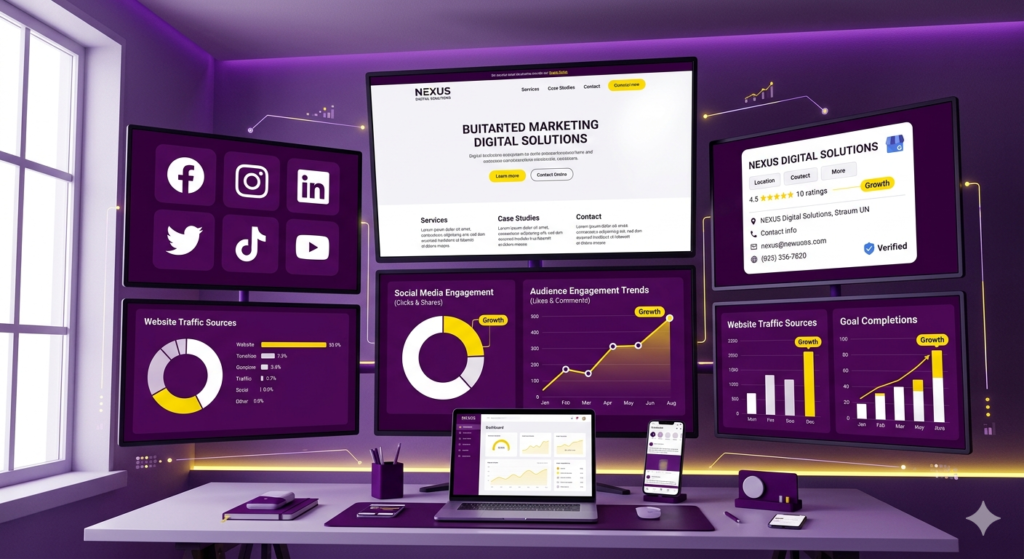
After completing your business registration and setting up your financial systems, the next step is making sure people can actually find your business. In today’s digital world, an online presence is no longer optional. It is a core part of how to register a small business and turn it into a recognisable brand.
The first step is creating a simple business website. A website acts as your digital headquarters where customers can learn about your products or services, contact you, and build trust in your brand. It does not need to be complicated at the beginning. A clean, professional layout is more effective than a complex design.
Next, set up your social media profiles. Platforms like Facebook, Instagram, TikTok, and LinkedIn help you reach potential customers where they already spend time. Consistency across all platforms is important so your brand is easily recognisable.
Another important step is setting up a Google Business Profile. This helps your business appear in local search results and Google Maps. It increases visibility and makes it easier for customers to find and trust your business.
Building trust online is not just about presence, but also about activity. Posting useful content, sharing updates, and engaging with your audience help position your business as credible and active. This is where many small businesses gain their first customers.
To strengthen your marketing foundation, it is helpful to understand how customer acquisition works after setup. You can learn more in How to Market Your Small Business in 2026 Without Wasting a Kobo on Ads, which explains how to attract customers without heavy advertising costs.
For setting up your Google Business Profile correctly, you can refer to the Google Business Profile Setup Guide, which provides official instructions on getting listed and verified.
Once your online presence is established, the final step is to review everything through a structured checklist to ensure nothing has been missed.
Small Business Registration Checklist for Beginners
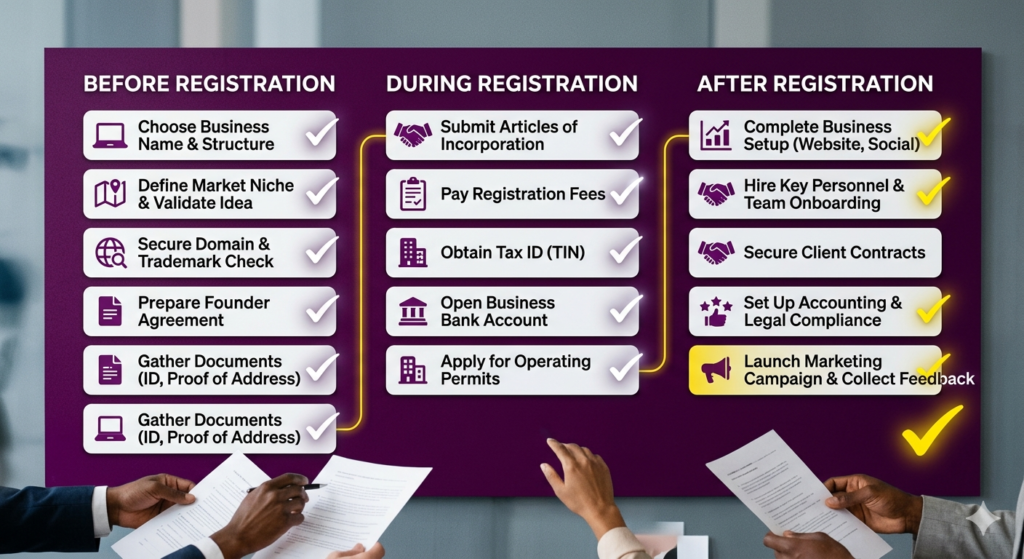
Before moving forward with growth and marketing, it is important to make sure every step of the registration process has been completed correctly. A checklist helps ensure nothing is missed and gives clarity on what has been done and what still needs attention.
Before Registration
At this stage, the focus is on preparation and validation. The business idea should already be tested and confirmed to have demand. The right business structure must also be selected based on goals and risk level. Finally, the business name should be chosen and verified for availability and legal use.
During Registration
This is the official setup phase. All required registration forms must be completed accurately and submitted to the appropriate authority. Supporting documents such as identification, business address proof, and ownership details should be included. Any applicable registration fees must also be paid to complete the application process.
After Registration
Once the business is officially registered, compliance and setup continue. Necessary licenses and permits should be obtained based on the business type. A dedicated business bank account should be opened to separate personal and business finances. Financial systems such as bookkeeping and tax tracking should also be set up to ensure proper management.
At this stage, the business should also begin building its online presence and marketing systems. This ensures that once registration is complete, customers can actually find and trust the business.
For additional guidance on avoiding early-stage mistakes that slow down business growth, you can read 9 Common Mistakes That Are Slowing Your Small Business Growth.
With everything checked and in place, the final step is understanding the common mistakes that many beginners make during registration so they can be avoided early.
Common Mistakes People Make When Registering a Small Business
Many beginners assume that registering a business is just a form-filling exercise, but small mistakes at this stage can create long-term problems. Understanding these errors early can save time, money, and legal stress.
One of the most common mistakes is choosing the wrong business structure. Many people rush into registration without understanding how each structure affects taxes, liability, and ownership. This can lead to unnecessary financial risk or limitations when trying to scale.
Another mistake is registering too early. Some entrepreneurs register a business before validating their idea or understanding their market. This often leads to wasted fees and a registered business that never becomes active or profitable.
Ignoring legal requirements is another serious issue. Business registration alone is not always enough. Depending on the industry, additional licenses and permits may be required. Failing to secure these can lead to fines or forced closure.
Many beginners also fail to research naming rules properly. Using a business name that is already registered or trademarked can lead to legal disputes and costly rebranding later. Proper verification should always be done before submission.
Mixing personal and business finances is another major mistake. Without a separate business bank account, it becomes difficult to track income, manage expenses, and file taxes correctly. This creates confusion and reduces financial clarity.
Finally, some entrepreneurs underestimate the importance of compliance. Business registration is not a one-time task. Ongoing obligations such as tax filing, renewals, and reporting must be maintained consistently.
To avoid these issues and build a stronger foundation, it is helpful to follow structured growth principles explained in 9 Small Business Growth Strategies for Beginners.
For official guidance on avoiding legal and registration errors, the U.S. Small Business Administration Registration Guide provides clear and reliable information.
Avoiding these mistakes ensures that your business registration process becomes a solid foundation for long-term success rather than a source of future problems.
FAQ SECTION
How much does it cost to register a small business?
The cost of registering a small business depends on your country, business structure, and industry. Some regions allow basic registration at a low fee, while others may charge higher amounts for specific business types. It is important to check your local government registration portal for accurate pricing.
Can I register a small business online?
Yes, many countries now offer online registration systems. These platforms allow you to complete forms, upload documents, and pay fees digitally. However, some regions still require in-person submission depending on the business type.
Do I need a business license after registration?
Yes, in many cases. Business registration does not automatically give you the right to operate in all industries. You may still need specific licenses or permits depending on your business activity and local regulations.
How long does business registration take?
The time required varies by location. Some registrations are completed within a few days, while others may take several weeks, depending on verification processes and documentation accuracy.
Can I start a business before registering it?
Yes, but it is often recommended to register as soon as possible. Operating without registration may limit your access to banking services, contracts, and legal protection.
What documents are needed to register a small business?
Common requirements include identification documents, business address proof, ownership details, and a description of your business activities. Additional documents may be required depending on your industry and location.
For more clarity on starting a business correctly from the beginning, you can read How to Start a Business With No Money in 2026: The Complete Bootstrapping Blueprint, which explains how to build a business foundation before formal registration.
For official reference, the U.S. Small Business Administration FAQ Guide provides trusted answers to common startup questions.
Conclusion

Learning how to register a small business step by step is one of the most important decisions any entrepreneur can make. It marks the transition from an idea to a legally recognised business and creates the foundation for long-term growth and stability.
Throughout this guide, the process has been broken down into clear steps. From choosing the right business idea and structure to preparing documents, completing registration, obtaining licenses, opening a business bank account, and setting up financial systems, each stage plays a critical role in building a strong and compliant business.
Business registration should never be treated as a final destination. Instead, it is the beginning of a more structured and professional journey. Once your business becomes official, it becomes easier to build trust, attract customers, and access financial opportunities that support growth.
Many entrepreneurs rush this process or overlook important details, but taking the time to do it properly can prevent costly mistakes in the future. A properly registered business is more stable, more credible, and better positioned for expansion.
If you are still in the early stages of your journey, you can also explore How to Start a Business With No Money in 2026: The Complete Bootstrapping Blueprint to understand how to build a business foundation before registration.
For additional official guidance on starting and managing a business, the U.S. Small Business Administration Business Guide remains one of the most reliable resources available.
The key takeaway is simple: register your business the right way, and you create a strong platform for everything that comes next.
Your next step is to take action and begin the registration process with clarity and confidence.